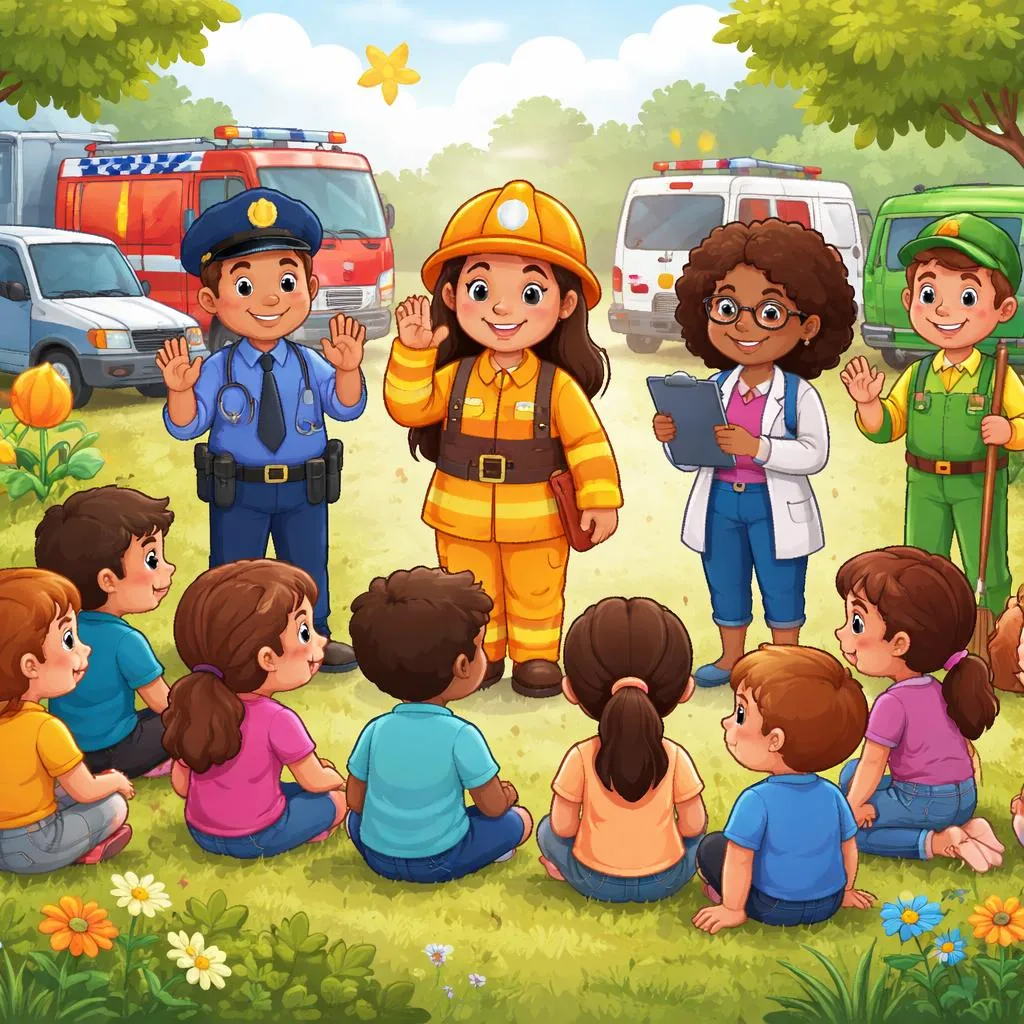

What Are Children's Stories About Community Helpers? Let us explore this important genre of children's literature together. Children's stories about community helpers focus on people who serve others. They introduce firefighters, police officers, doctors, and teachers. Mail carriers, librarians, and garbage collectors also appear. The stories show these helpers in their daily work routines. Characters demonstrate how they help people in the community. Children learn what each helper does and why it matters. The narratives often follow a helper through a typical day. Young readers see the tools and vehicles each helper uses. The stories emphasize that these helpers are friendly and trustworthy. They show children that helpers are ordinary people doing important work. This builds understanding and appreciation for community services.
Meaning and Purpose of Community Helper Stories These stories serve multiple essential purposes in early education. They introduce children to the world beyond family and school. Children learn about the many people who make communities work. The stories also build understanding of how society functions daily. Each helper plays a role in keeping everyone safe and healthy. The narratives also reduce fear of community helpers when needed. Children learn that police and doctors are there to help. This makes emergency situations less frightening for children. The stories also inspire career awareness and aspirations naturally. Children begin thinking about what they might want to be. They see that all work has value and dignity always. The stories foster respect for the work others do daily.
Categories of Community Helpers in Stories We can organize community helpers into several helpful categories. Safety helpers keep people safe from harm and danger. Police officers, firefighters, and paramedics belong here. Health helpers care for people who are sick or hurt. Doctors, nurses, dentists, and veterinarians appear. Education helpers help children learn and grow each day. Teachers, librarians, and school staff are included. Food helpers grow, make, and sell food for everyone. Farmers, bakers, grocery store workers, and chefs appear. Building helpers construct and maintain places where people live. Construction workers, plumbers, and electricians belong here. Transport helpers move people and goods from place to place. Bus drivers, pilots, train conductors, and delivery workers. Service helpers provide services that make life better daily. Mail carriers, garbage collectors, and hair stylists appear.
Daily Life Connections Through Helper Stories Community helper stories connect directly to children's daily experiences. Children see mail carriers delivering mail to their homes. They notice garbage trucks coming on collection days. They visit doctors and dentists for checkups regularly. They ride buses driven by friendly drivers to school. They see firefighters at school during safety visits. They watch construction workers building in their neighborhoods. They interact with grocery store workers while shopping. They know their teachers and librarians by name personally. These daily encounters become meaningful through stories. Children understand better what these workers actually do. The stories give context for the helpers they see regularly. We can point out these connections during and after reading. "Look, there's our mail carrier just like in the story."
Vocabulary Learning from Helper Stories Community helper stories introduce rich career and service vocabulary. Community means a group of people living in one area. Helper means someone who assists or serves others. Firefighter means a person who puts out fires and rescues people. Police officer means a person who keeps people safe and enforces laws. Doctor means a person who treats sick or injured people. Teacher means a person who helps others learn new things. Librarian means a person who works in a library helping people find books. Mail carrier means a person who delivers letters and packages. Garbage collector means a person who takes away trash and recycling. Farmer means a person who grows food and raises animals. We can teach these words with picture cards showing examples. Use them in sentences about helpers children know.
Phonics Points in Helper Stories Community helper stories provide useful phonics practice with career words. Firefighter has the long I and short I and ER ending. Police has the long O and long E and soft C. Doctor has the short O and OR combination. Teacher has the EA digraph and ER ending. Farmer has the AR combination and ER ending. Helper has the short E and ER ending. Vehicle words offer valuable sound patterns. Truck has the TR blend and short U. Engine has the short E and ING and long E. Wagon has the short A and short O. Tool words provide phonics elements. Hose has the H sound and long O and silent E. Ladder has the short A and DD and ER ending. Stethoscope has the ST blend and short E and long O. We can focus on one sound pattern from each story. Find all words with that sound in the helper tale. Write them on tool or vehicle shapes for practice.
Grammar Patterns in Helper Narratives Helper stories model useful grammar for young readers naturally. Present tense describes what helpers do every day. "The firefighter drives the big red truck." Past tense tells what happened in a specific story. "Yesterday the doctor helped a little boy who fell." Future tense shows what helpers will do next. "Tomorrow the teacher will read us a new book." Questions explore helper roles and responsibilities. "Who helps us when we are sick?" "What does a mail carrier do?" Commands appear in helper instructions. "Stop at the red light." "Open wide and say ah." Descriptive language paints clear pictures of helpers. "The friendly mail carrier waved as she walked down the street." Prepositional phrases describe locations helpers work. "At the station, in the ambulance, at the school." We can point out these patterns during reading.
Learning Activities for Helper Stories Many activities deepen understanding of community helpers. Create a community helper dress-up center with simple costumes. Hats, tools, and clothing for different roles included. Invite real community helpers to visit the classroom. Firefighters, police officers, and parents with jobs come. Take field trips to places where helpers work. Visit fire stations, post offices, grocery stores, and libraries. Make thank you cards for community helpers in the neighborhood. Deliver them to express appreciation for their work. Create a community helper matching game with pictures and tools. Match each helper with what they use for work. Set up dramatic play centers for different helper roles. Practice being firefighters, doctors, teachers, and mail carriers. These activities make helper concepts tangible and memorable.
Printable Materials for Helper Learning Printable resources support deep engagement with community helper themes. Create helper cards showing each worker with name and tools. Use for identification and matching games. Design a "When I Grow Up" page for career aspirations. Children draw themselves as a helper and write about it. Make a community helper bingo game with pictures on cards. Call out helper names, children mark matching pictures. Create a tools matching sheet connecting helpers with equipment. Draw lines from doctor to stethoscope, firefighter to hose. Design a helper hats activity matching hats to workers. Color and cut out hats for different community roles. Make a community map showing where different helpers work. Place fire station, hospital, school, and post office on map. These printables structure helper exploration activities effectively.
Educational Games About Community Helpers Games make helper learning playful and interactive. Play "Helper Charades" acting out community helper roles. Others guess which helper is being portrayed dramatically. Create "Match the Tool" pairing helpers with their equipment. Firefighter with hose, doctor with stethoscope, teacher with book. Play "Who Am I?" reading clues about specific helpers. "I put out fires and rescue people. Who am I?" Design "Helper Bingo" with different workers on cards. Mark when helpers are discussed or spotted in community. Play "Helper Says" like Simon Says with helper actions. "Firefighter says spray the hose." "Teacher says read a book." Create "Community Helper Scavenger Hunt" finding helper-related items. Look for mail truck, fire station, or hospital in neighborhood. These games build helper knowledge through active participation.
Teaching About Interdependence Helper stories teach that communities depend on each other always. No one can do everything alone in a community. Farmers grow food that grocery workers sell to families. Doctors heal people so they can work and help others. Garbage collectors keep neighborhoods clean and healthy. Mail carriers connect people through letters and packages. Teachers prepare children to become future helpers themselves. This web of interdependence keeps communities functioning well. Children learn that all work has value and importance. Every helper contributes to making life better for everyone. No job is too small or unimportant to matter. This builds respect for all kinds of work equally. Children see themselves as part of this helping community.
Reducing Fear of Helpers Some children feel afraid of certain community helpers initially. Police officers in uniforms can seem intimidating to young children. Doctors with needles may cause anxiety and fear. Stories present these helpers as friendly and trustworthy always. They show helpers helping, not hurting, people always. Children learn that helpers are there for their protection. The stories build positive associations before real encounters. When a child meets a police officer, they remember the story. The officer becomes a friend from the book, not a stranger. This reduces stress during actual medical or safety situations. Children cooperate better with helpers they trust completely. The stories provide emotional preparation for real experiences.
Gender and Diversity in Helper Stories Good helper stories show diversity in all community roles. Firefighters can be women, men, and non-binary people. Doctors come from all racial and cultural backgrounds equally. Helpers with disabilities appear in inclusive stories now. Children see that anyone can be any kind of helper. Their own identity does not limit their possibilities. The stories should reflect the diversity of real communities. Children from all backgrounds see themselves represented. They also learn that helpers come in all forms always. This builds inclusive attitudes from earliest ages. No job belongs to any particular group exclusively. Everyone can contribute to community in meaningful ways.
Inspiring Future Helpers Helper stories plant seeds for future career aspirations naturally. Children begin imagining themselves in helping roles. They might want to be firefighters saving people. They might dream of being teachers helping children learn. They might see themselves as doctors healing the sick. The stories show that helping work is meaningful and rewarding. It makes a real difference in people's lives daily. This inspires children to think about how they can help. Not just as careers, but in everyday life too. They learn that everyone can be a helper right now. Holding doors, sharing, and being kind all help. Small acts of helping matter in community every day. The stories build a foundation for lifelong service to others.