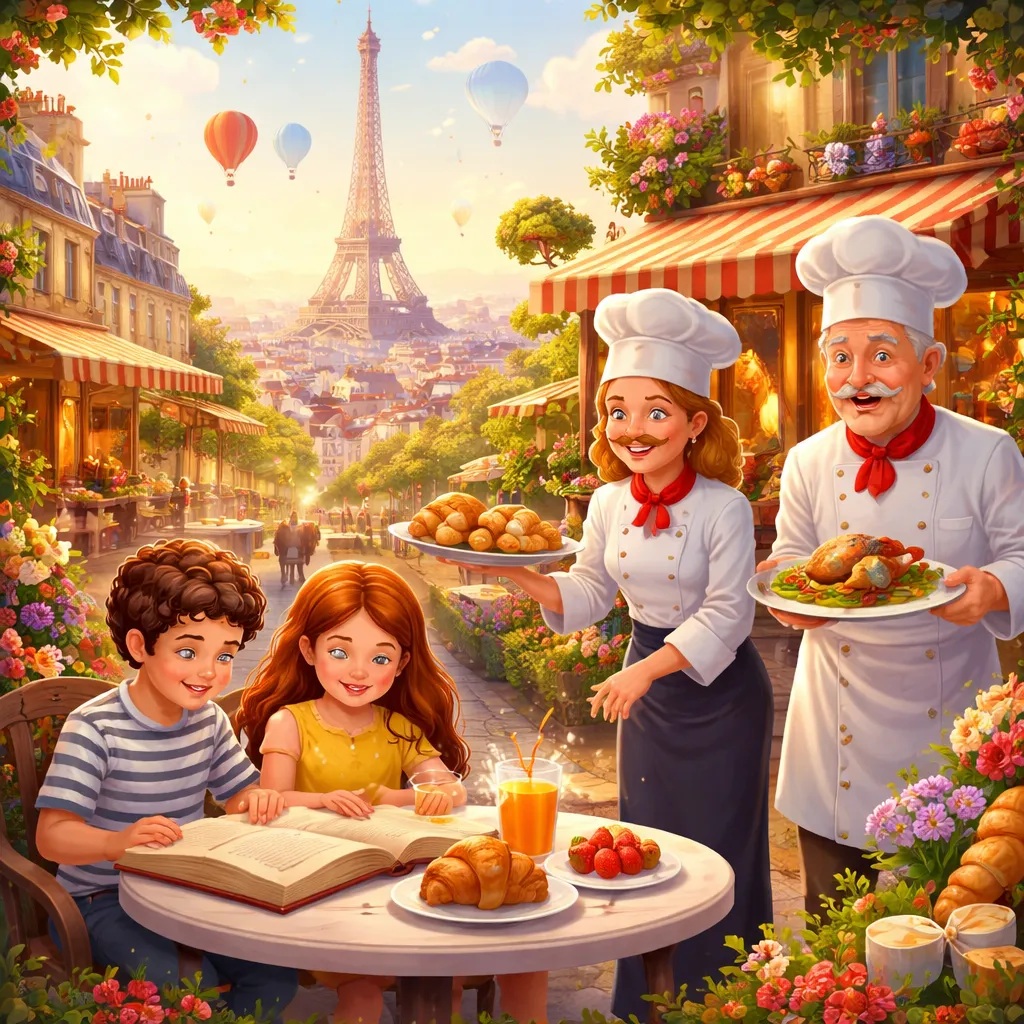

A Friendly Hello and First Impressions
Bonjour! (bohn-ZHOOR). This is the polite "Hello" in French. Merci! (mehr-SEE). This is a sincere "Thank you". People say it with a smile. Learning reading about France starts with these classic, elegant words.
France is in Western Europe. Its shape looks like a neat, six-sided polygon. People call it "The Hexagon". The country is on the continent of Europe. The Mediterranean Sea is to the south. The Atlantic Ocean is to the west. Italy, Spain, and Germany are its neighbors. The land is a beautiful mix of coast, mountains, and farms.
People call it the "City of Light". This nickname is for its capital, Paris. The city was an early adopter of street lamps. It also means a city of ideas and learning. Another name is "L'Hexagone". This is the French word for the six-sided shape. Are you ready to explore each side of this famous hexagon?
Deep Dive into Culture and Stories
Echoes of History
A world-changing event started in France. It was the French Revolution. It began in 1789. The people were unhappy with the king. They wanted liberty, equality, and brotherhood. They stormed a prison called the Bastille. This event changed France forever. It ended the monarchy for a time. It created the first French Republic. This history is a key part of learning reading about France. It is a story of the fight for rights.
A famous ruler was Napoleon Bonaparte. He was a military genius. He became Emperor of the French. He created many laws still used today. His wars changed the map of Europe. His story is full of ambition and drama.
A World of Human Rights
France gave the world a powerful idea. It is the Declaration of the Rights of Man. It was written in 1789. It says all people are born free and equal. It inspired many other countries. It is a foundation of modern democracy. This idea is a gift to humanity.
A Land of Diverse Beauty
France's geography is wonderfully varied. The south has sunny beaches on the Mediterranean. The west has rugged cliffs on the Atlantic. The center has rolling hills and farms. The east has the high Alps mountains. The landscape changes from snowy peaks to purple lavender fields.
The climate is mostly temperate. The north is cool. The south is warm and Mediterranean. This affects how people live. In the north, people grow wheat and sugar beets. In the south, they grow grapes, olives, and lavender. Houses in the north often have steep roofs for snow. In the south, houses have flat tiles. The main exports are planes, medicines, wine, and perfume.
A special animal is the rooster. It is the national symbol. The rooster represents vigilance and pride. The national tree is the oak. It stands for strength. The national flower is the iris. It is elegant and beautiful. Lavender is a symbol of sunny Provence.
Landmarks of Iron and Art
Visit the Eiffel Tower. It is in Paris. It was built in 1889 for a world's fair. It is 330 meters tall. It was the tallest building in the world then. Many people hated it at first. They thought it was ugly iron. A fun story says the designer dined at the top. He wanted to show it was safe. Now, it is the symbol of Paris. The view from the top is amazing.
See the Louvre Museum. It is the world's largest art museum. It was once a royal palace. The glass pyramid is the entrance. The museum holds the Mona Lisa. A legend says a phantom lives in the opera house nearby. The Louvre is a treasure chest of art.
Another wonder is Mont-Saint-Michel. It is a rocky island. A beautiful abbey sits on top. It looks like a fairy-tale castle. When the tide is high, water surrounds it. When the tide is low, you can walk to it. A fun story says the archangel Michael told a bishop to build it. The site is magical.
Festivals of Fire and Music
The biggest national holiday is Bastille Day. It is on July 14th. It celebrates the start of the French Revolution. There is a huge military parade in Paris. Jets fly over the Champs-谷lys谷es. At night, every town has a fireworks display. People dance in the streets.
Families and friends have picnics. They eat, drink, and listen to music. Fire stations hold parties. The national flag is everywhere. The colors are blue, white, and red. The day is about liberty, joy, and national unity. The feeling is electric.
Food and Flavors
The national food is the baguette. It is a long, thin loaf of bread. The crust is crispy. The inside is soft and chewy. People buy it fresh every day. They eat it with cheese, butter, or ham. A fresh baguette tastes simple and delicious. It is the sound of France.
You must try Coq au Vin. It is a classic French stew. It is chicken cooked slowly in red wine. It has mushrooms, onions, and bacon. Families eat it for a special Sunday lunch. The chicken is tender. The sauce is rich and savory. It tastes like comfort and tradition.
A Culture of Art and Innovation
France is a world leader in art. The Impressionist movement started here. Artists like Claude Monet painted light and gardens. France is also famous for fashion. Designers like Coco Chanel changed how women dress. This love for beauty is a key part of learning reading about France.
France is a leader in science and technology. It has a high-speed train called the TGV. It is very fast. France also builds passenger planes with other countries. The country has a strong space program. This mix of art and engineering is special.
Tips for Young Explorers
Cultural Manners Matter
French people value politeness. Always say "Bonjour, Madame/Monsieur" when you enter a shop. Say "Au revoir" (goodbye) when you leave. This is very important. It is the first rule.
At the dinner table, keep your hands on the table. Not in your lap. But do not put your elbows on the table. Try to use your knife and fork properly. Do not eat with your hands. This is the custom.
Greet friends with "la bise". This is a kiss on each cheek. But do not do it with people you just met. A handshake is better for first meetings. Watch what others do.
A Note on Staying Safe
France is a very safe country. But be careful in big cities and tourist spots. Watch for pickpockets. Keep your bag closed. Do not put your phone on a caf谷 table. Use common sense.
The sun in the south is very strong. Use sunscreen. Drink lots of water. The Mediterranean sun can burn you quickly. Protect your skin.
A Tasty Stop
Look for a "cr那perie". This is a place that makes cr那pes. A cr那pe is a very thin pancake. Try a "cr那pe au sucre". It is a cr那pe with butter and sugar. Or try a "cr那pe au Nutella". Eat it hot. The cr那pe is soft, warm, and sweet. It is the perfect street food.
Healthy and Happy Travels
Tap water is safe to drink everywhere. Ask for "une carafe d'eau" in a restaurant. It is free tap water. Carry a refillable bottle. This saves plastic and money.
Walk a lot. French cities are made for walking. Wear comfortable shoes. You will explore beautiful streets and parks. Your feet will thank you.
Be patient. Meals in restaurants are slow. This is normal. It is a time to talk and enjoy. Do not rush. Relax and watch the world go by.
Your Invitation to Explore
Start your journey with art. Look at a painting by Claude Monet. See the water lilies and light. Or, listen to French music. Try the song "Sous le Ciel de Paris". This is a wonderful way of learning reading about France.
Visit a local bakery. Buy a fresh baguette. Taste the crispy crust. Imagine a Parisian street. You can also try to paint like an Impressionist. Use bright dots of color. Do not worry about perfect lines.
The world is a big, wonderful book. Each country is a different chapter. France's chapter is about revolution, recipes, and Renaissance art. Open it with curiosity. Read about its towers, traditions, and joie de vivre. Your curiosity is your guide.
French families share a long Sunday lunch. Friends debate in a sidewalk caf谷. Children learn to appreciate art in museums. We all know these feelings. We love sharing long meals. We enjoy good conversation. We see beauty in the world. Learning about France shows us this. Our global family shares the same joys. Keep exploring, one page, one country, at a time. Your adventure has just begun.