
A Friendly Hello and First Impressions
Sawubona! (sah-woo-BOH-nah). This is a warm "Hello" in SiSwati. Ngiyabonga! (ngee-yah-BONG-ah). This is a sincere "Thank you". People say it with respect. Learning reading about Eswatini (Swaziland) starts with these kind, musical words.
Eswatini is a small, landlocked kingdom. It sits in Southern Africa. Its shape looks like a tilted shield. The shield is protected by mountains. South Africa surrounds it on three sides. Mozambique borders the east. The land is full of beautiful valleys and hills. It is one of Africa's smallest countries.
People call it the "Kingdom of Eswatini". This is its official name. Another nickname is "Africa's Last Absolute Monarchy". The king has great traditional power. But he rules with his mother, the Queen Mother. Are you ready to visit a living kingdom of culture?
Deep Dive into Culture and Stories
Echoes of History
A great king ruled for a very long time. His name was King Sobhuza II. He was king for 82 years! He became king in 1899. He led the nation to independence in 1968. Britain had ruled before. He was a symbol of Swazi culture. He always wore traditional dress. His story is a key part of learning reading about Eswatini (Swaziland). It is a story of long leadership.
Another important figure is King Mswati III. He is the current king. He became king in 1986. He is known for his many wives. This is a traditional practice. The king leads the nation today. He balances old ways and new ideas.
A World of Cultural Preservation
Eswatini gives the world a lesson in tradition. The country keeps its ancient customs alive. Rituals like the Reed Dance are famous. The world watches this beautiful event. Eswatini shows how to honor the past. This is a gift of cultural pride. It is a key part of learning reading about Eswatini (Swaziland).
A Land of Valleys and Mountains
Eswatini has four main regions. The Highveld has mountains and forests. The Middleveld has rolling hills. The Lowveld is hot and dry. The Lubombo Mountains are in the east. The landscape changes from green hills to dry plains.
The climate varies with altitude. The Highveld is cool. The Lowveld is hot. The environment shapes life. People grow sugarcane, maize, and citrus fruits. They also raise cattle. Cattle are a sign of wealth. Traditional houses are beehive-shaped huts. They are made of grass and poles. Modern houses are made of brick. The main exports are sugar, soft drink concentrates, and wood pulp.
A special animal is the lion. It is the national animal. It represents strength and royalty. The national bird is the purple-crested turaco. It has beautiful purple and green feathers. The national flower is the fire lily. It is a bright red flower. The marula tree is important. Its fruit makes a popular jam.
Landmarks of Nature and Culture
Visit Mlilwane Wildlife Sanctuary. It was the first protected area in Eswatini. It means "Little Fire". The name comes from lightning strikes. You can see zebras, wildebeest, and hippos. You can stay in traditional beehive huts. A fun story says the founder, Ted Reilly, loved animals. He turned his family farm into this park. The sanctuary is peaceful and green.
See the Mantenga Cultural Village. It is a living museum. It shows a traditional Swazi homestead from the 1850s. You can see how people lived. You can watch dances and taste local food. A legend says the site is near a sacred waterfall. The waterfall is the home of spirits. The village is a window to the past.
Another wonder is the Ngwenya Glass Factory. Artists make beautiful glass objects. They use recycled glass. You can watch them blow and shape the glass. The creations are like colorful art. The factory shows Swazi creativity and skill.
Festivals of Unity and Purity
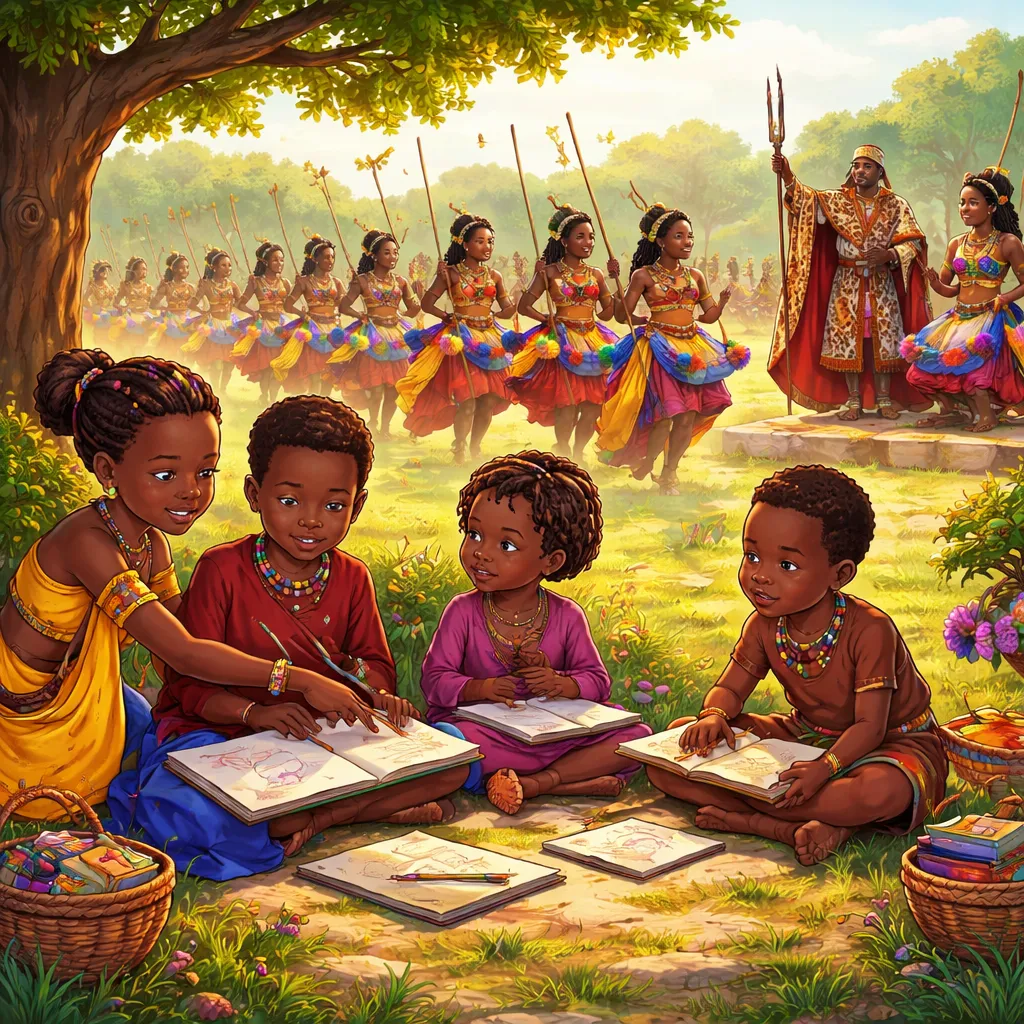
The biggest festival is Umhlanga. This is the Reed Dance. It happens in August or September. Tens of thousands of unmarried girls gather. They wear colorful beaded skirts. They cut tall reeds from the river. They carry the reeds to the royal palace. They present the reeds to the Queen Mother.
The reeds are for repairing the palace fence. Then the girls dance and sing for the king. The dance celebrates purity and unity. It is a stunning sight of culture and color. The festival lasts for eight days. It is a key national event.
Another important day is Independence Day. It is on September 6th. It marks freedom from Britain in 1968. There is a parade at the Somhlolo Stadium. The king gives a speech. People celebrate with music and parties. The national flag is everywhere. The colors are blue, yellow, red, white, and black. A shield and spears are on the flag. The day is full of national pride.
Food and Flavors
The national dish is Sishwala. It is a thick porridge. It is made from maize meal. It is served with a side dish. The side is meat or vegetables in a sauce. Families eat it from a shared bowl. It is hearty and filling. It tastes like the staple of daily life.
You must try Incwancwa. It is a sour porridge. It is made from fermented maize meal. People eat it for breakfast. It is often served with milk or sugar. The taste is tangy and unique. It is a traditional favorite.
A Culture of Respect and Craft
Respect is very important. The concept is "inhlonipho". It means respect for all. People respect elders, leaders, and each other. Greetings are long and polite. This value is central to Swazi life. It is a key part of learning reading about Eswatini (Swaziland).
The country is famous for its crafts. Women weave beautiful baskets and mats. They use natural grasses and dyes. Men carve wood and soapstone. These crafts are sold worldwide. They provide income for many families. This skill is a source of pride.
Tips for Young Explorers
Cultural Manners Matter
Respect for elders is essential. Always greet the oldest person first. Use both hands to give or receive something. This shows great respect. Do not look elders directly in the eyes for too long. This is a sign of respect.
Greetings are important. Say "Sawubona" and shake hands. A common handshake uses three parts. You touch hands, then thumbs, then hands again. This is a traditional greeting. Learn it and use it.
Dress modestly, especially at cultural events. Do not wear very short shorts or revealing tops. This is considered disrespectful. When visiting a homestead, ask permission before entering.
A Note on Staying Safe
Eswatini is a peaceful country. But be smart in cities. Do not walk alone at night. Keep your belongings close. Do not show expensive items. Use common sense.
Malaria is a risk in the Lowveld. Take anti-malaria medicine if your doctor says. Use insect repellent. Wear long sleeves in the evening. Your lodge may have a mosquito net. Use it.
A Tasty Stop
Look for "emasi" in a market. It is sour milk. It is thick and tangy. People eat it with porridge or drink it. Try a small cup. The taste is sour and refreshing. It is a traditional dairy product.
Healthy and Happy Travels
Drink only bottled or boiled water. This is the most important rule. Do not drink tap water. Avoid ice in drinks. Brush your teeth with bottled water. This keeps your stomach happy.
The sun is very strong. Use a high SPF sunscreen. Wear a hat. The African sun can burn you quickly. Drink lots of water to stay hydrated.
Wear comfortable walking shoes. You will walk on uneven paths. Good shoes protect your feet. They let you explore the beautiful landscapes.
Your Invitation to Explore
Start your journey with rhythm. Listen to Swazi music. Hear the drums and the singing. Try to clap along. Or, look at pictures of the Reed Dance. See the sea of colorful skirts. This is a wonderful way of learning reading about Eswatini (Swaziland).
Visit a craft store. Look for a Swazi basket or a glass animal. Feel the woven grass. See the colorful glass. Imagine the hands that made it. You can also try braiding string or grass. Make a simple bracelet. Feel the patience it takes.
The world is a big, open book. Each country is a different chapter. Eswatini's chapter is about kings, reeds, and deep respect. Open it with curiosity. Read about its dances, crafts, and close community. Your curiosity is your guide.
Swazi families share a bowl of sishwala. Girls practice the Reed Dance together. Children help their parents with crafts. We all know these feelings. We love sharing meals. We enjoy celebrating together. We help our families. Learning about Eswatini shows us this. Our global family shares the same values of respect and togetherness. Keep exploring, one page, one country, at a time. Your adventure has just begun.