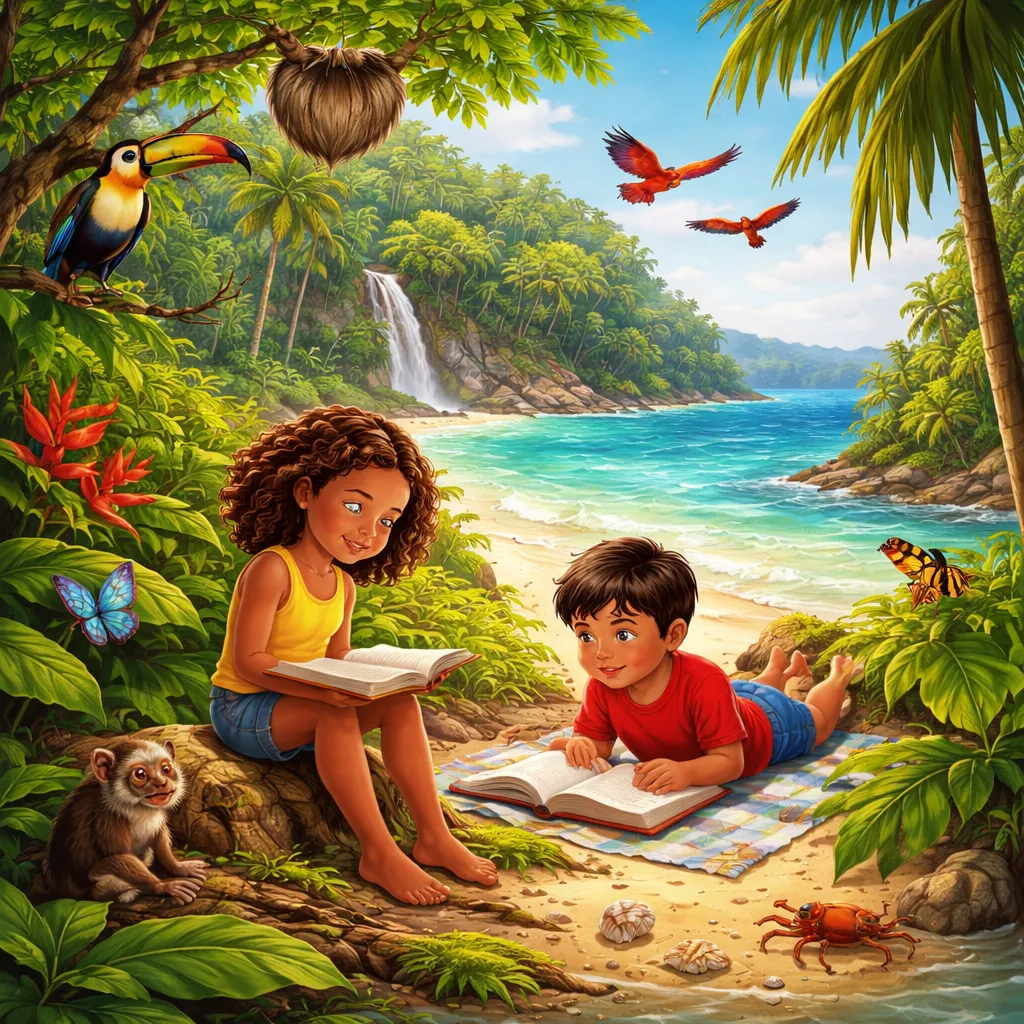

A Friendly Hello and First Impressions
?Hola! (OH-lah). This is the warm, common "Hello" in Spanish. ?Pura vida! (POO-rah VEE-dah). This is a special phrase. It means "pure life". People use it for hello, goodbye, and thank you. It is a way of life. Learning reading about Costa Rica starts with this happy, positive saying.
Costa Rica is in Central America. Its shape looks like a curved bridge. The bridge connects North and South America. Nicaragua is to the north. Panama is to the south. The Pacific Ocean is on the west coast. The Caribbean Sea is on the east coast. The land is narrow but packed with life.
People call it the "Rich Coast". The name "Costa Rica" means this in Spanish. Spanish explorers gave it this name. They hoped to find gold here. The real riches are the nature and happy people. Another nickname is the "Switzerland of Central America". It is peaceful and has no army. What makes this small country so rich in life?
Deep Dive into Culture and Stories
Echoes of History
A great leader shaped modern Costa Rica. His name was Jos谷 Figueres Ferrer. People called him "Don Pepe". He was president three times. After a civil war in 1948, he made a big decision. He abolished the national army. He said the money was for education and health. Costa Rica has no army to this day. His story is a key part of learning reading about Costa Rica. It is a story of peace.
Long before that, indigenous people lived here. Then Spain made it a colony. Costa Rica gained independence peacefully in 1821. It became a democracy. The country focused on education and the environment. This created the stable nation we see today.
A Model of Green Living
Costa Rica gives the world a model of conservation. In the 1980s, the country was losing its forests. The government made a smart choice. It paid people to protect their land. It created national parks and reserves. Today, over 25% of the land is protected. Forests grew back. Wildlife returned. The country also runs on almost 100% renewable energy. This is a gift of environmental wisdom.
A Land of Fire and Forest
Costa Rica's geography is incredibly diverse. A chain of volcanoes runs through the center. The plains on the Pacific side are drier. The Caribbean side is wetter with rainforests. The coast has beautiful beaches. The land rises from sea level to tall mountains. This creates many microclimates.
The climate is tropical. It has a dry season from December to April. The rainy season is from May to November. It is warm in the lowlands and cool in the mountains. This affects how people live. People grow coffee in the highlands. They grow pineapples and bananas on the coasts. Houses are often open to the breeze. The main exports are medical devices, coffee, and bananas.
A special animal is the sloth. It moves very, very slowly. It lives in the trees. It is a symbol of the "pura vida" lifestyle. The national bird is the clay-colored thrush. It has a lovely song. The national tree is the Guanacaste tree. It is huge and provides great shade. The national flower is the guaria morada. It is a beautiful purple orchid.
Landmarks of Fire and Mist
Visit the Arenal Volcano. It is a perfect cone-shaped volcano. It was very active until 2010. Now it sleeps. The area has hot springs. The water is heated by the volcano. You can relax in the warm water. A local legend says the volcano is a giant. The giant fell in love with a lake. He watches over her. The view of the volcano is majestic.
See the Monteverde Cloud Forest. It is a magical, misty forest. Clouds drift through the trees. The air is cool and fresh. You walk on hanging bridges high above the ground. You can see colorful birds like the quetzal. The forest is full of moss, orchids, and ferns. It feels like a green, peaceful dream.
Another wonder is the Tortuguero Canals. They are on the Caribbean coast. The canals are like a jungle Amazon. You explore by boat. You see monkeys, caimans, and many birds. Giant sea turtles come here to lay eggs. The area is a network of rivers and lagoons. It is a waterworld of nature.
Festivals of Light and Liberty
The biggest national holiday is Independence Day. It is on September 15th. The celebration starts the evening before. At 6 p.m., a freedom torch arrives from Nicaragua. Children carry homemade lanterns. They are called "faroles". They parade through towns.
The next day, there are parades with marching bands. Children in traditional dress dance. People wear the national colors. The colors are blue, white, and red. The national anthem is sung with pride. The day is about peace, freedom, and community.
Another fun day is the Festival of the Oxcarts. It happens in San Jos谷. Decorated oxcarts parade through the streets. Long ago, these carts carried coffee. Now they are symbols of tradition. The paintings on the carts are bright and geometric. The festival is colorful and historic.
Food and Flavors
The national dish is Gallo Pinto. It means "spotted rooster". It is rice and beans. The beans give the rice dark spots. It is cooked with onions, peppers, and cilantro. People eat it for breakfast with eggs. A common saying is "M芍s tico que el gallo pinto". This means "More Costa Rican than gallo pinto". It tastes like the essential, savory start to the day.
You must try a Casado. It is a typical lunch plate. "Casado" means "married man". The story says a married man ate this at home. The plate has rice, beans, salad, fried plantains, and a choice of meat or fish. It is a complete, balanced meal. It tastes hearty, fresh, and satisfying.
A Culture of Peace and Soccer
"Pura vida" is the national philosophy. It means enjoying simple things. It means being friendly and relaxed. It means living in peace with nature. This attitude is central to learning reading about Costa Rica. It is a lesson in happiness.
Soccer is the national passion. The national team is called "La Sele". When they play, the country stops. People watch in homes and parks. The joy is huge when they win. Playing soccer on the beach or in a field is a common pastime. It brings people together.
Tips for Young Explorers
Cultural Manners Matter
Costa Ricans are called "Ticos". They are very polite and friendly. Greet people with a smile. Say "Buenos d赤as" (Good morning) or "?Hola!". Use "usted" instead of "t迆" for "you". This is more formal and polite. It shows respect.
Punctuality is relaxed. Being a little late is common. This is called "la hora tica". But try to be on time for tours. For social events, it is fine to be 15 minutes late.
Always say "con permiso" (excuse me) when passing someone. Say "por favor" (please) and "gracias" (thank you). Good manners are appreciated. People are helpful and welcoming.
A Note on Staying Safe
Costa Rica is a very safe country. But be smart. Do not leave your things alone on the beach. Keep your bag closed in crowds. Use common sense.
Nature needs respect. Do not swim where there are warning signs. Rip currents can be strong. Never turn your back on the ocean. Only hike with a guide in the rainforest. Do not feed or touch wildlife. Animals are wild, not pets.
A Tasty Stop
Look for a "churrer赤a". This is a place that sells churros. Churros are long, fried dough pastries. They are rolled in cinnamon sugar. They are often filled with dulce de leche. Eat them hot. They are crispy, sweet, and delicious. Perfect with a cup of hot chocolate.
Healthy and Happy Travels
The sun is very strong near the Equator. Use a high SPF sunscreen. Reapply it often, especially after swimming. Wear a hat and sunglasses. Protect your skin.
Drink lots of bottled water. The heat and activity can dehydrate you. "Pura agua" is safe in most areas. But bottled water is easy to find. Stay hydrated to enjoy your adventures.
Use insect repellent. Mosquitoes can be annoying, especially at dusk. It helps prevent itchy bites. Wear light, long sleeves in the evening.
Your Invitation to Explore
Start your journey with a calm moment. Sit quietly and listen to the sounds around you. Can you hear birds? Imagine the sounds of the rainforest. Or, listen to Costa Rican "calypso" music from the Caribbean coast. Feel the happy rhythm. This is a wonderful way of learning reading about Costa Rica.
Visit a local market. Look for Costa Rican coffee or a ripe plantain. Make gallo pinto at home. It is easy. Cook rice and black beans together with spices. Taste the simple, delicious flavor. Imagine eating it with a view of a volcano.
The world is a big, open book. Each country is a different chapter. Costa Rica's chapter is about "pura vida", peace, and protecting our planet. Open it with a smile. Read about its forests, freedom, and friendly people. Your curiosity is your guide.
Tico families share a casado for lunch. Friends play soccer on the beach. Children carry lanterns on Independence Day. We all know these scenes. We love sharing meals. We enjoy playing games. We celebrate our freedom. Learning about Costa Rica shows us this. Our global family shares a love for simple, happy moments. Keep exploring, one page, one country, at a time. Your adventure has just begun.