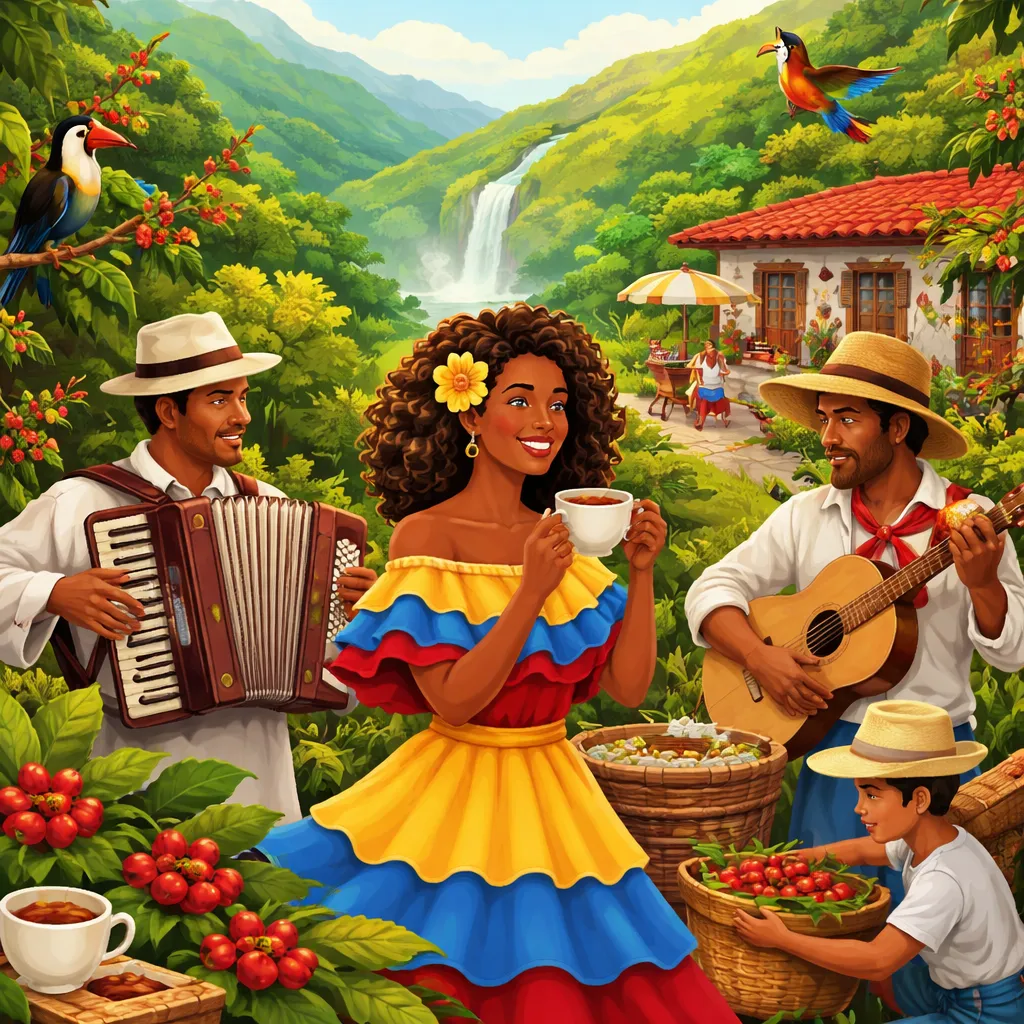

A Friendly Hello and First Impressions
?Hola! (OH-lah). This is the warm, musical "Hello" in Spanish. ?Gracias! (GRAH-see-ahs). This is a sincere "Thank you". People say it with a big smile. Learning reading about Colombia starts with these happy, welcoming words.
Colombia sits at the very top of South America. Its shape looks like a fancy, patterned bag. The bag holds amazing treasures. The country has two coastlines. The Pacific Ocean is to the west. The Caribbean Sea is to the north. Venezuela, Brazil, and Ecuador are its neighbors. It is the only South American country with two oceans. What rhythm does this colorful bag hold?
Deep Dive into Culture and Stories
Echoes of History
A great liberator is important here. His name was Sim車n Bol赤var. He was born in Venezuela. But he helped free Colombia from Spain. The final battle was at Boyac芍 in 1819. Colombia won its independence. Bol赤var dreamed of a united South America. People call him "El Libertador". His story is a proud part of learning reading about Colombia. It is a story of freedom.
Another important time was the colonial period. The Spanish came looking for gold. They founded beautiful cities. They brought their language and religion. This history mixed with indigenous cultures. It created the unique Colombian mix of today.
A World of Magical Stories
Colombia gave the world a famous writer. His name was Gabriel Garc赤a M芍rquez. He wrote in a style called "magical realism". In his stories, magical things happen in normal life. A woman might fly to heaven. A town might have endless rain. His most famous book is "One Hundred Years of Solitude". He won the Nobel Prize for Literature. His stories are a gift of imagination.
A Land of Incredible Variety
Colombia's geography is amazing. The Andes Mountains split into three chains here. They are called the Cordilleras. The east has vast plains called Los Llanos. The south has part of the Amazon Rainforest. The coast has beautiful beaches. The land goes from snowy peaks to tropical jungle.
The climate changes with altitude. The high mountains are cool. The coasts are hot and humid. This affects how people live. In the mountains, people grow coffee and flowers. On the coast, people fish and grow bananas. Houses are often painted in bright colors. This makes towns look cheerful and vibrant. The national flower is the orchid. Colombia has thousands of types.
A special animal is the spectacled bear. It is the only bear in South America. It has light markings around its eyes. They look like glasses. The national bird is the Andean condor. It is one of the world's largest flying birds. The wax palm is the national tree. It is the tallest palm in the world. It grows in the Cocora Valley.
Landmarks of Green and Salt
Visit the Ciudad Perdida. It means "Lost City". It is high in the Sierra Nevada mountains. The Tayrona people built it around 800 AD. It is older than Machu Picchu. The city has stone terraces and circles. It was covered by jungle for centuries. You must hike for days to reach it. A fun story says the city is protected by a spirit. The spirit is a jaguar. The city is a magical, hidden place.
See the Salt Cathedral of Zipaquir芍. It is an underground church. It is built inside an old salt mine. The tunnels and chapels are carved from salt rock. A large cross is at the front. The air smells like salt. It is cool and quiet inside. A miner had the idea to build it. It is a place of worship and wonder.
Another wonder is the Ca?o Cristales river. People call it the "Liquid Rainbow". For a few months each year, the river turns many colors. Red, yellow, green, and blue plants grow in the water. The river looks like it is flowing with paint. It is a stunning natural spectacle.
Festivals of Dance and Joy
The biggest festival is the Carnival of Barranquilla. It happens before Lent. It is one of the largest carnivals in the world. The city explodes with color and sound. People wear incredible costumes. They dance the cumbia and salsa. Giant parade floats move down the streets.
The main character is "Mar赤a Mo?itos". She is a joyful, funny woman. The festival is a party for four days. It is a UNESCO masterpiece. It celebrates life, music, and mixed cultures. The energy is absolutely incredible.
Another important day is Independence Day. It is on July 20th. People fly the national flag everywhere. The colors are yellow, blue, and red. There are parades and concerts. Families have barbecues. The day is full of national pride.
Food and Flavors
The national dish is Bandeja Paisa. It is a huge platter of food. It has rice, beans, ground beef, chorizo, an arepa, a fried egg, and avocado. Sometimes it has fried pork belly. It is a meal for a hungry farmer. Families eat it for special lunches. It tastes like a festival on a plate.
You must try Arepas. They are round, flat corn cakes. You can grill, fry, or bake them. People eat them every day. They are for breakfast, lunch, or dinner. You can put cheese, eggs, or meat inside. A hot arepa is crispy outside and soft inside. It tastes like the comforting base of Colombian food.
A Culture of Rhythm and Peace
Music is the heartbeat of Colombia. Cumbia music comes from the coast. It has African, Indigenous, and Spanish roots. Salsa music is huge in Cali. The city is the "Salsa Capital of the World". People dance everywhere. This love for rhythm is a joyful part of learning reading about Colombia.
Colombia is now a country at peace. It had a long internal conflict. In 2016, a peace agreement was signed. The country is working hard to heal. It is a new chapter of hope. This story of peace is an important lesson for the world.
Tips for Young Explorers
Cultural Manners Matter
Colombians are very friendly and warm. Greetings are important. A handshake is common. Women often kiss on the right cheek. Say "?Hola! ?C車mo est芍s?" (Hello! How are you?). This is polite. People like to chat.
Punctuality is flexible. Being 15-30 minutes late is normal. This is called "la hora colombiana". But try to be on time for appointments. For parties, it is fine to be late.
Always say "buen provecho" before eating. It means "enjoy your meal". It is a nice custom. Compliment the food. The cook will be very happy.
A Note on Staying Safe
Colombia is much safer now. But be smart in big cities. Do not show expensive phones or jewelry. Keep your bag close in crowds. Use official taxis or ride-sharing apps. Ask your hotel for safe areas.
Some rural areas are still risky. Always check travel advisories. Stick to popular tourist routes. Travel with a guide in nature. This keeps you safe and informed.
A Tasty Stop
Look for "Bu?uelos" in a bakery. They are delicious fried cheese balls. They are made with corn flour and cheese. They are golden and crispy outside. They are soft and chewy inside. Eat them hot. They are salty, cheesy, and delicious. They are a favorite Christmas snack, but you can find them all year.
Healthy and Happy Travels
Drink bottled water in most places. Tap water is safe in big cities like Bogot芍. But in small towns, ask first. If unsure, choose bottled water. It is easy to find.
The sun is very strong, especially in the mountains. Use a high SPF sunscreen. Wear a hat. The altitude in Bogot芍 can make you tired. Rest on your first day. Drink lots of water.
Wear comfortable walking shoes. Colombian cities have hills. The streets in old towns are cobblestone. Good shoes make exploring fun. You can dance salsa all night.
Your Invitation to Explore
Start your journey with music. Listen to a cumbia or salsa song. Feel the rhythm. Try to move your hips. Or, read a short story by Gabriel Garc赤a M芍rquez. Let your imagination fly. This is a wonderful way of learning reading about Colombia.
Visit a local market. Look for Colombian coffee or achiote paste. Make a simple rice dish with achiote for color. Taste the rich coffee. Imagine the green mountains where it grows. You can also try to dance. It is all about joy.
The world is a big, open book. Each country is a different chapter. Colombia's chapter is about coffee, color, and contagious joy. Open it with a smile. Read about its music, mountains, and magical stories. Your curiosity is your guide.
Colombian families share a big bandeja paisa on Sunday. Friends dance together in the town square. Children play soccer in the street. We all know these feelings. We love sharing big meals. We enjoy music and games. We cherish time with friends. Learning about Colombia shows us this. Our global family shares the same simple, happy moments. Keep exploring, one page, one country, at a time. Your adventure has just begun.