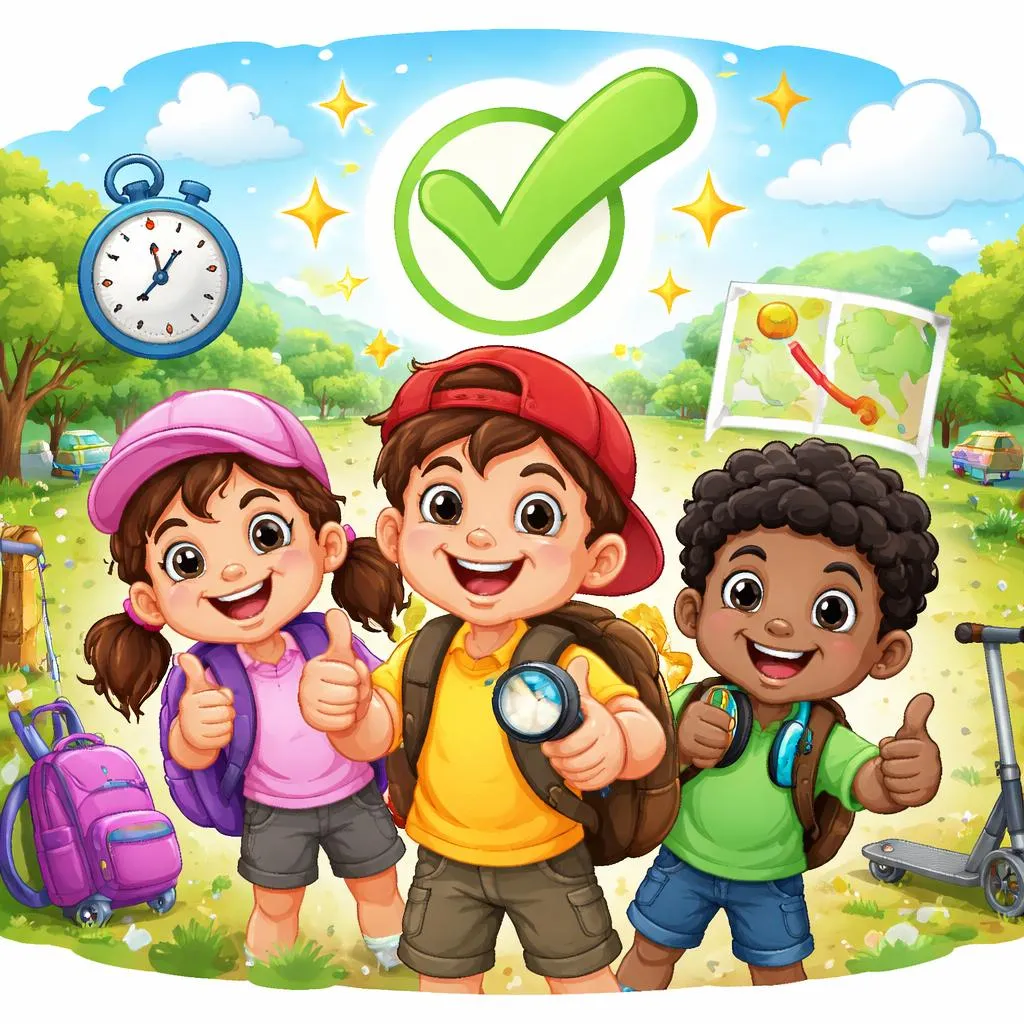

Hello, super word explorers and phrase friends. Are you ready to learn a really cool saying. Today, we are going to look at a fun English phrase. The phrase is "good to go." Have you ever heard someone say that. It sounds simple, but it has a special meaning. Learning what "good to go" means is like getting a new tool for your conversation toolbox. Let us find out how and when to use it. Are you good to go. Let us start.
What is good to go meaning?
When we talk about the "good to go meaning," we are asking for the definition. We want to know what this phrase tells us. "Good to go" is an idiom. An idiom is a group of words that has a meaning different from the individual words. The words are "good," "to," and "go." But together, "good to go" means something is ready. It means everything is prepared. It means it is all set. For example, if your backpack is packed for school, you can say, "My backpack is good to go." This does not mean your backpack is nice and will walk away. It means your backpack is ready for school. The "good to go meaning" is all about readiness and being prepared.
Meaning and explanation
The meaning of "good to go" is clear. It signals that someone or something is ready for the next step. Let us explain more. Think about a rocket ship. Before it launches, the scientists check everything. When all the checks are done, the captain says, "We are good to go." This means the rocket is ready for launch. The phrase gives a feeling of being prepared, approved, and all set. It is a positive, confident phrase. It is often used in casual, friendly talk.
The explanation also involves how we use it. You can use it for people. "Are you good to go?" means "Are you ready?" You can use it for objects. "The car is good to go" means the car is ready for the trip. You can use it for plans. "Our picnic plans are good to go" means the plans are all set. The "good to go meaning" is flexible. It fits many situations where readiness is the main idea. It is a quick, cool way to say "all systems are ready" without saying so many words.
Categories or lists
We can think about the phrase "good to go" in different ways. We can sort it into categories of when we use it. One category is Travel and Trips. This is a very common use. When the family is packed and in the car, Dad might say, "Everyone buckled up. We are good to go!" Another category is School and Activities. Before a soccer game, the coach checks the team. "Is everyone good to go?" Before a school project presentation, you might tell your teacher, "My poster is good to go."
Another category is Food and Meals. When you help set the table and the food is served, Mom might say, "Dinner is good to go!" This means everyone can start eating. We also have a Technology and Games category. When your video game console finishes updating, a message might say "System is good to go." When your computer finishes starting up, it is good to go. Thinking in these categories shows the "good to go meaning" in action. It is a phrase for moments of completion and readiness before an action starts.
Daily life examples
You can use "good to go" in your daily life. Here are some fun scenes. First, the morning rush to school. You have eaten breakfast. You have your shoes on. Your lunch is in your backpack. You are standing by the door. You can say to your parent, "I'm good to go!" This tells them you are ready to leave for school. In the car, your parent might ask, "Seatbelt on. Are you good to go?" You say, "Yes, I'm good to go!"
Second, think about planning a playdate with a friend. You agree on a time. You pack your favorite game. You tell your mom, "My stuff for Leo's house is good to go." Later, your friend calls. He says, "My mom says the snacks are ready. We are good to go for your visit." This means everything is prepared for your fun time.
Third, imagine a family bike ride. Everyone gets their helmets. Your dad checks the tires. He makes sure the water bottles are full. Then he gives a thumbs up. "Bikes are pumped. Helmets are on. We are good to go!" This means the adventure can start. Using the phrase in these real moments makes it a natural part of your speech. It is useful and sounds very cool.
Printable flashcards
Printable flashcards can help you remember the "good to go meaning." How to make them. You can create "Situation Cards." On one side, draw a picture of a scene. Draw a family standing by a car with suitcases. On the other side, write the phrase "We are good to go!" and a short explanation. "This means we are ready for our trip." Make another card with a picture of a student with a backpack. Back side: "I'm good to go!" meaning "I am ready for school."
Another idea is "Matching Cards." Make cards with different "ready" situations on one set. Make another set with the phrase "good to go." Kids match the situation to the phrase. For example, a picture of a checked-off to-do list matches the "good to go" phrase. How to use the cards. Play a memory game. Turn all cards picture-side down. Find a situation card and its matching phrase card. Play "Phrase Charades." Pick a situation card and act it out. Others must guess and say, "You are good to go!" Printable flashcards make the "good to go meaning" visual and interactive. You are playing a game while learning a practical phrase.
Learning activities or games
Learning about "good to go" should be an active game. Let us play some. First, the "Good to Go" Situation Role-Play. Write different scenarios on slips of paper. "Going to the pool," "Starting a board game," "Leaving for the movies," "Beginning your homework." Players pick a slip. They must act out getting ready for that activity. When they are done, they must strike a pose and say, "I'm good to go!" Others guess what activity they were preparing for. This is fun and dramatic.
Second, play the "Ready, Set, Go!" Memory Game. Gather 5-10 common items needed for an activity, like for a picnic: a napkin, a plastic cup, a sandwich, an apple, a hat. Show them to the kids for 30 seconds. Then cover them with a cloth. Remove one item. Uncover the rest. The kids must look and say which item is missing. When they guess correctly, they say, "Now the picnic is good to go!" This practices memory and the phrase.
Third, the "All Systems Check" Game. Pretend you are a spaceship crew preparing for launch. The "captain" has a checklist: "Oxygen? Check. Engines? Check. Navigation? Check." Each "crew member" reports on their system. When all checks are done, everyone shouts together, "We are good to go!" and pretends to blast off. This is a fantastic group game that teaches teamwork and the phrase's meaning.
For a craft, make a "Good to Go" Checklist Poster. Help your child draw or write the steps to get ready for their daily routine, like bedtime or morning. After each step, they can check a box. At the bottom, in big letters, write "I'M GOOD TO GO!" They can decorate it. Hang it in their room. This makes the phrase part of a helpful habit. For a quiet game, play "Is it Good to Go?" Show pictures or describe situations. Some are ready, some are not. A picture of a made bed with pajamas laid out? Good to go. A picture of an empty lunchbox on a school morning? Not good to go. Kids give a thumbs up or down and say the phrase. These activities make the "good to go meaning" stick in a fun, practical way. You will be using this cool phrase all the time.