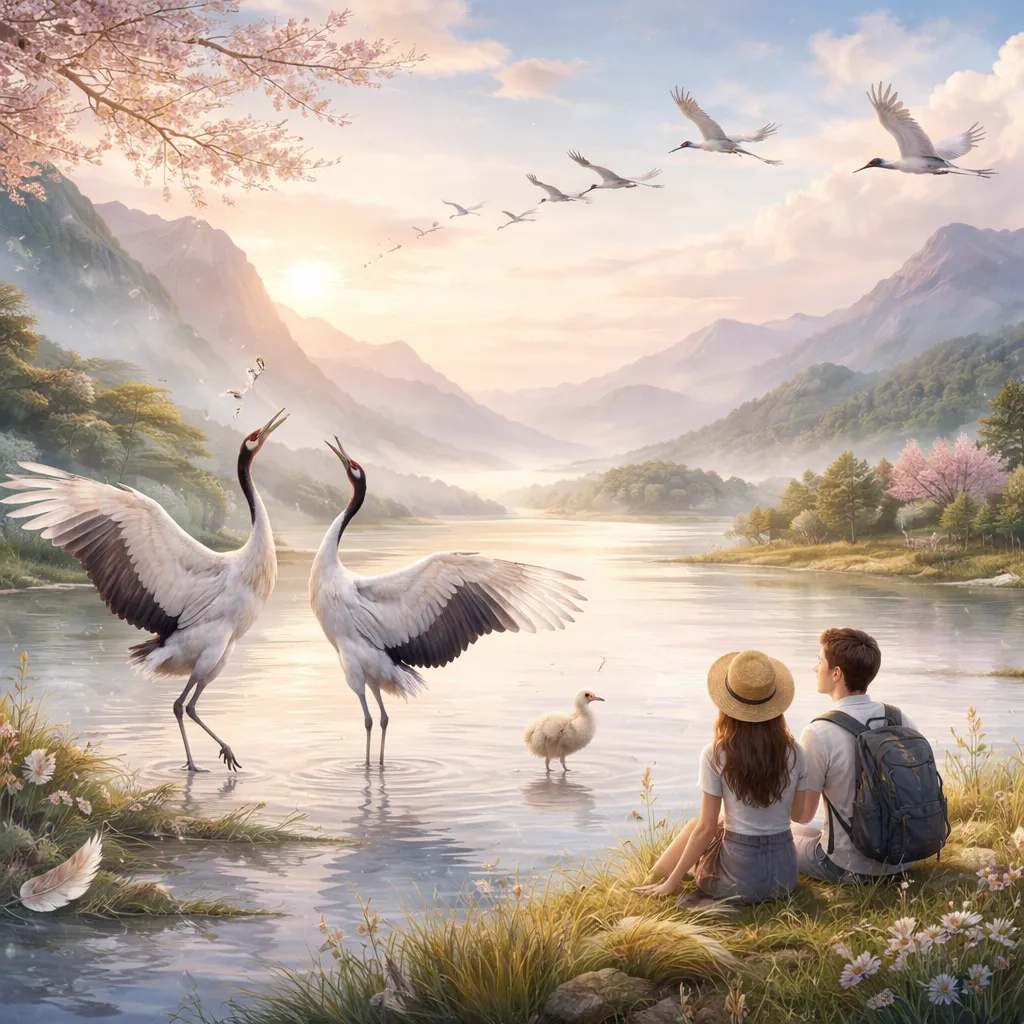

Imagine you’re near a wetland and see a very tall, elegant bird with long legs and a long neck, stepping gracefully through the water. It might be a crane! With their beautiful dances and loud, trumpeting calls, cranes are some of the most majestic birds in the world. They are symbols of good luck and long life in many cultures. Learning about cranes is a graceful adventure that takes us to wetlands and open skies. Let’s begin our journey of learning about crane elegance and migration.
English Language Learning
Vocabulary and Spelling Our tall, graceful friend is called a crane. The word "crane" is a noun. A noun names a person, place, or thing. So, a crane is a thing—a large, living bird. Spelling "crane" is simple: C-R-A-N-E. The 'C' starts the word, the 'R' and 'A' are in the middle, and it ends with 'N-E'. C-R-A-N-E spells crane.
Sound and Pronunciation Let’s say the word correctly. It sounds like this: /kreɪn/. We can say it in one clear part. It’s a sound that starts with "cr" (like in "crab") and ends with a long "ain", like in "rain" or "plane". Now, say it together! Crane! Great! The word "crane" has just one beat, or one syllable. Clap your hands once: Crane! It’s a strong, clear word.
Related Words Learning about cranes is more fun with new words! Here are some important ones. Group: A group of cranes is called a sedge, a siege, or a dance. A baby crane is called a chick or colt. Action: The beautiful, leaping movements cranes make are part of a courtship dance. Sound: The loud, trumpeting call of a crane is a bugle.
A Famous Saying In some cultures, the crane is known as: "A symbol of happiness and eternal youth." This comes from stories and art where the crane represents long life, good fortune, and joyful celebration. It reminds us to appreciate the beauty and longevity of nature. Say the meaning with me: "A symbol of happiness and eternal youth." It’s a positive and hopeful idea.
Now you know the word "crane"! Are you ready to learn about these majestic birds? Let’s soar from words to wonderful knowledge!
Animal Knowledge
Who Are They? – Family and Group What kind of animal is a crane? Cranes are birds. They are warm-blooded, have feathers, and lay eggs. They are part of the Gruidae family. Their cousins are rails and coots. There are 15 species, like the Sandhill Crane, the Whooping Crane, and the majestic Red-crowned Crane.
What Do They Look Like? – Amazing Bodies Cranes are very tall birds, some as tall as a grown-up! They have long legs, a long neck, and a large wingspan. Their most famous features are their long legs and neck and their trumpeting call. Their long legs are perfect for wading in shallow water. Their long neck helps them reach down to the ground or up to the sky. They often have patches of bare, red skin on their heads. In flight, their necks are stretched out straight. Cranes have special adaptations. They are powerful fliers and can migrate thousands of miles. They have a loud, resonant call that can be heard from far away, thanks to a long, coiled windpipe.
Where Do They Live and How? – Home and Habits Cranes live on most continents except South America and Antarctica. Their homes are wetlands, marshes, grasslands, and fields. They need open spaces and shallow water. Cranes are omnivores. This means they eat both plants and animals. They eat seeds, grains, insects, frogs, and small rodents. They use their strong bills to probe in the ground and water for food. Cranes are very social and often mate for life. They are active during the day. They spend their time foraging, dancing, and flying. Many species migrate in large flocks, forming huge, noisy groups in the sky. Their migration is an amazing sight.
A Crane’s Life Story – Growing Up A baby crane is called a chick or a colt. Cranes are birds, so chicks hatch from eggs. Cranes usually lay two eggs in a nest built on the ground in a marsh or field. Both parents take care of the chicks. They are very protective. The chicks can walk and even swim soon after hatching. The parents teach them how to find food and avoid danger. Chicks are born with soft, downy feathers, often a brown or yellow color. They grow quickly and learn to fly after about two to three months. They stay with their parents for almost a year, sometimes even longer. Cranes can live for a very long time, some for over 20 years.
How Do They "Talk"? – Communication Cranes are famous for their loud, musical calls. They bugle, trumpet, and rattle. Their calls are used to talk to their mate, warn of danger, and talk to their flock during migration. Their most beautiful "talk" is their dance. Cranes jump, bow, stretch their wings, and toss grass or sticks in the air. This dancing strengthens the bond between a mated pair and is a joyful sight. Their best senses are their excellent eyesight and hearing. They have very good vision to spot predators and food from a distance. Their hearing helps them recognize the calls of their family and flock.
Are They Okay? – Taking Care of Them Many crane species are in danger. Some, like the Whooping Crane, are endangered and were once almost extinct. Others are vulnerable. The main threats are loss of their wetland homes, pollution, collisions with power lines, and sometimes hunting. It is very hard for cranes to find safe places to live and raise their young. You can be a crane champion! You can learn and tell others about their plight. You can support groups that protect and restore wetlands. You can also support wildlife refuges. If you live where cranes migrate, you can watch them from a distance and keep their skies safe by supporting laws that protect flyways.
Life Connections and Inspiration
How to Be With Them – Safety and Love Cranes are large, wild, and often endangered birds. We must give them the utmost respect and plenty of space. The rule is: Watch from a very, very far distance with quiet admiration. Use binoculars or a spotting scope. Never, ever try to approach, feed, or disturb a crane, especially near a nest. Your presence can scare them and cause them to leave their eggs or chicks. Always stay on marked paths and viewing areas. We show our love by being voices for the protection of the wetlands, grasslands, and clean skies they need to survive. We can support conservation with our actions and choices.
Super Qualities We Learn from Them Cranes teach us profound lessons. One super quality is lifelong partnership and joyful celebration. Cranes often stay with the same mate for life, and they celebrate their bond with beautiful dances. They teach us the value of commitment, partnership, and finding joy in our relationships. Another quality is resilience and the long journey. Some cranes migrate thousands of miles, facing many challenges, yet they return year after year. This reminds us of our own resilience, our ability to undertake long journeys (like learning a new skill), and the importance of having a safe place to call home. Think about it: How can you show commitment and celebrate the relationships in your life? What is a long-term goal or "journey" you are on, and how can you be resilient in reaching it?
Take Action! – Your "Crane Dance" Project Let’s do a graceful and celebratory activity! Your project is to choreograph a simple "crane dance" with a partner or by yourself. Think of slow, graceful moves: stretch your "neck" (arm) up high, take slow, deliberate steps, bow, and maybe even gently jump. You can use a scarf or ribbon as a "wing." If you have a partner, mirror each other’s movements. This shows the beauty of the crane’s courtship dance and lets you express grace and partnership through movement.
Closing Learning about crane majesty is a uplifting and important adventure! We learned the word "crane" and how to say its one-syllable name. We discovered amazing facts about their trumpeting calls, their joyful dances, and their life in lifelong pairs. We know that cranes are resilient, social birds that are in danger and need our help to protect their wetland homes and migration routes. You can use your new words to share the inspiring story of these majestic birds. You can use your knowledge to become a voice for wetland conservation and the protection of all migratory species. The animal world is full of graceful and resilient teachers. Always remember to respect wildlife from a safe distance, value lifelong partnerships, and be resilient on your own life’s journey. Keep exploring with a respectful heart, move through life with grace, and be a friend to the wild. Your caring actions and resilient spirit make you a true friend to the amazing crane.