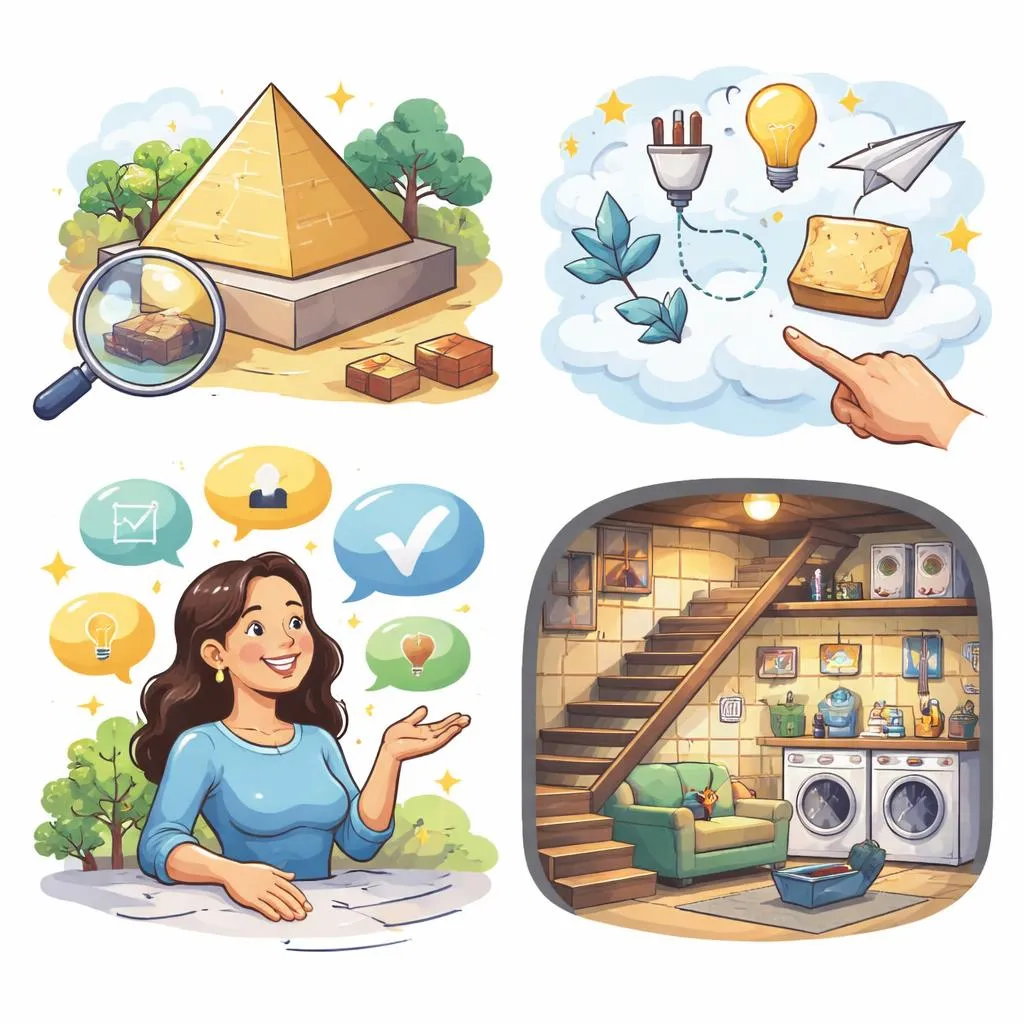

A base is the bottom of a lamp. Basic math includes adding and subtracting. The words “base, basic, basically, basement” all come from one family. Each word talks about a foundation or simplicity. But each one has a different job in a sentence. Learning this family helps children understand foundations and essentials. Let us explore these four words together.
What Does “Same Word, Different Forms” Mean? One core idea can grow into many word shapes. The meaning stays the same at the heart. But the word changes its ending or adds a suffix for a new role. For example, “base” is a noun or a verb. “Basic” is an adjective. “Basically” is an adverb. “Basement” is a noun. Knowing these four forms helps a child talk about foundations and simplicity.
Personal Pronouns Change Their Form Pronouns change from “he” to “him” or “his”. Our word family changes by adding suffixes, not by changing person. Think of “base” as the core bottom or main part. “Basic” turns that idea into a description of simplicity. “Basically” turns the quality into a way of speaking. “Basement” turns the idea into a room below. Each form answers a simple question. What is the bottom or main part? Base. What is simple or essential? Basic. How do you say something simply? Basically. What is the room under the house? Basement.
From Verb to Noun to Adjective to Adverb – One Family, Many Words This family has nouns, an adjective, an adverb, and a verb. Let us start with the noun “base”. Noun: The base of the mountain is covered in trees. “Base” means the bottom part or main location.
“Base” can also be a verb. Verb: We will base our decision on facts. Here “base” means to use as a foundation.
Next is the adjective “basic”. Adjective: Basic needs are food, water, and shelter. “Basic” means simple or most important.
Then the adverb “basically”. Adverb: Basically, you need to be kind to make friends. “Basically” means in a simple way or summarizing.
Finally the noun “basement”. Noun: The basement floods when it rains heavily. “Basement” means the room below the main floor of a house.
One Root, Many Roles – How Words Grow from Actions to Qualities The Greek word “basis” meant a step or foundation. From this root, we built a family about the bottom. “Base” kept the main noun and verb meanings. Adding -ic made “basic” (relating to a base). Adding -ally made “basically” (in a basic way). Adding -ment made “basement” (a place below). Children can see the same pattern in other families. For example, “found, foundation, fundamental, fundamentally”. Learning the -ic suffix helps kids describe essentials.
Same Meaning, Different Jobs – Is It a Verb or a Noun? Look at each word’s job carefully. “Base” can be a noun or a verb. Noun example: The base of the lamp is heavy. Verb example: Base your story on real events.
“Basic” is an adjective. Example: The basic rules are easy to follow.
“Basically” is an adverb. Example: Basically, that is all you need to know.
“Basement” is a noun. Example: The basement has a washer and dryer. Each form has a clear job.
Adjectives and Adverbs – When Do We Add -ly? We add -ly to “basic” to make “basically”. Basic + ly = basically. No letter changes. No letters lost. The rule is simple: adjective + ly = adverb. A simple reminder: “Base is the foundation. Basic means simple. Basically means in simple terms. Basement is the room below.”
Watch Out for Tricky Spelling Changes (Double Letters, y to i, and More) “Base” has no double letters. It ends with a silent e. Add -ic to make “basic”. Base → basic (drop the e, add ic). Add -ally to make “basically”. Basic + ally = basically (no changes). Add -ment to make “basement”. Base + ment = basement (keep the e? Yes, basement keeps the e from base). A common mistake is writing “base” as “bace” (wrong). Say “Base has s, not c.” Another mistake is “basic” spelled “bacic” (with c). Say “Basic has s: B-A-S-I-C.” Another mistake is “basically” spelled “basicly” (missing al). Say “Basically has ally: basic + ally.” Another mistake is “basement” spelled “basment” (missing e). Say “Basement has an e from base.”
Let’s Practice – Can You Choose the Right Form? Try these sentences with your child. Read each one aloud. Pick the correct word from the family.
The ______ of the statue is made of marble. Answer: base (noun)
Reading and writing are ______ skills. Answer: basic (adjective)
______, the recipe needs flour, eggs, and milk. Answer: basically (adverb)
We store old furniture in the ______. Answer: basement (noun)
You should ______ your opinion on facts. Answer: base (verb)
The ______ idea of the game is to score points. Answer: basic (adjective)
______, you just need to water the plant once a week. Answer: basically (adverb)
The ______ flooded after the heavy rain. Answer: basement (noun)
The lamp fell over because its ______ was too light. Answer: base (noun)
She gave a ______ explanation that everyone understood. Answer: basic (adjective)
After the practice, ask your child one question. Is this word a foundation, a simple description, a simple way, or a room below? That simple question teaches grammar through buildings and ideas.
Tips for Parents – Help Your Child Learn Word Families in a Fun Way Use a toy stand to teach “base”. Say “The base of this toy keeps it from falling.”
Use a recipe to teach “basic”. Say “The basic ingredients are flour, water, and salt.”
Use an explanation to teach “basically”. Say “Basically, a plant needs sun and water to grow.”
Use a house to teach “basement”. Say “The basement is the room below the first floor.”
Play “fill in the blank” during car rides. Say “The ______ of a building must be strong.” (base) Say “______ needs are food and sleep.” (basic) Say “______, you need to turn on the switch.” (basically) Say “We keep holiday decorations in the ______.” (basement)
Read a story about a building or a scientist. Ask “What is the base of the structure?” Ask “What are the basic needs of the character?”
Turn a drawing activity into a word lesson. Draw a pencil with a stand. Label “base”. Draw a list of must-haves. Label “basic needs”. Draw a simple instruction. Label “basically, do this”. Draw a house with a lower floor. Label “basement”.
When your child makes a mistake, stay calm. If they say “The basement is basic,” say “The basement is a room. Basic means simple.” If they say “Base your answer,” that is correct. “Basically, yes.”
Write the four words on sticky notes. Put them on the wall near a step ladder or a bookshelf. Each time you talk about foundations, point to “base”.
Remember that basics are important. Use these words to build learning. “Learn the basics first, then go deeper.” “Basically, every expert started as a beginner.” Soon your child will understand the base of a problem. They will master basic skills. They will explain things basically. And they will know where the basement is. That is the foundational power of learning one small word family together.