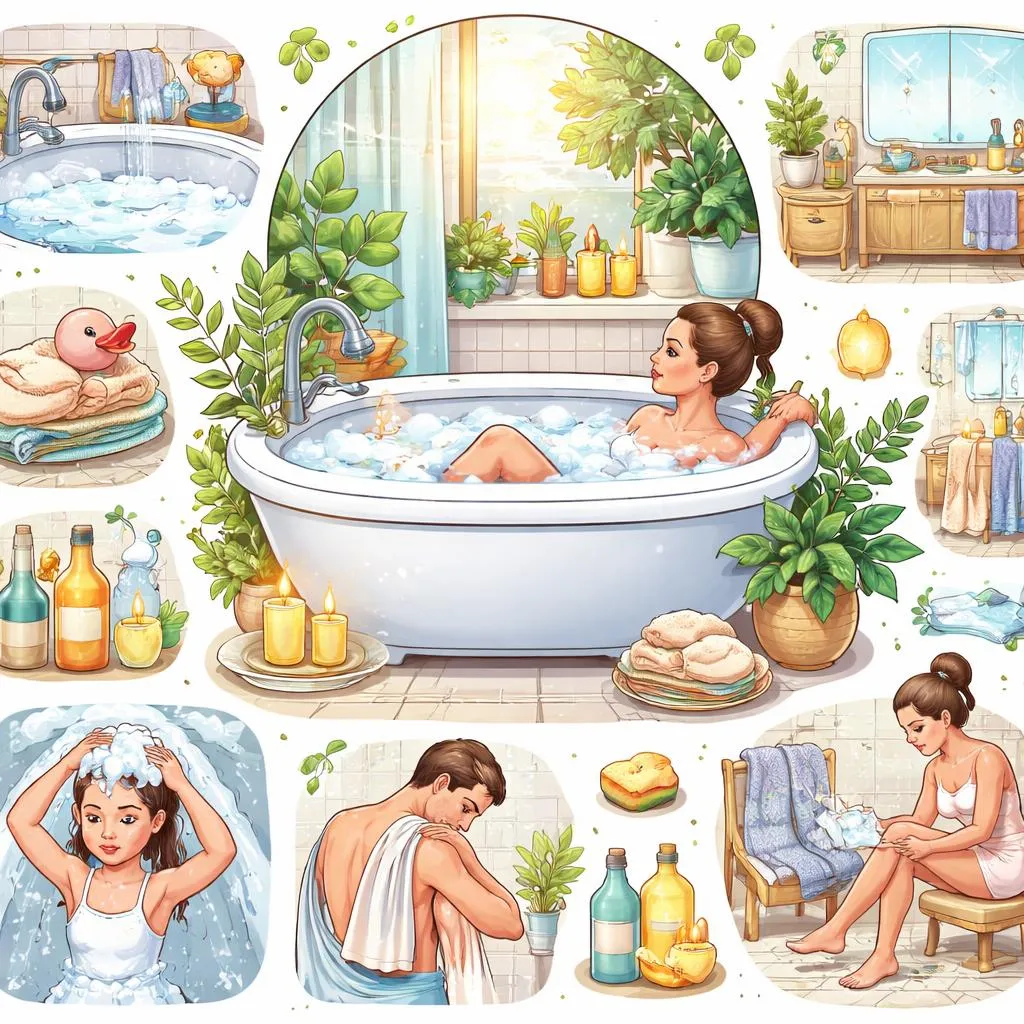

A warm bath helps you relax. You bathe to wash away dirt. The words “bath, bathe, bathing, bathroom” all come from one family. Each word talks about washing the body. But each one has a different job in a sentence. Learning this family helps children understand cleanliness and routines. Let us explore these four words together.
What Does “Same Word, Different Forms” Mean? One core idea can grow into many word shapes. The meaning stays the same at the heart. But the word changes its ending or combines for a new role. For example, “bath” is a noun. “Bathe” is a verb. “Bathing” is a noun or a verb form. “Bathroom” is a noun. Knowing these four forms helps a child talk about washing and rooms.
Personal Pronouns Change Their Form Pronouns change from “he” to “him” or “his”. Our word family changes by adding suffixes and compounds. Think of “bath” as the core act of washing. “Bathe” turns that act into an action. “Bathing” turns the action into an activity. “Bathroom” combines bath with room to name the place. Each form answers a simple question. What is the wash? Bath. What is the action of washing? Bathe. What is the activity of washing? Bathing. What is the room for washing? Bathroom.
From Verb to Noun to Adjective to Adverb – One Family, Many Words This family has a noun, a verb, and a verb form. Let us start with the noun “bath”. Noun: The baby took a warm bath before bed. “Bath” means the act of washing the body or the water used.
Next is the verb “bathe”. Verb: You should bathe your dog once a month. “Bathe” means to wash the body.
Then “bathing” as a noun. Noun: Bathing in the ocean feels refreshing. “Bathing” can also be a verb form. Verb (ongoing): She is bathing the baby in the tub.
Finally the noun “bathroom”. Noun: Please hang the towel in the bathroom. “Bathroom” means a room with a toilet and a bath or shower.
One Root, Many Roles – How Words Grow from Actions to Qualities The Old English word “baeth” meant a bath. From this root, we built a family about washing. “Bath” kept the main noun meaning. Adding -e made “bathe” (the verb). Adding -ing made “bathing” (the activity). Combining “bath” with “room” made “bathroom” (the room). Children can see the same pattern in other families. For example, “wash, wash (noun), washing, washroom”. Learning compounds helps kids name rooms in a house.
Same Meaning, Different Jobs – Is It a Verb or a Noun? Look at each word’s job carefully. “Bath” is a noun. Example: I will take a bath tonight.
“Bathe” is a verb. Example: Bathe the baby in warm water.
“Bathing” is a noun or a verb form. Noun example: Bathing keeps you clean. Verb example: The bird is bathing in the puddle.
“Bathroom” is a noun. Example: The bathroom has a new showerhead. Each form has a clear job.
Adjectives and Adverbs – When Do We Add -ly? We can make an adverb from “bath” or “bathe”. Add -ly to “bathing” to get “bathingly” (rare). For young learners, focus on the noun “bath” and the verb “bathe.” A simple reminder: “Bath is the thing. Bathe is the action. Bathing is the activity. Bathroom is the place.”
Watch Out for Tricky Spelling Changes (Double Letters, y to i, and More) “Bath” has no double letters. Add -e to make “bathe”. Bath + e = bathe (no changes). Add -ing to make “bathing”. Bathe → bathing (drop the e, add ing). Combine with “room” to make “bathroom”. Bath + room = bathroom (no changes). A common mistake is writing “bath” as “baf” (slang). Say “Bath has a th at the end, like path.” Another mistake is “bathe” spelled “bath” (missing e). Say “Bathe has an e at the end.” Another mistake is “bathing” spelled “bathing” (correct) but some write “bathing” (same). Good. Another mistake is “bathroom” spelled “bath room” as two words. “Bathroom” as one word is correct.
Let’s Practice – Can You Choose the Right Form? Try these sentences with your child. Read each one aloud. Pick the correct word from the family.
A warm ______ helps you sleep better. Answer: bath (noun)
You should ______ your hands before eating. Answer: bathe (verb)
______ in the sea is fun on a hot day. Answer: bathing (noun)
The ______ has a mirror and a sink. Answer: bathroom (noun)
The baby is ______ in the tub. Answer: bathing (verb form)
Please take a ______ after playing in the mud. Answer: bath (noun)
Dogs need to ______ regularly. Answer: bathe (verb)
The ______ smelled like lavender. Answer: bathroom (noun)
______ the cut with soap and water. Answer: bathe (verb)
A ______ duck floats in the water. Answer: bath (noun)
After the practice, ask your child one question. Is this word a wash, a washing action, a washing activity, or a washing room? That simple question teaches grammar through hygiene.
Tips for Parents – Help Your Child Learn Word Families in a Fun Way Use a tub to teach “bath”. Say “I will draw a bath for you.”
Use a washcloth to teach “bathe”. Say “Let us bathe the dog with pet shampoo.”
Use a beach to teach “bathing”. Say “Bathing in the ocean is refreshing.”
Use a house to teach “bathroom”. Say “The bathroom is the first door on the left.”
Play “fill in the blank” during car rides. Say “A bubble ______ is fun.” (bath) Say “You ______ your face every morning.” (bathe) Say “______ in a lake is colder than a pool.” (bathing) Say “The ______ light is too bright.” (bathroom)
Read a story about a bedtime routine or a swimming trip. Ask “When does the character take a bath?” Ask “Where is the bathroom in the story?”
Turn a drawing activity into a word lesson. Draw a tub with bubbles. Label “bath”. Draw a hand and a sponge. Label “bathe”. Draw a person in a pool. Label “bathing”. Draw a room with a toilet and a sink. Label “bathroom”.
When your child makes a mistake, stay calm. If they say “I need to bath,” for the action, say “Almost. I need to bathe. Bath is the noun.” If they say “The bathe is clean,” for the room, say “The bathroom is clean. Bathe is the action.”
Write the four words on sticky notes. Put them on the bathroom mirror. Each time you wash up, point to “bath”.
Remember that bathing keeps us healthy. Use these words to build good habits. “A bath before bed signals sleep time.” “Bathing daily removes germs.” Soon your child will enjoy a bath. They will bathe without fuss. They will understand bathing as a routine. And they will know where the bathroom is. That is the clean power of learning one small word family together.