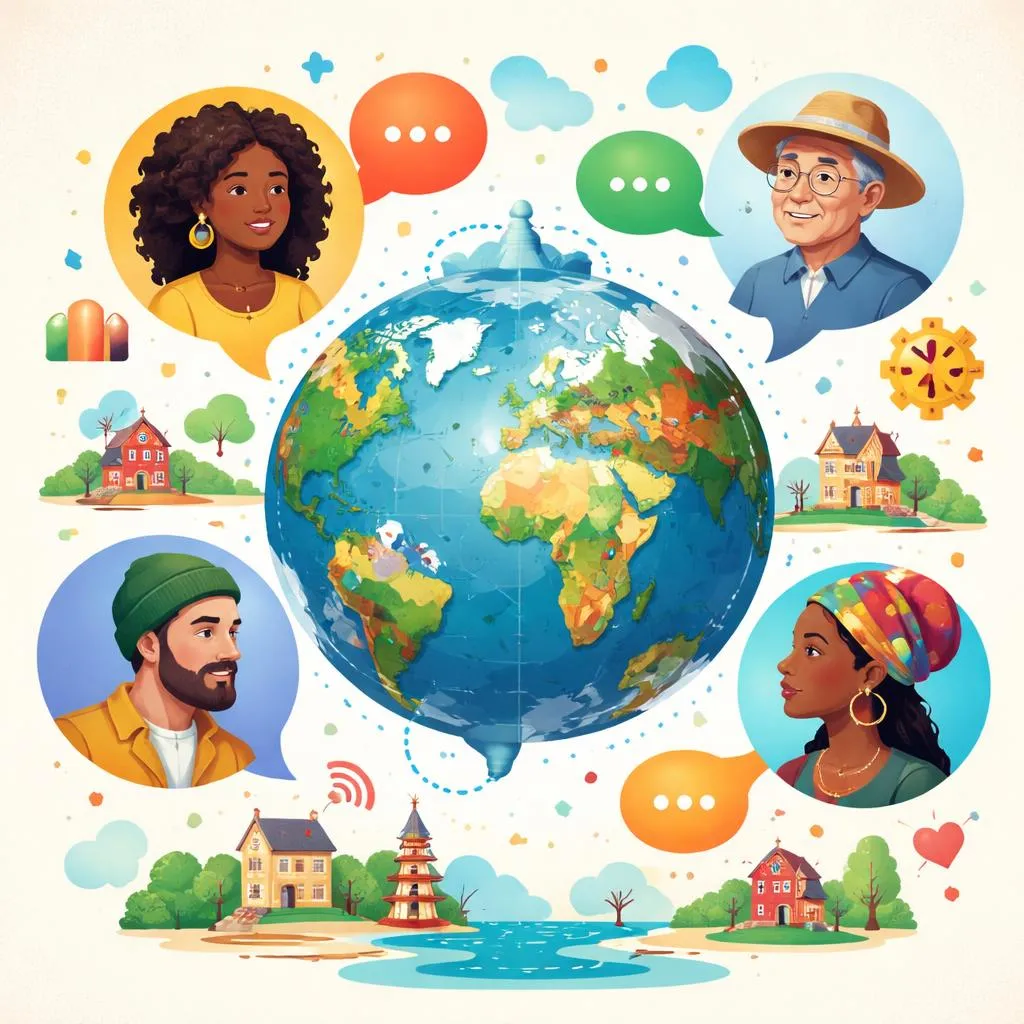

A dialect is a form of a language.
It is used by a group of people.
It may change by region.
It may change by social group.
It is still the same language.
It has its own features.
What Makes a Dialect Different?
A dialect can have different pronunciation.
It can have different vocabulary.
It can have different grammar because language naturally varies across communities depending on geography, history, culture, and social identity.
Accent is part of dialect.
Word choice is part of dialect.
Sentence structure may vary.
Spelling may stay the same.
Variation does not mean incorrect.
Variation shows diversity.
Regional Dialect
Regional dialects develop in specific areas.
People in different cities speak differently.
People in different countries speak differently.
For example, English spoken in United States differs from English spoken in United Kingdom because pronunciation patterns, vocabulary choices, and sometimes grammatical preferences reflect historical development and cultural influence within each region.
Regional dialect reflects geography.
Geography influences sound patterns.
Community shapes vocabulary.
Social Dialect
Social dialect relates to social group.
Age may influence speech.
Education may influence speech.
Profession may influence speech because different communities develop shared linguistic habits that signal belonging and identity.
Youth slang differs from formal speech.
Professional vocabulary differs from casual conversation.
Language signals membership.
Speech reflects identity.
Is a Dialect a Separate Language?
A dialect is not automatically a new language.
Mutual understanding matters.
If speakers understand each other, it is usually considered dialect variation because linguistic classification depends on intelligibility, political history, and cultural recognition rather than simple structural difference.
Borders sometimes affect classification.
Politics sometimes affect naming.
Language and dialect distinctions can be complex.
Linguistic Definition Sentence
In linguistics, a dialect is a systematic variety of a language characterized by distinct phonological, lexical, and grammatical features that are associated with a particular geographic region or social group while remaining mutually intelligible with other varieties of the same language.
Why Is Understanding Dialect Important?
Dialect shows diversity.
Dialect shows culture.
Dialect shows history.
Language variation reflects human experience.
Respect for dialect supports inclusion.
Understanding dialect improves communication because awareness of linguistic diversity encourages tolerance, reduces prejudice, and strengthens sociolinguistic competence within multicultural and multilingual societies.
How Do Dialects Develop Over Time?
Dialects develop gradually.
They do not appear suddenly.
They change slowly across generations because language naturally evolves as communities interact, migrate, separate, and adapt to new social and geographic conditions.
Geographic distance creates variation.
Mountains limit contact.
Oceans separate speakers.
Limited communication increases difference.
New vocabulary enters daily speech.
Old grammar may remain.
Pronunciation shifts over time.
Small changes accumulate.
Accumulation creates dialect distinction.
How Does Accent Relate to Dialect?
Accent refers to pronunciation.
Dialect includes more than pronunciation.
Dialect also includes vocabulary.
Dialect also includes grammar because a complete variety of language involves systematic patterns across sound, structure, and word choice rather than only phonetic difference.
Two speakers may share grammar.
They may differ in accent.
Accent alone does not define dialect.
Dialect is broader concept.
Phonology is one part.
Syntax is another part.
Lexicon is another part.
Are Dialects Correct or Incorrect?
Dialects are not incorrect.
They follow rules.
They have internal structure.
They are systematic because every dialect contains consistent grammatical patterns understood by members of the speech community.
Standard language is one variety.
It is often used in education.
It is often used in media.
Other dialects are equally complex.
Social attitude influences perception.
Linguistic value remains equal.
How Do Media and Education Influence Dialect?
Schools teach standard forms.
Media spreads common pronunciation.
Technology connects regions because television, radio, internet platforms, and digital communication increase exposure to widely recognized speech patterns that may reduce some regional differences over time.
Some dialect features weaken.
Some features remain strong.
Local identity preserves variation.
Cultural pride maintains dialect use.
Language contact accelerates change.
Globalization influences speech.
Can a Dialect Become a Separate Language?
Sometimes it can.
Mutual understanding may decrease.
Political boundaries may form.
Cultural identity may strengthen because when speech communities become socially or geographically separated for long periods, their dialects may develop enough structural difference to be recognized as distinct languages.
History influences classification.
Identity influences naming.
Language status can change.
Linguistic difference grows gradually.
Social Attitudes Toward Dialect
Some dialects are prestigious.
Some dialects face stigma.
Attitudes often reflect power structures because social hierarchy influences which speech varieties receive institutional support, educational endorsement, and media representation.
Respect improves inclusion.
Awareness reduces prejudice.
Education promotes understanding.
Linguistic diversity deserves recognition.
Speech reflects identity.
Identity deserves respect.
Extended Linguistic Explanation Sentence
A dialect represents a systematic and rule-governed variety of a language that emerges through historical development, geographic separation, social differentiation, and cultural identity formation, encompassing distinct patterns of pronunciation, vocabulary selection, and grammatical structure while maintaining communicative function within its speech community.
Broader Importance of Understanding Dialect
Dialect awareness improves listening skills.
It improves intercultural competence.
It strengthens sociolinguistic understanding because recognizing variation within a language helps speakers interpret differences accurately without assuming error or deficiency.
Language is dynamic.
Variation is natural.
Diversity enriches communication.
Understanding dialect encourages respect, promotes effective interaction across communities, and highlights the complex relationship between language, culture, history, and social identity within human society.