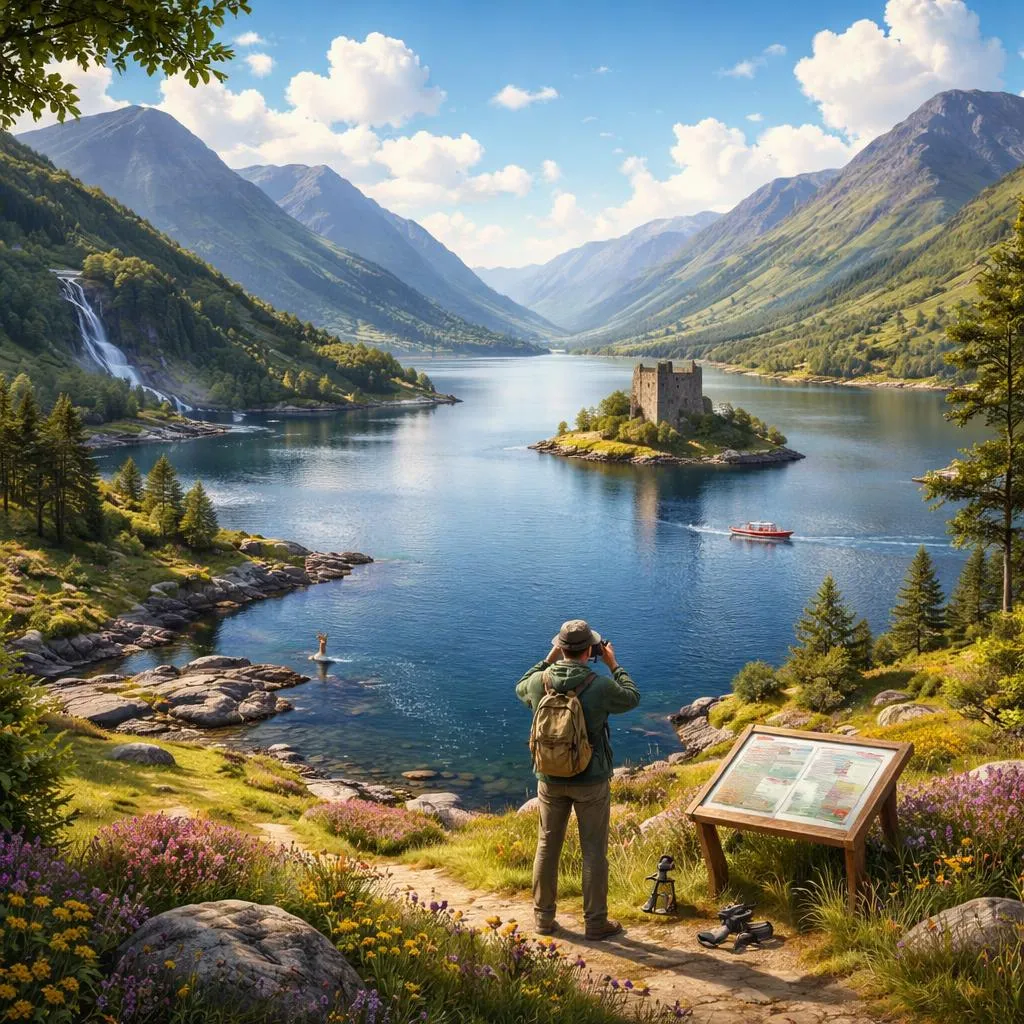

What Is a Loch? A loch is a Scottish term used to describe a lake or a large body of water. It can refer to both freshwater and saltwater bodies, but the term is most commonly used in Scotland. While it’s similar to a lake in most cases, lochs often have unique geographical features, particularly in Scotland where the landscape is shaped by ancient glaciers and sea inlets. The word “loch” comes from the Gaelic language, where it means a lake, bay, or sea inlet. The term is widely recognized in Scotland, though some parts of Ireland also use the word. In everyday use, lochs are considered picturesque and often feature in local culture and stories. Types of Lochs There are two main types of lochs: freshwater lochs and saltwater lochs. Freshwater Lochs Freshwater lochs are inland bodies of water surrounded by land. These lochs are commonly found in Scotland, often nestled in valleys or glacial depressions. Many of these lochs were formed during the last Ice Age. They can vary in size and depth and are essential sources of freshwater. For example, Loch Ness is a large freshwater loch, famous not only for its size but also for its associated legends. Another well-known freshwater loch is Loch Lomond, which is the largest loch by surface area in Scotland. Saltwater Lochs Saltwater lochs, or sea lochs, are coastal inlets that are partially enclosed by land but still connected to the sea. These lochs typically have deeper waters and may have tides, currents, and marine life. Sea lochs are often used for fishing and shipping due to their sheltered nature. Loch Fyne and Loch Long are examples of sea lochs. They are key for maritime activities and are often visited for scenic beauty and local seafood. Where Are Lochs Found? Lochs are most commonly associated with Scotland, as the country has numerous lochs across its rugged terrain. The geography of Scotland, shaped by glaciers, has created ideal conditions for lochs, both freshwater and saltwater. While Scotland is home to the majority of lochs, similar features can be found in other parts of the world, particularly in regions with glacial history. For example, parts of Canada and the northern United States also have lochs or similar bodies of water, although they tend to use the term “lake” instead. The Importance of Lochs Lochs play a significant role in the environment, economy, and culture. Freshwater lochs provide valuable ecosystems for many species, and they are often sources of drinking water. They also support biodiversity, with various fish, birds, and plants depending on the unique environments of lochs. Saltwater lochs, on the other hand, are important for shipping, fishing, and tourism. They act as natural harbors and sheltered areas for boats and marine life. Additionally, lochs are a part of Scotland’s cultural heritage. Many legends, like the famous Loch Ness Monster, are tied to these bodies of water, drawing tourists and researchers from around the world. Loch vs. Lake While "loch" and "lake" both refer to bodies of water surrounded by land, the distinction lies mainly in the terminology. In Scotland and parts of Ireland, the term "loch" is used for both freshwater and saltwater bodies. In contrast, "lake" is the more common term used elsewhere, such as in the United States, Canada, and other English-speaking countries. Despite the regional difference, the two terms are generally interchangeable when discussing bodies of water in general. The primary distinction is that a loch can also refer to saltwater inlets, which is not the case with a lake. Famous Lochs in Scotland Scotland is home to some of the most famous lochs in the world, each with its own unique beauty and cultural significance. Here are a few notable examples: Loch Ness – Perhaps the most famous loch, known worldwide due to the legend of the Loch Ness Monster. It is one of the largest freshwater lochs in Scotland and attracts tourists year-round. Loch Lomond – The largest loch by surface area in Scotland, popular for boating, hiking, and stunning views. Loch Awe – Known for its picturesque beauty, Loch Awe is surrounded by castles and offers a tranquil atmosphere. Loch Katrine – A beautiful freshwater loch in the Trossachs National Park, often featured in Scottish literature and art. These lochs not only offer scenic beauty but also hold historical and cultural significance. The Loch Ness Monster The Loch Ness Monster, affectionately known as "Nessie," is perhaps the most famous creature associated with a loch. The legend of Nessie has attracted countless visitors to Loch Ness, hoping to catch a glimpse of the mythical creature. Although there is no scientific proof of the Loch Ness Monster’s existence, the legend has become a symbol of the area and a major tourist draw. Researchers, adventurers, and curious visitors continue to search for evidence of Nessie, making Loch Ness one of the most visited lochs in the world. How Are Lochs Formed? Lochs are primarily formed by natural processes. Many of Scotland’s lochs were created during the last Ice Age, around 12,000 years ago, when glaciers carved deep valleys and depressions in the land. As the ice melted, these depressions filled with water, forming lochs. Some lochs, especially sea lochs, have been shaped by the rising sea levels that flooded valleys, creating long, narrow inlets. Over time, the geography of the land and water has shaped these unique bodies of water. Lochs in Scottish Culture Lochs have a special place in Scottish culture. They are not only part of the natural landscape but also feature prominently in literature, art, and folklore. Many of Scotland’s legends, from the Loch Ness Monster to tales of ancient battles fought near lochs, have been passed down through generations. Lochs also serve as symbols of the Scottish wilderness, often associated with mystery and beauty. Artists have long been inspired by their landscapes, capturing their tranquility, depth, and natural charm. The Economic Importance of Lochs Beyond their cultural significance, lochs play a vital economic role in Scotland. Freshwater lochs are sources of drinking water for nearby communities and industries. Sea lochs, being sheltered, are important for fishing and maritime trade. Many of Scotland’s fishing villages are located along sea lochs, which provide calm waters for vessels. Tourism also plays a significant part in the economy, with lochs such as Loch Ness attracting visitors from all over the world. This tourism boosts the local economy and provides jobs in the hospitality, transport, and entertainment industries.
Lochs are integral to Scotland’s environment, culture, and economy. From their stunning natural beauty to their deep cultural significance, lochs continue to captivate the imagination of people around the world. Whether it’s for their mysterious waters or the legends that surround them, lochs remain an iconic part of the Scottish landscape.