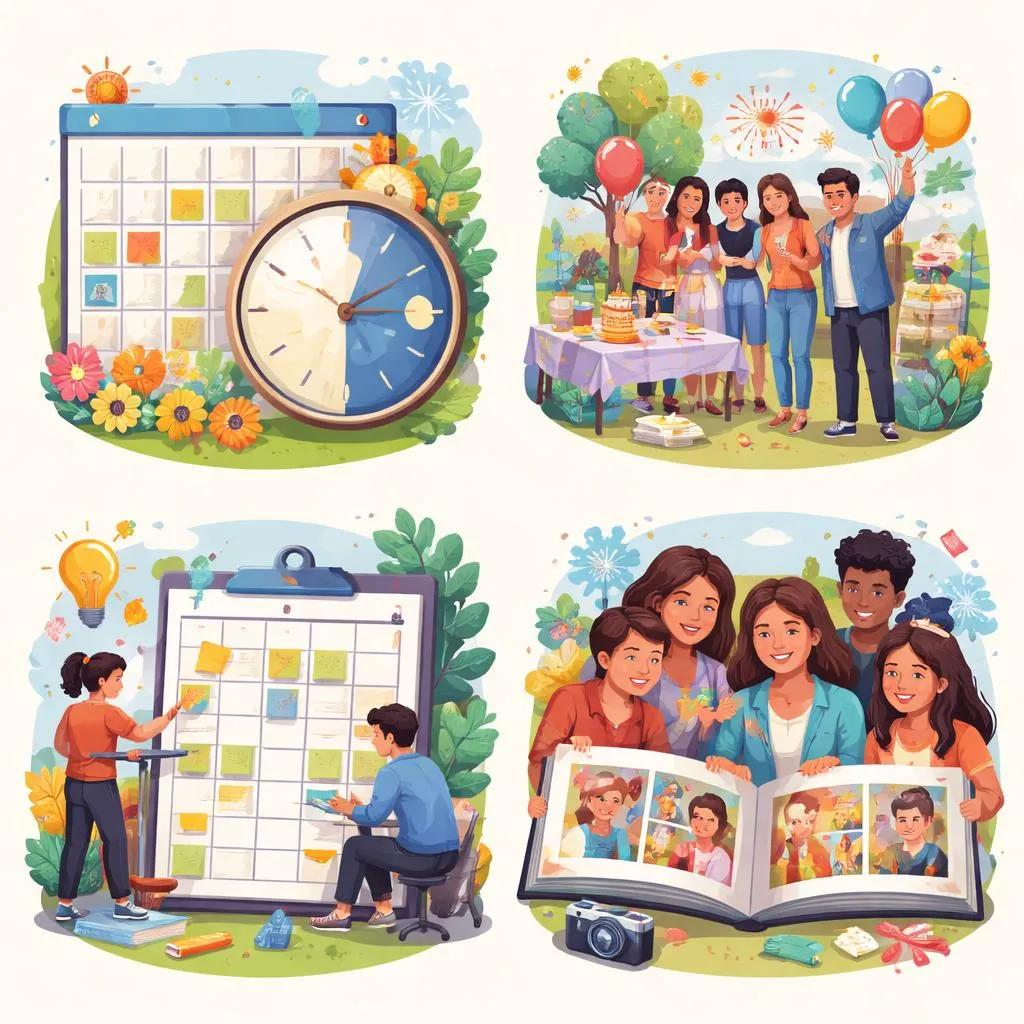

A year has 365 days, or 366 in a leap year. A yearly checkup keeps you healthy. The words “year, yearly, yearlong, yearbook” all come from one family. Each word talks about a twelve-month period or things related to it. But each one has a different job in a sentence. Learning this family helps children understand calendars and school traditions. Let us explore these four words together.
What Does “Same Word, Different Forms” Mean? One core idea can grow into many word shapes. The meaning stays the same at the heart. But the word changes its ending or combines for a new role. For example, “year” is a noun. “Yearly” is an adjective or an adverb. “Yearlong” is an adjective. “Yearbook” is a noun. Knowing these four forms helps a child talk about time and memories.
Personal Pronouns Change Their Form Pronouns change from “he” to “him” or “his”. Our word family changes by adding suffixes and compounds. Think of “year” as the core unit of twelve months. “Yearly” turns that unit into a description of frequency. “Yearlong” turns that unit into a description of duration. “Yearbook” combines year with book to name a memory book. Each form answers a simple question. What is 12 months? Year. What happens every year? Yearly. What lasts a full year? Yearlong. What book holds school memories? Yearbook.
From Verb to Noun to Adjective to Adverb – One Family, Many Words This family has a noun, adjectives, and an adverb. Let us start with the noun “year”. Noun: This year, I will learn to swim. “Year” means the time it takes Earth to go around the sun.
Next is “yearly” as an adjective or adverb. Adjective: Our yearly family reunion is in July. Adverb: The magazine is published yearly. “Yearly” means happening once a year.
Then the adjective “yearlong”. Adjective: The yearlong training program required dedication. “Yearlong” means lasting for a full year.
Finally the noun “yearbook”. Noun: She signed her name in my yearbook. “Yearbook” means a book of photos and memories from a school year.
One Root, Many Roles – How Words Grow from Actions to Qualities The Old English word “gear” meant year. From this root, we built a family about time. “Year” kept the main noun meaning. Adding -ly made “yearly” (every year). Combining “year” with “long” made “yearlong” (lasting a year). Combining “year” with “book” made “yearbook” (the book of a year). Children can see the same pattern in other families. For example, “month, monthly, monthlong, monthbook (no)”. Learning compounds helps kids describe time frames.
Same Meaning, Different Jobs – Is It a Verb or a Noun? Look at each word’s job carefully. “Year” is a noun. Example: A year on Mars is longer than a year on Earth.
“Yearly” is an adjective or an adverb. Adjective example: The yearly fair draws thousands of visitors. Adverb example: The rent is paid yearly.
“Yearlong” is an adjective. Example: The yearlong drought dried up the river.
“Yearbook” is a noun. Example: The yearbook committee meets every Friday. Each form has a clear job. Only “yearly” has two roles.
Adjectives and Adverbs – When Do We Add -ly? We add -ly to “year” to make “yearly”. Year + ly = yearly. No letter changes. No letters lost. The rule is simple: noun + ly = adjective or adverb. A simple reminder: “Year is the time. Yearly means every year. Yearlong means all year. Yearbook is the memory book.”
Watch Out for Tricky Spelling Changes (Double Letters, y to i, and More) “Year” has no double letters. Add -ly to make “yearly”. Year + ly = yearly (no changes). Combine with “long” to make “yearlong”. Year + long = yearlong (no changes). Combine with “book” to make “yearbook”. Year + book = yearbook (no changes). A common mistake is writing “year” as “yer” (slang). Say “Year has a, like hear and dear.” Another mistake is “yearly” spelled “yearley” (with e). Say “Yearly ends with ly.” Another mistake is “yearlong” spelled “year long” as two words. “Yearlong” as one word is correct. Another mistake is “yearbook” spelled “year book” as two words. “Yearbook” as one word is correct.
Let’s Practice – Can You Choose the Right Form? Try these sentences with your child. Read each one aloud. Pick the correct word from the family.
A ______ has four seasons. Answer: year (noun)
Our ______ membership renews in January. Answer: yearly (adjective)
The ______ construction project finally finished in December. Answer: yearlong (adjective)
The senior ______ was filled with signatures and notes. Answer: yearbook (noun)
I see the dentist once a ______. Answer: year (noun)
The festival happens ______ in the fall. Answer: yearly (adverb)
A ______ course covers a lot of material. Answer: yearlong (adjective)
We looked through my parents’ old ______ from high school. Answer: yearbook (noun)
This ______ has flown by so fast. Answer: year (noun)
The ______ checkup is important for your dog’s health. Answer: yearly (adjective)
After the practice, ask your child one question. Is this word a 12-month period, a once-a-year description, a full-year description, or a memory book? That simple question teaches grammar through time and school.
Tips for Parents – Help Your Child Learn Word Families in a Fun Way Use a calendar to teach “year”. Say “A year starts in January and ends in December.”
Use a birthday to teach “yearly”. Say “Your birthday is a yearly celebration.”
Use a project to teach “yearlong”. Say “A yearlong garden project means planting in spring and harvesting in fall.”
Use a school keepsake to teach “yearbook”. Say “The yearbook has photos of all your classmates.”
Play “fill in the blank” during car rides. Say “A ______ on Mercury is only 88 Earth days.” (year) Say “Our ______ trip to the beach is in August.” (yearly) Say “The ______ study tracked the growth of the trees.” (yearlong) Say “The ______ club needs volunteers to take pictures.” (yearbook)
Read a story about a school year or a calendar. Ask “What happens during the year in the story?” Ask “Does the character have a yearly tradition?”
Turn a drawing activity into a word lesson. Draw a circle with months labeled. Label “year”. Draw a birthday cake with one candle. Label “yearly party”. Draw a timeline from January to December. Label “yearlong project”. Draw a book with a school picture on the cover. Label “yearbook”.
When your child makes a mistake, stay calm. If they say “This is my yearly,” for a yearbook, say “Almost. This is my yearbook. Yearly means every year.” If they say “I did a year project,” say “Close. I did a yearlong project. Yearlong means lasting a full year.”
Write the four words on sticky notes. Put them on a calendar or a bulletin board. Each time you start a new year, point to “year”.
Remember that a year is a cycle. Use these words to build appreciation for time. “A year gives you time to grow.” “A yearly tradition creates family bonds.” Soon your child will know the months of the year. They will look forward to yearly holidays. They will finish a yearlong challenge. And they will treasure their yearbook. That is the timeless power of learning one small word family together.