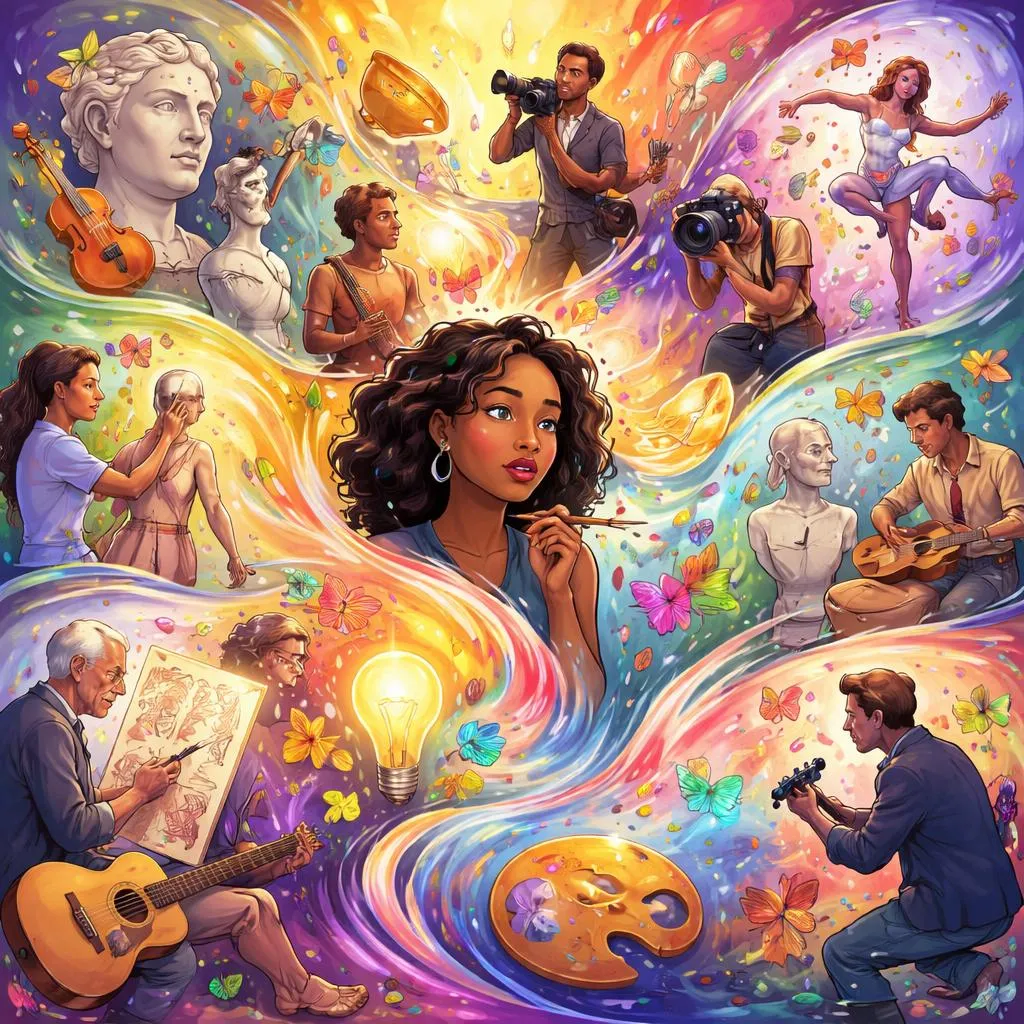

Art can be a painting or a song. An artist creates beauty from imagination. The words “art, artist, artistic, artistry” all come from one family. Each word talks about creative expression. But each one has a different job in a sentence. Learning this family helps children appreciate creativity and skill. Let us explore these four words together.
What Does “Same Word, Different Forms” Mean? One core idea can grow into many word shapes. The meaning stays the same at the heart. But the word changes its ending for a new role. For example, “art” is a noun. “Artist” is a noun. “Artistic” is an adjective. “Artistry” is a noun. Knowing these four forms helps a child talk about creativity and talent.
Personal Pronouns Change Their Form Pronouns change from “he” to “him” or “his”. Our word family changes by adding suffixes, not by changing person. Think of “art” as the core creative expression. “Artist” turns that expression into a person. “Artistic” turns the quality into a description. “Artistry” turns the skill into a thing. Each form answers a simple question. What is creative expression? Art. Who creates? Artist. What is creative in nature? Artistic. What is the skill of an artist? Artistry.
From Verb to Noun to Adjective to Adverb – One Family, Many Words This family has nouns and an adjective. Let us start with the noun “art”. Noun: Art can tell stories without words. “Art” means works created by humans, such as painting, music, or dance.
Next is the noun “artist”. Noun: The artist mixed colors to make a sunset. “Artist” means a person who creates art.
Then the adjective “artistic”. Adjective: She has an artistic eye for color. “Artistic” means relating to art or having creative skill.
Finally the noun “artistry”. Noun: The dancer’s artistry left the audience breathless. “Artistry” means great creative skill or technique.
One Root, Many Roles – How Words Grow from Actions to Qualities The Latin word “ars” meant skill or craft. From this root, we built a family about creative skill. “Art” kept the main noun meaning. Adding -ist made “artist” (the person). Adding -istic made “artistic” (relating to art). Adding -istry made “artistry” (the skill). Children can see the same pattern in other families. For example, “science, scientist, scientific, scientism (different)”. Learning the -ist suffix helps kids talk about professions.
Same Meaning, Different Jobs – Is It a Verb or a Noun? Look at each word’s job carefully. “Art” is a noun. Example: Art makes the world more beautiful.
“Artist” is a noun. Example: The artist signed the painting in the corner.
“Artistic” is an adjective. Example: The sculpture showed artistic talent.
“Artistry” is a noun. Example: Her artistry in pottery was famous. Each form has a clear job.
Adjectives and Adverbs – When Do We Add -ly? We can make an adverb from “artistic”. Add -ly to get “artistically”. Example: She danced artistically across the stage. For young learners, focus on the nouns “art” and “artist.” A simple reminder: “Art is the creation. Artist is the person. Artistic is the adjective. Artistry is the skill.”
Watch Out for Tricky Spelling Changes (Double Letters, y to i, and More) “Art” has no double letters. Add -ist to make “artist”. Art + ist = artist (no changes). Add -istic to make “artistic”. Art + istic = artistic (no changes). Add -istry to make “artistry”. Art + istry = artistry (no changes). A common mistake is writing “art” as “artt” (double t). Say “Art has one t.” Another mistake is “artist” spelled “artist” (correct) but some write “artest” (like test). Say “Artist ends with ist, like pianist.” Another mistake is “artistic” spelled “artestic” (missing i). Say “Artistic has i after c: A-R-T-I-S-T-I-C.” Another mistake is “artistry” spelled “artisty” (missing r). Say “Artistry has r before y: A-R-T-I-S-T-R-Y.”
Let’s Practice – Can You Choose the Right Form? Try these sentences with your child. Read each one aloud. Pick the correct word from the family.
______ allows people to express feelings. Answer: art (noun)
The ______ painted a mural on the wall. Answer: artist (noun)
She has a very ______ way of decorating cakes. Answer: artistic (adjective)
The ______ of the singer moved everyone to tears. Answer: artistry (noun)
Modern ______ includes photography and video. Answer: art (noun)
A true ______ practices their craft every day. Answer: artist (noun)
The garden was designed with ______ flair. Answer: artistic (adjective)
The chef’s ______ was evident in every dish. Answer: artistry (noun)
Creating ______ helps me relax. Answer: art (noun)
The ______ used unusual materials to build a sculpture. Answer: artist (noun)
After the practice, ask your child one question. Is this word a creation, a creator, a creative description, or a creative skill? That simple question teaches grammar through imagination.
Tips for Parents – Help Your Child Learn Word Families in a Fun Way Use a drawing to teach “art”. Say “This picture is your art. It is beautiful.”
Use a famous painter to teach “artist”. Say “Frida Kahlo was an artist who painted self-portraits.”
Use a decoration to teach “artistic”. Say “Your arrangement of shells on the shelf looks artistic.”
Use a performance to teach “artistry”. Say “The magician’s artistry made the trick seem real.”
Play “fill in the blank” during car rides. Say “Making a collage is a form of ______.” (art) Say “An ______ uses a brush or a pencil.” (artist) Say “The design on your shirt is very ______.” (artistic) Say “The ______ of the woodcarver amazed me.” (artistry)
Read a story about a sculptor, a painter, or a musician. Ask “What kind of art does the character make?” Ask “What does the artist use to create?”
Turn a drawing activity into a word lesson. Draw a paint palette. Label “art”. Draw a person with a beret. Label “artist”. Draw a swirl of colors. Label “artistic”. Draw a close-up of a hand weaving. Label “artistry”.
When your child makes a mistake, stay calm. If they say “I am art,” say “Almost. I am an artist. Art is the thing you make.” If they say “The artist has good art,” that is fine. “She has artistic skill.”
Write the four words on sticky notes. Put them on a wall near your child’s art area. Each time you draw or paint, point to “art”.
Remember that everyone can be an artist. Use these words to build creativity. “Art comes in many forms.” “Your artistry grows with practice.” Soon your child will love art. They will call themselves an artist. They will develop an artistic eye. And they will show artistry in everything they make. That is the creative power of learning one small word family together.