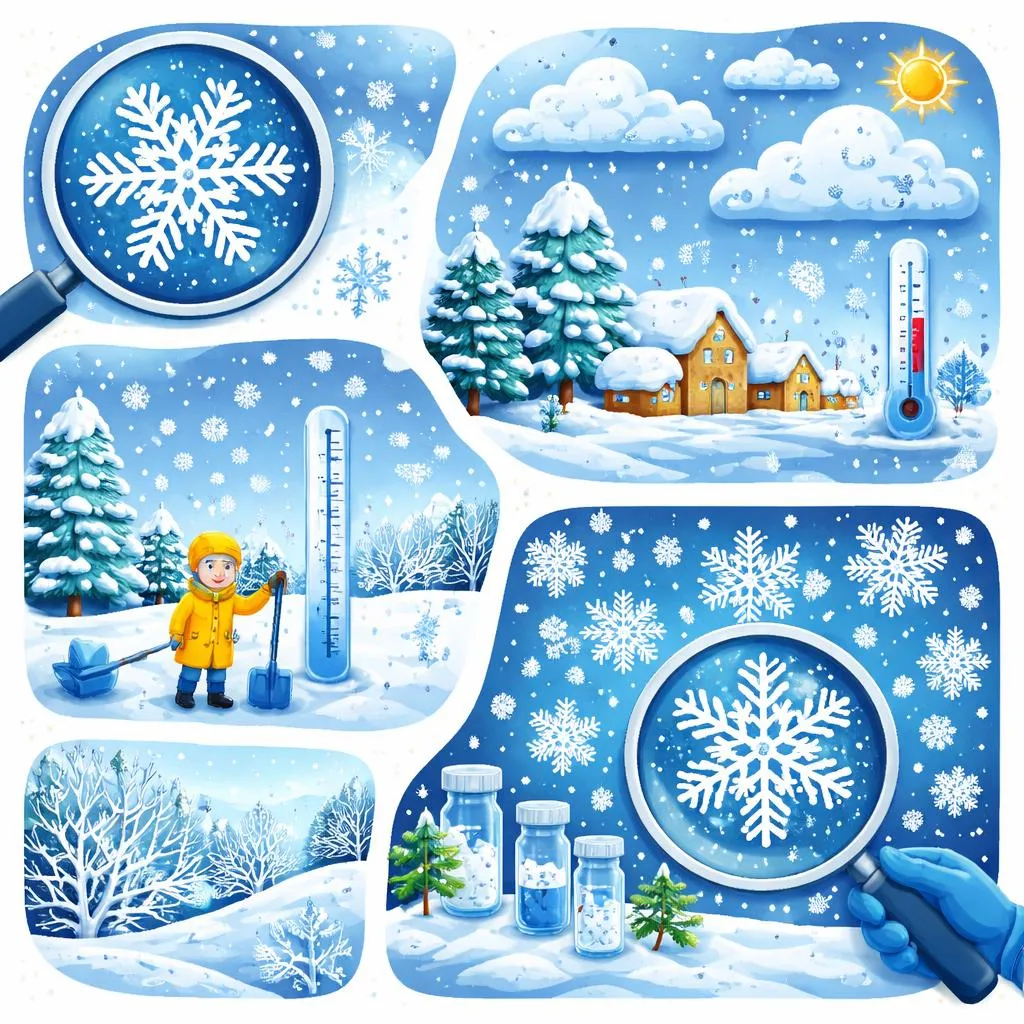

Winter brings a white blanket of snow. A snowy day means time for warm clothes. The words “snow, snowy, snowfall, snowflake” all come from one family. Each word talks about frozen water falling from the sky. But each one has a different job in a sentence. Learning this family helps children describe winter weather and play. Let us explore these four words together.
What Does “Same Word, Different Forms” Mean? One core idea can grow into many word shapes. The meaning stays the same at the heart. But the word changes its ending or combines with other words. For example, “snow” is a noun or a verb. “Snowy” is an adjective. “Snowfall” is a noun. “Snowflake” is a noun. Knowing these four forms helps a child talk about winter days.
Personal Pronouns Change Their Form Pronouns change from “he” to “him” or “his”. Our word family changes by adding suffixes or creating compounds. Think of “snow” as the core frozen water. “Snowy” turns that idea into a description. “Snowfall” combines snow and fall to name an event. “Snowflake” combines snow and flake to name a single piece. Each form answers a simple question. What frozen water? Snow. What kind of day? Snowy. What is the event of snow coming down? Snowfall. What is one tiny crystal? Snowflake.
From Verb to Noun to Adjective to Adverb – One Family, Many Words This family has nouns, a verb, and an adjective. Let us start with the noun “snow”. Noun: The snow covered the ground. “Snow” means soft white frozen water that falls from clouds.
“Snow” can also be a verb. Verb: It might snow tonight. Here “snow” means to fall as snow.
Next is the adjective “snowy”. Adjective: The snowy mountain looked beautiful. “Snowy” means covered with snow or full of snow.
Then we have the noun “snowfall”. Noun: The snowfall measured six inches. “Snowfall” means the amount of snow that falls in a storm.
Finally the noun “snowflake”. Noun: Each snowflake has a unique shape. “Snowflake” means a single crystal of snow. This family has no common adverb form.
One Root, Many Roles – How Words Grow from Actions to Qualities The Old English word “snaw” meant snow. From this root, we built a winter family. “Snow” kept the main noun and verb meanings. Adding -y made “snowy” (full of snow). Combining “snow” with “fall” made “snowfall” (the falling of snow). Combining “snow” with “flake” made “snowflake” (a flake of snow). Children can see the same pattern in other weather families. For example, “rain, rainy, rainfall, raindrop”. Also “storm, stormy, stormfall (rare), storm cloud”. Learning compounds helps kids build new words.
Same Meaning, Different Jobs – Is It a Verb or a Noun? Look at each word’s job carefully. “Snow” can be a noun or a verb. Noun example: The snow is deep. Verb example: It will snow again tomorrow.
“Snowy” is an adjective. Example: A snowy owl blends in with the ground.
“Snowfall” is a noun. Example: The snowfall broke a record.
“Snowflake” is a noun. Example: A snowflake landed on my nose. Each form has a clear job. Only “snow” has two roles. That makes this family easy to learn.
Adjectives and Adverbs – When Do We Add -ly? This family has no common adverb form. We do not say “snowily” very often. We usually say “in a snowy way” or use the verb. For young learners, focus on nouns and the adjective. A simple reminder: “Snow is the thing. Snowy describes the thing. Snowfall is the event. Snowflake is one piece.”
Watch Out for Tricky Spelling Changes (Double Letters, y to i, and More) “Snow” has no double letters. Add -y to make “snowy”. Snow + y = snowy (no changes, keep the w). Combine with “fall” to make “snowfall”. Snow + fall = snowfall (no changes). Combine with “flake” to make “snowflake”. Snow + flake = snowflake (no changes). A common mistake is writing “snow” as “sno”. Say “Snow has a w, like blow and grow.” Another mistake is “snowy” spelled “snowie”. Say “Snowy ends with y, not ie.” Another mistake is “snowfall” spelled “snowfall” (correct) but some write “snow fall” as two words. “Snowfall” as a noun is one word. “Snow will fall” as a verb phrase is three words.
Let’s Practice – Can You Choose the Right Form? Try these sentences with your child. Read each one aloud. Pick the correct word from the family.
The ______ covered the car completely. Answer: snow (noun)
It might ______ next week. Answer: snow (verb)
A ______ day is perfect for building a snowman. Answer: snowy (adjective)
The ______ was light, only one inch. Answer: snowfall (noun)
A single ______ landed on my mitten. Answer: snowflake (noun)
Look at all the white ______ on the roof. Answer: snow (noun)
We hope it will ______ on Christmas morning. Answer: snow (verb)
The ______ fields stretched for miles. Answer: snowy (adjective)
The biggest ______ of the year came in February. Answer: snowfall (noun)
No two ______s are exactly alike. Answer: snowflake (noun)
After the practice, ask your child one question. Is this word the frozen water itself, an action, a description, a storm event, or a single crystal? That simple question teaches grammar through winter fun.
Tips for Parents – Help Your Child Learn Word Families in a Fun Way Use a winter day to teach “snow”. Point outside. Say “Look at the snow on the ground.”
Use a weather forecast to teach “snowy”. Say “Tomorrow will be a snowy day.”
Use a ruler in the yard to teach “snowfall”. Measure the snow. Say “The snowfall last night was three inches.”
Use a magnifying glass to teach “snowflake”. Catch a snowflake on a dark mitten. Say “Look at this tiny snowflake.”
Play “fill in the blank” during car rides. Say “The ______ is white and cold.” (snow) Say “It might ______ tonight.” (snow - verb) Say “A ______ road can be slippery.” (snowy) Say “The ______ this winter was very heavy.” (snowfall) Say “Each ______ has its own shape.” (snowflake)
Read a story about winter or a snowstorm. Ask “How much snowfall did the characters get?” Ask “What do snowflakes look like in the book?”
Turn a drawing activity into a word lesson. Draw a white blanket on the ground. Label “snow”. Draw a house with snow on the roof. Label “snowy day”. Draw a ruler next to a pile of snow. Label “snowfall = 4 inches”. Draw a magnifying glass over a tiny crystal. Label “snowflake”.
When your child makes a mistake, stay calm. If they say “Look at the snows,” say “Almost. Look at the snow. Snow is usually not plural. We say snow, not snows.” If they say “It is snow falling,” say “Yes. Snow falling. The word snowfall means the total snow that falls.”
Write the four words on sticky notes. Put them on the window during winter. Each time it snows, point to the words.
Remember that snow words bring joy. Use them during play, not just lessons. Soon your child will love snow days even more. They will name the snow on the ground. They will call a winter scene snowy. They will measure the snowfall with you. And they will catch snowflakes on their tongue. That is the magic of learning one small word family together.