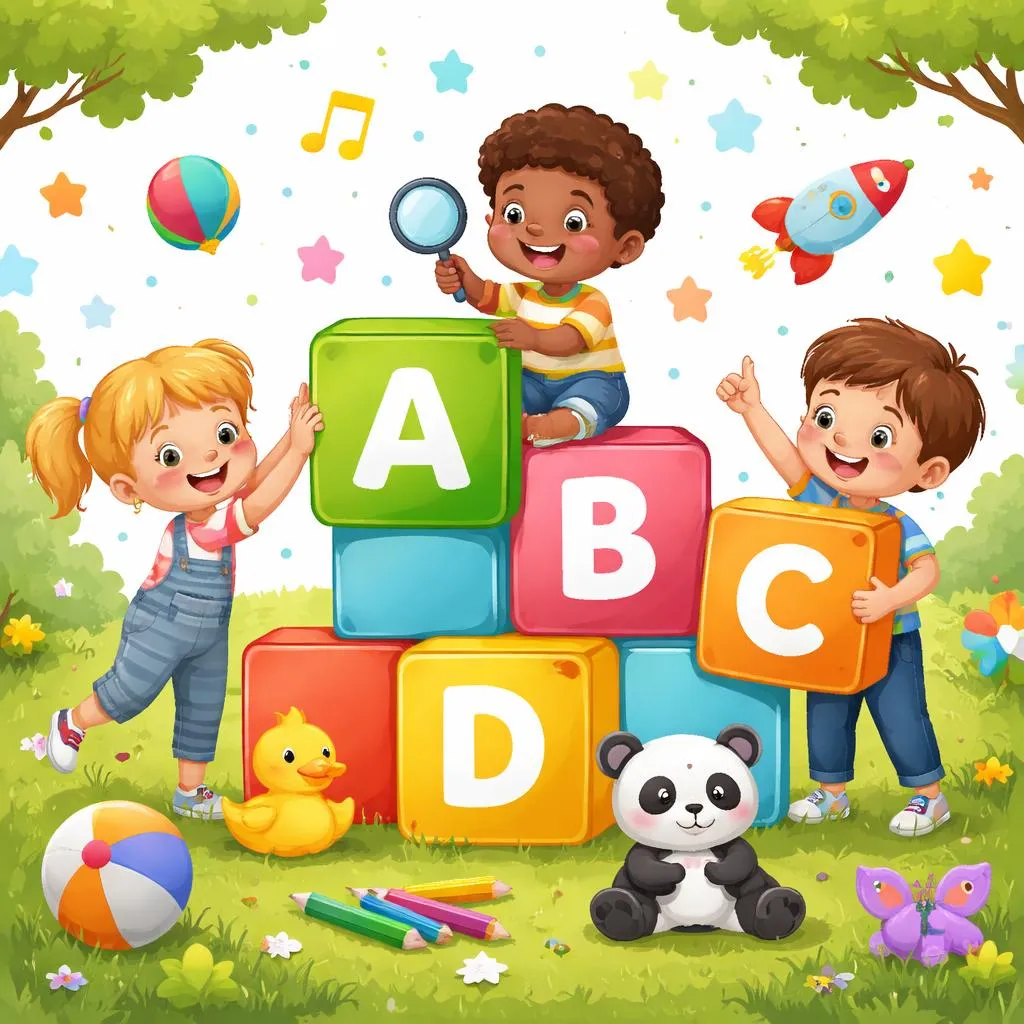

Hello, wonderful word builders. Welcome to the most important adventure in the English language. Today, we are going to explore the alphabet a to z. This is the magical code that makes all the words you know. Every story, every joke, every name starts with these letters. From the first letter A to the last letter Z, we have twenty six special friends. They are the building blocks of reading and writing. Let us meet them all and learn how to be best friends with the alphabet a to z.
What is alphabet a to z?
The alphabet a to z is the complete set of English letters. It is the list of all the letters in order. We say "A, B, C, D..." all the way to "Z." Think of it as a train with twenty six cars. Car A is first. Car Z is last. Every car is important. Without one, the train is not complete. This alphabet is a system. It helps us organize sounds. Each letter has a name. The name is what we say when we sing the ABC song. Each letter also has a sound. The sound is what we use when we read words. The alphabet a to z is the first thing you learn. It is the key that opens the door to all other learning. It is a tool you will use forever.
Meaning and explanation
The meaning of the alphabet a to z is deep. It is a map. This map shows us how to turn sounds into written marks. Let us explain. Long ago, people needed a way to write down their ideas. They invented letters. Each letter stands for one or more sounds in speech. When we put letters together, we make words. The word "cat" is made of the letters C, A, T. Each letter adds its sound. The order of the alphabet a to z is also meaningful. It is a standard order. Everyone agrees on it. This helps us find things. Dictionaries list words in alphabetical order. Name lists use it too. Knowing the order is a super useful skill.
The alphabet a to z is not just twenty six random shapes. It is a team. Some letters are vowels. A, E, I, O, U. They are the stars. They make the loudest sounds in words. The other letters are consonants. They are the helpers. They work with vowels to make all the different sounds. The explanation is simple. The alphabet is the foundation. You must know the letters. You must know their names. You must know their common sounds. Then you can start building words. It is like knowing all the notes before you play a song on the piano. The alphabet a to z is your set of musical notes for language.
Categories or lists
We can look at the alphabet a to z in different ways. We can sort it into categories. This helps us learn. The first category is Vowels vs Consonants. This is the biggest split. The vowels are A, E, I, O, U. Sometimes Y acts like a vowel too. The consonants are all the other letters. B, C, D, F, G, H, J, K, L, M, N, P, Q, R, S, T, V, W, X, Y, Z. Another way to categorize is by Letter Shapes. Some letters have straight lines only. Like I, L, T. Some have curves only. Like O, S, C. Some have both. Like B, D, P.
We can also list letters by their sounds. Some letters make only one main sound. Like B says /b/. Some letters make more than one sound. Like C can say /k/ as in "cat" or /s/ as in "city." Another fun list is Capital Letters and Small Letters. Every letter in the alphabet a to z has two forms. The big form is the capital letter. A, B, C. The small form is the lowercase letter. a, b, c. We use capitals to start sentences and for names. We use lowercase for most writing. Thinking in categories makes the alphabet easier to understand. It is not just a long string. It is groups of friends with similar jobs or looks.
Daily life examples
Let us see the alphabet a to z in your daily life. Here are some places you will find it. First, your morning routine. You are eating breakfast. Look at the cereal box. What letters do you see on the front. Find the first letter of the cereal name. Is it a C for "Cheerios"? Is it an F for "Frosties"? You can spell the word with your finger on the table. Later, you get dressed. Your t shirt might have a word on it. "COOL" or "CAT." Say the letters. C O O L. This is the alphabet in action on your clothes.
Second, think about your trip to school or the store. Look at the signs. A stop sign has the letters S T O P. A store sign might say "TOYS." Play a game in the car. Find letters in order. Look for something that starts with A. Then B. You see an "Apartment" sign for A. You see a "Bus" for B. It is a fun challenge. On the road, license plates are full of letters. Try to read the letters on the car in front of you. This makes the trip go faster and you are practicing.
Third, imagine you are helping in the kitchen. You are putting away groceries. The soup cans have labels. Find the letter that the soup starts with. "Tomato" starts with T. The milk carton has a big M. You can also help sort mail. Look at the names on the envelopes. Find the first letter of each name. "Grandma" starts with G. "Aunt Sue" starts with A. The alphabet a to z is everywhere. It is on your books, your toys, and your games. When you notice it, you are learning all the time.
Printable flashcards
Printable flashcards are a perfect tool for the alphabet a to z. How do you make them. You can print twenty six cards. On one side, write a big, colorful capital letter. Like a giant red A. On the other side, write the lowercase a. Then, draw a picture of something that starts with A. Like an apple. You can also write the word "apple" underneath. Do this for every letter. For B, a big B on one side, a small b and a picture of a ball on the other. You now have a complete alphabet flashcard set.
How to use these flashcards. You can use them alone. Look at the letter side. Say the letter's name. "A." Say its most common sound. "/a/ as in apple." Then flip the card to check the picture. You can use them with a partner. One person shows the picture side. The other person must say the letter and the word. "That's A for apple." You can also play matching games. Print two sets. Turn all cards picture-side down. Take turns flipping two cards. Find matching letters. Or, match the capital letter card to its lowercase letter card. Printable flashcards make learning the alphabet a to z hands-on and fun. You can carry them anywhere for a quick practice.
Learning activities or games
Learning the alphabet a to z should be a joyful adventure. Let us play some games. First, "Alphabet Obstacle Course." Use chalk or tape to write letters on the ground in a path. Call out a letter. Your child must hop, skip, or jump to that letter. Then call out the next letter. "Hop to the M. Now crawl to the S." This connects the letter shape with physical movement. It is great for energy and learning. Another classic is "Alphabet Bingo." Make bingo cards with letters instead of numbers. Call out letters. Kids cover them with a token. First to get a line wins. This sharpens listening and letter recognition.
Another wonderful game is "Letter Hunt." Hide letter cards or magnetic letters around a room. Give your child a "treasure list" of letters to find. "Find the letters that spell your name." Or, "Find the letters A, G, and T." They must bring them back in order. This turns learning into a detective mission. For a creative game, play "Alphabet Story." Start a story with "A amazing astronaut..." The next person must continue the story with something starting with B. "A amazing astronaut saw a big bear..." Go through the alphabet. The story gets very silly. It practices thinking of words for each letter.
You can also do "Letter Art." Each week, focus on one letter. For the letter S, you can make a snake from playdough. You can draw stars on a paper. You can glue sand on a big letter S shape. This multi-sensory activity helps the letter stick in memory. For older kids, play "Alphabet Order Race." Shuffle letter cards. Race to put them in the correct order from a to z. Time yourselves. Try to beat your own record. All these games make the alphabet a to z a living, breathing part of play. You are not just memorizing. You are playing with your new friends, the twenty six letters. Keep playing, and soon you will know them all by heart.