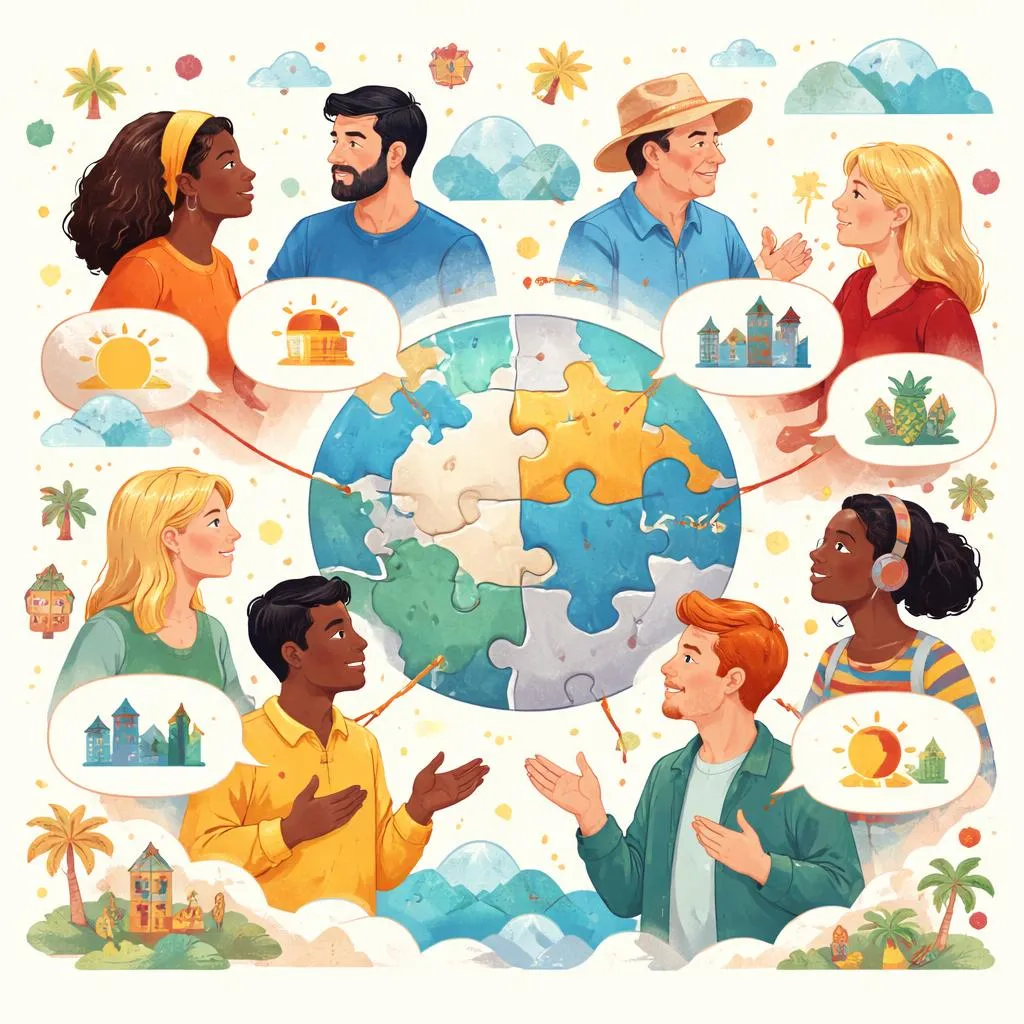

When searching for a clear dialect definition, the key idea is variation within a language. A dialect is a particular form of a language that is spoken by a specific group of people. This group may be defined by region, social class, ethnicity, or community.
A dialect is not a separate language. It is a variety of an existing language. It includes differences in pronunciation, vocabulary, and grammar.
Simple Dialect Definition
A dialect is a version of a language used by a group of speakers.
These differences may include:
pronunciation changes unique vocabulary grammar variations expression patterns
Even when dialects differ, speakers can often still understand each other.
Dialect and Accent Difference
Dialect and accent are related but not identical.
An accent refers only to pronunciation. It describes how words sound.
A dialect includes pronunciation, grammar, and vocabulary differences.
For example, two speakers may pronounce words differently but use the same grammar. That difference is accent.
If grammar and vocabulary also change, that difference is dialect.
Regional Dialects
Regional dialects develop when groups of people live in different geographic areas.
Over time, pronunciation shifts. Vocabulary changes. Certain expressions become common in one region but not in another.
For example, English has many regional dialects.
British English and American English differ in spelling and vocabulary.
color / colour truck / lorry apartment / flat
Pronunciation also differs across regions.
Social Dialects
Dialect differences are not only geographic. Social groups may develop distinct speech patterns.
Education level, profession, age group, or cultural background can influence language use.
Young speakers often create slang terms that older generations may not use.
Professional groups may use specialized vocabulary.
These variations form social dialects.
Grammar Differences in Dialects
Grammar may change slightly between dialects.
For example, some dialects may use different verb forms or sentence structures.
Standard English might say:
She doesn’t have any.
Another dialect might say:
She don’t have none.
Both forms communicate meaning, but grammar structure differs.
Linguistics studies these variations without labeling them as inferior. Dialects follow their own consistent rules.
Vocabulary Differences in Dialects
Vocabulary differences are often easy to notice.
In some regions, a carbonated drink is called soda. In others, it is called pop. In some areas, it is called cola.
All words refer to the same object. The difference reflects regional usage.
Vocabulary variation is one of the clearest signs of dialect diversity.
Historical Development of Dialects
Dialects develop naturally over time.
When communities become separated by distance, their speech patterns change gradually.
Migration influences dialect formation. Trade routes spread vocabulary. Political borders shape language identity.
For example, after historical migrations, varieties of Spanish developed in Europe and Latin America. Differences in pronunciation and vocabulary appeared across continents.
Despite variation, these dialects remain part of the same language family.
Standard Language and Dialects
A standard language is a widely accepted form used in education, media, and official documents.
Standard forms help create consistency in writing and communication.
However, dialects remain important. They represent identity and culture.
No dialect is inherently better than another. Standard forms are often chosen for practical reasons, not because they are linguistically superior.
Why Understanding Dialect Definition Matters
Understanding dialect definition improves language awareness.
It builds respect for linguistic diversity. It explains pronunciation differences. It supports clearer communication.
Dialect study is part of linguistics. It shows how language changes across regions and communities.
Language is not uniform. It adapts to environment, culture, and social interaction.
A dialect reflects history, identity, and belonging. Recognizing dialect variation strengthens understanding of how language works in real life.
Dialect in Everyday Communication
Dialect differences appear in daily conversations. Small variations in pronunciation or vocabulary may signal where a speaker comes from.
For example, within English, pronunciation of certain vowels changes across regions. The word “bath” may sound different in northern and southern parts of England. In the United States, pronunciation varies between the East Coast, the South, and the Midwest.
These differences do not prevent communication. They simply reflect regional identity.
Dialect and Identity
Dialect connects closely with personal and community identity. Speech patterns often reflect family background, cultural heritage, and local traditions.
In many communities, dialect represents belonging. Changing dialect may feel like changing identity. Because of this, dialect is not only a linguistic feature but also a social marker.
Writers and filmmakers often use dialect in dialogue to show character background. This technique adds realism to storytelling.
Dialect Continuum
In some regions, dialects change gradually across geographic space. This pattern is called a dialect continuum.
Neighboring towns may speak slightly differently. Each town understands the next. However, towns at opposite ends of the region may have greater differences.
This gradual shift shows that language change does not happen suddenly. It develops step by step.
Examples from Other Languages
Dialect variation exists in almost every major language.
Within Arabic, dialects differ significantly across countries. The spoken form in Morocco differs from the spoken form in Egypt. Modern Standard Arabic is used in writing and formal settings, while regional dialects are used in daily conversation.
Within Chinese, many spoken varieties exist. Some are mutually unintelligible in speech, yet they share a writing system.
Within German, dialects vary between northern and southern regions. Pronunciation and vocabulary differ, yet the standard written form remains unified.
These examples show that dialect diversity is universal.
Code-Switching and Dialect
Many speakers adjust their dialect depending on context. This behavior is called code-switching.
In formal situations, a speaker may use a standard variety. In informal settings, local dialect may appear naturally.
This ability demonstrates linguistic flexibility. It also shows awareness of audience and environment.
Code-switching is a normal and valuable communication skill.
Dialect in Education
In educational settings, the standard variety of a language is often taught for writing and formal communication. This approach supports clarity across regions.
However, dialect differences should be respected. Students who speak regional dialects are not speaking incorrectly. They are using systematic language varieties.
Teaching the difference between dialect and standard form improves linguistic understanding without reducing cultural identity.
Dialect and Language Change
Dialect variation often leads to language change over time.
New pronunciation patterns may spread. Slang words may enter mainstream usage. Grammar structures may shift gradually.
What begins as regional dialect may eventually become part of the standard language.
Language evolution often begins at the dialect level.
Mutual Intelligibility
One important concept in dialect definition is mutual intelligibility. If speakers can understand each other without special study, the varieties are usually considered dialects of the same language.
If understanding becomes very difficult, linguists may classify the varieties as separate languages.
However, political and cultural factors also influence classification. The boundary between dialect and language is not always purely linguistic.
Written and Spoken Differences
Dialect differences are often stronger in speech than in writing.
Written language usually follows standard spelling and grammar rules. Spoken language shows more variation.
For example, contractions and informal expressions appear frequently in speech. Pronunciation differences are most noticeable when listening rather than reading.
Understanding this difference helps explain why dialect diversity is more obvious in conversation.
Respecting Dialect Diversity
A clear dialect definition supports respectful communication.
Dialect differences do not indicate intelligence level. They do not indicate correctness or incorrectness. They reflect natural language development.
Recognizing dialect variation builds cultural awareness. It encourages open-mindedness.
In global communication, exposure to different dialects increases listening skills and comprehension flexibility.
Key Points About Dialect Definition
A dialect is a variety of a language. It includes pronunciation, grammar, and vocabulary differences. Dialects develop through geography, history, and social interaction. Dialect variation exists in all languages. Standard language is one variety among many.
Understanding dialect definition deepens awareness of how language functions in real life.
Language is not uniform. It changes across communities and regions. Dialects represent living expressions of culture, history, and identity.
Recognizing and studying dialects strengthens overall understanding of linguistics and communication.