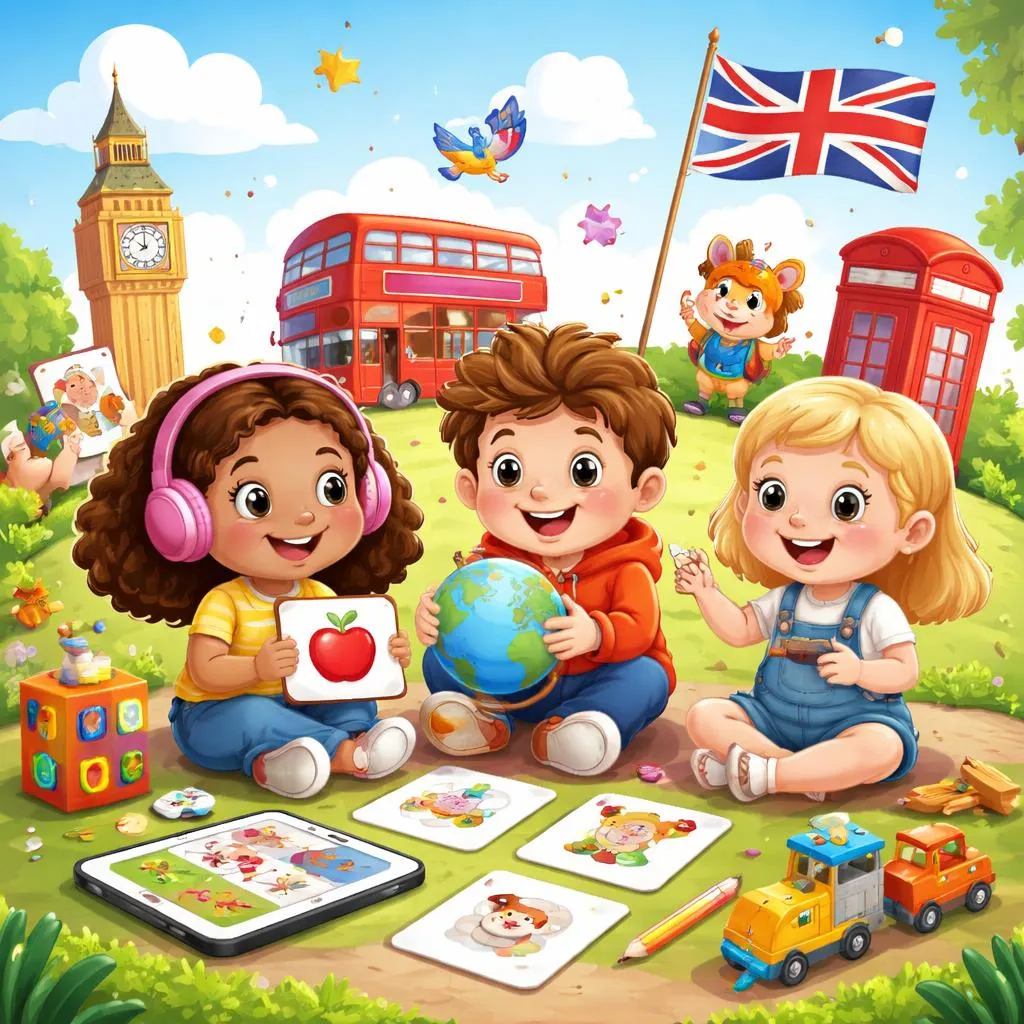

Hello. Welcome to the wonderful world of words. Today, we are going to talk about a very special tool. This tool is the English language. It is more than just a subject in school. It is a way to share ideas, tell stories, and make friends all over the world. Maybe you are just starting. Maybe you know some words already. This journey is for everyone. Let us discover what the English language is and how you can have fun learning it.
What is the English language?
The English language is a system of communication. People use it to talk, to write, to read, and to listen. It is made of words, sounds, and rules. Think of it like a huge Lego set. The words are the Lego blocks. The rules are the instruction manual. You can build anything with it. A simple sentence. A funny joke. A thrilling adventure story. English is spoken by millions of people. It is used in many countries. Learning the English language opens many doors. It lets you understand songs, play games, read books, and watch cartoons from different places.
The English language is alive. It grows and changes. New words are added all the time. Words like "app" or "emoji" are new friends in the language. It is a mix of many other languages too. That is why it has so many words. It is a welcoming language. It is happy to have you join. You do not need to know everything at once. Start with "hello." Start with your name. You are already using the English language. That is a fantastic first step.
Meaning and explanation
The meaning of the English language is connection. It helps people connect. Let us explain how it works. The language is built on a few key parts. First, we have words. Words are symbols for things, actions, or ideas. The word "dog" means that furry animal that barks. The word "run" means to move your legs fast. We put words together to make sentences. "The dog runs." This is a basic sentence. The rules for putting words together are called grammar. Grammar helps us make sense. It tells us to say "The dog runs" not "Runs dog the."
Another big part is sound. This is called pronunciation. It is how we say the words. The same letters can sound different. The "a" in "cat" and "cake" sound different. We also have spelling. Spelling is how we write the words down. Sometimes spelling is tricky. The word "knight" has a silent "k." But do not worry. We learn patterns. The explanation is that the English language is a code. Once you learn the code, you can understand messages and send your own. You start with simple codes like "yes" and "no." Then you learn bigger codes like stories and poems. Every word you learn is a new piece of the code.
Categories or lists
We can look at the English language in different ways. We can split it into skill categories. The four main skills are Listening, Speaking, Reading, and Writing. Listening is understanding spoken English. Speaking is using your voice to make English sounds. Reading is understanding written words. Writing is creating written words yourself. Another way to categorize is by parts of the language. The main parts are Vocabulary, Grammar, and Pronunciation. Vocabulary is all the words you know. Grammar is the rules for using them. Pronunciation is how to say them.
We can also make lists of word types. This is very helpful. Nouns are words for people, places, animals, and things. Teacher, school, cat, ball. Verbs are action words. Run, eat, think, is. Adjectives are describing words. Happy, big, blue, funny. Adverbs describe how an action is done. Quickly, loudly, well. There are also lists for common phrases. "Good morning." "How are you?" "Thank you very much." "Can you help me?" Thinking in these categories makes the big English language feel smaller. You can focus on one part at a time. Master nouns this week. Practice greeting phrases next week. It is a manageable adventure.
Daily life examples
Let us see the English language in your daily life. Here are some easy scenes. First, your morning at home. You wake up. You might say "Good morning" to your family. You eat breakfast. The cereal box has English words. You can read "Corn Flakes" or "Milk." You can say, "This is my favorite cereal." When you get dressed, you can name your clothes. "I am wearing a blue shirt and black shoes." This simple talk uses the English language.
Second, think about a trip to the supermarket with a parent. This is a great place for English. You see signs everywhere. "Enter." "Exit." "Fruits." "Vegetables." You can help find items. "We need bread. Bread is in aisle four." You can read the shopping list. "Milk, eggs, apples." At the checkout, you hear the cashier speak. "Your total is twenty dollars." You say "Thank you" and "Have a nice day." Every part of this trip uses the English language. It is practical and useful.
Third, imagine your evening time. You are watching a cartoon. The characters are speaking English. You are listening. You are learning how they talk. Maybe you are playing a video game. The instructions are in English. "Press start." "Go left." "Find the key." Later, your parent reads you a bedtime story. The book is in English. You hear the sentences. You see the words on the page. You are connecting sounds to letters. From morning to night, the English language is all around you. You are soaking it up like a sponge.
Printable flashcards
Printable flashcards are a super helper for learning the English language. What can you put on them. You can make vocabulary cards. On one side, draw a picture of an apple. On the other side, write the word "APPLE." You can make phrase cards. One side says "How are you?" The other side has a picture of two people talking. You can make grammar cards. One side says "I am" and the other side has a smiley face. You match it with cards that say "happy" or "tall."
How to use these cards. Play matching games. Spread the picture cards on the floor. Hold up a word card. Your friend finds the matching picture. You can also play "Flashcard Jump." Place cards on the floor in a path. Say a word. Your child jumps to the correct card. For sentence building, have separate cards for "I," "see," "a," "red," "car." Mix them up. Work together to put them in order to make "I see a red car." Printable flashcards make learning active. You are not just looking. You are moving, playing, and matching. This helps your brain remember the English language better. You can find many free flashcards online to print, or you can make your own. It is a fun craft too.
Learning activities or games
Learning the English language should be an adventure. Let us play some games. First, "English Language Scavenger Hunt." Make a list of simple things to find or hear. "Find something that starts with the letter B." "Listen for someone saying the word 'please.'" "Find a sign with the word 'open.'" This game makes you look and listen carefully to the English language around you. Another fun game is "Word Bingo." Make bingo cards with simple words or pictures. Call out the words. Kids mark them. First to get a line wins. This is great for word recognition.
Play "Simon Says" with English language commands. "Simon says touch your nose." "Simon says jump three times." This practices listening and action words. For a creative game, try "Story Dice." Make dice with pictures on each side. Roll a few dice. Make a short story in English using the pictures that come up. A picture of a sun, a dog, and a ball. You say, "The sunny day was perfect. The dog played with a ball." This builds sentence skills.
For a movement game, do "Verb Charades." Write action verbs on cards. "Swim." "Eat." "Sleep." "Dance." Players pick a card and act it out. Others guess the verb in English. This connects words to actions. For a quiet time activity, do "Label the House." Use sticky notes. Write the English word for things and stick them on the object. "Door" on the door. "Window" on the window. "Table" on the table. Live in an English-labeled world for a day. All these games make the English language a part of play, not work. You are learning by doing, which is the best way. Keep playing, keep talking, and watch your new language grow.