
Start! Find a Pair of 'Carrying Twin' Words
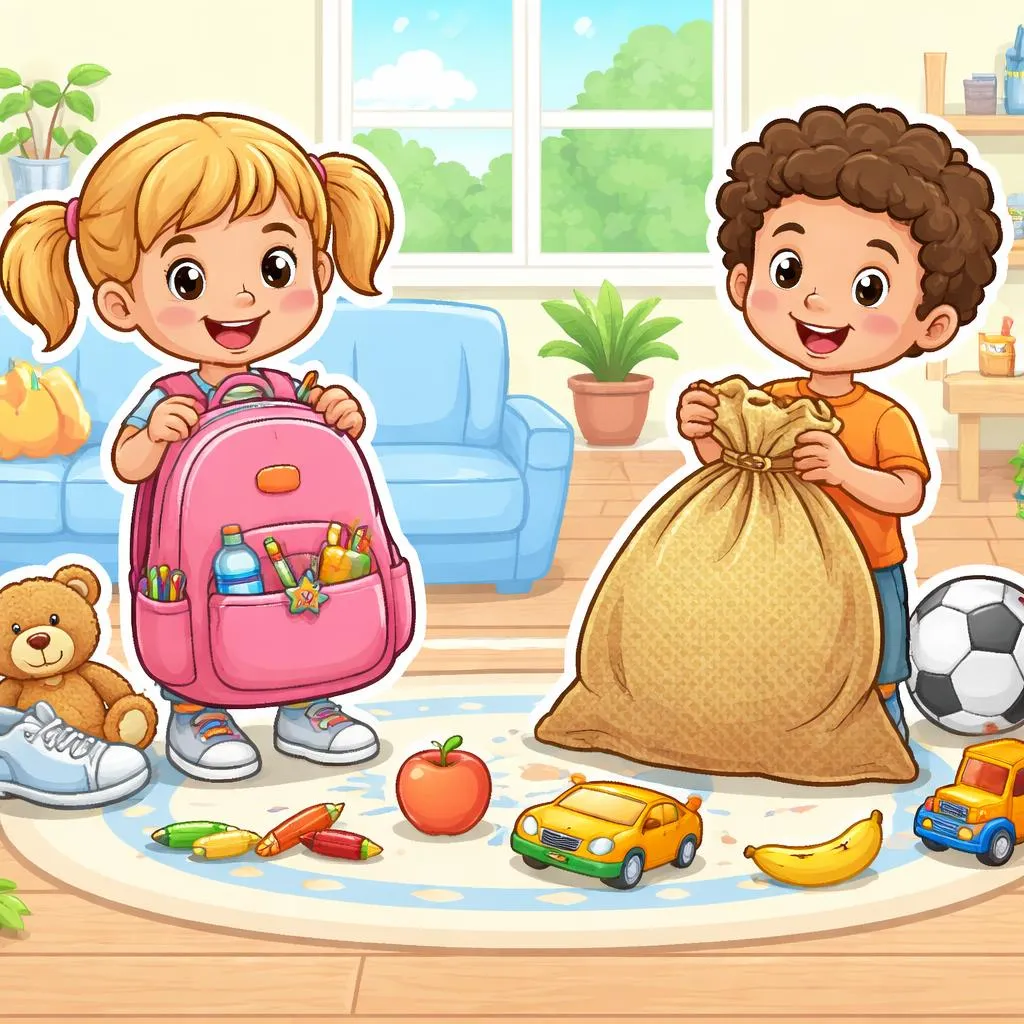
Hello, word explorer! Have you ever carried your books to school? You use a backpack or a school bag. Have you seen someone carry potatoes? They might use a burlap sack. They are both things that hold and carry items. They are both made of fabric or material. Are they the same? This is a fun carrying puzzle. Today we explore a word pair. We explore bag and sack. They are like a city backpack and a farm hauler. One is for everyday life. One is for heavy loads. Knowing the difference is a superpower. Your talk about carrying things will be clear and smart. Let us start our word journey!
Be a Language Observer now. Our first clue is at home. Your mom goes shopping. She brings home groceries in a reusable shopping bag. In the garage, you see a big sack of soil for the garden. They both carry things. But are they the same? Let us test with two sentences.
"She packed her lunch in a paper bag." This feels like a common, everyday carrier. "The farmer filled a sack with grain." This feels like a large, rough carrier for bulk items.
They both are containers you carry. But one feels common and handy. One feels big and rustic. Your observation mission starts. Let us carry our way into their word world.
Adventure! Carry Into the Word World
Feel the Word's Polished and Rustic Vibe!
Feel the word bag. It is a common, handy word. It feels like school, shopping, purses, and zippers. It is for organized, everyday items. The word sack is a rough, simple word. It feels like farms, markets, flour, potatoes, and simple tying. It is for bulk, loose goods. Bag is the city backpacker. Sack is the farm worker. One is for personal items. The other is for raw materials. Let us see this at school.
At school, you carry books in your backpack or school bag. This is for personal, organized belongings. In a history lesson, you might learn people used to carry coins in a money bag. This is a specific, small pouch. Saying you carry your pencil case in a "sack" sounds a bit odd. The feeling of the words is different. One is modern and personal. The other is traditional and bulky.
Compare Their Size, Material, and Use!
Think about a lady's elegant handbag and a rough potato sack. The word bag is the handbag. It can be any size, but often implies more structure, handles, and style. The word sack is the potato sack. It often suggests a larger, looser shape, made of simpler material like burlap, and is for carrying lots of one thing. Their use is a clue. A bag is for carrying a variety of personal things. A sack is often for carrying a large amount of one kind of thing. Let us test this on the playground.
You bring a small drawstring bag for your toys. This is for personal, mixed items. Someone rakes leaves into a huge plastic leaf sack. This is for a large amount of one thing. The word bag is for your stuff. The word sack is for bulk material. The playground shows the difference.
Meet Their Best Word Friends!
Words have favorite carrying partners. The word bag likes personal and specific words. It teams up with 'shopping', 'sleeping', 'tea', 'hand', 'mixed', and 'brown paper'. A mixed bag. In the bag. The word sack likes agricultural and bulk words. It teams up with 'potato', 'mail', 'hit the', 'sleeping', 'burlap', and 'sack of'. A sack of potatoes. Hit the sack. Their partners are different. Note that "sleeping bag" and "sleeping sack" both exist! A sleeping bag is common. A sleeping sack is like a simple, sack-shaped liner. Let us go back to nature.
A squirrel might store nuts in a hollow tree, its own little treasure bag. This is a small, personal stash. A pack animal might carry heavy supplies in large cloth sacks. This is for bulk transport. The animal's load uses the word "sacks." The word friends help us choose.
Our Little Discovery!
We carried and stored in the word world. We made a clear discovery. The words bag and sack are different. A bag is a common word for a flexible container with an opening, used to carry personal items, groceries, or belongings. It often has more structure or style. A sack is a type of bag, but it often implies a larger, simpler bag, usually made of rough material like burlap or thick plastic, used for carrying bulk goods like potatoes, grain, or soil. Bag is the everyday word. Sack is the workhorse word. One is general and personal. The other is specific and bulky. This is the main difference.
Challenge! Become a Carrying Word Expert
"Best Choice" Challenge!
Let us look at a nature scene. A hamster fills its cheek pouches with food. Its pouches are like tiny, natural bags for carrying snacks. Is it Bag or Sack? The champion is Bag! The pouches are for small, personal amounts of food. Now, imagine a farmer harvesting a huge crop of corn. He needs to move it to the barn. He uses large, rough sacks made of strong fabric. Is it bag or sack? The champion is sack! This is for a large amount of a single, bulky crop. Excellent!
"My Sentence Show"!
Now, create your own sentences. Here is a fun scene: Imagine you are going to the library. You need something to carry your books home. Use the word bag in one sentence. Now imagine a gardener has a huge pile of weeds to throw away. He needs a large, strong holder. Use the word sack in another. Try it! Here is an example. Sentence one: "I put my library books in a reusable tote bag." Sentence two: "The gardener filled a heavy-duty sack with weeds." See the difference? The first is for personal, mixed items. The second is for a large amount of garden waste.
"Eagle Eyes" Search!
Can you find the word that needs help? Read this sentence: "For the picnic, we packed our sandwiches and apples in a brown paper sack to carry to the park." Hmm. This is a tricky one. People do say "paper sack" for a lunch bag! But "paper bag" is much more common and sounds more natural for a small lunch. A "sack" often feels bigger or rougher. A better, more common choice is: "For the picnic, we packed our sandwiches and apples in a brown paper bag to carry to the park." You made it sound more everyday!
What a great carrying and hauling session in the word world! You started as a curious explorer. Now you are a word porter. You know the secret of bag and sack. You can feel their different handy and rough vibes. You see that a bag is the everyday word and a sack is often for bulk. You know their best word friends. This is a real language superpower.
You can learn amazing things from this article. You now know that a 'bag' is the common word for a container you carry personal things in, like a school bag or shopping bag. You understand that a 'sack' is often a larger, simpler bag, usually for carrying big amounts of one thing, like a sack of potatoes or a sack of soil. You can explain that all sacks are bags, but not all bags are called sacks. You learned phrases like 'mixed bag' and 'hit the sack'.
How can you use this today? It is easy and fun. Look at your backpack. It is a school bag. Look in the kitchen pantry. You might find a sack of rice or flour. At the store, you carry groceries in a bag. If you help with yard work, you fill a leaf sack. Draw two pictures. Draw a person with a shopping bag. Draw a gardener with a sack of soil. You are using your new skill every day.
Keep your explorer eyes open. The world is full of amazing bags and useful sacks. You are learning the words to pick the right one. Great work, word expert. Your English journey is getting more precise and loaded with meaning every day!