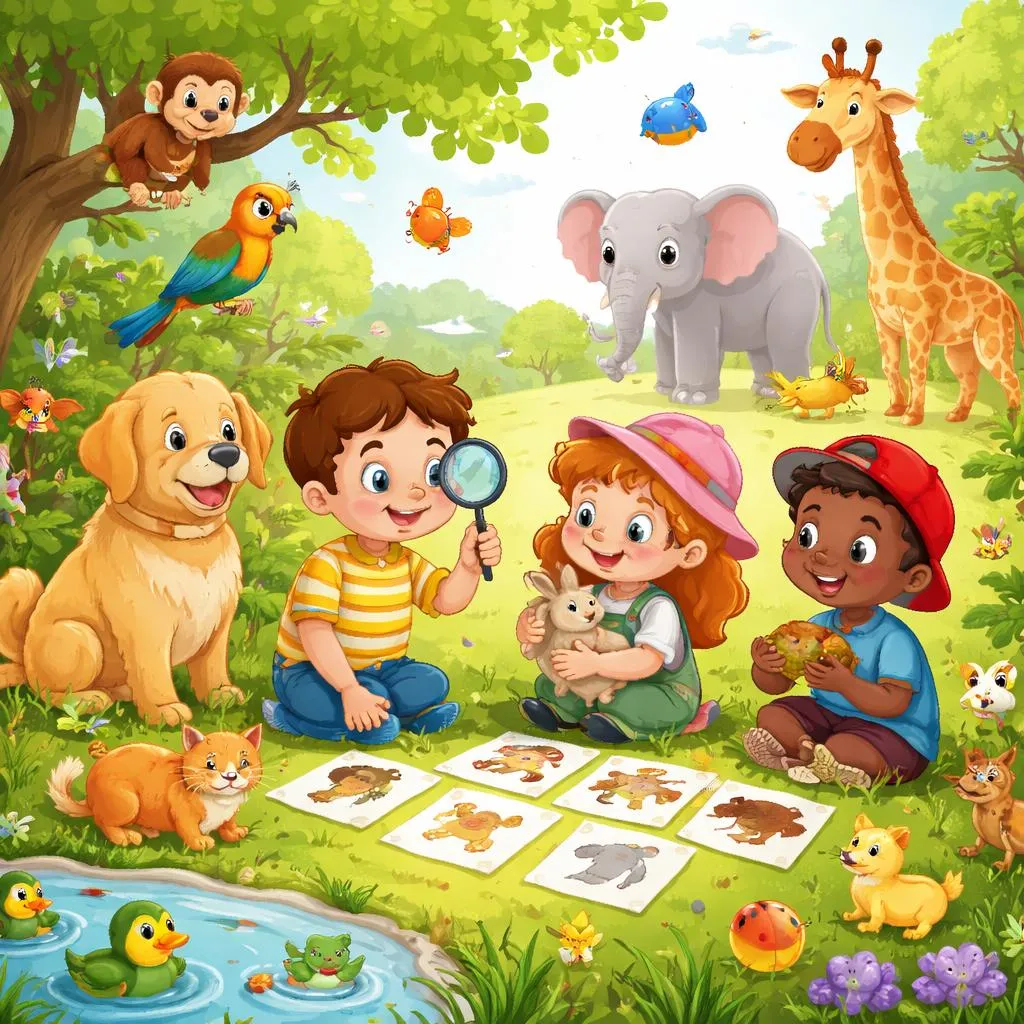

Animals fascinate young children. They love visiting the zoo. They enjoy stories about farm animals. They imitate animal sounds with delight. Learning animal names is one of the most joyful parts of language acquisition. Children naturally want to know what each creature is called. They want to make the sounds. They want to talk about their favorite animals. Teaching animal vocabulary gives children words they are excited to use. Let us explore how to guide young learners through this engaging topic with clear explanations and fun activities.
What Are Animal Names for Young Learners? Animal names are the words we use for different creatures. Animals can be grouped in many ways. Children need to learn names for animals they might see or hear about.
Pets: Animals that live with people Dog, cat, fish, bird, hamster, rabbit, guinea pig, turtle
Farm animals: Animals that live on farms Cow, pig, horse, sheep, goat, chicken, duck, goose, turkey, donkey
Zoo animals: Animals we see at the zoo Lion, tiger, elephant, giraffe, zebra, monkey, bear, hippo, rhino, crocodile, snake, penguin, polar bear, kangaroo
Forest animals: Animals that live in woods and forests Deer, fox, squirrel, rabbit, owl, raccoon, skunk, bear, wolf, mouse
Ocean animals: Animals that live in water Fish, dolphin, whale, shark, octopus, crab, lobster, seal, starfish, jellyfish
Insects and small creatures: Tiny animals Bee, butterfly, ant, ladybug, spider, caterpillar, grasshopper, snail, worm
For young learners, start with animals they are most likely to encounter. Pets and farm animals are good beginning points. Add zoo animals and others gradually.
Categories of Animals Organizing animals into categories helps children understand different groups. Here are useful categories for teaching.
Animals by where they live: On a farm - cow, pig, horse, sheep, chicken In the jungle - monkey, tiger, elephant, snake In the ocean - fish, dolphin, whale, shark In the forest - deer, fox, owl, bear In the house - dog, cat, fish, bird
Animals by size: Small animals - mouse, bug, bee, bird, fish Medium animals - cat, dog, rabbit, fox Large animals - cow, horse, lion, tiger Very large animals - elephant, giraffe, whale, hippo
Animals by what they eat: Animals that eat plants - cow, horse, sheep, giraffe, elephant Animals that eat meat - lion, tiger, shark, snake Animals that eat both - bear, pig, raccoon
Animals by how they move: Animals that walk - dog, cat, cow, horse Animals that fly - bird, butterfly, bee Animals that swim - fish, dolphin, whale Animals that hop - rabbit, kangaroo, frog
Animals by sounds they make: Dogs bark, cats meow, cows moo, pigs oink, sheep baa, ducks quack, horses neigh, lions roar, birds chirp
Use these categories in sorting activities. Children learn that animals have different characteristics and behaviors.
Daily Life Examples of Animals The best animal learning happens through real experiences and connections. Here are examples of animals in daily life.
At home: Some families have pet dogs. They bark and wag their tails. Cats like to sleep and purr when happy. Fish swim in tanks and need to be fed. Birds in cages can sing and chirp.
In books and stories: Many children's books have animal characters. Brown Bear, Brown Bear, What Do You See? features many animals. The Very Hungry Caterpillar shows a caterpillar turning into a butterfly. Farm stories often have cows, pigs, and chickens.
On television and in movies: Children watch shows with animal characters. Daniel Tiger, Peppa Pig, and others. Nature programs show real animals in the wild. Cartoons often feature talking animals.
At the zoo: Visiting the zoo lets children see real animals. They see elephants with long trunks. They watch monkeys swinging. They hear lions roaring.
In the neighborhood: Squirrels run up trees and gather nuts. Birds build nests and sing in the morning. Dogs go for walks with their owners. Cats sit on fences and watch.
On the farm: Some children visit farms. They see cows being milked. They collect eggs from chickens. They ride horses.
Use these examples during discussions. Connect animal words to children's experiences. "Do you have a pet at home?" "What animals did you see at the zoo?" This makes learning personal.
Printable Flashcards for Animals Flashcards provide visual support for learning animal names. Here are ideas for creating and using them.
Basic animal cards: Create cards with clear pictures of each animal. Write the name below each picture. Include a variety of animals from different categories.
Animal sound cards: Create cards that show the animal and the sound it makes. Dog - woof, cat - meow, cow - moo, pig - oink, sheep - baa. Children match the animal to its sound.
Habitat cards: Create cards showing different habitats. Farm, jungle, ocean, forest, house. Children sort animals into the correct habitat.
Baby animal cards: Create cards showing adult animals and their babies. Cow and calf, cat and kitten, dog and puppy, chicken and chick. Children match adults to babies.
Animal feet cards: Create cards showing animal footprints. Children match the footprint to the animal. This adds a fun detective element.
What animal am I? cards: Create cards with simple clues. "I have a long trunk. I am very big. I am gray. What am I?" Children guess the animal.
Laminate the cards for durability. Keep them in a pocket chart for easy access. Use them for games, sorting, and vocabulary building.
Learning Activities for Animals Active learning helps children remember animal names. Here are activities that work well in the classroom.
Animal Sounds Game: Make animal sounds. Children guess which animal makes that sound. The child who guesses correctly makes the next sound.
Animal Walk: Call out an animal name. Children move like that animal. Hop like a rabbit. Stomp like an elephant. Swim like a fish. Fly like a bird. This builds gross motor skills.
Animal Sort: Provide a collection of animal toys or pictures. Children sort them into categories. Farm animals here. Zoo animals there. Ocean animals in another group.
Feed the Animals: Create animal faces on boxes with open mouths. Children "feed" each animal the correct food. A rabbit gets a carrot. A monkey gets a banana. A dog gets a bone.
Animal Habitats: Create simple habitat scenes on paper. A farm, a jungle, an ocean. Children place animal pictures in the correct habitat.
Animal Bingo: Create bingo cards with animal pictures. Call out animal names. Children cover the matching picture. First to cover a row wins.
I Spy an Animal: Play I Spy with animal pictures. "I spy an animal with a long neck." Children guess "giraffe!" "I spy an animal that says moo." Children guess "cow!"
Educational Games for Animals Games make learning about animals joyful. Here are games for practicing animal vocabulary.
Animal Memory Match: Create pairs of animal picture cards. Place them face down. Children take turns flipping two cards, trying to find matches. When they make a match, they name the animal.
Animal Charades: Act out an animal without speaking. Move like the animal. Make the animal's sound. Children guess which animal it is. The person who guesses correctly acts out the next animal.
What's Missing?: Place several animal toys or pictures in view. Children close their eyes. Remove one animal. Children open their eyes and guess which animal is missing.
Animal Relay Race: Divide children into teams. Place animal cards at one end of the room. Call out an animal name. One child from each team runs, finds that animal card, and brings it back. First correct card wins.
Animal Sorting Relay: Place two hoops on the floor. Label them with categories. "Farm animals" and "Zoo animals." Children run to a pile of animal cards, grab one, and place it in the correct hoop.
Animal Detective: Give clues about an animal. "This animal lives in the ocean. It is very big. It blows water from its head." Children guess "whale!"
Animal Cube Game: Create a cube with animal pictures on each side. Children take turns rolling the cube and naming the animal that lands on top. For extra challenge, they say one fact about that animal.
Connecting Animals to Other Learning Animals connect naturally to many curriculum areas. Here are ways to extend learning.
Literacy with animals: Read books about animals. Write animal names. Make an alphabet animal book. "A is for alligator. B is for bear." This builds letter knowledge.
Math with animals: Count animal toys. Sort animals by size. Graph favorite animals. Make patterns with animal pictures. This builds math skills.
Science with animals: Learn about animal habitats. Discuss what animals eat. Explore life cycles like caterpillar to butterfly. Study animal coverings - fur, feathers, scales.
Art with animals: Draw favorite animals. Make animal masks. Create animal habitats in shoeboxes. Paint animal pictures. This builds creativity.
Music with animals: Sing animal songs. "Old MacDonald Had a Farm." "The Wheels on the Bus" with animal sounds. "Five Little Ducks." This builds rhythm and memory.
Movement with animals: Do animal walks. Hop like a frog. Stomp like an elephant. Slither like a snake. Fly like a bird. This builds gross motor skills.
Social studies with animals: Discuss animals from different parts of the world. Learn about animals important in different cultures. Talk about pets in different countries.
Using Songs to Teach Animals Songs make animal names easy to remember. Here are songs that work well for teaching animals.
Old MacDonald Had a Farm: This classic song introduces many farm animals and their sounds. Each verse adds a new animal. Children love making the sounds.
The Wheels on the Bus: Adapt this song with animal sounds. "The cow on the bus goes moo moo moo." This adds variety to a familiar tune.
Five Little Ducks: This counting song teaches duck vocabulary and subtraction. Children practice numbers while learning about ducks.
Animal Fair: This old song mentions a monkey and other animals. Children enjoy the silly story.
Going to the Zoo: This song talks about seeing many animals at the zoo. Children can act out seeing each animal.
We're Going on a Bear Hunt: This story song includes many animals and sounds. Children love the repetition and actions.
Create simple recordings of these songs. Play them during transitions or quiet times. Repetition through music builds long-term memory.
Using Stories to Teach Animals Children's books provide wonderful examples of animals in context. Here are ways to use books for animal learning.
Brown Bear, Brown Bear, What Do You See?: This classic book introduces many animals in a repeating pattern. Children learn to predict what comes next.
The Very Hungry Caterpillar: This book teaches the life cycle of a butterfly. Children see the caterpillar eat and grow before becoming a butterfly.
Goodnight Moon: This gentle bedtime book mentions a mouse and kittens. Children find the mouse on each page.
Dear Zoo: This lift-the-flap book shows different animals sent from the zoo. Children learn about each animal's characteristics.
Animal Picture Books: Many books focus on single animals. Books about dogs, cats, bears, and more. Read these throughout the year.
Create Class Animal Book: Make your own book. Each child chooses an animal and draws it. Write "I like _____" sentences. Read it together often.
Learning the animals gives children words they are excited to use. They can talk about pets at home. They can describe animals they see. They can make animal sounds and play animal games. These words appear in stories, songs, and conversations. Teaching animal vocabulary well gives children confidence to talk about the natural world. With pictures, games, and daily practice, animal names become natural. Children use them without thinking. And that is the goal of all vocabulary teaching.