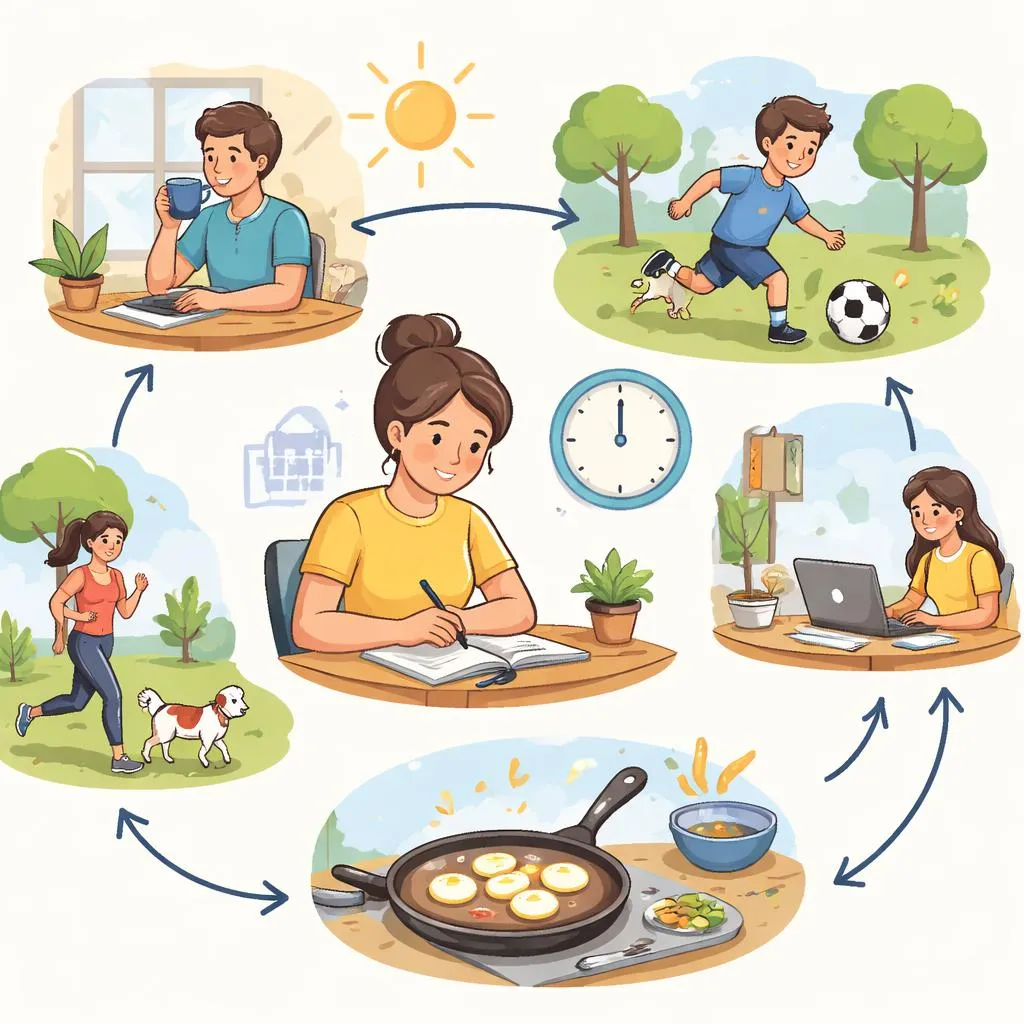

What Is the Present Simple?
The present simple tense talks about habits.
It talks about routines.
It talks about facts.
It describes things that are generally true.
This tense is one of the first grammar points taught in English because it is used every day in normal conversation and simple writing.
Structure of Present Simple
Subject + base verb
For he, she, and it, add -s or -es.
I work. You play. They study.
He works. She plays. It rains.
The extra -s is important.
Without it, the sentence is not correct.
Present Simple for Daily Routines
The present simple describes repeated actions.
She wakes up at six. He brushes his teeth every morning. They go to school on weekdays.
These actions happen again and again.
Time words often appear in these sentences.
every day every week on Mondays in the morning
She drinks coffee every day. He visits his grandmother on Sundays.
These time expressions help show routine.
Present Simple for Facts
The present simple is used for general truths.
The sun rises in the east. Water boils at one hundred degrees. Birds fly.
These sentences describe facts.
They do not change.
That is why present simple is correct.
Present Simple for Schedules
This tense is also used for fixed schedules.
The train leaves at eight. The class starts at nine. The store closes at ten.
Even though these actions happen in the future, present simple is used because the schedule is fixed.
Negative Form
Use do not or does not for negative sentences.
I do not like coffee. You do not understand. They do not live here.
He does not like milk. She does not play tennis. It does not work.
After does not, the verb goes back to the base form.
Not correct: She does not plays. Correct: She does not play.
Question Form
Use do or does at the beginning.
Do you like pizza? Do they work here?
Does he play football? Does she speak English?
The main verb stays in base form.
Does she likes coffee? This is not correct.
Does she like coffee? This is correct.
Adverbs of Frequency
Present simple often uses adverbs of frequency.
always usually often sometimes rarely never
She always wakes up early. He usually takes the bus. They never eat fast food.
These adverbs show how often something happens.
They usually come before the main verb.
Long Sentence Practice
When learners understand that the present simple tense is used for habits, repeated actions, general truths, and fixed schedules, they can form clearer sentences and communicate daily activities more accurately, which builds confidence in both speaking and writing over time.
Paragraph Practice
Every day, he wakes up at seven, eats breakfast with his family, walks to school, studies English in the morning, plays sports in the afternoon, and finishes his homework in the evening before he goes to bed.
This paragraph uses present simple for routine actions.
The present simple tense is basic but powerful.
It helps describe daily life clearly and naturally.
Present Simple With Third Person Singular
In the present simple tense, special attention is needed when the subject is he, she, or it, because the verb changes form and usually adds -s or -es, which is a small change but very important for correct grammar.
play → plays work → works read → reads
He plays basketball. She reads every night. It works well.
If the verb ends in ch, sh, x, s, or o, add -es.
watch → watches wash → washes go → goes fix → fixes
She watches TV in the evening. He goes to school by bus.
These spelling rules must be practiced carefully.
Verbs Ending in Consonant + Y
When a verb ends in consonant + y, change y to i and add -es.
study → studies carry → carries try → tries
She studies English every day. He tries his best.
If the verb ends in vowel + y, just add -s.
play → plays enjoy → enjoys
She enjoys music.
Understanding these patterns helps prevent common mistakes.
Present Simple With “Be”
The verb to be is different.
I am You are We are They are He is She is It is
I am happy. She is tired. They are ready.
The verb “be” does not use do or does in negative sentences.
She is not late. They are not busy.
In questions, change the order.
Is she at home? Are they ready?
This structure is common in English conversation.
Present Simple in Stories
The present simple is sometimes used in storytelling to make events feel immediate and exciting, even when the story describes something that happened in the past, which creates a strong and vivid effect for the listener.
In the story, the hero walks into the room, looks around carefully, and opens the mysterious box.
This style is often called the “historic present.”
It makes stories more lively.
Stative Verbs in Present Simple
Some verbs are usually not used in present continuous.
These verbs describe states, not actions.
know believe love hate understand want need
She knows the answer. He loves chocolate. They understand the lesson.
Not correct: She is knowing the answer.
These verbs usually stay in present simple form because they describe feelings, thoughts, or conditions rather than actions that happen physically.
Present Simple in Instructions
The present simple is often used in instructions and directions because it sounds clear, direct, and easy to understand, especially in recipes, manuals, and classroom explanations.
First, mix the flour and sugar. Next, add the eggs. Then, bake for twenty minutes.
Open the book. Turn to page ten. Read the first paragraph.
These sentences give clear guidance.
Present Simple in Headlines
Newspapers often use present simple in headlines.
The president visits Europe. Company opens new store. Team wins championship.
This style makes news sound immediate.
Extended Practice Paragraph
Every weekday, Maria wakes up early, prepares breakfast for her family, checks her email before work, drives through busy traffic to reach her office, answers phone calls throughout the morning, attends meetings in the afternoon, and returns home in the evening where she cooks dinner, relaxes with a book, and goes to bed before midnight.
This paragraph shows repeated daily actions.
All verbs are in present simple.
Why Present Simple Is Important
The present simple tense forms the foundation of English grammar because it allows speakers to describe habits, routines, schedules, facts, emotions, and general truths in a clear and organized way, which makes communication smoother and easier to understand in everyday situations.
Mastering this tense improves accuracy.
It builds confidence.
It supports learning other tenses.
Present simple may look basic, but it is used everywhere in spoken and written English.