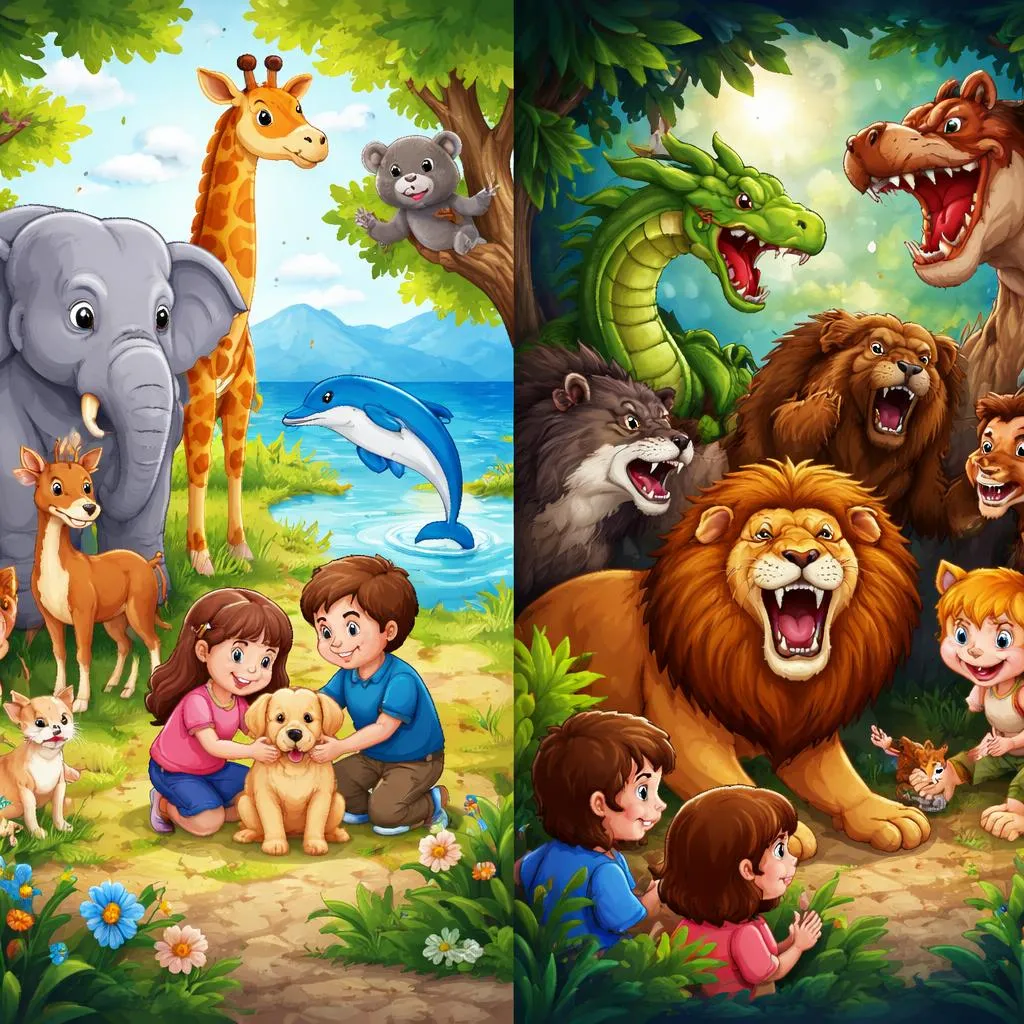

Hello, word adventurer! Do you love animals? Think about your friendly dog at home. Now think about a roaring lion in a movie. What do you call them? You might call both "animals." But English has special words. It has two words for this. Today we explore a word pair. We explore mammal and beast. They are like animal word cousins. They are in the same family. But they tell different stories! Knowing the difference is a superpower. Your descriptions will become powerful and clear. Let us start our word safari!
Be a Language Observer! Our first clue is at home. Look at your pet dog. It is furry. It drinks its mother's milk. It is a mammal. This is a science fact. Now, think of a scary monster in a storybook. It is big and wild. It is a beast. This is a story word. They seem to talk about animals. But do they feel the same? Let us listen to two sentences.
"My dog is a friendly mammal." This sounds like a science fact. "The story had a scary beast in the forest." This sounds exciting and wild.
They both describe creatures. But one sounds calm and factual. The other sounds thrilling and wild. Your observation starts now. Let us explore their secret world.
Adventure! Explore the Word Jungle
Feel the Word's Weather!
Feel the word mammal. It is a calm, sunny day word. It feels smart and clear. It is a fact word. It is like a friendly zoo guide. The word beast is different. It is a stormy, exciting night word. It feels wild and strong. It is an emotion word. It is like a campfire story. Mammal is for learning. Beast is for imagining. One is a classroom. The other is an adventure movie. Let us see this at school.
You are in science class. Your teacher says, "A whale is a mammal, not a fish." This is perfect. It teaches a fact. Now imagine your friend at recess. He says, "I ran like a beast to win the race!" This is perfect too. It shows strong feeling. Saying "I ran like a mammal" sounds funny. It loses the exciting feeling. The weather of the words is different.
Compare Their Size and Home!
Think about a spotlight. The word mammal is a precise, small spotlight. It shines on a specific group. It means animals with fur or hair. They give milk to their babies. Think humans, cats, dolphins, and bats. The word beast is a huge, wild spotlight. It can shine on many big, strong animals. It often means wild, scary, or powerful creatures. Its home is in stories, myths, and feelings. A mouse is a mammal. But you would not call it a beast. A lion can be both. Mammal is the science club. Beast is the legend tribe. Let us test this on the playground.
You are playing tag. You pretend to be animals. You say, "I am a fast cheetah mammal!" This is okay. But you shout, "I am a powerful beast!" This is more fun. It sounds stronger. The word beast here adds power and wildness. Its home is in play and imagination. The word mammal's home is in books and facts.
Meet Their Best Word Friends!
Words have favorite teams. The word mammal likes science friends. It teams up with 'marine', 'land', 'species', and 'biology'. You learn about marine mammals. You study mammal biology. The word beast likes story friends. It teams up with 'wild', 'mythical', 'beauty', and 'mode'. You read about a wild beast. You go into beast mode in a game. Their teams are very different. Let us go back to school.
You write a science report. You write, "Bats are the only flying mammals." This is correct. Now, you read a fairy tale. It says, "A fearsome beast guarded the castle." This is also correct. You would not write "fearsome mammal" in a fairy tale. It loses the magic. The word friends tell us the word's job.
Our Little Discovery!
We explored the word jungle. We made a great discovery. The words mammal and beast are different animals. The word mammal is a science word. It is a clear category. It describes animals with fur and milk. The word beast is a feeling word. It describes powerful, often wild creatures. It lives in stories and strong expressions. Mammal is for your brain. Beast is for your imagination. One is a fact. The other is a story.
Challenge! Become an Animal Word Champion
"Best Choice" Challenge!
Let us play in the wild. Read each scene. Pick the champion word. Scene one: You watch a nature show. It shows a dolphin mother feeding her baby. The narrator says, "The dolphin is a sea ______." Is it mammal or beast? The champion is mammal! It tells a true science fact. Scene two: You see a huge, angry bear in a movie. It roars loudly. A character yells, "Watch out for the ______!" Is it mammal or beast? The champion is beast! It shows the fear and wild power. Great thinking!
"My Sentence Show"!
Now, create your own sentences. Here is a fun scene: Imagine a deep, dark cave. Use the word mammal in one sentence. Use the word beast in another. Try it! Here is an example. Sentence one: "Bats in the cave are nocturnal mammals." Sentence two: "A legendary beast slept in the cave." See the difference? The first sentence teaches. The second sentence tells a thrilling tale.
"Eagle Eyes" Search!
Can you find the word that needs help? Read this sentence: "The zoo keeper cares for many beasts, like monkeys and giraffes." Hmm. This sounds a bit strange. Monkeys and giraffes are animals. But calling them "beasts" feels too wild and scary. They are friendly zoo animals. The better word is mammals. "The zoo keeper cares for many mammals, like monkeys and giraffes." This is accurate and kind. You fixed it!
What a fantastic safari! You started as a curious explorer. Now you are a word expert. You know the secret of mammal and beast. You can feel their different weather. You see their different homes. You know their best word friends. This is a real language superpower.
You can learn amazing things from this article. You now know that 'mammal' is a science word for warm-blooded, milk-giving animals. You understand that 'beast' is a story word for wild, strong, or mythical creatures. You can tell your friend that a whale is a mammal, not a fish. You learned that calling someone a "beast" at sports is a cool compliment. Your word toolbox is now full of great choices!
How can you use this today? It is easy and fun. Watch a nature documentary. Listen for the word 'mammal'. Point and say, "That's a mammal!" Read a fairy tale. Find the word 'beast'. See how it makes the story exciting. Play an animal game. Say, "I am a fast mammal!" for a rabbit. Say, "I am a strong beast!" for a dinosaur. You are using your new power every day.
Keep your explorer eyes open. Language is a wonderful jungle. You have the map to explore it. Great work, word champion. Your English adventure is full of amazing discoveries.