
When learning English grammar, one of the most important topics is the verb “to be.” If someone searches for “verb to br,” it is often a typing mistake for “verb to be.”
The verb “to be” is one of the most common and essential verbs in English. It is used to describe identity, condition, age, location, and more.
Forms of the Verb “To Be”
The verb “to be” changes form depending on tense and subject.
Present Tense
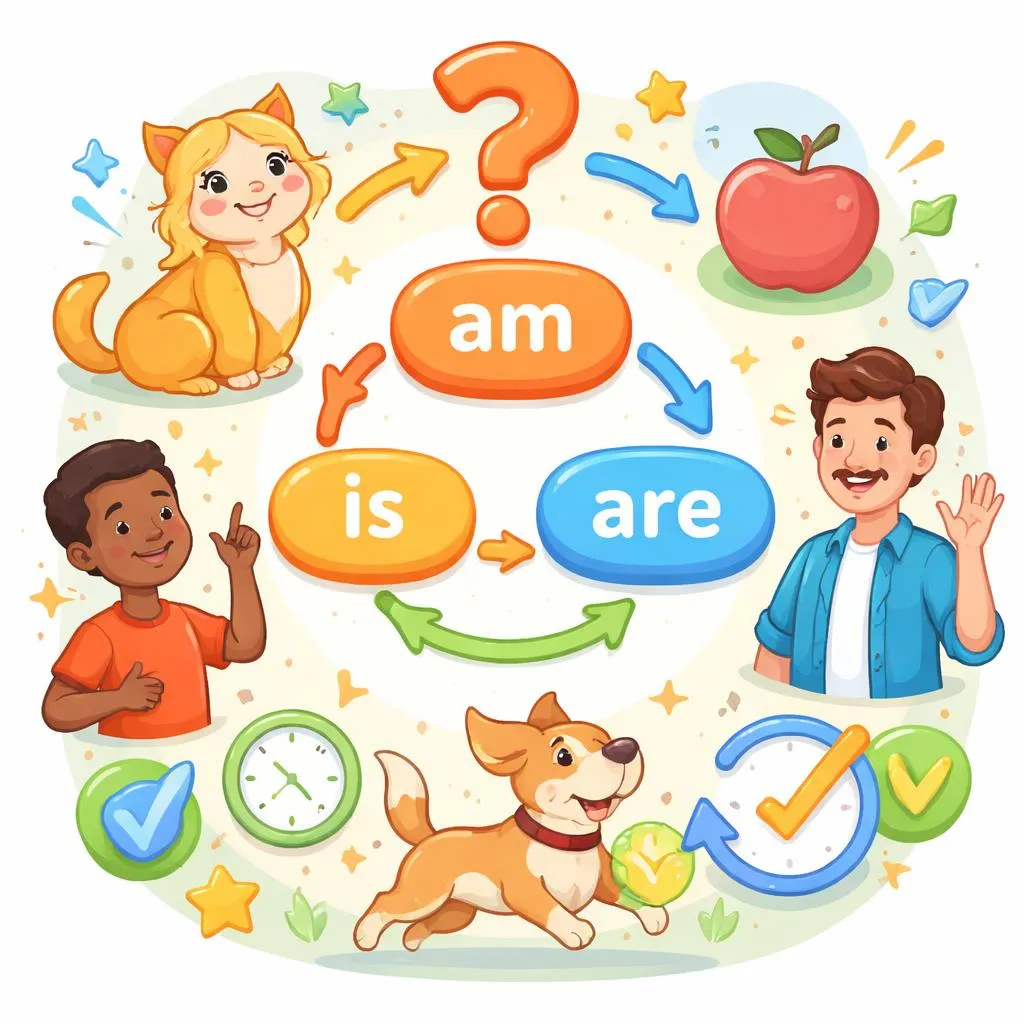
am is are
I am You are He is She is It is We are They are
Examples:
I am happy. She is a teacher. They are ready.
Past Tense
was were
I was You were He was She was It was We were They were
Examples:
She was tired yesterday. We were at school. They were excited.
Base Form
be
The base form appears after modal verbs or in infinitives.
I want to be a doctor. You must be careful.
Past Participle
been
Used in perfect tenses:
I have been busy. She has been kind.
Present Participle
being
Used in continuous or passive structures:
He is being polite. The work is being completed.
Main Uses of the Verb “To Be”
Identity
The verb “to be” connects a subject with a noun.
She is a student. He is my brother.
It acts as a linking verb.
Description
The verb “to be” connects a subject with an adjective.
The sky is blue. The movie was interesting.
It describes a quality or condition.
Age
In English, age uses the verb “to be.”
I am ten years old. She is twenty.
Some languages use “have” for age, but English uses “be.”
Location
The verb “to be” describes location.
The book is on the table. We are at home.
Time and Dates
It is five o’clock. Today is Monday.
Verb “To Be” in Questions
To form questions, the verb “to be” moves before the subject.
Are you ready? Is she here? Was he late?
This inversion forms yes-no questions.
Negative Sentences
Add “not” after the verb.
I am not tired. She is not at home. They were not happy.
Contractions are common in spoken English.
I’m not She isn’t They weren’t
Verb “To Be” in Continuous Tenses
The verb “to be” is used to form continuous (progressive) tenses.
Structure:
subject + be + verb-ing
I am studying. She is working. They were playing.
Without the verb “to be,” continuous tense is impossible.
Verb “To Be” in Passive Voice
The passive voice uses the verb “to be” plus the past participle.
The cake was baked yesterday. The project is finished. The letter was written by her.
The verb “to be” is essential in passive construction.
Common Mistakes
Using the wrong form:
Incorrect: She are happy. Correct: She is happy.
Forgetting the verb:
Incorrect: He tall. Correct: He is tall.
In English, a sentence usually requires a verb. The verb “to be” often fills that role.
Why the Verb “To Be” Is Important
The verb “to be” is fundamental because:
It connects subjects to descriptions. It forms continuous tenses. It creates passive voice. It appears in everyday communication.
It is one of the first verbs learners study and one of the most frequently used verbs in English.
Practice Sentences
I am ready for class. She is my friend. They are excited about the trip. We were surprised by the news. He has been very helpful.
Understanding the verb “to be” builds a strong foundation for English grammar. It supports sentence structure, tense formation, and clear communication.
The Verb “To Be” as a Linking Verb
The verb “to be” is often called a linking verb. A linking verb connects the subject to information about the subject. It does not show action. Instead, it shows a state or condition.
In the sentence:
She is a teacher.
The verb “is” links “she” to “a teacher.” It does not describe an action. It connects identity.
In the sentence:
The weather is cold.
The verb “is” links the subject “weather” to the adjective “cold.”
Understanding this linking function helps learners avoid confusion with action verbs such as run, eat, or write.
The Verb “To Be” and Predicate Nouns
When the verb “to be” connects a subject to a noun, the noun is called a predicate noun.
Examples:
He is a doctor. They are students. My sister is an engineer.
The predicate noun gives more information about the subject.
This structure is common in introductions and descriptions.
The Verb “To Be” and Predicate Adjectives
When the verb “to be” connects a subject to an adjective, that adjective is called a predicate adjective.
Examples:
The soup is hot. The children were quiet. The exam was difficult.
The adjective describes the subject, not the verb.
Recognizing predicate adjectives strengthens sentence analysis skills.
Contractions With the Verb “To Be”
In everyday speech, the verb “to be” often appears in contractions.
I am → I’m You are → You’re He is → He’s She is → She’s It is → It’s We are → We’re They are → They’re
Negative contractions are also common:
is not → isn’t are not → aren’t was not → wasn’t were not → weren’t
Contractions are common in informal writing and conversation, but full forms are often preferred in formal writing.
The Verb “To Be” in There Is / There Are
The verb “to be” appears in existential sentences with “there.”
There is a book on the table. There are many students in the classroom.
In past tense:
There was a problem. There were several questions.
The verb agrees with the noun that follows.
There is + singular noun There are + plural noun
This structure is frequently used to introduce new information.
The Verb “To Be” in Emphatic Sentences
The verb “to be” can add emphasis in certain sentence structures.
What is important is your effort. The problem is the lack of time.
In these sentences, “is” highlights the key idea.
This structure appears often in formal explanations and academic writing.
The Verb “To Be” in Questions With Wh-Words
The verb “to be” is also used in wh-questions.
Where are you? Why is she late? Who was at the door? What is your name?
In these questions, the verb comes before the subject.
Wh-word + be + subject
This structure is essential in everyday conversation.
The Verb “To Be” in Comparisons
The verb “to be” appears in comparative structures.
She is taller than her brother. This book is more interesting than that one. The weather was better yesterday.
The verb links the subject to the comparative adjective.
The Verb “To Be” and Continuous Passive
The verb “to be” can appear twice in one sentence when forming the continuous passive.
The house is being painted. The documents were being prepared.
Structure:
subject + be + being + past participle
This advanced structure shows that an action is happening to the subject.
The Verb “To Be” in Tag Questions
The verb “to be” appears in tag questions.
You are ready, aren’t you? She is coming, isn’t she? They were late, weren’t they?
The tag repeats the verb “to be” in negative or positive form.
Tag questions are common in spoken English.
The Verb “To Be” in Conditional Sentences
The verb “to be” appears in conditional forms.
If I am late, call me. If she were here, she would help.
Notice the special form “were” used in hypothetical situations.
If I were you, I would study more.
This structure expresses unreal or imaginary situations.
The Verb “To Be” in Formal Writing
In formal writing, the verb “to be” is sometimes reduced to make sentences more active.
For example:
The report was written by the manager.
This is passive voice.
An active version would be:
The manager wrote the report.
Writers often revise sentences to reduce unnecessary use of “to be” and create stronger action verbs.
However, the verb “to be” remains essential in many grammatical structures.
Why Mastering the Verb “To Be” Matters
The verb “to be” appears in:
basic descriptions identity statements continuous tenses passive voice questions negative forms comparisons existential sentences
Because of its many uses, mastering the verb “to be” builds a strong grammatical foundation.
Without the verb “to be,” English sentences would often be incomplete.
Understanding its forms, functions, and structures supports clearer writing, better speaking, and more confident communication in English.