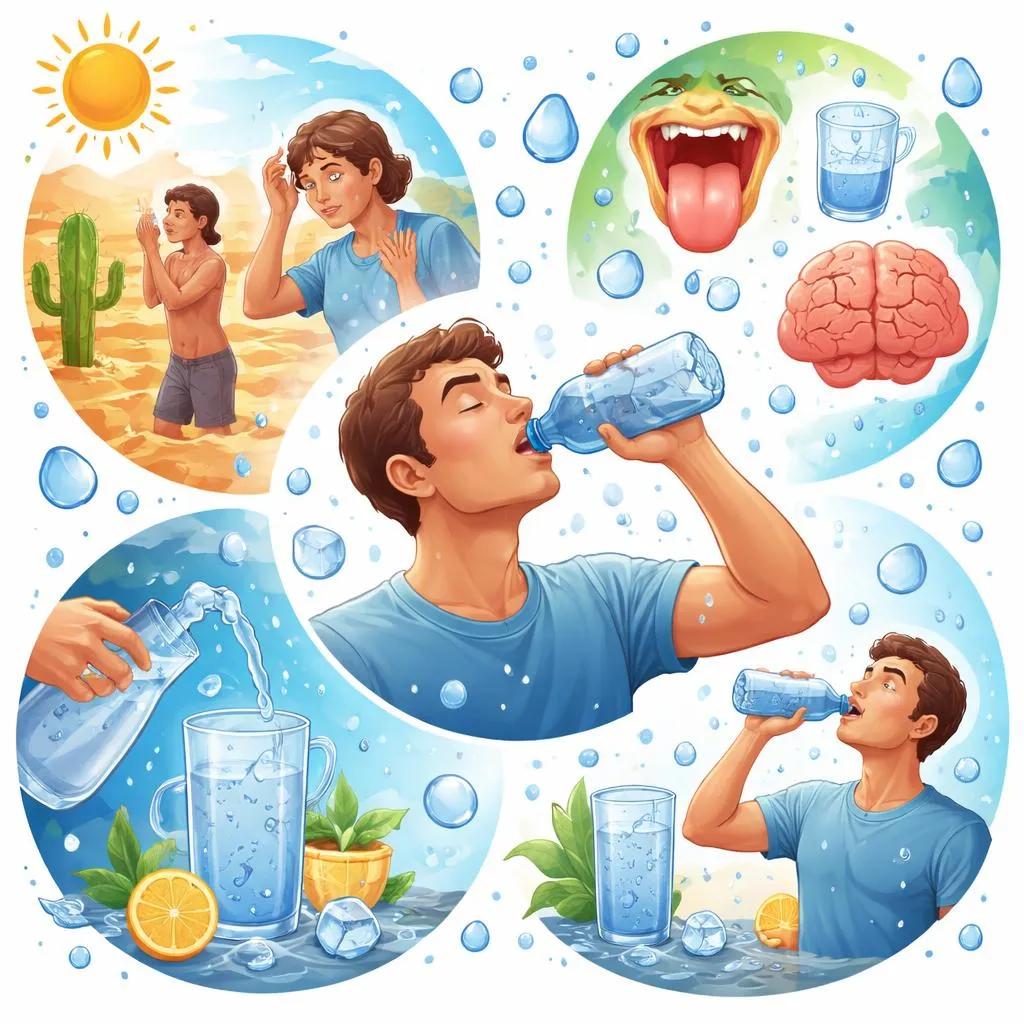

Thirst tells you to drink water. A thirsty runner needs a break. The words “thirst, thirsty, thirstily, thirstiness” all come from one family. Each word talks about needing to drink. But each one has a different job in a sentence. Learning this family helps children understand their body’s signals. Let us explore these four words together.
What Does “Same Word, Different Forms” Mean? One core idea can grow into many word shapes. The meaning stays the same at the heart. But the word changes its ending for a new role. For example, “thirst” is a noun. “Thirsty” is an adjective. “Thirstily” is an adverb. “Thirstiness” is a noun. Knowing these four forms helps a child talk about hydration.
Personal Pronouns Change Their Form Pronouns change from “he” to “him” or “his”. Our word family changes by adding suffixes, not by changing person. Think of “thirst” as the core need for liquid. “Thirsty” turns that need into a description. “Thirstily” turns the quality into a way of doing something. “Thirstiness” names the quality as a thing. Each form answers a simple question. What need? Thirst. How does a person feel? Thirsty. How? Thirstily. What is the state of being thirsty? Thirstiness.
From Verb to Noun to Adjective to Adverb – One Family, Many Words This family has nouns, an adjective, and an adverb. Let us start with the noun “thirst”. Noun: After the run, my thirst was strong. “Thirst” means the feeling of needing to drink.
Next is the adjective “thirsty”. Adjective: The thirsty dog drank from the bowl. “Thirsty” means feeling a need for water.
Then the adverb “thirstily”. Adverb: The plant drank thirstily after a week of sun. “Thirstily” means in a thirsty way.
Finally the noun “thirstiness”. Noun: The thirstiness of the desert travelers was severe. “Thirstiness” names the quality of being thirsty. This family has no verb form.
One Root, Many Roles – How Words Grow from Actions to Qualities The Old English word “thurst” came from “thurstian” meaning to be thirsty. From this root, we built a family about needing water. “Thirst” kept the main noun meaning. Adding -y made “thirsty” (full of thirst). Adding -ily (from -y + -ly) made “thirstily” (in a thirsty way). Adding -ness made “thirstiness” (the state). Children can see the same pattern in other families. For example, “hunger, hungry, hungrily, hungriness”. Learning patterns helps kids describe body feelings.
Same Meaning, Different Jobs – Is It a Verb or a Noun? Look at each word’s job carefully. “Thirst” is a noun. Example: Thirst woke me up at night.
“Thirsty” is an adjective. Example: The thirsty child asked for juice.
“Thirstily” is an adverb. Example: He drank thirstily after the game.
“Thirstiness” is a noun. Example: The thirstiness of the soil showed it needed rain. Each form has one clear job. No confusing double roles here.
Adjectives and Adverbs – When Do We Add -ly? We change “thirsty” to “thirstily” to make the adverb. First change “y” to “i”, then add “-ly”. Thirsty → thirst + ily = thirstily. The rule: adjective ending in y changes y to i and adds -ly. Example: easy → easily, happy → happily, thirsty → thirstily. A simple reminder: “Thirsty describes a person. Thirstily describes how they drink.”
Watch Out for Tricky Spelling Changes (Double Letters, y to i, and More) “Thirst” has no double letters. Add -y to make “thirsty”. Thirst + y = thirsty (no changes). Add -ily to make “thirstily”. Thirsty → thirstily (change y to i, add ly). Add -ness to make “thirstiness”. Thirsty → thirstiness (change y to i, add ness). A common mistake is writing “thirsty” as “thirstee” or “thirstey”. Say “Thirsty ends with y, like firsty? No, it is T-H-I-R-S-T-Y.” Another mistake is “thirstily” spelled “thirstily” (correct) but some write “thirstley”. Say “Thirstily has an i before the ly. Thirsty becomes thirstily.” Another mistake is “thirstiness” spelled “thirstyness”. Say “Change the y to i before adding ness. Thirsty → thirstiness.”
Let’s Practice – Can You Choose the Right Form? Try these sentences with your child. Read each one aloud. Pick the correct word from the family.
After playing outside, my ______ was strong. Answer: thirst (noun)
The ______ cat drank from the faucet. Answer: thirsty (adjective)
He drank the water ______ and asked for more. Answer: thirstily (adverb)
The ______ of the hikers made them hurry back to camp. Answer: thirstiness (noun)
Lemonade is great for quenching ______. Answer: thirst (noun)
I feel ______ after eating salty popcorn. Answer: thirsty (adjective)
The plant ______ absorbed the rain. Answer: thirstily (adverb)
The ______ of the soil told the farmer to water. Answer: thirstiness (noun)
A ______ person should drink slowly, not all at once. Answer: thirsty (adjective)
Water is the best answer to ______. Answer: thirst (noun)
After the practice, ask your child one question. Is this word a need, a feeling, a way of drinking, or a quality name? That simple question teaches grammar through body awareness.
Tips for Parents – Help Your Child Learn Word Families in a Fun Way Use a hot day to teach “thirst”. Say “After playing, your body feels thirst.”
Use a fun activity to teach “thirsty”. Say “Are you thirsty? Let us get water.”
Use a fast drinker to teach “thirstily”. Say “You drank thirstily. You really needed that water.”
Use a science talk to teach “thirstiness”. Say “The thirstiness of a plant tells you it needs rain.”
Play “fill in the blank” during car rides. Say “Running makes me feel ______.” (thirsty) Say “Drink water when you feel ______.” (thirst) Say “The puppy lapped milk ______.” (thirstily) Say “The ______ of the desert is dangerous.” (thirstiness)
Read a story about a desert journey or a thirsty animal. Ask “How does the character’s thirst change?” Ask “What happens when the thirstiness becomes too much?”
Turn a drawing activity into a word lesson. Draw a person with a water drop. Label “thirst”. Draw a person pointing to a glass. Label “thirsty”. Draw a dog lapping water with speed lines. Label “drinking thirstily”. Draw a wilting flower. Label “thirstiness of the plant”.
When your child makes a mistake, stay calm. If they say “I have thirsty,” say “Almost. I have thirst. Thirsty is how you feel. Thirst is what you have.” If they say “He drank thirsty,” say “Close. He drank thirstily. Thirsty is an adjective. Thirstily is an adverb.”
Write the four words on sticky notes. Put them on the refrigerator near the water filter. Each time you get a drink, point to “thirst” and “thirsty”.
Remember that thirst is a healthy signal. Use these words to teach body awareness. “Listen to your thirst. Drink water before you feel very thirsty.” Soon your child will name their thirst. They will say “I am thirsty” instead of whining. They will drink thirstily when active. And they will understand the thirstiness of plants in summer. That is the refreshing power of learning one small word family together.