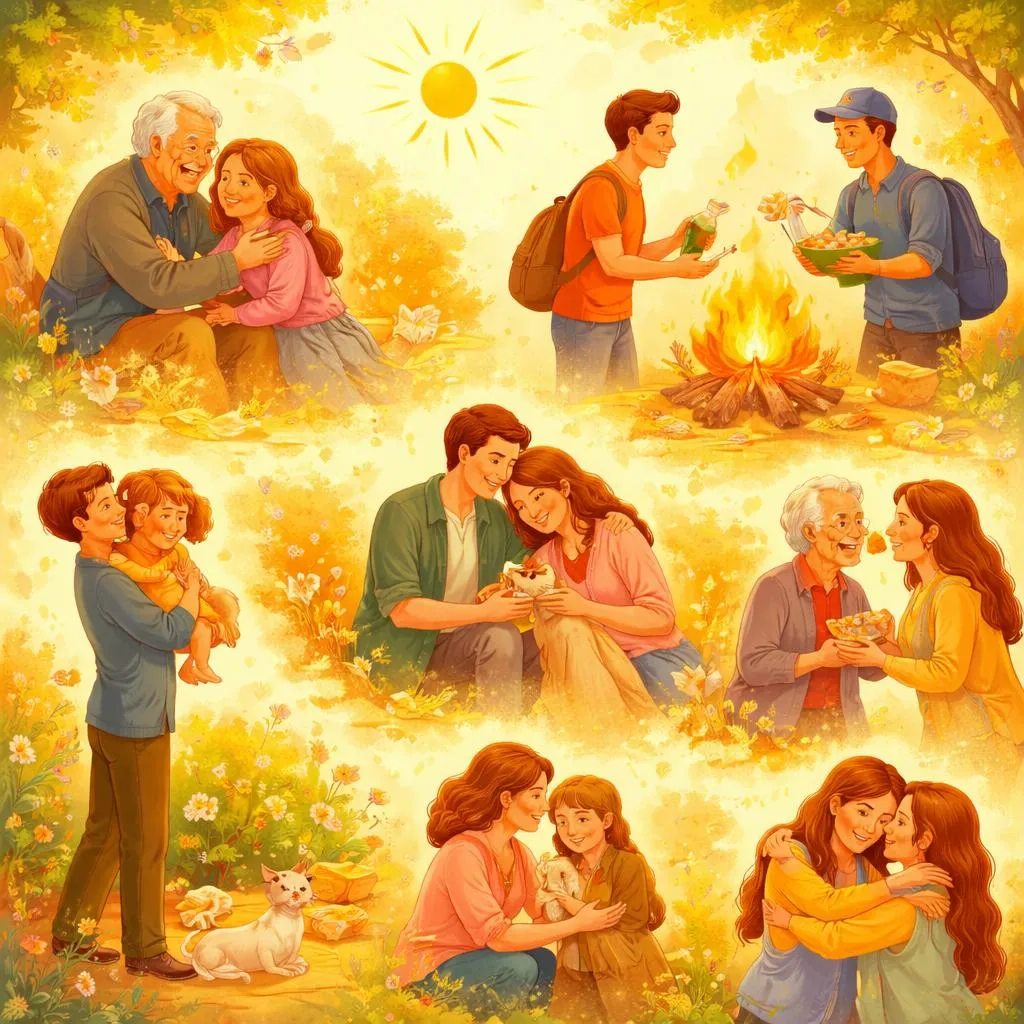

A warm blanket keeps you cozy. A warmer day means you can play outside. The words “warm, warmer, warmth, warmly, warmhearted” all come from one family. Each word talks about heat or kindness. But each one has a different job in a sentence. Learning this family helps children describe temperature and compassion. Let us explore these five words together.
What Does “Same Word, Different Forms” Mean? One core idea can grow into many word shapes. The meaning stays the same at the heart. But the word changes its ending or combines for a new role. For example, “warm” is an adjective or a verb. “Warmer” is an adjective. “Warmth” is a noun. “Warmly” is an adverb. “Warmhearted” is an adjective. Knowing these five forms helps a child talk about heat and kindness.
Personal Pronouns Change Their Form Pronouns change from “he” to “him” or “his”. Our word family changes by adding suffixes and compounds. Think of “warm” as the core quality of heat or kindness. “Warmer” compares that quality. “Warmth” turns the quality into a thing. “Warmly” turns the quality into a way of doing something. “Warmhearted” combines warm with heart to describe a kind person. Each form answers a simple question. What quality? Warm. What is more warm? Warmer. What is the state of being warm? Warmth. How? Warmly. What describes a kind person? Warmhearted.
From Verb to Noun to Adjective to Adverb – One Family, Many Words This family has an adjective, a noun, an adverb, and a compound adjective. Let us start with the adjective “warm”. Adjective: The warm soup felt good on a cold day. “Warm” means having heat or being friendly.
“Warm” can also be a verb. Verb: Please warm the milk in the microwave.
Next is the comparative adjective “warmer”. Adjective: Today is warmer than yesterday. “Warmer” means more warm.
Then the noun “warmth”. Noun: The warmth of the fire made us sleepy. “Warmth” means the state of being warm or friendly.
Then the adverb “warmly”. Adverb: She greeted us warmly at the door. “Warmly” means in a warm manner.
Finally the adjective “warmhearted”. Adjective: The warmhearted nurse comforted the sick child. “Warmhearted” means kind, caring, and compassionate.
One Root, Many Roles – How Words Grow from Actions to Qualities The Old English word “wearm” meant warm. From this root, we built a family about temperature and kindness. “Warm” kept the main adjective and verb meanings. Adding -er made “warmer” (more warm). Adding -th made “warmth” (the state). Adding -ly made “warmly” (in a warm way). Combining “warm” with “hearted” made “warmhearted” (kind-hearted). Children can see the same pattern in other families. For example, “cool, cooler, coolth (rare), coolly, coolheaded”. Learning the -th suffix helps kids talk about abstract qualities like warmth and length.
Same Meaning, Different Jobs – Is It a Verb or a Noun? Look at each word’s job carefully. “Warm” can be an adjective or a verb. Adjective example: The puppy’s fur is warm. Verb example: Warm your hands by the fire.
“Warmer” is an adjective (comparative). Example: Spring is warmer than winter.
“Warmth” is a noun. Example: The warmth of her hug melted my worries.
“Warmly” is an adverb. Example: The host welcomed us warmly.
“Warmhearted” is an adjective. Example: A warmhearted person shares their lunch. Each form has a clear job.
Adjectives and Adverbs – When Do We Add -ly? We add -ly to “warm” to make “warmly”. Warm + ly = warmly. No letter changes. No letters lost. The rule is simple: adjective + ly = adverb. A simple reminder: “Warm describes a thing. Warmly describes an action. Warmth is the noun. Warmhearted describes a person’s character.”
Watch Out for Tricky Spelling Changes (Double Letters, y to i, and More) “Warm” has no double letters. Add -er to make “warmer”. Warm + er = warmer (no changes). Add -th to make “warmth”. Warm + th = warmth (no changes). Add -ly to make “warmly”. Warm + ly = warmly (no changes). Add “hearted” to make “warmhearted”. Warm + hearted = warmhearted (no changes). A common mistake is writing “warm” as “warm” (correct) but some write “warm” (same). Good. Another mistake is “warmer” spelled “warmer” (correct) but some write “warmmer” (double m). Say “Warmer has one m.” Another mistake is “warmth” spelled “warmpth” (with p). Say “Warmth has no p. W-A-R-M-T-H.” Another mistake is “warmly” spelled “warmly” (correct) but some write “warmley” (with e). Say “Warmly ends with -ly, not -ley.” Another mistake is “warmhearted” written as “warm hearted” as two words. “Warmhearted” as one word is correct.
Let’s Practice – Can You Choose the Right Form? Try these sentences with your child. Read each one aloud. Pick the correct word from the family.
The ______ sun made the snow melt. Answer: warm (adjective)
Next week is ______ than this week. Answer: warmer (adjective)
The ______ of the blankets made me feel safe. Answer: warmth (noun)
She smiled ______ at the baby. Answer: warmly (adverb)
A ______ person always helps a friend in need. Answer: warmhearted (adjective)
Please ______ the leftover soup on the stove. Answer: warm (verb)
This jacket is ______ than my old one. Answer: warmer (adjective)
The ______ of her voice reassured the lost child. Answer: warmth (noun)
The audience applauded ______ after the performance. Answer: warmly (adverb)
The ______ volunteer spent hours at the animal shelter. Answer: warmhearted (adjective)
After the practice, ask your child one question. Is this word a heat description, a comparison of heat, the feeling of heat, a way of acting, or a kind person description? That simple question teaches grammar through temperature and empathy.
Tips for Parents – Help Your Child Learn Word Families in a Fun Way Use a jacket to teach “warm”. Say “This jacket keeps you warm in winter.”
Use two days to teach “warmer”. Say “Today is warmer than yesterday.”
Use a hug to teach “warmth”. Say “A hug gives warmth to your body and heart.”
Use a greeting to teach “warmly”. Say “She greeted us warmly with a big smile.”
Use a good deed to teach “warmhearted”. Say “The warmhearted boy shared his snack with a new student.”
Play “fill in the blank” during car rides. Say “The ______ bread tasted good with butter.” (warm) Say “This room is ______ than the last one.” (warmer) Say “The ______ of the fire prevented frostbite.” (warmth) Say “Please treat your friends ______.” (warmly) Say “A ______ person thinks of others’ feelings.” (warmhearted)
Read a story about a kind character or a cold climate. Ask “How does the character show warmth?” Ask “Is the main character warmhearted?”
Turn a drawing activity into a word lesson. Draw a sun with a smiling face. Label “warm”. Draw a thermometer reading higher. Label “warmer”. Draw a fire with heat waves. Label “warmth”. Draw a person hugging another. Label “warmly greeting”. Draw a heart with a blanket around it. Label “warmhearted”.
When your child makes a mistake, stay calm. If they say “I warmth the milk,” say “Almost. I warm the milk. Warmth is the noun.” If they say “She is warm,” for kind, say “Yes. She is warm. Or she is warmhearted. Both work.”
Write the five words on sticky notes. Put them on a wall near a heater or a family photo. Each time you share a kind moment, point to “warmhearted”.
Remember that warmth is both physical and emotional. Use these words to build kindness. “A warmhearted person makes the world better.” Soon your child will feel the warmth of the sun. They will dress for warmer weather. They will share warmth with a hug. They will speak warmly to a sad friend. And they will grow into a warmhearted human. That is the cozy power of learning one small word family together.