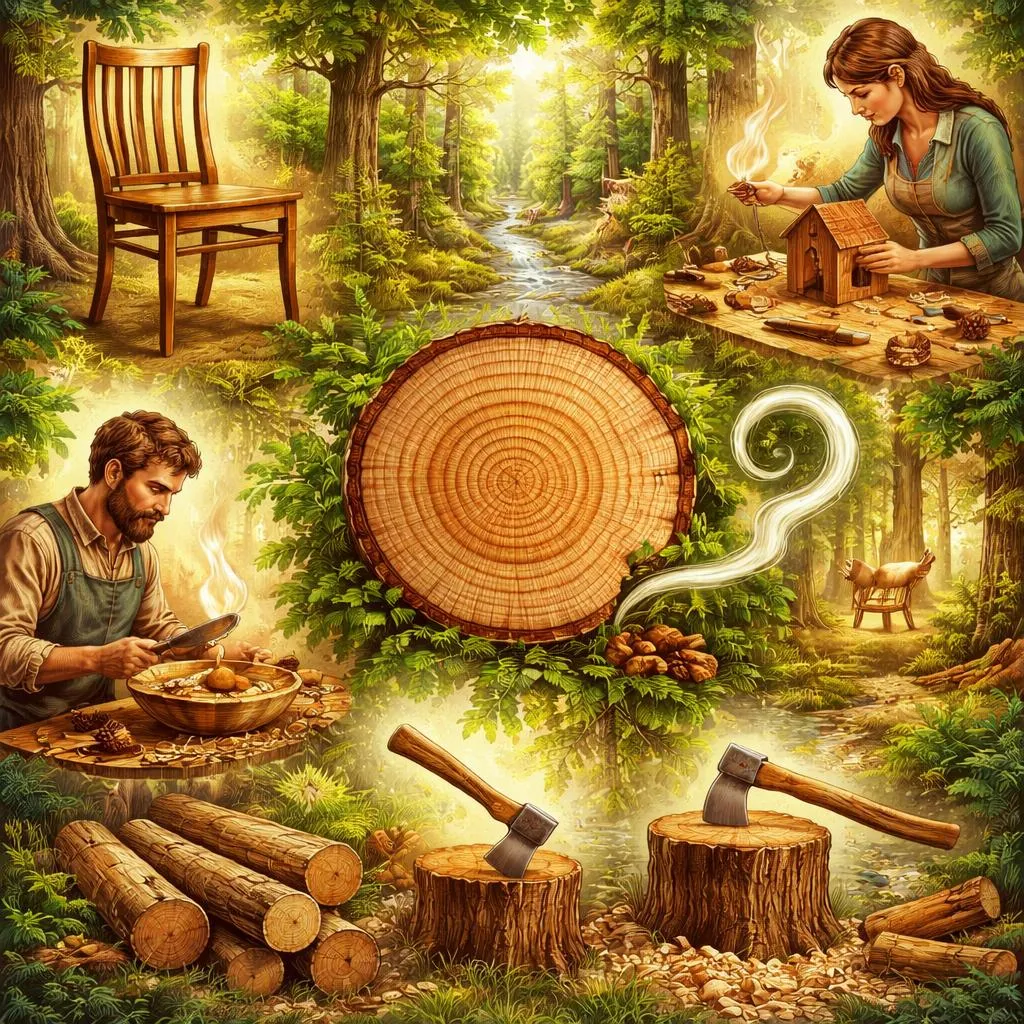

Wood comes from trees like oak and pine. A wooden chair feels solid and warm. The words “wood, wooden, woody, woodland, woodwork” all come from one family. Each word talks about the material from trees or places with trees. But each one has a different job in a sentence. Learning this family helps children describe nature and furniture. Let us explore these five words together.
What Does “Same Word, Different Forms” Mean? One core idea can grow into many word shapes. The meaning stays the same at the heart. But the word changes its ending or combines for a new role. For example, “wood” is a noun. “Wooden” is an adjective. “Woody” is an adjective. “Woodland” is a noun. “Woodwork” is a noun. Knowing these five forms helps a child talk about forests, furniture, and crafts.
Personal Pronouns Change Their Form Pronouns change from “he” to “him” or “his”. Our word family changes by adding suffixes and compounds. Think of “wood” as the core material from trees. “Wooden” turns that material into a description. “Woody” turns the material into a description of smell or texture. “Woodland” combines wood with land to name a forested area. “Woodwork” combines wood with work to name carpentry or details. Each form answers a simple question. What material? Wood. What is made of wood? Wooden. What smells or feels like wood? Woody. What is a forest area? Woodland. What is carpentry or interior wood details? Woodwork.
From Verb to Noun to Adjective to Adverb – One Family, Many Words This family has nouns and adjectives. Let us start with the noun “wood”. Noun: The table is made of oak wood. “Wood” means the hard material that comes from trees.
Next is the adjective “wooden”. Adjective: She has a wooden toy chest. “Wooden” means made of wood.
Then the adjective “woody”. Adjective: The plant had a woody stem. “Woody” means like wood or smelling of wood.
Then the noun “woodland”. Noun: The woodland is home to deer and owls. “Woodland” means an area covered with trees.
Finally the noun “woodwork”. Noun: The woodwork in the old house was beautifully carved. “Woodwork” means wooden parts of a building or the craft of working with wood.
One Root, Many Roles – How Words Grow from Actions to Qualities The Old English word “wudu” meant a tree or forest. From this root, we built a family about trees and their material. “Wood” kept the main noun meaning. Adding -en made “wooden” (made of wood). Adding -y made “woody” (like wood). Combining “wood” with “land” made “woodland” (forest land). Combining “wood” with “work” made “woodwork” (working with wood). Children can see the same pattern in other families. For example, “stone, stony, stoneless (rare), stonework (different)”. Learning the -en suffix helps kids describe what things are made of.
Same Meaning, Different Jobs – Is It a Verb or a Noun? Look at each word’s job carefully. “Wood” is a noun. Example: The fireplace burns wood.
“Wooden” is an adjective. Example: The wooden bridge creaked under our feet.
“Woody” is an adjective. Example: The rosemary had a woody fragrance.
“Woodland” is a noun. Example: The woodland path was covered in ferns.
“Woodwork” is a noun. Example: He learned woodwork in shop class. Each form has a clear job.
Adjectives and Adverbs – When Do We Add -ly? We can make an adverb from “wooden”. Add -ly to get “woodenly” (meaning stiffly or without emotion). Example: He laughed woodenly. From “woody” we can make “woodily” (rare). For young learners, focus on “wood” and “wooden.” A simple reminder: “Wood is the material. Wooden means made of wood. Woody means like wood. Woodland is a forest. Woodwork is carpentry.”
Watch Out for Tricky Spelling Changes (Double Letters, y to i, and More) “Wood” has a double o. Add -en to make “wooden”. Wood + en = wooden (keep double o). Add -y to make “woody”. Wood + y = woody (keep double o). Combine with “land” to make “woodland”. Wood + land = woodland (keep double o). Combine with “work” to make “woodwork”. Wood + work = woodwork (keep double o). A common mistake is writing “wood” as “would” (verb) or “wod” (missing o). Say “Wood has two o’s, like good and hood.” Another mistake is “wooden” spelled “woodden” (double d). Say “Wooden has one d.” Another mistake is “woody” spelled “woody” (correct) but some write “woodie” (with i). Say “Woody ends with y.” Another mistake is “woodland” spelled “wood land” as two words. “Woodland” as one word is correct. Another mistake is “woodwork” spelled “wood work” as two words. “Woodwork” as one word is correct.
Let’s Practice – Can You Choose the Right Form? Try these sentences with your child. Read each one aloud. Pick the correct word from the family.
The table is made of solid ______. Answer: wood (noun)
She keeps her jewelry in a ______ box. Answer: wooden (adjective)
The stem of the plant felt ______, not soft. Answer: woody (adjective)
The ______ was full of singing birds. Answer: woodland (noun)
The beautiful ______ in the old church took years to carve. Answer: woodwork (noun)
Pine ______ smells good when it burns. Answer: wood (noun)
The ______ floor creaked with every step. Answer: wooden (adjective)
The wine had a ______ taste from the barrel. Answer: woody (adjective)
The ______ path led us to a hidden lake. Answer: woodland (noun)
He spent the afternoon sanding the ______ for his bookshelf. Answer: woodwork (noun)
After the practice, ask your child one question. Is this word the tree material, a made-of-wood description, a like-wood description, a forest area, or a carpentry craft? That simple question teaches grammar through nature and building.
Tips for Parents – Help Your Child Learn Word Families in a Fun Way Use a log to teach “wood”. Say “This log is made of wood.”
Use a spoon to teach “wooden”. Say “This wooden spoon is good for stirring.”
Use a tree branch to teach “woody”. Say “The branch is woody. It is not bendy.”
Use a forest to teach “woodland”. Say “The woodland is quiet and cool.”
Use a house to teach “woodwork”. Say “The woodwork around the door is carved.”
Play “fill in the blank” during car rides. Say “The chair is made of ______.” (wood) Say “A ______ pencil does not roll off the desk.” (wooden) Say “The old tree had a ______ smell.” (woody) Say “The ______ trail was muddy after rain.” (woodland) Say “The ______ in the old library is dark oak.” (woodwork)
Read a story about a forest or a carpenter. Ask “What wood is used to build the house?” Ask “Is the area a woodland or a city?”
Turn a drawing activity into a word lesson. Draw a plank of wood. Label “wood”. Draw a chair with four legs. Label “wooden chair”. Draw a tree trunk. Label “woody stem”. Draw a forest with a path. Label “woodland”. Draw a carved door frame. Label “woodwork”.
When your child makes a mistake, stay calm. If they say “The house is wood,” say “Almost. The house is wooden. Wood is the material. Wooden means made of wood.” If they say “The forest is wood,” say “Close. The forest is woodland. Wood is the material. Woodland is the place.”
Write the five words on sticky notes. Put them on a tree or a wooden piece of furniture. Each time you touch something made of wood, point to “wood”.
Remember that wood comes from trees. Use these words to build respect for nature. “We make wooden things from trees, so we should plant new trees.” “A woodland ecosystem supports many animals.” Soon your child will know wood types. They will appreciate wooden toys. They will recognize a woody plant. They will love walking in the woodland. And they may even try woodwork. That is the natural power of learning one small word family together.