
What Is This Animal?
A firefly is a small beetle that glows in the dark. It produces its own light from its body. At night, fireflies blink like tiny stars floating in the air. Children love watching them appear as the sun goes down.
Fireflies are also called lightning bugs. They are not flies or bugs. They are beetles. Their soft bodies and glowing lights make them special. Each species of firefly has its own flash pattern. Some blink slowly. Others blink fast. Some glow steadily.
These insects live in fields, forests, and near water. They like warm, humid places. You see them on summer evenings. They fly low over grass. Their lights turn on and off. This creates a magical display.
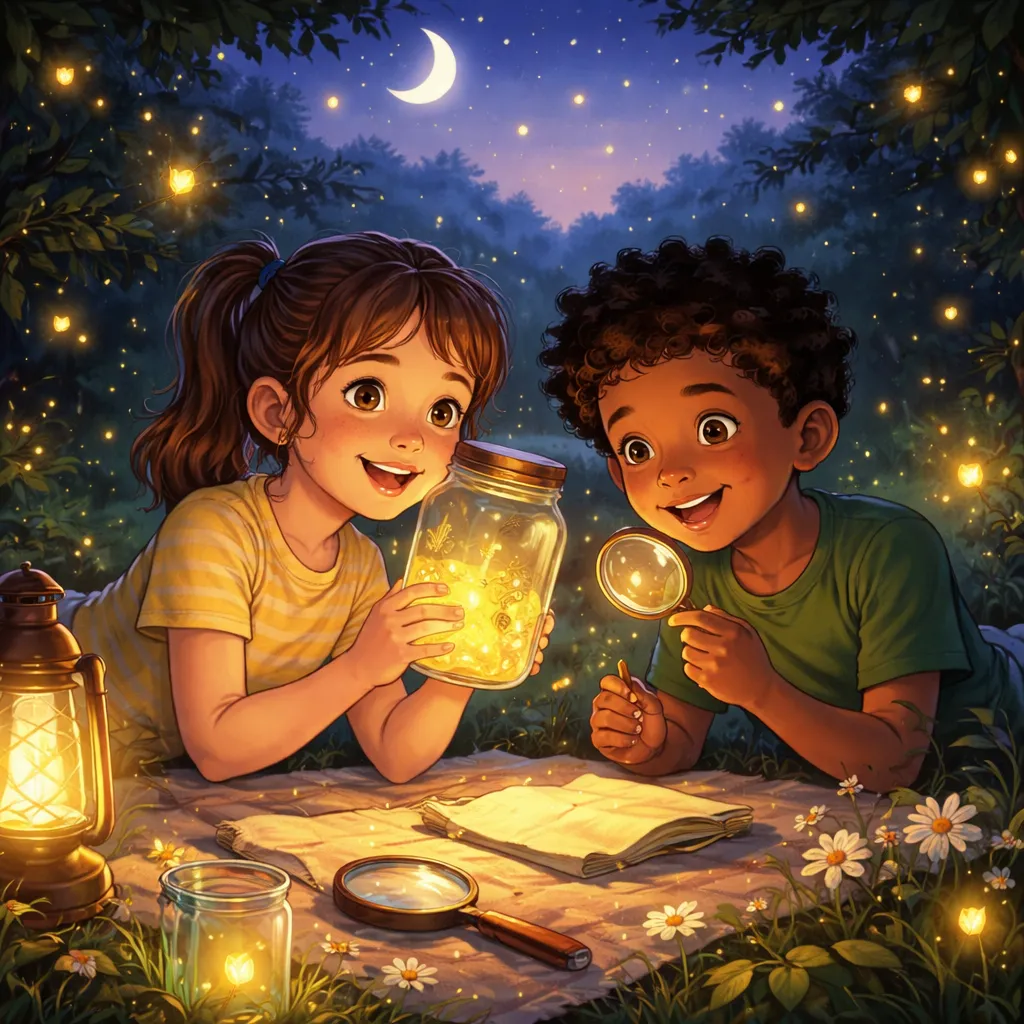
For children, fireflies represent wonder. Catching fireflies in a jar is a childhood memory for many families. These gentle insects do not bite or sting. They are safe to observe up close. They turn ordinary backyards into enchanted spaces.
English Learning About This Animal
Let us learn the English word firefly. We say it like this: /ˈfaɪərflaɪ/. The word has two parts. Fire sounds like “fyre.” Fly sounds like “flie.” Put them together: firefly. Say it three times. Firefly. Firefly. Firefly.
Now let us learn words about a firefly’s body. The abdomen is the back part of the body. This is where the light comes from. The light organ is the special part that produces the glow. The elytra are the soft wing covers. The head is small and often hidden. The antennae are long and thin.
There is a beautiful quote about fireflies. The writer Rabindranath Tagore said, “I leave no trace of wings in the air, but I am glad I have had my flight.” Fireflies remind us that some things are beautiful even when they do not last. Another simple saying is, “Fireflies are stars that came down to play.” This captures the joy children feel when they see them.
These English words help children understand how fireflies glow. When they say abdomen, they learn where the light lives. When they say light organ, they learn a science word for this special gift. Parents can practice these words while watching fireflies at dusk. Point to pictures. Say the words together.
Animal Facts and Science Knowledge
Fireflies belong to the beetle family Lampyridae. This name comes from Greek. It means “shining ones.” Fireflies are insects. They have six legs. They have two pairs of wings. Their wing covers are soft, not hard like other beetles.
Fireflies produce light through bioluminescence. This means living things make their own light. Inside the firefly’s abdomen, a chemical called luciferin mixes with oxygen. This reaction creates cold light. It does not produce heat. That is why firefly lights feel cool to touch.
Fireflies use light to communicate. Males fly and flash to attract females. Females sit on the ground or low plants. They flash back if they like the male’s pattern. Each species has its own code. Some fireflies flash together in synchrony. Whole groups light up at the same time.
Fireflies live in many places. They prefer grassy fields, forests edges, and areas near ponds. They need moisture. Their larvae live in soil or leaf litter. Firefly larvae eat snails, slugs, and worms. Adults eat nectar or sometimes nothing at all. Some adult fireflies do not eat.
Fireflies have special abilities. Their light warns predators. The light tastes bad to birds and other animals. Some fireflies copy other species’ flashes. They trick males from other species. Then they eat them. This behavior shows how clever fireflies can be.
How to Interact With This Animal Safely
Fireflies are gentle wild insects. They do not bite or sting. They are safe to watch and hold gently. If you see fireflies in your yard, enjoy them from outside. Do not use bright lights. Bright lights make it hard for fireflies to see each other.
If your child wants to catch fireflies, use a jar with air holes. Catch one or two at a time. Watch them glow inside the jar for a short while. Then release them. Fireflies need to return to their mates. Keeping them too long can harm them.
Teach children to be gentle. Fireflies have soft bodies. Squeezing them can hurt them. Let fireflies crawl onto a hand. Watch the light up close. Then place them back on grass. Always wash hands afterward.
Never take fireflies away from their home area. Fireflies need their habitat to survive. They need fields, moisture, and the right plants. If you move them far away, they cannot find mates. They cannot find food. Releasing them where you found them is the kindest choice.
Help fireflies by protecting their home. Avoid using pesticides on lawns. Leave some areas of grass long. Keep leaves in garden beds. Firefly larvae live in these places. Turn off outdoor lights when not needed. Artificial lights confuse fireflies. Small actions help fireflies thrive for years to come.
What Can We Learn From This Animal
Fireflies teach us to shine in our own way. Each firefly has its own light. It does not try to be like others. Children learn that they have unique gifts. Being different is something to celebrate. Kindness, creativity, or a good laugh are ways to shine.
Fireflies teach us to enjoy small moments. They only appear in summer. Their light lasts for a short season. Children learn to appreciate things while they last. A beautiful sunset, a fun game, or time with family are moments to treasure.
Fireflies teach us about communication. They use light to talk to each other. Children learn that we all have ways to share our feelings. Words, drawings, and kind actions help us connect with others. Finding our own way to communicate makes relationships stronger.
Fireflies teach us to be patient. They wait until dusk to appear. They do not come out during the day. Children learn that waiting can bring something beautiful. Waiting for a turn, waiting for a special day, or waiting for a skill to develop all lead to rewarding moments.
Fun Learning Activities
Let us make learning about firefly fun. One activity is the firefly light game. On a summer evening, sit outside. Count how many fireflies you see. Watch their flash patterns. Ask your child to blink like a firefly. Flash a flashlight slowly or quickly. Say “firefly blinks” and “firefly glows.”
Another activity is creating a firefly jar craft. Take a clean glass jar. Cut yellow or green glow paper into small circles. Place them inside the jar. Add a small battery-operated tea light. Turn off the lights. Watch the jar glow. Talk about how real fireflies make their light.
Draw a firefly and label its parts. Draw the head, antennae, abdomen, light organ, and wing covers. Write the words next to each part. Say them aloud. For younger children, draw the firefly first. Let them point to the parts as you say the words.
Create a story about a firefly’s night. Ask your child where the firefly flies. Does it visit the garden? Does it blink at friends? Does it find a mate? Write a few sentences together. Let your child draw pictures. Read the story aloud before bed.
Make a firefly observation journal. Go outside on several summer nights. Draw what you see. Note how many fireflies appear. Notice if they blink together. Talk about how the night changes week by week. This simple activity builds patience and observation.
These simple activities bring learning to life. Children build English vocabulary while playing. They learn science through direct observation. They connect with nature in gentle ways. Learning about firefly becomes a shared summer tradition. Each moment spent together strengthens language, curiosity, and a lasting sense of wonder for the tiny lights that dance in the evening air.