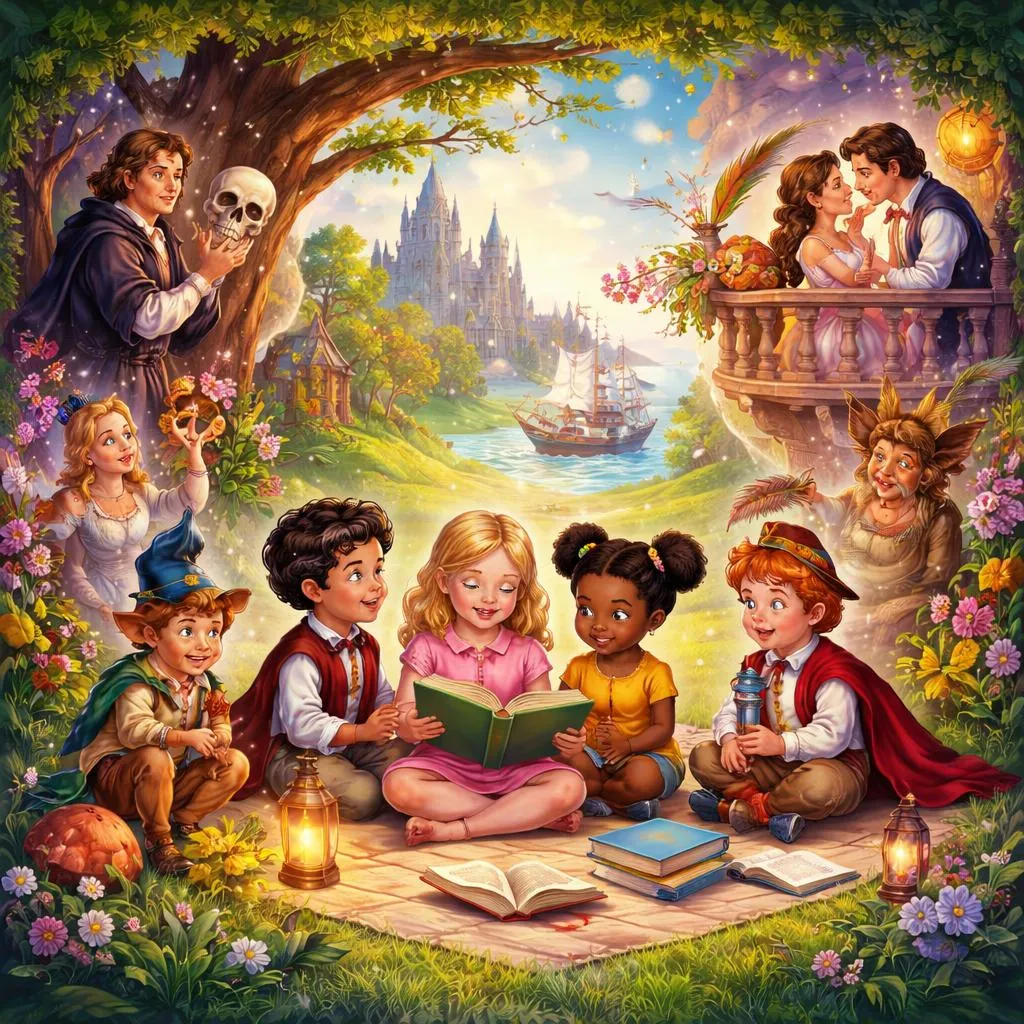

What Is 20 Shakespeare Children's Stories The Complete Collection? Let us explore this wonderful literary resource together. 20 Shakespeare Children's Stories The Complete Collection is a book set that adapts Shakespeare's plays for young readers. It contains simplified versions of twenty of Shakespeare's most famous works. The language is made accessible for children while keeping the essential stories. Tragedies like Hamlet, Romeo and Juliet, and Macbeth are included. Comedies like A Midsummer Night's Dream and Twelfth Night appear. Histories like Julius Caesar and Henry V are also part of the collection. Each story captures the main plot and key characters. The themes of love, betrayal, jealousy, and forgiveness remain clear. Children can enjoy these classic tales without struggling with original language. The collection opens the door to Shakespeare for young minds.
Meaning and Purpose of This Collection This collection serves several important purposes in literary education. It introduces children to Shakespeare's works at an appropriate level. The stories become familiar before children encounter the original plays. This familiarity makes later study much easier and more enjoyable. The collection also preserves the essential themes and plots. Children experience the richness of Shakespeare's storytelling. The adapted versions build cultural literacy and background knowledge. Many references to Shakespeare appear in books and media. Children with this knowledge understand those references. The collection also develops literary appreciation early. Children learn to love these stories before they can read originals. This love motivates deeper study later.
Stories Included in the Collection The complete collection features twenty of Shakespeare's best-known plays. Comedies bring laughter and happy endings to readers. A Midsummer Night's Dream features fairies and confused lovers. The Tempest tells of magic and forgiveness on an island. Twelfth Night involves twins separated by shipwreck. The Merry Wives of Windsor shows Falstaff's comic adventures. As You Like It features romance in the Forest of Arden. The Comedy of Errors has mistaken identity and confusion. Much Ado About Nothing involves trickery and true love. Tragedies explore deeper themes with sad endings. Hamlet follows a prince seeking revenge for his father's death. Romeo and Juliet tells of young lovers from feuding families. Macbeth shows ambition leading to destruction. King Lear deals with family and loyalty. Othello explores jealousy and betrayal. Julius Caesar involves conspiracy and assassination. Antony and Cleopatra tells of love and war.
Vocabulary Learning from Shakespeare's Stories These stories introduce rich vocabulary in accessible contexts. Tragedy means a play with sad events and unhappy ending. Comedy means a play with humor and happy ending. History means a play about real historical figures and events. Plot means the main events of a story arranged in sequence. Character means a person in a play or story. Theme means the central idea or message of a work. Revenge means hurting someone because they hurt you. Jealousy means feeling resentful of another's advantages. Betrayal means being disloyal to someone who trusts you. Forgiveness means stopping anger toward someone who wronged you. We can teach these words with examples from the stories. Use them in sentences about characters and events.
Phonics Points in Shakespeare's Stories Character names provide useful phonics practice with varied sounds. Hamlet has the short A and short E and L and T. Juliet has the long U and short I and short E and T. Macbeth has the short A and short E and TH. Othello has the short O and short E and long O. Characters from comedies offer more practice. Viola has the long I and long A and short A. Oberon has the long O and short E and short O. Titania has the long I and long A and short A. Place names provide phonics elements. Denmark has the short E and AR combination and K. Scotland has the short O and short A and ND. Verona has the short E and long O and short A. We can focus on one sound pattern from each story. Find all words with that sound in the adapted tale. Write them on crown or dagger shapes for practice.
Grammar Patterns in Adapted Shakespeare The adapted stories model good grammar for young readers naturally. Past tense carries most of the narrative. "Hamlet saw the ghost of his father on the castle wall." Present tense appears in dialogue between characters. "To be or not to be, that is the question," Hamlet said. Future tense shows what characters plan to do. "Tomorrow we will watch the play within the play." Questions drive plots and character interaction. "Wherefore art thou Romeo?" Juliet asks. Commands appear in moments of drama. "Get thee to a nunnery!" Hamlet tells Ophelia. Descriptive language paints scenes from the plays. "The dark, cold castle stood on the rocky cliffs of Elsinore." Prepositional phrases describe locations. "In the forest, at the ball, on the balcony." We can point out these patterns during reading.
Daily Life Connections Through Shakespeare's Stories Shakespeare's themes connect to children's experiences meaningfully. Jealousy appears in sibling relationships and friendships. Children understand wanting what someone else has. Family loyalty matters in every child's life. Parents, siblings, and relatives are important. Friendship and betrayal happen in school every day. Children know what it feels like to be betrayed. Love and caring are part of daily life. Children love their families and friends. Mistakes and forgiveness occur regularly. Children need forgiveness and must forgive others. These universal themes make Shakespeare relevant. The stories speak to human experience across centuries. Children recognize their own feelings in these tales.
Learning Activities for Shakespeare's Stories Many activities deepen engagement with these adapted tales. Act out scenes from favorite plays with simple costumes. Children become the characters they've read about. Draw scenes from the stories showing key moments. Illustrate what happened in each play. Compare two different plays with similar themes. Romeo and Juliet with Hamlet both deal with tragedy. Create character profiles for main figures in each story. List their traits, motivations, and actions. Write a new scene for a play that fits the story. Imagine what happened before or after the play. Design a castle or forest setting from a play. Create the world where the story happens.
Printable Materials for Shakespeare Learning Printable resources support deep engagement with these classic stories. Create character cards for figures from each play. Name, play, and description for matching games. Design a play comparison chart for different stories. List title, genre, main characters, and theme. Make vocabulary cards with Shakespearean terms and definitions. Tragedy, comedy, history, plot, character, theme included. Create a timeline showing when plays were written. Place them in order of composition. Design a story map for each play in the collection. Characters, setting, problem, solution, theme included. Make a favorite play nomination form with reasons. "I loved this play because..." writing prompts. These printables structure Shakespeare exploration effectively.
Educational Games About Shakespeare's Stories Games make Shakespeare learning playful and interactive. Play "Play Charades" acting out titles without words. Others guess which play is being portrayed. Create "Match the Quote" pairing famous lines with plays. "To be or not to be" matches Hamlet. Play "Who Said It?" matching quotes with characters. "Wherefore art thou Romeo?" matches Juliet. Design "Genre Sort" sorting plays by tragedy, comedy, or history. Place each play in correct category. Play "Character Match" pairing characters with their plays. Match Hamlet with Hamlet, Juliet with Romeo and Juliet. Create "Plot Sequence" arranging events from a play in order. Put key moments from a chosen play in sequence. These games build Shakespeare knowledge through active participation.
Teaching That Shakespeare Is for Everyone Many people think Shakespeare is too hard for children. This collection proves otherwise. The stories are accessible and engaging for young readers. Children can enjoy the plots without struggling with language. They meet unforgettable characters and timeless themes. This positive first experience shapes attitudes forever. Children who enjoy these stories will approach Shakespeare confidently later. They will remember the stories and characters fondly. The plays become old friends rather than difficult assignments. This collection opens doors that might otherwise stay closed. It democratizes access to cultural treasures.
The Value of Adapted Classics Adapted versions of classics serve important educational purposes. They make great literature accessible to developing readers. Children can enjoy stories they couldn't read in original form. The adaptations preserve the essential elements of each work. Plots, characters, and themes remain intact. Children gain cultural literacy through these accessible versions. They build background knowledge for future learning. Adapted classics can spark interest in reading originals later. Many adults first encountered Shakespeare through simplified versions. The adaptations are not replacements for originals. They are stepping stones on the path to full appreciation. This collection provides those stepping stones beautifully.
Why This Collection Belongs in Every Classroom This complete collection deserves a place in every classroom. It introduces children to the world's greatest playwright. The twenty stories offer variety and richness for all readers. Every child can find plays that appeal to them. The collection supports both individual reading and group study. Teachers can read stories aloud to the whole class. Children can explore plays independently afterward. The stories spark discussions about universal themes. Love, hate, jealousy, and forgiveness are always relevant. The collection builds foundation for lifelong literary appreciation. It plants seeds that will grow for years to come. Every child deserves this introduction to Shakespeare.