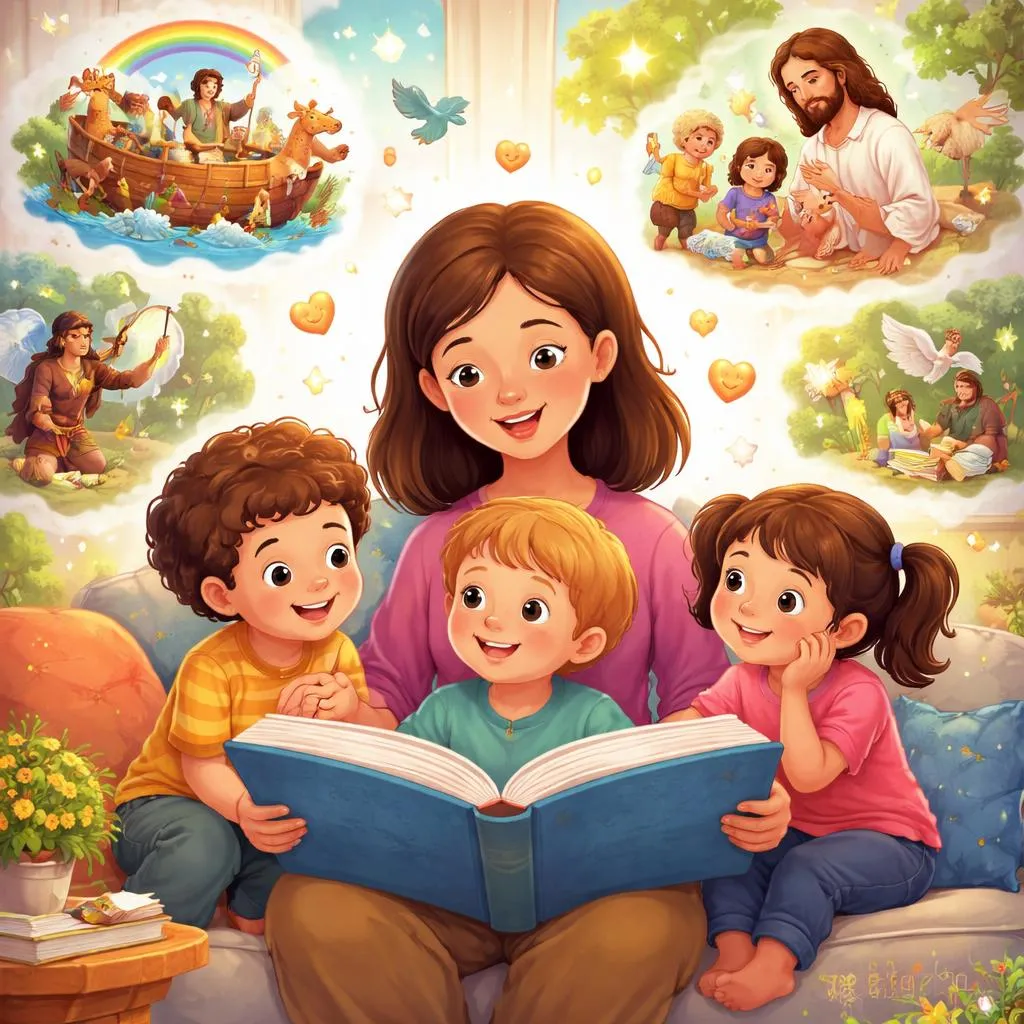

Many educators seek resources that combine language instruction with character development. Children's bible story book materials offer this combination naturally. These books present narratives that have shaped English language and culture for centuries. The stories contain rich vocabulary. They present clear moral situations. This article explores practical teaching applications for these special books. The focus remains on classroom strategies. Let us examine how these stories support English learning.
What Is a Children's Bible Story Book? A children's bible story book presents simplified versions of biblical narratives. These books target young readers. The language uses basic vocabulary. The sentences remain short and clear. Colorful illustrations accompany each story.
These books select specific stories from the larger biblical text. Popular choices include Noah's Ark, David and Goliath, and the story of Jonah. Each story stands alone. Readers do not need previous knowledge to understand. The narratives focus on action and clear outcomes. Good choices and poor choices become obvious. This clarity supports both language learning and moral discussion.
Meaning and Explanation of Bible Stories for Children The narratives in a children's bible story book carry multiple layers of meaning. The surface level tells an exciting story. Animals board a big boat. A small boy defeats a giant. A man survives inside a big fish. These plots engage young imaginations.
The deeper level presents moral and spiritual concepts. Characters demonstrate faith, courage, forgiveness, and obedience. These abstract ideas become visible through concrete actions. Children see what courage looks like. They see what happens when someone shows forgiveness. The stories provide vocabulary for discussing these important ideas.
Another layer involves cultural literacy. Many English language references come from these stories. Understanding them helps learners grasp everyday expressions. Phrases like "the writing on the wall" or "a drop in the bucket" connect to these ancient tales.
Categories of Stories in Bible Story Books Different categories of stories appear in a typical children's bible story book. Creation stories form one category. These narratives explain how the world began. They use vocabulary related to nature, light, water, and living things. The language tends toward poetic repetition.
Stories about leaders form another important category. Moses, Joshua, and David appear in these tales. Students encounter vocabulary about courage, responsibility, and difficult choices. The narratives show characters facing problems and finding solutions.
Parables represent a third category. These short teaching stories appear in the New Testament. The Good Samaritan and the Prodigal Son are examples. Each parable teaches a specific lesson. The clear moral at the end supports comprehension checks.
Miracle stories offer exciting narratives. Water becomes wine. A few fish feed thousands. Storms calm instantly. These stories use dramatic vocabulary. They capture attention through impossible events becoming possible.
Daily Life Examples in Bible Stories Children's bible story book narratives connect to everyday experiences despite their ancient origins. A story about sharing food reflects classroom snack time. A tale about helping a neighbor connects to community activities. These connections make the language meaningful.
Consider the story of the Good Samaritan. A traveler helps a stranger in need. Children understand this situation. They see people helping others daily. They may have helped someone themselves. The story's vocabulary about kindness and assistance becomes personally relevant.
The story of Ruth shows loyalty between family members. Ruth stays with her mother-in-law Naomi. She works hard to provide food. Children understand family relationships. They understand working together. The narrative provides language for discussing these familiar experiences.
Printable Flashcards for Bible Story Vocabulary Flashcards extend the teaching value of any children's bible story book. Select key nouns from each narrative. For Noah's Ark, choose "ark," "flood," "rainbow," and "dove." Create cards with images on one side and words on the other.
Character flashcards help students remember who does what. "Noah," "David," "Goliath," and "Jonah" become recognizable names. Students can match characters to their actions. Who built the ark? Who fought the giant? This builds comprehension of story roles.
Abstract concept flashcards support moral discussions. Words like "faith," "courage," "obedience," and "forgiveness" appear throughout these stories. Discuss what each word means. Connect each concept to a character who demonstrated it. This builds emotional vocabulary alongside language skills.
Learning Activities with Bible Stories Several activities maximize the teaching potential of a children's bible story book. Story sequencing offers one effective approach. After reading, provide picture cards from the story. Students arrange them in correct order. This builds understanding of narrative structure.
Character comparisons work well with multiple stories. Compare David's courage with Esther's courage. Compare Noah's obedience with Abraham's obedience. Students notice different expressions of the same quality. This builds analytical thinking about character traits.
Modern retelling activities engage creativity. Ask students to retell a Bible story in a modern setting. David and Goliath becomes a student facing a school bully. The Good Samaritan becomes someone helping after a playground accident. This connects ancient narratives to current experience.
Prediction exercises develop inferential skills. Stop reading at a dramatic moment. Ask what might happen next. Students must use story clues to support predictions. This builds engagement with the text.
Grammar Patterns Found in Bible Stories Children's bible story book narratives contain consistent grammar patterns useful for teaching. Past tense dominates these stories. "God created the heavens and the earth" establishes the past framework. Students encounter regular and irregular past forms naturally.
Commands appear frequently. "Go," "build," "do not eat" appear as God speaks to characters. Students see imperative forms in context. The consequences of following or ignoring commands become clear through the plot.
Comparative language describes characters and situations. "Stronger than," "wiser than," "more faithful than" compare biblical figures. The dramatic nature of the stories makes these comparisons memorable.
Promise language appears throughout. "I will make you a great nation." "I will be with you always." These sentences model future tense with intention. Students see promises made and fulfilled within the narrative.
Educational Games for Bible Story Learning Games transform children's bible story book content into interactive experiences. Story charades works well with any narrative. Write character names or actions on cards. Students act out while others guess. This builds vocabulary recall through physical expression.
Bible story bingo reinforces key vocabulary. Create cards with images or words from multiple stories. Call out descriptions. Students mark matching squares. The game format encourages attention to word meanings across different narratives.
Memory match pairs characters with their stories. Create cards with character names and cards with story summaries. Students match each character to the correct story. This builds comprehension of who belongs in which narrative.
Storytelling relay races encourage cooperative learning. Divide students into teams. Give each team a set of picture cards from a story. Teams race to arrange cards and retell the story correctly. This builds sequencing skills and oral language production.
Printable Materials for Bible Story Lessons Printable materials support structured learning with any children's bible story book. Story summary templates guide comprehension. Provide simple forms with spaces for characters, setting, problem, and solution. Students complete after reading each story.
Fill-in-the-blank passages work for vocabulary review. Remove key words from a story summary. Provide a word bank. Students choose correct words to complete the text. This checks understanding of word meaning in context.
Coloring pages with vocabulary labels offer quiet reinforcement. Provide outline drawings of key scenes. Add simple French words labeling important elements. Students color while seeing the words. This connects visual memory to language.
Word searches using story vocabulary provide independent review time. Include character names and key nouns from recent stories. The puzzle format feels like play while reinforcing word recognition.
The use of Bible stories in language teaching provides rich opportunities for vocabulary development and moral discussion. These ancient narratives carry cultural significance that extends beyond religious contexts. Their clear plots support comprehension. Their memorable characters provide reference points for discussing human qualities. Children's bible story book materials bridge language instruction and character education naturally. The stories that have taught generations about faith and values also teach the words to express these important ideas.