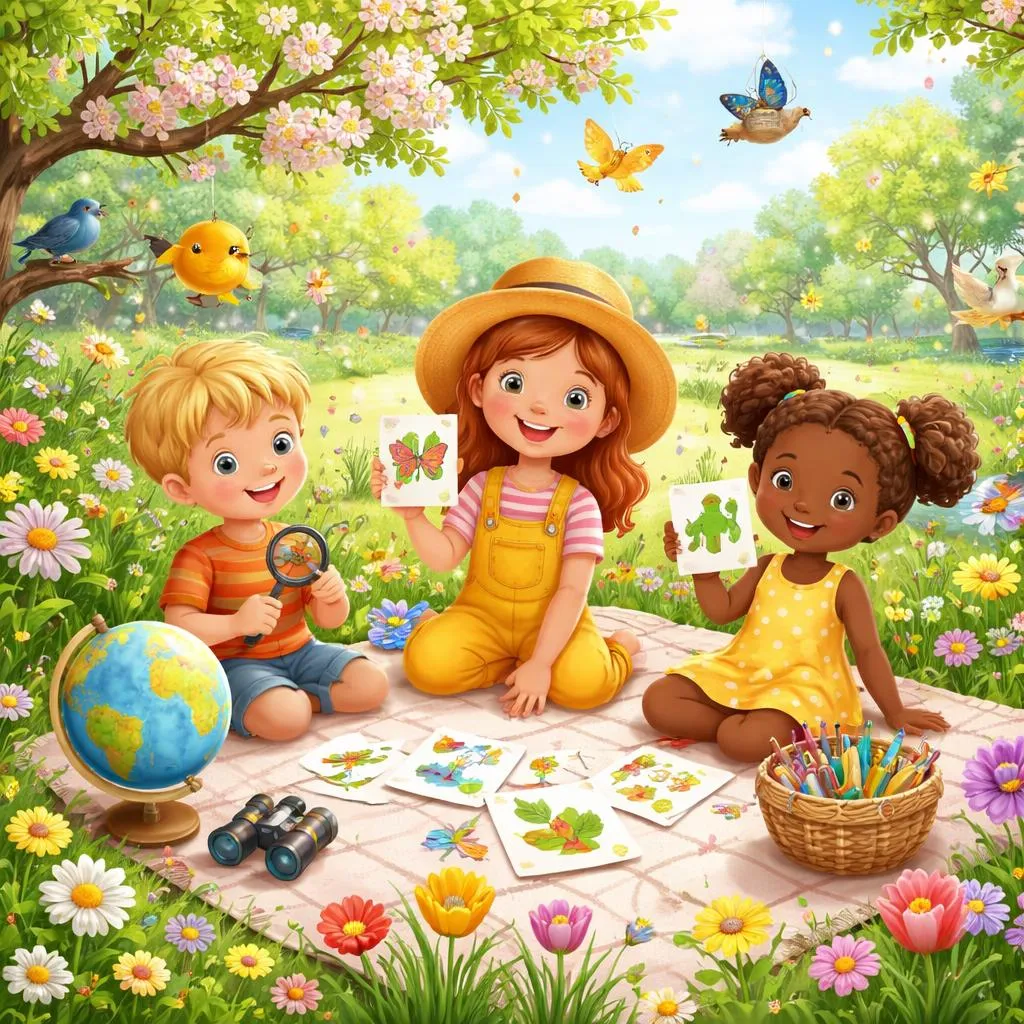

Seasons provide natural teaching opportunities. They bring visible changes. They introduce new activities. They create distinct vocabulary sets. A children's story about spring captures all these elements beautifully. The world wakes up after winter. Flowers bloom. Animals return. Weather warms. Children experience these changes directly. The story connects language to their observations. Words gain concrete meaning through real-world evidence. The themes of growth and renewal resonate deeply. Let us explore how springtime tales support vocabulary development, grammar understanding, and scientific observation in early childhood classrooms.
What Is a Children's Story About Spring?
These are narratives set during the spring season. They feature elements specific to this time of year. Melting snow and warming temperatures appear in many stories. Growing plants and blooming flowers feature prominently. Baby animals being born provide engaging characters. Rain showers and rainbows create natural drama. Planting gardens and preparing soil offer activity sequences. Some stories teach about the season's science. Others use spring as a backdrop for adventures. Common themes include growth, renewal, and patience. The stories range from simple board books for toddlers to more complex picture books for early readers. All share the seasonal setting that makes vocabulary concrete and observable.
Categories of Spring Stories
Understanding different story types helps in selecting appropriate materials for specific learning goals.
Plant Growth Stories: These focus on the most visible spring change. Seeds sprouting. Plants growing. Flowers blooming. Stories like "The Tiny Seed" and "Planting a Rainbow" explore these themes. They teach plant vocabulary and growth sequences.
Animal Baby Stories: Tales about animals giving birth in spring. Ducklings hatching. Bunnies being born. Chicks emerging. These introduce animal families and baby animal names. They teach life cycle vocabulary naturally.
Weather Stories: Narratives about spring weather changes. Rain showers. Rainbows. Warming temperatures. Melting snow. These build weather vocabulary and seasonal comparisons.
Garden Stories: Tales about planting and growing food. Vegetable gardens. Flower gardens. Community gardens. These introduce food vocabulary and gardening actions.
Spring Celebration Stories: Stories about spring holidays and traditions. Easter. Nowruz. Passover. May Day. These build cultural vocabulary and tradition descriptions.
Vocabulary Learning from Spring Stories
Spring narratives introduce rich vocabulary across multiple domains. The words connect to nature, weather, plants, and animals.
Nature Words: spring, season, nature, world, earth, ground, sun, sky, cloud, rainbow. Weather Words: warm, melt, rain, shower, puddle, breeze, sunny, cloudy, misty, fresh. Plant Words: seed, sprout, plant, grow, leaf, flower, bud, blossom, petal, stem, root, soil. Animal Words: bird, nest, egg, hatch, chick, duckling, bunny, lamb, caterpillar, butterfly. Color Words: green, yellow, pink, purple, blue, red, orange, colorful, bright, pastel. Action Words: plant, water, grow, bloom, hatch, fly, sing, jump, play, splash.
Each story introduces words in meaningful contexts. A seed story teaches growth sequence. A duckling story teaches animal families. The season provides natural connections.
Phonics Points in Spring Stories
Specific sound patterns appear frequently in spring-themed narratives. Identifying these helps build decoding skills.
The /s/ sound: spring, seed, sun, sprout, soil, sing. The season name starts with this sound. Practice saying spring words together.
The /g/ sound: grow, green, ground, garden, grass. Growth words feature this sound. Plants grow in the ground.
The /r/ sound: rain, rainbow, rabbit, robin, rise. Spring rains bring rainbows. Rabbits appear. Robins return.
The /fl/ sound: flower, fly, flutter, fluffy. Flowers bloom. Butterflies flutter. Chicks are fluffy. The blend appears frequently.
Rhyming words: spring/thing, rain/again, grow/know, flower/power. Many spring books use rhyme. Point out patterns naturally during reading.
Grammar Patterns in Spring Stories
Children's stories about spring model essential grammar structures within seasonal narratives.
Present Tense Observation: Stories use present tense for ongoing spring changes. "The sun shines brighter." "Flowers open their petals." "Birds build their nests." This matches what children observe outside.
Past Tense Narrative: Many spring stories use simple past tense. "The seed grew into a plant." "The ducklings hatched from eggs." "The children planted a garden." This models past tense for completed actions.
Future Tense Hope: Spring represents new beginnings. Stories use future language. "The flowers will bloom soon." "The baby birds will learn to fly." "We will have vegetables in summer." This models future meaningfully.
Comparative Language: Spring invites comparisons with other seasons. "Spring is warmer than winter." "Days are longer now." "Flowers are more colorful than before." Comparatives appear naturally.
Imperative Sentences: Gardening stories use commands. "Plant the seeds." "Water the soil." "Watch them grow." This models instruction language.
Learning Activities for Spring Stories
Active engagement helps children internalize vocabulary and themes through hands-on learning.
Seed Planting: Read a story about planting. Then plant real seeds in classroom cups. Use planting vocabulary. Soil, seed, water, sun, grow. Observe and record changes using simple sentences. "The seed is in the soil." "The plant has two leaves."
Spring Walk: Take students outside to observe spring changes. Look for buds, flowers, returning birds, warmer air. Use observation language. "I see yellow flowers." "I hear birds singing." Record findings with drawings and labels.
Butterfly Life Cycle: Read a story about caterpillars and butterflies. Create a life cycle chart. Use vocabulary cards for each stage. Egg, caterpillar, chrysalis, butterfly. This builds sequence understanding.
Rain Experiment: Spring brings rain. Create simple rain experiments. Fill a jar with water. Shaving cream clouds on top. Drop food coloring to make "rain." Use prediction language. "What will happen when we add blue?"
Spring Collage: Collect spring items on a walk. Leaves, flowers, small sticks. Create classroom collages. Label items with vocabulary cards. Display with spring words.
Learning Activities for Group Settings
Collaborative learning builds language through interaction and shared experiences.
Story Sequencing with Spring Pictures: Create picture cards showing spring changes. Bare tree. Buds. Leaves. Flowers. Small groups arrange in order and describe each stage using complete sentences.
Garden Role Play: Set up a pretend garden center. Students take turns being gardeners and customers. Practice garden language. "I want to buy seeds." "These flowers are beautiful." "How much are the plants?"
Spring Animal Match: Create cards with spring animals and their babies. Duck/duckling. Chicken/chick. Rabbit/bunny. Sheep/lamb. Students match parents and babies. Practice names.
What Grows Here? Game: Display pictures of different plants. Vegetables, flowers, fruits. Students guess where each grows. In the ground. On a vine. On a tree. This builds plant vocabulary.
Educational Games for Spring Stories
Games make learning playful and memorable.
Spring Bingo: Create bingo cards with spring pictures. Flower, rain, sun, bird, nest, egg, butterfly, caterpillar. Call out words. Students cover matching pictures. First to cover a row wins.
Seed Sort: Provide different seeds in small containers. Bean seeds. Sunflower seeds. Corn kernels. Students sort by size, color, or shape. Use descriptive language. "These seeds are big and brown."
Growing Game: Students start curled up like seeds. Teacher says "rain" and "sun." Students slowly grow into flowers. Stand tall with arms out like petals. This builds kinesthetic learning.
Rainbow Hunt: After reading a rainbow story, hide colored items around the room. Students find items and name colors. "I found something red!" Create a class rainbow with found items.
Printable Materials for Spring Stories
Ready-to-use printables extend learning beyond story time.
Spring Vocabulary Flashcards: Create cards with spring pictures on one side and words on the other. Flower, rain, sun, bird, nest, egg, butterfly, caterpillar, seed, sprout. Use for matching games or quick review.
Life Cycle Cards: Create cards showing plant or butterfly life cycles. Students arrange in order and describe each stage. This builds sequence vocabulary.
Spring Mini-Book: Fold paper to create a small book. Each page shows one spring element with simple text. "Flowers grow." "Birds sing." "Rain falls." "The sun shines." Students illustrate each page.
Coloring Pages: Print outline drawings of spring scenes. Flowers blooming. Birds nesting. Children planting. Rainbows appearing. Students color while discussing with partners.
Spring Scavenger Hunt: Create a simple checklist of spring items to find. Flower. Bud. Bird. Puddle. Worm. Students check off items they observe outside. Use present tense to describe finds.
Daily Life Connections to Spring Stories
Linking story themes to daily experiences makes learning relevant and personal.
Weather Observations: Start each day by observing and describing the weather. Use spring vocabulary. "Today is warm and sunny." "The sky has clouds." "I feel a warm breeze." Chart weather changes through the season.
Clothing Changes: Spring brings clothing changes. Discuss what students wear now versus winter. Jackets instead of coats. No more hats and gloves. Use comparison language. "In spring, we wear lighter clothes."
Gardening at Home: Many families garden in spring. Discuss what students plant at home. Connect to classroom planting. Use gardening vocabulary in discussions.
Animal Observations: Watch for returning birds and emerging animals. "I saw a robin today!" "There are ants on the sidewalk." Use animal vocabulary from stories to describe observations.
Printable Flashcards from Spring Stories
Effective flashcards support multiple learning styles.
Picture-Word Cards: Front shows simple spring drawing or printed image. Back shows word in English. Flower, rain, sun, bird, nest, egg, butterfly, seed, sprout, bloom.
Color Cards with Words: Create cards showing spring colors with color words. Green, yellow, pink, purple, blue, red. Students find real items matching each color.
Action Cards: Create cards showing spring actions. Planting, watering, growing, blooming, hatching, flying. Students act out actions while others guess. This builds verb vocabulary.
Sequence Cards: Create cards showing plant growth stages. Seed, sprout, seedling, plant, flower. Students arrange in order and describe using complete sentences.
Phonics Practice from Spring Words
Use spring vocabulary for targeted phonics instruction.
Initial Sound Sort: Provide spring picture cards. Flower, rain, sun, bird, nest, egg, butterfly, seed. Students sort by beginning sound. F words. R words. S words. This builds phonemic awareness.
Rhyming Word Hunt: Find words that rhyme with spring. Bring, ring, sing, wing, thing. Create rhyming pairs and use in spring sentences. "In spring, birds sing."
Syllable Clapping: Clap syllables in spring vocabulary. Spring (1). Flow-er (2). But-ter-fly (3). Ca-ter-pil-lar (4). This builds phonological awareness through physical movement.
Vowel Sound Sort: Sort spring words by vowel sounds. Rain has long /a/. Sun has short /u/. Seed has long /e/. This builds vowel discrimination.
Grammar Patterns Practice
Use spring story sentences to practice specific grammar structures.
Present Tense Observation: Practice present tense using spring observations. "Flowers grow." "Birds sing." "The sun shines." Students create sentences about what they see outside.
Past Tense Sharing: Share past spring experiences using past tense. "Yesterday we planted seeds." "Last week I saw a robin." "The flowers bloomed." Students share their own observations.
Future Tense Prediction: Predict spring changes using future language. "The seeds will grow." "More flowers will bloom." "The weather will get warmer." This models prediction language.
Because Sentences: Practice causal sentences using "because." "Flowers grow because the sun shines." "Birds build nests because they need homes." "We plant seeds because we want food." This builds causal language.
The Renewing Power of Spring Stories
A children's story about spring offers unique advantages in language classrooms. The season provides observable phenomena that make vocabulary concrete. Children see flowers blooming as they learn plant words. They feel warming temperatures while learning weather vocabulary. They hear birds singing while learning animal names. The stories connect to real experience. This connection strengthens memory and understanding. Spring also represents renewal and hope. These themes support social-emotional learning alongside language development. Children learn about patience as they wait for seeds to grow. They learn about care as they water plants. They learn about joy as they observe changes. For educators, spring tales provide rich material across multiple domains. Vocabulary, phonics, grammar, science, and social-emotional learning all find a place. The season itself becomes a classroom resource. That integration creates deep, meaningful learning that extends far beyond story time.