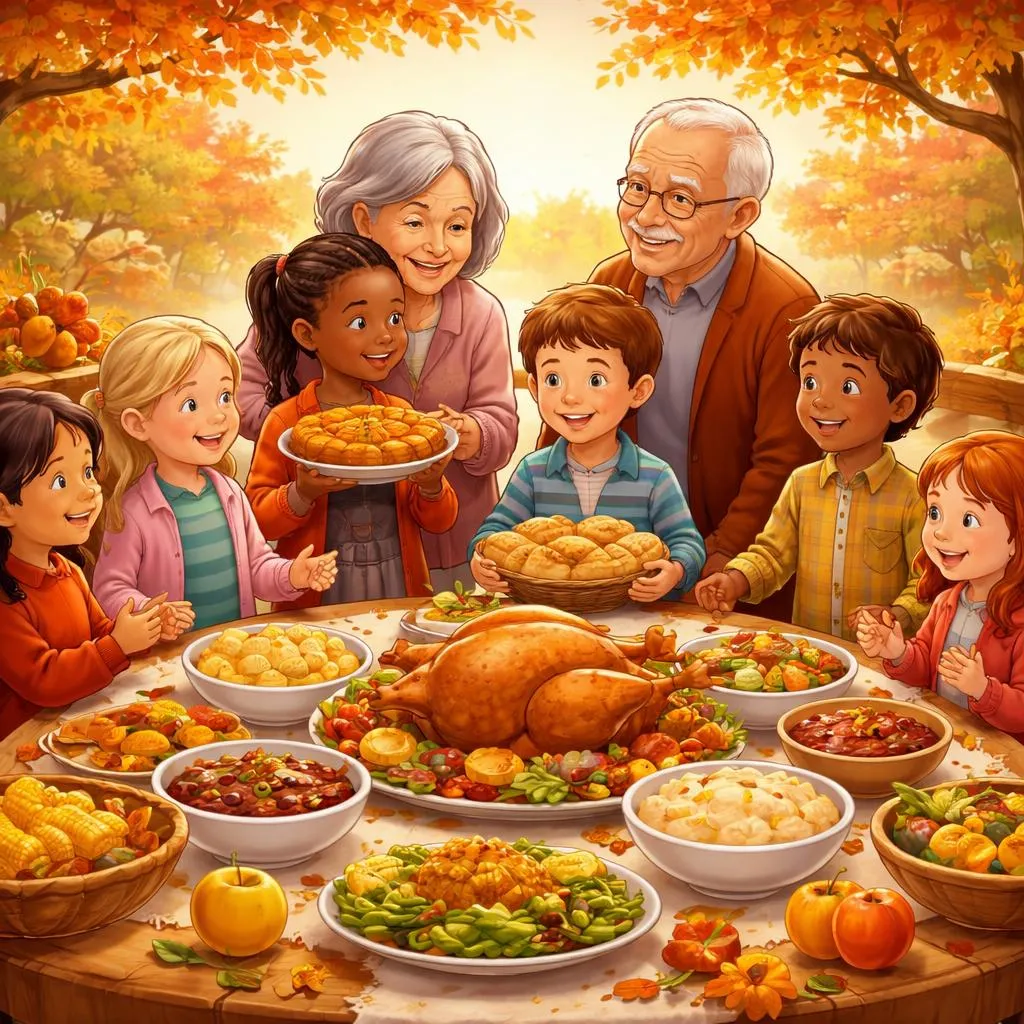

What Is a Children's Story About Thanksgiving? Let us explore this meaningful genre together. A children's story about Thanksgiving centers on the holiday's themes and traditions. Some tales tell of the first Thanksgiving between Pilgrims and Wampanoag people. Others focus on modern family gatherings and celebrations. The stories often feature harvest themes and autumn imagery. Turkeys, pumpkins, and falling leaves appear throughout. Family and community gathering forms the heart of many tales. Relatives travel from near and far to share a meal. Gratitude weaves through every page of these stories. Characters give thanks for food, family, and home. The stories capture the warmth of togetherness and tradition. Young readers connect with the universal themes of appreciation. The holiday becomes meaningful through character experiences.
Meaning and Purpose of Thanksgiving Stories These stories serve several important purposes for children. They introduce the history behind the holiday in accessible ways. Complex historical events become simple narratives for young minds. The tales also teach the practice of gratitude directly. Characters model noticing and appreciating good things. Children learn that thankfulness is a daily practice, not just one day. The stories build anticipation and understanding of family traditions. What happens at Thanksgiving dinner becomes familiar through reading. This reduces anxiety for children new to the celebrations. The tales also connect children to cultural heritage. Family stories and traditions gain meaning through these narratives. Thanksgiving stories create shared vocabulary around gratitude. Families can reference characters and moments during their own celebrations.
Common Elements in Thanksgiving Stories We can identify several elements common to Thanksgiving tales. A harvest setting appears with autumn colors and bounty. Corn, pumpkins, and apples fill the scenes. A journey often brings characters together for the holiday. Travel by car, train, or plane appears frequently. Food preparation shows family working together in kitchens. Pies, turkey, and side dishes get careful attention. A gathering scene brings everyone to the table. Extended family fills the room with noise and love. Gratitude moments show characters sharing what they appreciate. Around the table or in quiet moments, thanks is given. Traditions appear through family rituals and stories. The same foods, games, or stories happen every year. These elements create the warm feeling of the holiday.
Categories of Thanksgiving Stories We can organize Thanksgiving stories into helpful categories. Historical Thanksgiving stories tell of the first celebration. Pilgrims and Native Americans share a harvest feast. Modern family stories show current holiday celebrations. Characters travel, cook, and gather with relatives. Gratitude-focused stories emphasize appreciation practice. Characters learn to notice blessings in daily life. Turkey-centered stories feature the holiday's famous bird. Humorous tales from a turkey's perspective appear. Community service stories show families helping others. Sharing food with those in need becomes the focus. Multi-cultural stories explore different thanksgiving traditions. Various cultures have harvest and gratitude celebrations. Animal stories feature creatures preparing for winter. Squirrels, birds, and woodland creatures give thanks in their ways.
Daily Life Connections Through Thanksgiving Stories These stories connect naturally to children's experiences. Family gatherings feel familiar from holidays and events. Traveling to see relatives mirrors many children's lives. Special foods appear at celebrations throughout the year. The excitement of cousins and grandparents feels universal. Helping in the kitchen happens in many families. Stirring, setting tables, and taste-testing are real experiences. Feeling grateful for loved ones happens beyond the holiday. Children appreciate parents, siblings, and friends daily. The stories validate these ordinary but important feelings. We can point out connections during reading. "We travel to Grandma's just like in the story." "You helped mash potatoes last Thanksgiving." "Who are you thankful for like the character?" These links make story themes personally meaningful.
Vocabulary Learning from Thanksgiving Stories Thanksgiving stories introduce rich seasonal vocabulary. Holiday words build understanding of the celebration. Thanksgiving, harvest, feast, and tradition appear regularly. Food words expand descriptive vocabulary. Turkey, stuffing, cranberry, and pumpkin name specific dishes. Gratitude words carry the story's deeper meaning. Thankful, grateful, appreciate, and blessing appear throughout. Family words describe gathering participants. Relatives, cousins, ancestors, and community name connections. Historical words appear in traditional tales. Pilgrim, Wampanoag, harvest, and settlement teach early American history. Action words describe holiday activities. Gather, prepare, share, and celebrate move the plot forward. We can teach these words with picture cards showing examples. Use them in sentences about the story. Practice using them during holiday preparations.
Phonics Points in Thanksgiving Stories Thanksgiving stories provide useful phonics practice. Thanksgiving itself offers several sound patterns. The TH digraph appears at beginning and end. The long I sound in "give" and short A in "thanks" appear. Food words contain valuable patterns. Turkey has the UR combination. Pumpkin has the short U and MP blend. Stuffing has the short U and FF double letter. Gratitude words provide phonics elements. Thank has the TH digraph and NG ending. Grateful has the long A and FUL ending. Blessing has the BL blend and short E. Action words demonstrate patterns. Gather has the soft TH and ER ending. Share has the SH digraph and long A. Celebrate has the soft C and long A. We can focus on one sound pattern from each story. Find all words with that sound in the Thanksgiving tale. Write them on turkey or leaf shapes for practice.
Grammar Patterns in Thanksgiving Narratives Thanksgiving stories model useful grammar for young readers. Past tense carries historical sections. "The Pilgrims sailed on a ship called the Mayflower." Present tense appears in modern family scenes. "Now everyone gathers around the big table." Future tense shows holiday plans. "Tomorrow we will eat turkey together." Questions explore holiday meaning. "What are you thankful for this year?" Commands appear in cooking and preparing. "Pass the cranberry sauce please." Descriptive language paints autumn pictures. "Golden leaves covered the ground like a warm blanket." Prepositional phrases describe locations. "Around the table, in the kitchen, at Grandma's house." We can point out these patterns during reading. Notice how stories switch between past and present.
Learning Activities for Thanksgiving Stories Many activities extend the warmth of Thanksgiving reading. Create a gratitude chain with paper strips. Write one blessing on each strip and link them together. Draw pictures of what characters were thankful for in the story. Compare to what children feel thankful for now. Make simple Thanksgiving foods together. No-bake pumpkin pie or popcorn balls work well. Create a family tree showing relatives who gather. Talk about those who live far away or are no longer here. Practice saying thank you in different ways. Write thank you notes to family members or teachers. Act out the story with simple costumes and props. Pilgrim hats and paper turkey feathers add fun. These activities make Thanksgiving themes tangible and personal.
Printable Materials for Thanksgiving Learning Printable resources support deep engagement with Thanksgiving themes. Create thankfulness cards with sentence starters. "I am thankful for..." "I feel grateful when..." Design Thanksgiving placemats with coloring and activities. Use at family meals for children. Make vocabulary cards with holiday words and pictures. Use for matching and discussion before reading. Create a simple Mayflower ship template to cut and assemble. Children retell the journey story with their ship. Design turkey feather templates for gratitude writing. Each feather holds something to appreciate. Make family interview sheets for gathering stories. Questions about favorite Thanksgiving memories. These printables structure holiday learning activities.
Educational Games About Thanksgiving Games make Thanksgiving learning playful and interactive. Play "Gratitude Scavenger Hunt" finding things to appreciate. Look for food, family, home, and nature items. Create "Turkey Feather Match" pairing gratitude words with pictures. Play "Pass the Pumpkin" like hot potato with a small pumpkin. When music stops, share something you're thankful for. Design "Thanksgiving Bingo" with holiday symbols and words. Turkey, pie, corn, and family appear on cards. Play "Thanksgiving Memory" matching pairs of holiday pictures. Create "Pin the Feather on the Turkey" like traditional party games. Add gratitude words to feathers before sticking. These games build holiday understanding through active participation.
Teaching the History Respectfully Thanksgiving stories offer opportunities for thoughtful history teaching. The traditional story simplifies complex historical events. Modern understandings recognize multiple perspectives. We can acknowledge this when reading with children. The Wampanoag people helped the Pilgrims survive. They had lived on this land for thousands of years. Their generosity deserves recognition and respect. The years following the first feast brought difficult changes. Different groups experienced this history differently. We can tell children that people remember this time in various ways. Some celebrate cooperation and gratitude. Others remember loss of land and life. Both truths can exist together. Age-appropriate discussions build historical thinking. Children learn that history has multiple viewpoints. This complexity enriches rather than confuses understanding.
Extending Gratitude Beyond One Day Thanksgiving stories naturally lead to year-round gratitude practice. The habits modeled in stories can continue daily. A gratitude jar collects written thanks throughout the year. Read them together on hard days or holidays. A gratitude journal records daily appreciations. One sentence each day builds the habit. Gratitude circles during meals share appreciations. Each person names one good thing from the day. Thank you notes become regular practice, not just holiday tasks. Appreciation for helpers, teachers, and family members matters. Noticing small blessings becomes automatic with practice. The autumn leaves, a warm bed, a friend's smile. These daily moments build resilient, positive children. Thanksgiving becomes a reminder, not the only day for thanks.
Creating Family Thanksgiving Traditions Stories can inspire new family traditions around the holiday. A gratitude tree displays written thanks on paper leaves. Add to it throughout November. A thankful tablecloth gets written appreciations each year. Dates and names record years of blessings. A special book of Thanksgiving stories gets read each year. Children anticipate favorite tales returning. A family recipe book collects dishes from generations. Children help choose and prepare family favorites. A giving tradition shares with those in need. Donate food, volunteer time, or invite someone alone. A storytelling circle shares family memories at the table. Older relatives tell stories from their childhoods. These traditions build meaning beyond the meal itself. They create the memories children will carry forward.
Connecting to Other Gratitude Traditions Thanksgiving stories can connect to global gratitude practices. Many cultures have harvest and thanksgiving celebrations. Jewish Sukkot gives thanks for the harvest season. Jewish people build temporary shelters and share meals. Chinese Moon Festival celebrates abundance and togetherness. Families gather to appreciate the full moon. Korean Chuseok honors ancestors and shares harvest food. Families visit hometowns and make special rice cakes. Indian Pongal thanks the sun and farm animals. Four days of celebration mark the rice harvest. Ghanaian Homowo celebrates the pre-harvest season. Communities share food and remember ancestors. These connections show gratitude as universal human practice. Children learn that all people give thanks. Different expressions share the same appreciative heart. This builds respect for diverse traditions and cultures.