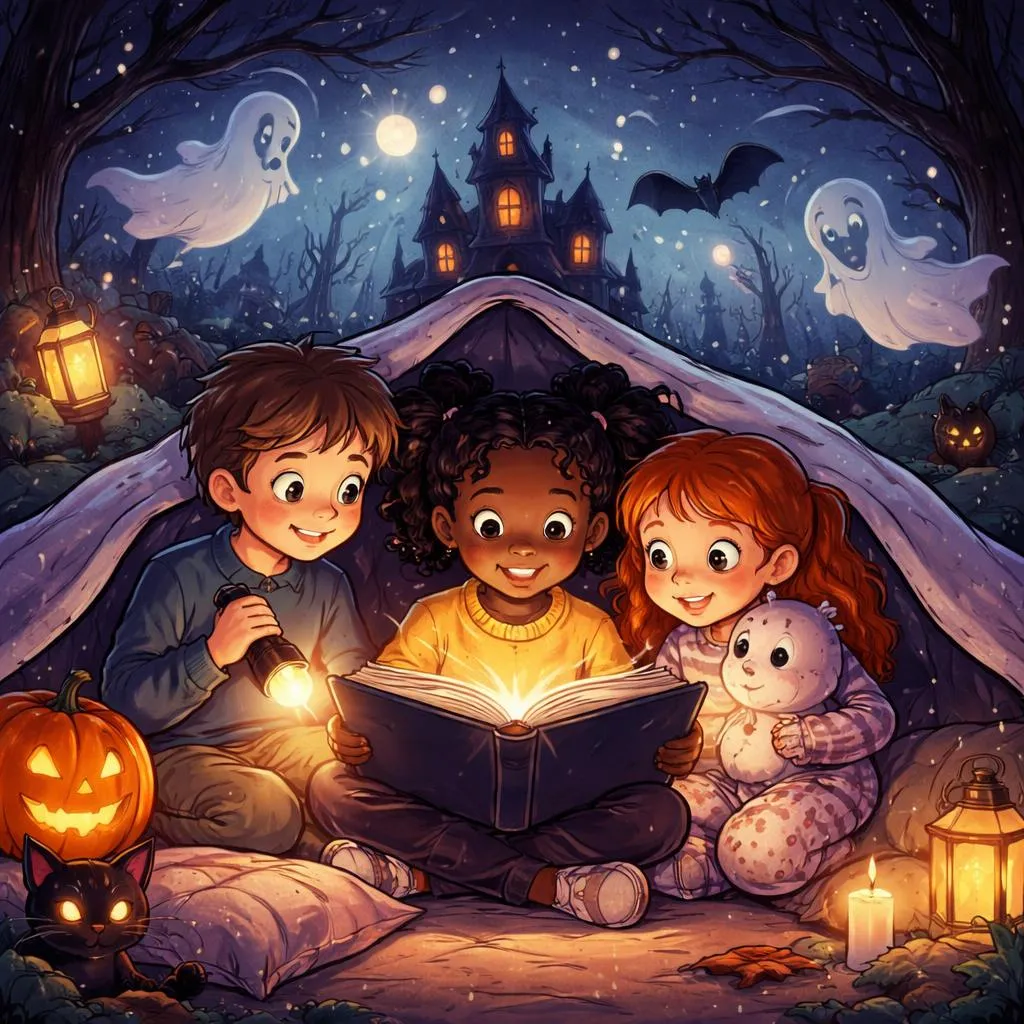

There is a special magic in stories that send a little shiver down the spine. A spooky children's story offers just enough thrill to keep young readers engaged without causing real fear. These tales create a safe space for experiencing suspense. They teach children that courage means facing the unknown. The shadows in these stories always retreat when the lights come on. This article explores how teachers can use gently spooky tales to build vocabulary, comprehension, and confidence in their young learners.
What Is a Spooky Children's Story? A spooky children's story is a narrative designed to create mild suspense and mystery for young readers. It includes elements that feel just a little bit eerie or strange. Dark rooms, strange noises, mysterious shadows, and creaky floors often appear. The characters might encounter something unexplained. The story builds tension slowly. But it always provides a safe resolution. Nothing truly frightening happens. The mystery gets solved. The strange noise has a simple explanation. These stories give children the thrill of suspense with the comfort of a happy ending. They are perfect for building emotional resilience through literature.
Meaning and Explanation Behind Spooky Stories Spooky stories serve important purposes in childhood development. They allow children to experience fear in a completely safe environment. The child knows, somewhere deep down, that this is just a story. The scary parts will end. The characters will be okay. This safe experience with fear builds emotional muscles. It teaches children that uncomfortable feelings pass. It shows them that courage means moving forward even when feeling uncertain.
These stories also teach children to pay attention to details. The creaking floorboard matters. The flickering light means something. The shadow behind the curtain deserves notice. This attention to detail builds observation skills that transfer to other reading. Children learn to look for clues and make predictions based on evidence.
The resolution in a spooky story nearly always reveals a natural explanation. The noise was just the wind. The shadow was just a coat on a hook. The light was a firefly. This teaches children that things are not always as scary as they first seem. It builds a habit of looking for reasonable explanations rather than jumping to fearful conclusions.
Categories or Lists of Spooky Story Types Spooky children's stories come in several varieties. Understanding the categories helps teachers choose the right level of spookiness for their class.
Gentle Mystery Stories: These involve something slightly strange that gets explained.
A missing toy that keeps appearing in new places.
Footprints that appear in the garden overnight.
A light that turns on by itself in an empty room.
Friendly Ghost Stories: These feature ghosts who are not scary at all.
A ghost who just wants to play.
A spirit who needs help finishing something.
A friendly haunting with no danger at all.
Dark and Stormy Night Stories: These use weather to create atmosphere.
A storm knocks out the power.
Strange sounds come from outside.
Shadows dance on the walls during lightning flashes.
Silly Spooky Stories: These use humor to take the edge off scary elements.
A monster who is afraid of children.
A witch who cannot do magic properly.
A vampire who only wants to eat strawberries.
Daily Life Examples from Spooky Stories Spooky children's stories connect to experiences children already know. Every child has heard a strange noise at night. Every child has seen a shadow that looked like something else. Every child has felt that moment of uncertainty in a dark room. The stories validate these experiences. They show that other people feel the same way.
After reading a spooky story, children can share their own slightly scary moments. The noise in the hallway. The dark corner of the bedroom. The tree branch that taps the window. Talking about these moments in a safe classroom setting reduces their power. The shared laughter at how silly fears can be builds community and resilience.
The stories also provide language for talking about fear. Children learn words like nervous, startled, uneasy, and relieved. Having words for feelings makes those feelings easier to manage. The vocabulary becomes a tool for emotional regulation.
Vocabulary Learning from Spooky Stories A spooky children's story introduces rich vocabulary related to atmosphere, emotion, and mystery.
Atmosphere Words: Dark, shadowy, gloomy, misty, quiet, silent, empty, cold, windy.
Sound Words: Creak, groan, whisper, rustle, tap, scratch, howl, thump, click.
Emotion Words: Nervous, scared, frightened, brave, curious, relieved, safe, calm.
Mystery Words: Strange, unusual, mysterious, secret, hidden, unknown, surprising.
Teachers can introduce these words before reading the story. Create a word wall with pictures where possible. Point out the words as they appear in the narrative. After reading, use the words in discussion. What made the sound in the story? How did the character feel when they heard it? How did they feel at the end? The vocabulary becomes meaningful through use in context.
Phonics Points in Spooky Stories The atmospheric language in spooky stories creates excellent opportunities for phonics practice.
Onomatopoeia: Spooky stories love sound words. Creak, groan, howl, thump, scratch. These words demonstrate the connection between letters and sounds directly. The word sounds like what it describes.
S Blends: Many spooky words begin with S blends. Scary, shadow, strange, spooky, story, scare. Practice these blends together. Feel how the sounds slide together.
Long Vowel Sounds: Mystery words often feature long vowels. Moan has a long O. Creak has a long E. Howl has a long OW. Listen for these sounds in the story.
Silent Letters: Words like shadow, light, night, and know contain silent letters. Point these out gently. The letters are there but we do not say them.
Teachers can pause during reading to notice these patterns. A quick comment draws attention without breaking the spooky mood.
Grammar Patterns in Spooky Stories The suspenseful narrative in spooky stories provides clear grammar models.
Past Tense for Storytelling: Spooky stories use past tense to tell what happened. The wind howled outside. The floorboards creaked. The child listened carefully. This provides natural exposure to regular and irregular past forms.
Questions and Suspense: Spooky stories ask questions that build suspense. What was that noise? Who left the door open? Where did the shadow go? These questions model interrogative forms while engaging readers.
Descriptive Language: Spooky stories use adjectives to create atmosphere. The dark room. The cold wind. The strange sound. These descriptions enrich language and teach observation skills.
Short Sentences for Tension: Spooky stories often use very short sentences to build tension. The light went out. Everything went dark. Someone whispered. This sentence structure creates rhythm and suspense.
Teachers can point out these patterns during rereading. The second reading provides space for noticing language structures while the story remains engaging.
Learning Activities for Spooky Stories Activities bring a spooky children's story to life in the classroom.
Activity 1: Sound Effect Story Read a spooky story aloud but pause at key moments. Let children provide the sound effects. Hands tapping desks for footsteps. Voices whispering for wind. Paper crinkling for rustling leaves. This activity builds engagement and listening skills while making the story multisensory.
Activity 2: Shadow Puppets Create simple shadow puppets of story characters. Use a flashlight and a white sheet or wall. Retell the story using shadow puppets. This connects to the spooky theme while building storytelling skills. The shadows themselves become part of the learning.
Activity 3: Brave Certificate After reading a spooky story, give each child a Brave Reader certificate. Celebrate that they listened to a slightly scary tale and stayed brave. This positive reinforcement builds confidence for future reading challenges.
Activity 4: Spooky Story Mapping Create a simple map showing where the story happened. Mark the places where spooky events occurred. Label each location with what happened there. This builds comprehension and spatial thinking.
Printable Materials for Spooky Stories Printable resources extend learning from any spooky children's story.
Story Sequencing Cards: Create simple picture cards showing key moments from the story. Children arrange them in correct order, retelling the story as they work.
Character Masks: Create masks of story characters. Children wear them during retelling or dramatic play. The masks make the characters real and personal.
Spooky Word Search: Create a word search using vocabulary from the story. Creak, shadow, ghost, dark, brave, mystery. This provides quiet independent practice with important words.
Draw Your Favorite Part: Create a simple page with space for drawing and writing. Children draw their favorite spooky moment and write a sentence about it. This builds comprehension and writing skills together.
Feelings Chart: Create a simple chart showing how the character felt at different story points. Scared at the beginning. Curious in the middle. Relieved at the end. Children match story moments to feelings.
Educational Games for Spooky Story Review Games provide a fun way to review spooky stories while maintaining engagement.
Game: Spooky Story Charades Write story events on slips of paper. Children draw a slip and act it out without speaking. The class guesses which part of the story they are performing. This requires recalling specific story details.
Game: What Happens Next Stop reading at a suspenseful moment. Ask children to predict what happens next. Share predictions. Then read the real ending. Compare predictions to the actual story. This builds prediction skills and comprehension.
Game: Spooky Bingo Create bingo cards with words and images from the story. Read definitions. Children cover the matching square. The first to complete a row wins. This provides vocabulary review in a familiar format.
Game: Pass the Pumpkin Sit in a circle with a small pumpkin or other object. Play quiet music while the pumpkin passes around. When the music stops, the child holding the pumpkin answers a question about the story. This combines suspense with story review.
Addressing Fears Through Discussion Spooky children's stories create natural opportunities for talking about fear.
After reading, gather in a circle for a gentle discussion. Ask what parts felt a little scary. Acknowledge those feelings as normal. Then talk about what made the story safe. The characters were okay. The mystery got solved. The scary thing had a simple explanation.
Ask children to share times they felt a little scared in real life. The dark bedroom. A strange noise. A new situation. Listen without judgment. Then talk about what helped them feel better. A nightlight. A grownup checking. Finding out what made the noise. This discussion builds emotional vocabulary and coping strategies.
Remind children that feeling a little scared is normal. Brave people feel scared too. They just keep going anyway. The characters in the story showed bravery. The children listening showed bravery too.
Connecting Spooky Stories to Writing Spooky stories naturally inspire young writers to create their own slightly scary tales.
Shared Writing: Write a class spooky story together. Start with an ordinary situation. A child home alone. A walk in the woods. A dark and stormy night. Add one slightly spooky element. A strange sound. A moving shadow. A door that creaks open. Work together to create a safe resolution. The shadow was just a tree branch. The sound was just the cat.
Sentence Starters: Provide sentence starters for children who need support. The dark room was quiet except for... Suddenly, a sound came from... The shadow looked just like... At the end, they discovered that...
Spooky Word Bank: Create a word bank of spooky vocabulary on the board. Children use these words in their writing. This builds vocabulary while providing support.
Illustration: Spooky stories need atmospheric pictures. Provide dark paper and light crayons or chalk. Children illustrate their stories with shadows and moonlight.
The Comfort of Safe Scares Spooky children's stories occupy a special place in childhood. They provide just enough thrill to keep things interesting. They create tension that always resolves safely. They introduce the pleasure of suspense without the pain of real fear. This gentle introduction to the darker side of storytelling builds important skills. Children learn that they can handle uncomfortable feelings. They learn that stories can take them on emotional journeys. They learn that courage and curiosity go hand in hand.
The best spooky stories leave children feeling brave rather than scared. They close the book with a smile and a shiver. They look at shadows with curiosity instead of fear. They understand that strange noises usually have simple explanations. These lessons extend far beyond reading time. They build emotional resilience that serves children throughout their lives. And they do it all through the simple magic of a well-told tale, just spooky enough to thrill, just safe enough to comfort.