
Opening Introduction
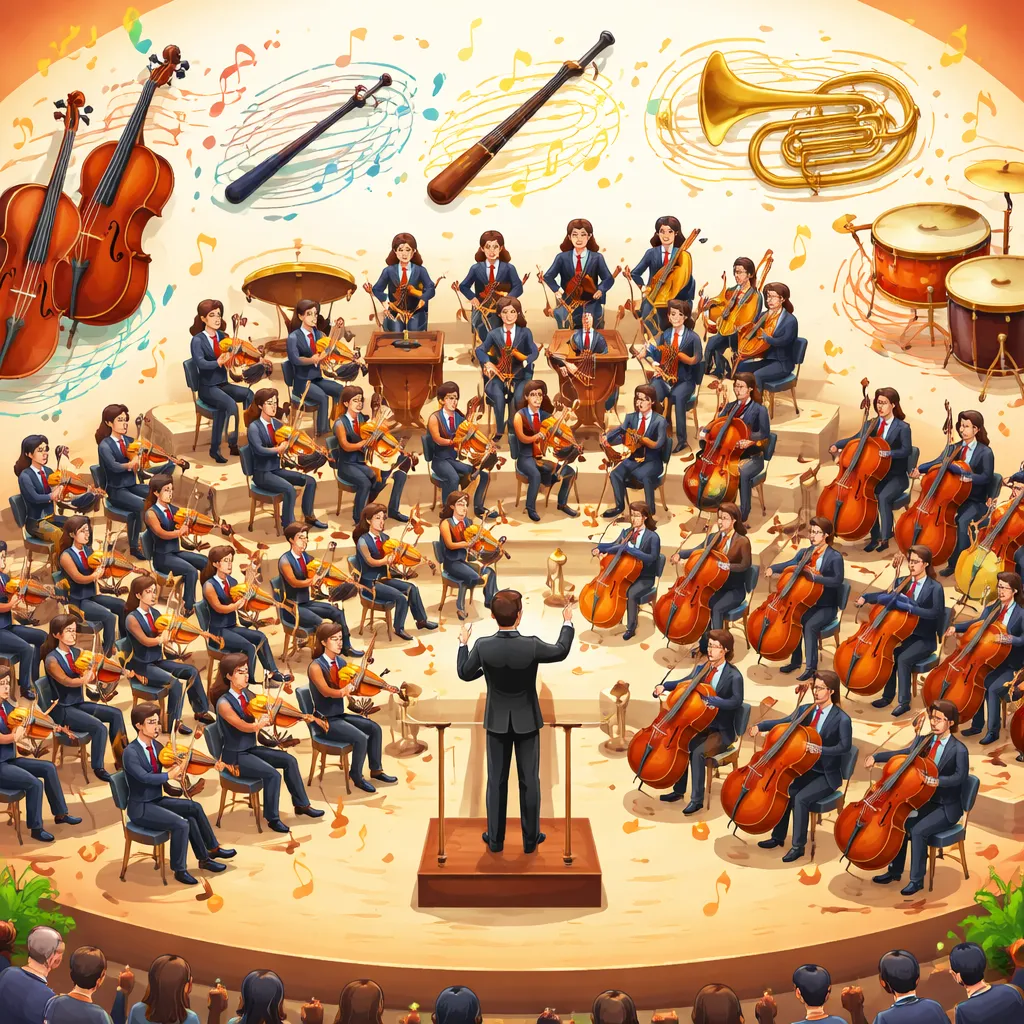
Leo is watching a video. It shows a big stage. Many people are holding instruments. They are all playing together. The sound is beautiful. Leo sees one person waving a stick. "Who is that?" he asks his sister, Mia. "That is the conductor," Mia says. "The conductor leads the orchestra. An orchestra is a big team of musicians. The team is divided into groups, or sections. Each section has a special job. Let's learn about the musical instruments orchestra sections. Knowing the sections helps us hear the music in a new way." Leo is excited. He wants to know all the parts of the team. Let's explore the orchestra together.
Core Knowledge Explanation
An orchestra is like a musical city. Every person has a job. Every instrument has a voice. The instruments are grouped into families, or sections. They sit together on the stage. There are four main musical instruments orchestra sections. The first section is the string family. The instruments in this family have strings. You play them by drawing a bow across the strings or by plucking them. The main string instruments are the violin, the viola, the cello, and the double bass. Violins are small and have a high sound. Cellos are bigger and have a lower, warm sound. The double bass is the biggest and has the deepest sound. The string section is often the largest in the orchestra. It plays the melody and the harmony. It is the heart of the orchestra.
The second section is the woodwind family. These instruments are often made of wood. You blow air into them to make a sound. The main woodwind instruments are the flute, the clarinet, the oboe, and the bassoon. The flute is made of metal. It has a light, bird-like sound. The clarinet is black and has a sweet sound. The oboe has a double reed. It makes a unique, nasal sound. The bassoon is very long. It has a deep, funny sound. The woodwind section plays beautiful tunes and adds color to the music. They are like the painters of the orchestra.
The third section is the brass family. These instruments are made of shiny brass. You make a sound by buzzing your lips into a mouthpiece. The main brass instruments are the trumpet, the trombone, the French horn, and the tuba. The trumpet is bright and loud. It plays fanfares. The trombone has a slide. It makes a smooth, strong sound. The French horn is curled in a circle. It has a mellow, majestic sound. The tuba is the biggest. It plays the lowest notes. The brass section adds power and excitement. They are the heroes of the orchestra.
The fourth section is the percussion family. These instruments make sound when you hit, shake, or scrape them. The main percussion instruments are the timpani, the snare drum, the cymbals, and the xylophone. Timpani are big, copper drums. You tune them to different notes. The snare drum makes a sharp, rolling sound. Cymbals crash and shimmer. The xylophone has wooden bars. You hit them with mallets. The percussion section keeps the rhythm. It makes special sound effects. They are the timekeepers of the orchestra. These are the four main musical instruments orchestra sections. Sometimes, you also see a harp or a piano. They are special guests. Now you know the teams in the musical city.
Fun Interactive Learning
Let's play a game to learn the sections. It is called "Orchestra Sorting." Ask a grown-up to help you find pictures of instruments. You can draw them too. Make four boxes. Label them: Strings, Woodwinds, Brass, Percussion. Now, sort the pictures into the right boxes. The violin goes in Strings. The trumpet goes in Brass. The flute goes in Woodwinds. The drum goes in Percussion. Say the section name as you sort. This is a fun way to learn the musical instruments orchestra sections.
Another game is "Sound Detective." Go online with a parent. Find short videos of each instrument playing. Close your eyes. Listen. Can you guess the instrument? Then, can you guess its section? "That is a cello. It is in the string section." This trains your ears. You can also play "Conductor Says." One person is the conductor. The conductor says, "Brass section, stand up and pretend to play!" Everyone must pretend to play a brass instrument. Then, "Percussion section, clap the rhythm!" This is a fun, active game. It helps you remember which instruments belong together. These activities make learning the musical instruments orchestra sections an adventure.
Expanded Learning
Orchestras have a long history. Hundreds of years ago, orchestras were very small. They had only a few string instruments. Over time, composers wrote music for more instruments. The orchestra grew into the big group we see today. The way the musical instruments orchestra sections are arranged on stage is also important. The strings sit at the front. The woodwinds sit in the middle. The brass sit behind the woodwinds. The percussion sits at the back. This helps the sound mix together beautifully.
Different countries have different kinds of traditional orchestras. In China, there is a traditional orchestra with instruments like the erhu and the pipa. But a Western symphony orchestra uses the sections we learned about. The musical instruments orchestra sections are the same all over the world. This means a musician from Japan can go to France and play in the same section. Music is a universal language. Let's make a song about the orchestra. Sing this to the tune of "Old MacDonald Had a Farm."
In the orchestra, we have four teams, with lots of sound! And in that orchestra, the strings are found! With a violin here, and a cello there, hear the bow go, soft and sweet! The string section makes the music complete! In the orchestra, the woodwinds play, with air and reed! With a flute so high, and a bassoon so low indeed! With an oboe here, and a clarinet there, adding colors bright and fair! The woodwind section fills the air! In the orchestra, the brass is strong, with power and might! With a trumpet blast, shining in the light! With a trombone slide, and a French horn's call, the brass section plays for one and all! In the orchestra, percussion keeps the time, with a bang and crash! The timpani roll, and the cymbals clash! With a drum roll here, and a xylophone there, keeping rhythm everywhere! The percussion section, we declare!
What You Will Learn
You are learning about music and teamwork. You are learning the names of the four musical instruments orchestra sections: strings, woodwinds, brass, percussion. You are learning instrument names like violin, flute, trumpet, and timpani. You are also learning words like conductor, melody, harmony, rhythm, and universal.
You are learning descriptive sentences. You can say, "The violin is a string instrument." You can explain, "The brass section is loud and powerful." You can compare, "The flute is a woodwind, but the trumpet is brass." You are using English to talk about art and culture. This builds a rich vocabulary.
You are building important skills. You are building listening skills. You learn to identify instruments by sound. You are building categorization skills. You sort instruments into families. You are building cultural awareness. You learn about a global tradition. You are building appreciation for the arts. You understand how teamwork creates beauty. You are building confidence. You can name and describe many instruments.
You are forming an appreciative habit. The habit of listening actively to music. You do not just hear noise. You hear sections and instruments working together. Learning about the musical instruments orchestra sections turns you from a passive listener into an active, knowledgeable music explorer.
Using What You Learned in Life
Use your new knowledge when you listen to music. When you watch a cartoon, listen for the music. Do you hear a trumpet? Say, "That's the brass section!" When you go to a school concert, look for the sections. Point them out to your family. "Look, the string section is at the front." You can also listen to recordings of orchestras online. Try to follow one section with your ears. Can you hear just the violins? Now, just the drums. This is a fun challenge.
At home, you can make a simple orchestra with your toys. Use a ruler as a violin (string). Use a straw as a flute (woodwind). Use a paper towel tube as a trumpet (brass). Use pots and pans as drums (percussion). Have a family concert. You are the conductor. Teach your family about the sections. The more you use your knowledge of the musical instruments orchestra sections, the more you will enjoy and understand the wonderful world of music.
Closing Encouragement
You are a music detective. You are a section spotter. You are a curious and attentive listener. I am so proud of you. Learning about the orchestra sections shows you have an ear for detail and a love for beautiful sounds.
Keep listening. Keep exploring. Keep discovering the instruments in every song you hear. Remember, an orchestra is a team where every player is important, just like in your classroom or family.
You are smart, you are observant, and you have learned the secret of how an orchestra works. Great work, my wonderful music maestro.