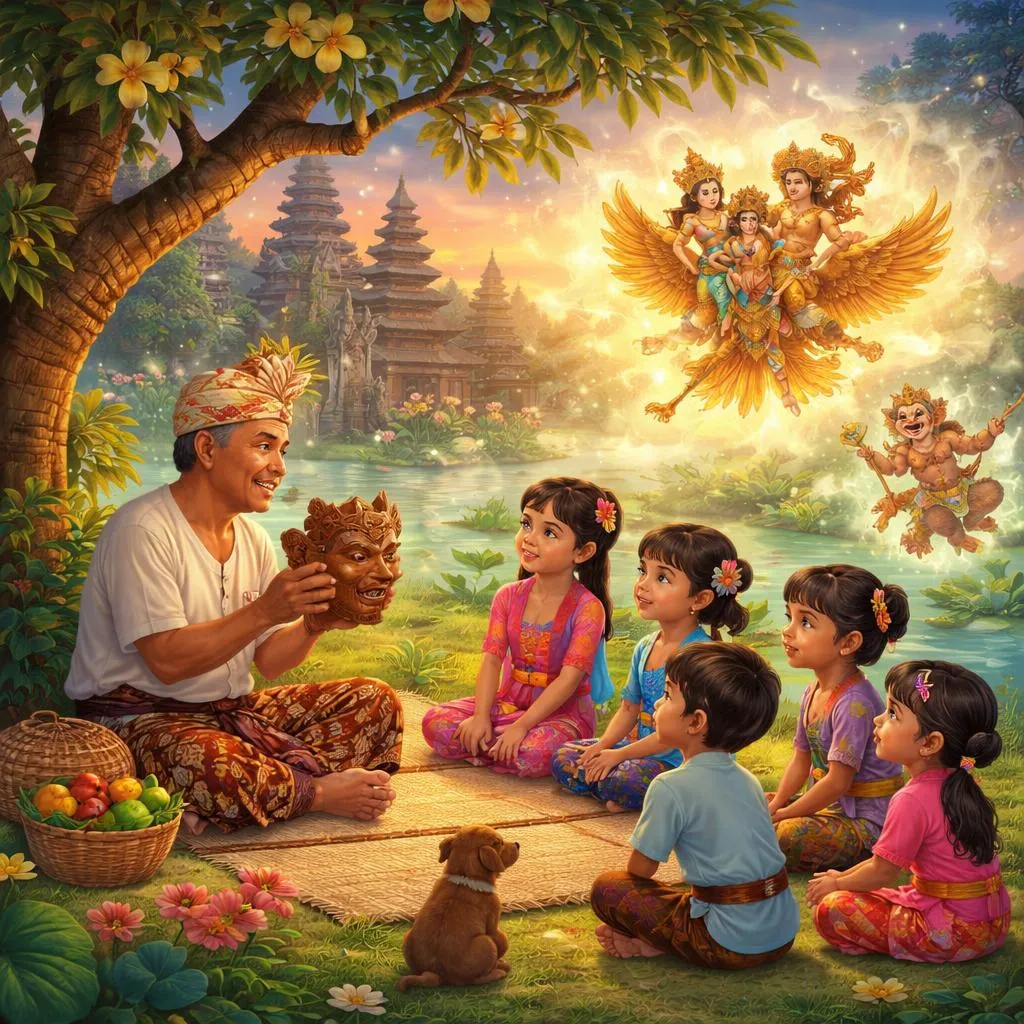

What Are Balinese Children's Favorite Stories? Let us explore this rich collection of tales from Bali together. Balinese children's favorite stories are traditional tales from the Indonesian island of Bali. They have been passed down through generations by storytellers. The stories reflect Balinese culture, beliefs, and values. Animals often appear as characters with human qualities. Clever monkeys, wise turtles, and magical creatures populate these tales. Gods and goddesses from Balinese Hinduism appear in many stories. Good and evil battle, with wisdom and kindness usually winning. The stories explain natural phenomena and teach moral lessons. They entertain while preserving cultural heritage. These tales offer windows into a rich and ancient culture.
Meaning and Purpose of Balinese Stories These stories serve several important purposes in cultural preservation. They pass down Balinese values and beliefs to new generations. Children learn what their culture considers important and true. The stories also explain the natural world through cultural lenses. Why rivers flow, mountains stand, and animals behave certain ways. They teach moral lessons about kindness, cleverness, and respect. Characters who do wrong face consequences. Those who do right are rewarded. The stories also preserve the Balinese language and oral tradition. Storytellers keep the culture alive through performance. Reading these stories builds appreciation for Balinese culture worldwide. Children everywhere can learn from these timeless tales.
Common Elements in Balinese Stories We can identify several elements common to Balinese tales. Animals feature prominently as clever or foolish characters. The mouse deer, monkey, and turtle appear often. Hindu gods and goddesses play important roles. Sanghyang, the sun god, and other deities appear. Magic and supernatural events are common. Characters transform, spirits appear, and miracles happen. Good versus evil struggles drive many plots. Right behavior is rewarded; wrong behavior punished. Natural phenomena are explained through stories. Why the rice grows, why the volcano erupts. Cleverness often triumphs over brute strength. Small, smart characters defeat larger, foolish opponents. Respect for elders and tradition appears throughout.
Stories Included in the Collection The collection features many beloved Balinese tales. "The Story of the Caterpillar and the Snail" teaches patience. Two creatures wait for rain and learn different lessons. "The King of the Mice" shows how small creatures can help each other. Mice work together to solve big problems. "The Tale of the Two Farmers" explores greed and generosity. One farmer shares; the other hoards and learns a lesson. "The Legend of the Crying Stone" explains a natural formation. A stone shaped like a crying woman has a sad story. "The Princess and the God" tells of love between mortal and divine. The princess must prove herself worthy of a god's love. Each story carries meaning beyond its simple plot.
Vocabulary Learning From Balinese Stories These stories introduce rich cultural and geographical vocabulary. Bali means the Indonesian island with unique Hindu culture. Indonesia means the country of islands in Southeast Asia. Hindu means the major religion of Bali with many gods. Temple means a sacred place of worship in Bali. Rice means the main food crop grown in terraced fields. Terrace means stepped fields carved into hillsides for farming. Volcano means a mountain that can erupt with hot lava. Offering means a gift presented to gods or spirits. Ceremony means a formal religious or public occasion. Tradition means customs and beliefs passed through generations. We can teach these words with picture cards showing examples. Use them in sentences about Balinese culture.
Phonics Points in Balinese Story Vocabulary Balinese stories provide useful phonics practice with cultural vocabulary. Bali has the short A and long E. Indonesia has the short I and short O and long E and short A. Hindu has the short I and long U. Temple has the short E and M and P and L. Rice has the long I and soft C. Terrace has the short E and short A and soft C. Volcano has the long O and long A and long O. Offering has the short O and short E and ING. Ceremony has the short E and short E and short O and long E. Tradition has the short A and short I and short O and N. Character names offer sound patterns. Sanghyang has the short A and short A and NG. We can focus on one sound pattern from each story. Find all words with that sound in the Balinese tale. Write them on temple or rice terrace shapes for practice.
Grammar Patterns in Balinese Narratives Balinese stories model useful grammar for young readers naturally. Past tense carries the main narrative throughout. "The clever monkey tricked the crocodile and escaped." Present tense appears in dialogue and timeless truths. "In Bali, we believe the gods watch over us." Future tense shows what will happen in the story. "The princess will face three tests to prove her worth." Questions explore character motivations and events. "Why did the mouse deer trick the tiger?" "How will the farmer learn to share?" Commands appear in moments of guidance. "Be kind to all creatures." "Respect your elders." Descriptive language paints Balinese scenes vividly. "The green, terraced rice fields stretched up the mountainside toward the temple." Prepositional phrases describe locations. "In the village, at the temple, beside the river." We can point out these patterns during reading.
Daily Life Connections Through Balinese Stories These stories connect to children's experiences across cultures. Animal stories appeal to children everywhere. Clever and foolish animals are universal. Moral lessons about kindness and sharing transcend cultures. Children everywhere understand right and wrong. Family relationships appear in all cultures. Parents, children, and siblings are universal. Natural wonders like volcanoes and rice fields fascinate all children. They wonder about the world around them. Celebrations and ceremonies happen in every culture. Children understand special days and traditions. We can point out these connections during reading. "We have stories about clever animals too." "In our family, we also have special celebrations."
Learning Activities for Balinese Stories Many activities deepen understanding of Balinese culture through stories. Locate Bali on a world map or globe. See where these stories come from. Learn about Balinese temples and their architecture. Draw a picture of a Balinese temple. Try making simple Balinese offerings from natural materials. Use leaves, flowers, and small baskets. Learn about rice farming and terraced fields. Draw how rice grows from seed to harvest. Compare Balinese stories to folktales from your own culture. How are they similar? Different? Create shadow puppets like those used in Balinese storytelling. Act out stories with shadow puppets.
Printable Materials for Balinese Stories Printable resources support deep engagement with Balinese culture. Create a map of Indonesia showing Bali island. Color and label the location. Design vocabulary cards with Balinese culture words and definitions. Bali, Indonesia, Hindu, temple, rice, terrace, volcano, offering included. Make a story sequencing sheet for each Balinese tale. Put events in correct order. Create a comparison chart for Balinese and local folktales. List similarities and differences. Design a Balinese temple coloring page with typical architecture. Children color while learning about temples. Make a "clever animal" writing prompt page. "Write about a time someone used cleverness to solve a problem." These printables structure cultural exploration effectively.
Educational Games About Balinese Stories Games make cultural learning playful and interactive. Play "Match the Animal" pairing Balinese animals with their traits. Match monkey with clever, turtle with wise, tiger with fierce. Create "Story Sequence Relay" arranging events from Balinese tales. Teams race to put story cards in order. Play "Who Am I?" describing characters from stories. "I tricked the crocodile and escaped. Who am I?" Design "Bali Bingo" with cultural elements on cards. Temple, rice terrace, volcano, offering, monkey, turtle included. Play "Cultural Comparison" matching Balinese items with local equivalents. Match Balinese temple with local place of worship. Create "Shadow Puppet Theater" where children perform stories. Make simple puppets and retell Balinese tales.
Teaching Respect for Other Cultures Balinese stories provide perfect material for teaching cultural respect. Children learn that people everywhere tell stories. Stories pass on values and wisdom in every culture. Balinese values may differ slightly from local ones. But kindness, cleverness, and respect are universal. Children learn to appreciate differences while noticing similarities. They see that all cultures have rich traditions. No culture is better than another; each is unique. This builds foundation for global citizenship. Children who understand other cultures respect them more. They become curious about the world, not fearful. Stories open doors to understanding that nothing else can.
The Art of Balinese Storytelling Balinese storytelling is itself a beautiful art form. Stories were traditionally told aloud, not read from books. Storytellers used voice, gesture, and expression to engage listeners. Shadow puppet plays called Wayang Kulit told these tales. Puppets cast shadows on a screen while narrator told story. Music accompanied the performance on traditional instruments. Entire villages would gather to watch and listen. The stories brought the community together. They taught while entertaining everyone present. This tradition continues today in Bali. Children can learn about this art form through stories. They can try their own storytelling performances.
Why These Stories Matter Today Balinese stories remain relevant in our modern world. Their lessons about kindness and wisdom never grow old. Their explanations of nature connect children to the world. Their celebration of culture preserves heritage for future. In a globalized world, understanding other cultures matters. These stories build bridges between Bali and the rest of the world. Children everywhere can enjoy these wonderful tales. They can learn from Balinese wisdom and values. The stories enrich the global community of children. They remind us that all people share the same hopes. We all want to be happy, loved, and safe. Stories from Bali express these universal human desires.