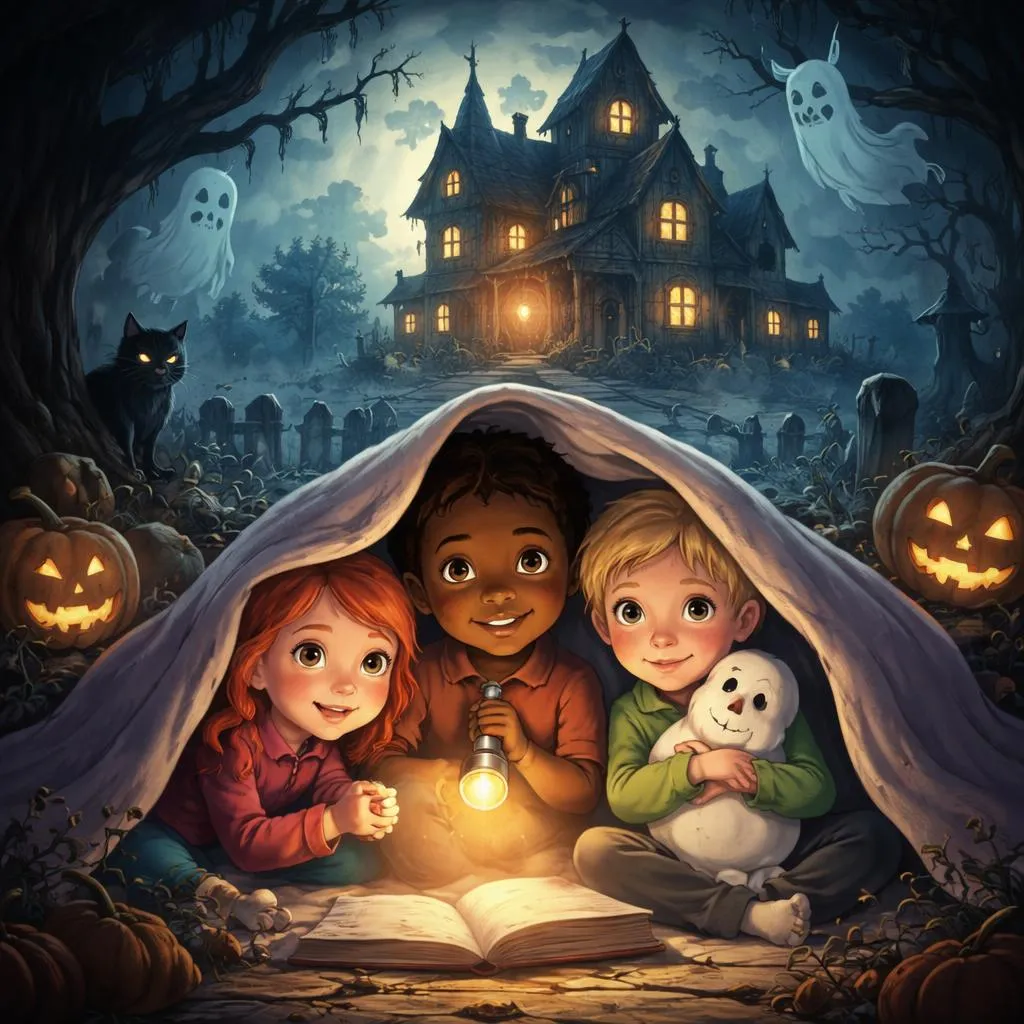

What Are Children's Haunted House Stories? Let us explore this thrilling genre of children's literature together. Children's haunted house stories feature spooky old houses with mysterious secrets. The houses are often abandoned, creaky, and covered in cobwebs. Strange sounds come from inside when no one should be there. Lights flicker in windows late at night mysteriously. Characters dare each other to enter and explore inside. They discover things that cannot be explained easily. The stories build suspense without becoming too terrifying. Happy endings reveal friendly ghosts or explainable noises often. The haunted house becomes less frightening by the story's end. Children experience thrills in a controlled, safe way. The genre has delighted young readers for many generations.
Meaning and Purpose of Haunted House Stories These stories serve several important purposes in child development. They allow children to experience fear in safe, controlled settings. The fear is real but the danger is not. This builds emotional resilience and coping skills gradually. Children learn that scary feelings pass and things work out. The stories also help children face real fears indirectly. A child afraid of the dark might read about it. The story provides distance while addressing the fear. Haunted house stories also teach that things aren't always as they seem. The scary house might have a friendly ghost inside. Appearances can be deceiving, a valuable life lesson. The genre also develops imagination and creativity richly. Children envision spooky scenarios beyond ordinary experience.
Common Elements in Haunted House Stories We can identify several elements common to haunted house tales. The old, abandoned house looks scary from the outside. Broken windows, overgrown yards, and creaking gates appear. Strange sounds come from within when no one is there. Moans, creaks, and whispers fill the silence. Mysterious lights flicker in windows at nighttime. No one should be inside, yet lights appear. Characters dare each other to enter and explore. Curiosity overcomes fear, leading them inside. Strange discoveries await inside the mysterious house. Old portraits, hidden rooms, and mysterious objects appear. The mystery gets solved by the story's satisfying end. The house turns out to be not so scary after all. Friendly ghosts or natural explanations resolve the mystery.
Categories of Haunted House Stories We can organize haunted house stories into helpful categories. Friendly ghost stories feature spirits who aren't scary at all. They might need help or just want to be friends. Mystery haunted houses have explainable strange events. Secret passages or hidden animals cause the scares. Adventure haunted houses combine thrills with exciting quests. Characters search for treasure or solve old mysteries. Humorous haunted houses add comedy to the scares. Silly ghosts and funny situations keep things light. Historical haunted houses connect to real events and places. Stories from long ago add educational value too. Holiday haunted houses appear especially at Halloween. Seasonal tales fit perfectly with October celebrations.
Vocabulary Learning from Haunted House Stories Haunted house stories introduce rich atmospheric vocabulary. Haunted means visited by ghosts or spirits regularly. Ghost means the spirit of a dead person that appears. Spooky means creepy in a fun, not too scary way. Eerie means strange and frightening at the same time. Mysterious means difficult to understand or explain clearly. Creak means a harsh scraping sound like old doors make. Moan means a long, low sound of pain or sadness. Whisper means to speak very softly and quietly. Shadow means dark shape caused by blocking light. Flicker means to shine with an unsteady, quick light. We can teach these words with picture cards showing examples. Use them in sentences about story events and feelings.
Phonics Points in Haunted House Stories Haunted house stories provide useful phonics practice with atmospheric language. Haunted has the H sound and AU diphthong and ED ending. Ghost has the GH silent and long O and ST blend. Spooky has the SP blend and long OO and long E. Eerie has the EA digraph and long E and long E. Creak has the CR blend and EA digraph and K sound. Moan has the M sound and OA digraph and N sound. Whisper has the WH digraph and short I and PER ending. Shadow has the SH digraph and short A and OW diphthong. Flicker has the FL blend and short I and ER ending. Mystery has the short I and short E and long E. We can focus on one sound pattern from each story. Find all words with that sound in the haunted tale. Write them on bat or ghost shapes for practice.
Grammar Patterns in Haunted House Narratives Haunted house stories model useful grammar for young readers effectively. Past tense carries the main narrative throughout. "The children crept slowly up the creaky stairs." Present tense appears in dialogue and urgent moments. "I think something is moving in there!" he whispers. Future tense shows anticipation and fear ahead. "We will never go back to that house again." Questions express character confusion and worry. "What was that noise?" "Who is hiding in the closet?" Commands appear in moments of danger. "Run!" "Hide!" "Don't look back!" Descriptive language builds atmosphere and tension. "The dark, dusty room smelled old and forgotten." Prepositional phrases describe locations precisely. "Under the bed, behind the door, inside the closet." We can point out these patterns during reading.
Daily Life Connections Through Haunted House Stories Haunted house stories connect to children's everyday experiences naturally. Old buildings sometimes look spooky in certain light. Shadows at night look different than in daytime. Strange sounds happen in every house occasionally. Creaking floors and settling pipes make noises. Imagination turns ordinary things into scary possibilities. A coat on a hook becomes a person at night. Being alone in a new place feels uncomfortable sometimes. Big empty houses feel different than full ones. Dreams sometimes feel scary and out of control. Nightmares visit most children at some point. We can point out these connections during reading. "Have you ever heard a creak at night and wondered what it was?" "Sometimes our imagination plays tricks on us."
Learning Activities for Haunted House Stories Many activities deepen engagement with haunted house tales. Create a haunted house diorama in a shoebox. Add spooky details like cobwebs, bats, and ghosts. Draw a map of the haunted house from the story. Mark where scary events happened inside. Write a new ending where the mystery is solved differently. Explain what really caused the strange events. Act out scenes showing characters being brave. Practice facing fears like story characters do. Create a "bravery kit" with items that help feel brave. Flashlight, stuffed animal, and positive notes included. Design a friendly ghost that isn't scary at all. Give it a name and a reason for being in the house. These activities help process fear through creative expression.
Printable Materials for Haunted House Learning Printable resources support deep engagement with haunted house stories safely. Create a haunted house parts labeling page with spooky vocabulary. Label windows, door, roof, chimney, and cobwebs. Design emotion tracking sheets for during reading. Note when characters feel scared and when they feel brave. Make vocabulary cards with haunted house words and definitions. Haunted, ghost, spooky, eerie, creak, moan, whisper included. Create a mystery solution sheet for explaining strange events. Write what really caused each scary moment. Design a friendly ghost template for creating non-scary spirits. Add a name, personality, and reason for haunting. Make a haunted house story map for tracking plot elements. Characters, setting, scary moments, mystery, solution included. These printables structure haunted house exploration activities safely.
Educational Games About Haunted Houses Games make haunted house learning playful and controlled for children. Play "Sound Detective" identifying spooky sounds recordings. Guess what makes each sound in real life. Create "Shadow Charades" making shadow shapes on wall. Others guess what spooky shape the shadow makes. Play "Brave or Scared" sorting character reactions. Decide if actions show courage or fear in situations. Design "Haunted House Bingo" with spooky elements on cards. Ghost, bat, spider, creak, moan, shadow, flicker included. Play "Flashlight Tag" in dimmed room with boundaries. Practice being brave in semi-darkness with friends. Create "Fear Thermometer" rating story scariness levels. Discuss why some parts feel scarier than others. These games build fear management through playful exposure.
Teaching About Healthy Fear Haunted house stories provide opportunities to discuss fear's purpose. Fear protects us from real dangers always. It makes us careful around heights and strangers. The feeling itself is not bad or wrong ever. What matters is how we respond to fear. Courage means acting despite feeling afraid sometimes. Fear becomes a problem only when too big. It should not stop us from living fully ever. Real dangers deserve fear, imagined ones less so. Children can learn to evaluate threats realistically. The stories help distinguish real from imaginary fears. They also teach that fear feelings pass eventually. Everyone feels scared sometimes, even adults too.
The Comfort of Happy Endings Children's haunted house stories almost always end happily ever after. The ghost is friendly or the mystery gets solved. The scary house becomes less frightening by the end. This pattern provides essential reassurance for children. They learn that fear passes and safety returns always. The happy ending makes the scary journey worthwhile. Children can endure temporary fear for satisfying resolution. This mirrors how real difficulties resolve eventually. Problems get solved and hard times end. The pattern builds hope and resilience gradually. Children internalize that they can survive hard things. The happy ending is not just comfort but teaching.
Why Children Choose Scary Stories Many children actively seek out frightening stories repeatedly. The thrill of fear feels exciting in safe contexts. Adrenaline provides a natural high some enjoy. Mastering fear through stories builds confidence greatly. Finishing a scary book feels like accomplishment. The stories also provide social bonding opportunities. Children share spooky stories with friends often. Telling ghost stories at sleepovers is traditional. The shared experience of being scared together bonds. Children also explore identity through facing fears. They discover they can be brave after all. The stories become milestones in growing up gradually. Surviving a scary book marks developmental progress.