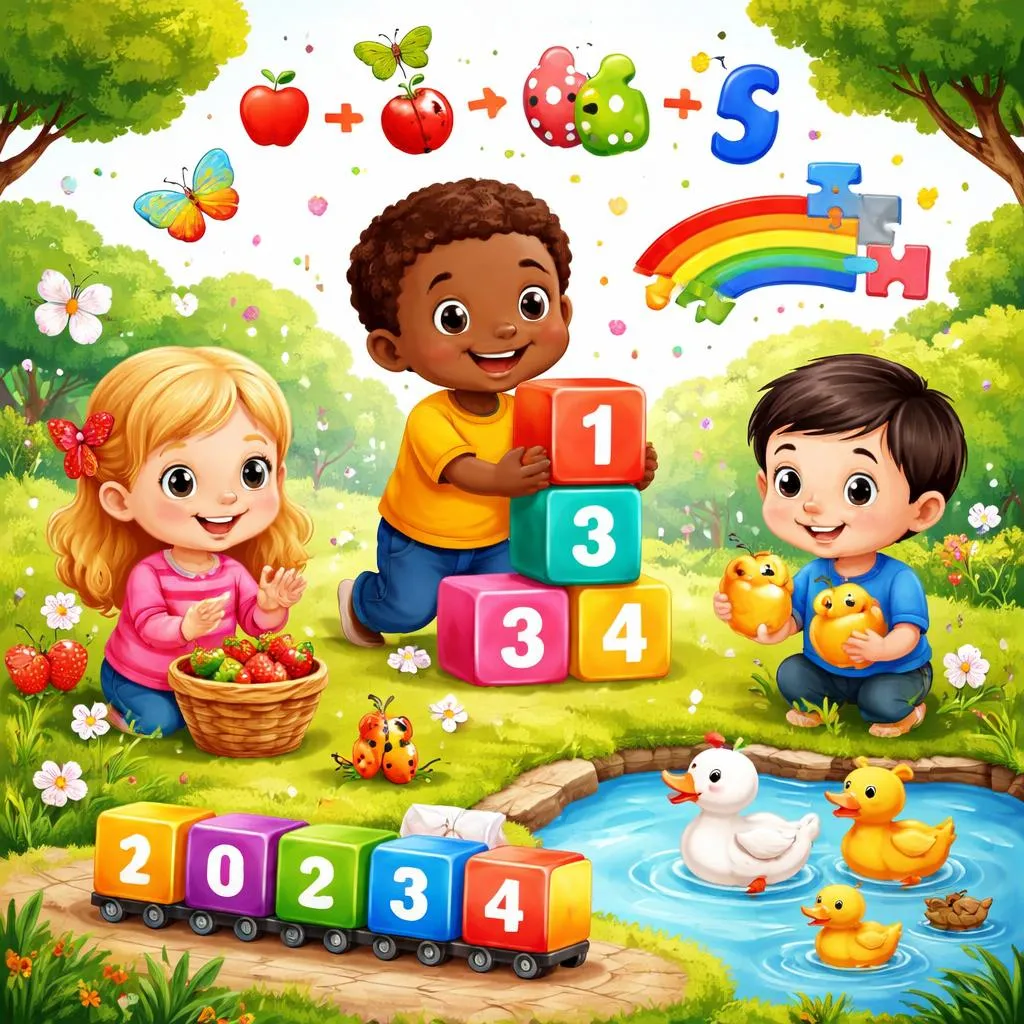

What Are Children's Number Stories? Let us explore this valuable educational genre together. Children's number stories weave counting and math concepts into engaging narratives. Characters count objects, animals, or items throughout the story. The numbers appear naturally as part of the plot. Children encounter numbers repeatedly in meaningful contexts. One story might follow five little ducks going out to play. Another could feature ten bears in a bed rolling over. The stories make abstract numbers concrete and understandable. Children see numbers connected to real objects and situations. Counting becomes a natural part of the story experience. The repetition builds number recognition and sequencing skills. These stories appear in picture books, board books, and learning materials.
Meaning and Purpose of Number Stories These stories serve several crucial purposes in early numeracy development. They introduce numbers in meaningful, memorable contexts. Isolated digits become part of engaging narratives children love. The stories also build one-to-one correspondence naturally. Children learn that each object gets one number when counting. The repetition in number stories reinforces learning effectively. Hearing the same numbers repeatedly builds familiarity and recall. Number stories also connect math to everyday experiences. Counting apples, children, or toys mirrors real life. The stories also develop number sequence understanding. Children learn that five comes after four and before six. This foundation supports all future mathematical learning. Number stories make math feel friendly and approachable.
Common Elements in Number Stories We can identify several elements common to number narratives. A specific number focus appears in each story. One story features the number three, another features five. Objects to count appear clearly in illustrations. Children can see and touch while counting along. Repetitive phrases help reinforce the numbers. "Five little monkeys jumping on the bed" repeats throughout. A countdown structure appears in many stories. Five becomes four, then three, then two, then one. Simple plots keep the focus on counting activities. The counting is the main purpose of the story. Colorful illustrations support the counting concept clearly. Children can count what they see in the pictures. Happy endings leave children feeling successful and satisfied.
Categories of Number Stories We can organize number stories into several helpful categories. Counting books introduce numbers one through ten sequentially. Each page features a new number with corresponding objects. Countdown stories start with a higher number and decrease. Five little pumpkins sitting on a gate is a classic example. Addition stories show numbers combining to make more. Two ducks join three ducks to make five ducks total. Subtraction stories show numbers decreasing through events. Five cookies, one gets eaten, now four remain. Number concept stories explore what numbers mean. "More," "less," and "the same" appear in these tales. Zero stories explore the concept of nothing meaningfully. Having none of something is an important math concept. Large number stories venture beyond ten for older children.
Daily Life Connections Through Number Stories Number stories connect directly to children's everyday experiences. Counting snacks at mealtime happens every day naturally. How many crackers, grapes, or cookies on the plate? Counting toys when cleaning up involves real numbers. "Let's put five blocks in the bin." Counting steps while walking uses numbers in context. "We took ten steps to the mailbox." Counting family members shows numbers in real life. "There are four people in our family." Counting days until special events builds anticipation. "Three more days until Grandma comes!" We can point out these connections during reading. "Remember when we counted your crackers like in the story?" "We have five people in our family, just like the story had five ducks."
Vocabulary Learning from Number Stories Number stories introduce essential math vocabulary for children. Number means a word or symbol representing a quantity. Count means to say numbers in order while pointing to objects. One, two, three are the first number words children learn. More means a greater amount or additional items. Less means a smaller amount or fewer items. Same means equal in quantity or amount. Add means to combine numbers to get a larger total. Subtract means to take away from a total amount. Total means the whole amount after adding everything. Zero means having none of something. We can teach these words with examples from stories. Use them in sentences about real counting situations.
Phonics Points in Number Stories Number stories provide useful phonics practice with number words. One has the W sound and short U and N sound. Two has the TW blend and long O. Three has the TH digraph and long E. Four has the F sound and OUR combination. Five has the F sound and long I and silent E. Six has the short I and X sound. Seven has the short E and short E and N sound. Eight has the long A and T sound. Nine has the N sound and long I and silent E. Ten has the short E and N sound. We can focus on one number word from each story. Find other words with that sound in the number tale. Write them on number shape templates for practice.
Grammar Patterns in Number Stories Number stories model useful grammar for young readers naturally. Present tense describes what is happening now. "Five little ducks go out to play." Past tense tells what happened in the story. "Four little ducks came swimming back." Future tense shows what will happen next. "One little duck will come back home." Questions encourage children to count along. "How many monkeys are jumping on the bed?" "How many ducks came swimming back?" Commands appear in counting activities. "Count the apples." "Show me five fingers." Descriptive language paints simple pictures. "Five fluffy sheep slept in the field." Prepositional phrases describe locations. "On the bed, in the pond, under the tree." We can point out these patterns during reading.
Learning Activities for Number Stories Many activities deepen understanding of numbers through stories. Use props to act out number stories while counting. Small toys or figures represent the objects being counted. Create counting books with each child contributing a page. Draw the number and that many objects clearly. Practice one-to-one correspondence with snack time. Give each child a certain number of crackers to count. Sing number songs that reinforce counting skills. "Five Little Ducks" and "Ten in the Bed" work well. Play counting games during transition times. Count steps to lunch, chairs in circle, or children in line. Create number cards matching numerals with quantities. Match the number 5 with five stickers on a card. These activities make numbers concrete and meaningful.
Printable Materials for Number Learning Printable resources support deep engagement with number stories. Create number cards showing numeral and word for each number. 1 one, 2 two, 3 three, through 10 ten. Design counting sheets with objects to count and number to write. Count the objects and write how many. Make number mini-books for each number 1-10. Each page shows the number and that many objects. Create a number line for classroom display showing 1-20. Children refer to it during number activities. Design number matching games pairing numerals with quantities. Match the number 4 with four star stickers. Make number story templates for creating original counting tales. Fill in number and objects to create new stories. These printables structure number learning activities effectively.
Educational Games About Numbers Games make number learning playful and interactive. Play "Number Hunt" finding objects in specific quantities. Find three red things, four round things, five soft things. Create "Number Bingo" with numerals on cards. Call out numbers, children mark matches. Play "Count and Move" doing actions certain number of times. Jump five times, clap three times, spin two times. Design "Number Memory" matching numeral cards with quantity cards. Match 5 with five dot card correctly. Play "What's Missing?" with number line and covered numbers. Guess which number is hidden from view. Create "Number Relay" racing to collect correct quantities. Team must gather exactly five items to win. These games build number knowledge through active participation.
Teaching One-to-One Correspondence One-to-one correspondence is a foundational math skill. Children must learn that each object gets one count. Touching each object while counting helps develop this. Number stories provide perfect practice for this skill. Children can touch each object pictured in the book. They say one number for each object touched. This connects the abstract number to concrete objects. Practice continues with real objects in the classroom. Counting children, crayons, or blocks reinforces the skill. Number stories make this practice enjoyable and natural. Children don't realize they are learning important math. They just enjoy the story and counting along.
Understanding Quantity Through Stories Number stories help children understand what quantities mean. The number five is not just a word or symbol. Five means this many objects, no more and no less. Seeing five ducks in the story makes this concrete. Children internalize that five is more than three. They understand that seven is less than ten. These quantity relationships build number sense gradually. Number sense is the foundation for all future math. Children who understand quantities do better with addition. They can visualize what numbers mean in problems. Number stories build this understanding playfully and effectively.
The Importance of Repetition Repetition in number stories serves important learning purposes. Hearing the same numbers repeatedly builds familiarity. Children learn the sequence through repeated exposure. They remember what comes after four because they've heard it often. The predictable pattern reduces cognitive load. Children can focus on the numbers without following complex plots. Repetition also builds confidence in young learners. They know what comes next and feel successful. This success motivates continued engagement with numbers. The repetition never feels boring in engaging stories. Children enjoy the predictability and join in reading. They proudly demonstrate what they know again and again.