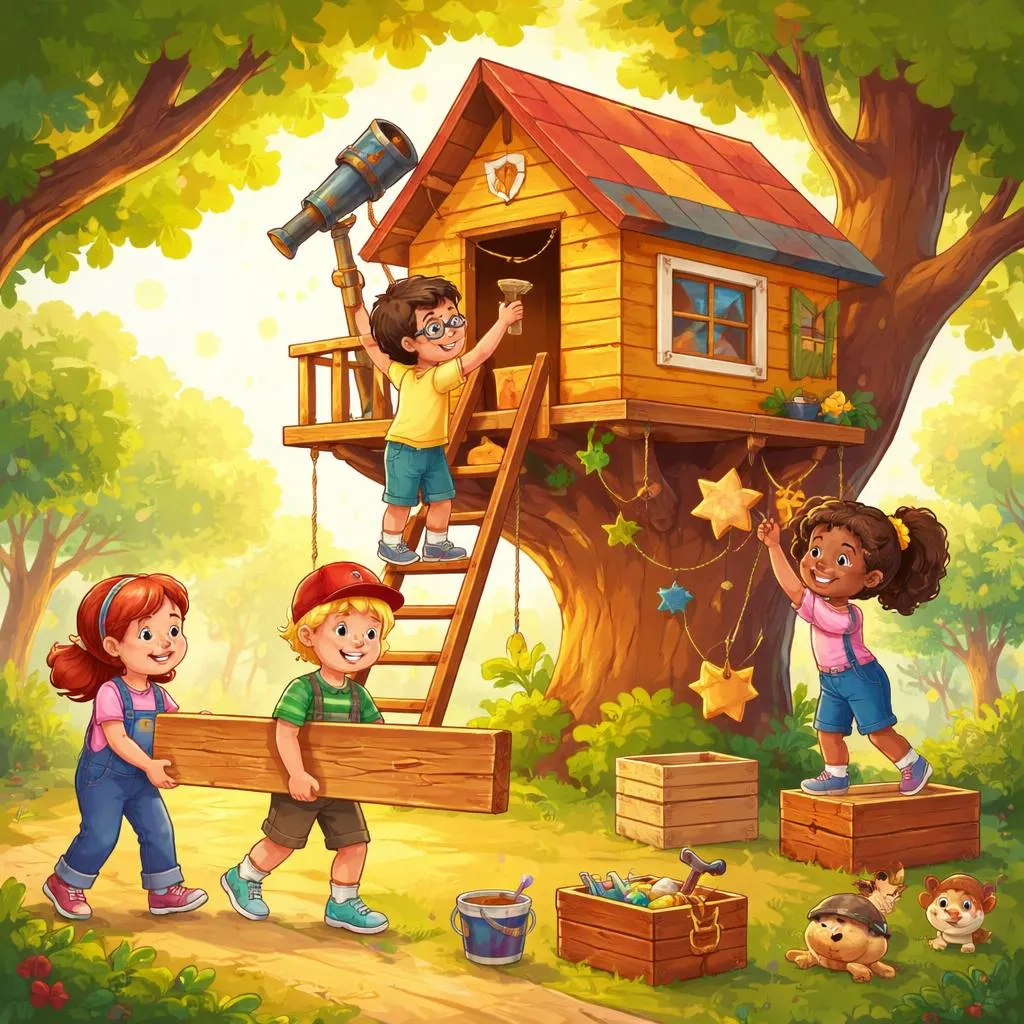

What Are Children's Stories About Teamwork and Cooperation? Let us explore this valuable genre together. Children's stories about teamwork and cooperation feature characters working together. They face challenges that no single person can solve alone. The stories show how groups combine strengths to succeed. Each character brings something unique to the team. One might be strong, another clever, another kind. Together they accomplish what seemed impossible. These tales appear in every culture around the world. Ancient fables teach cooperation through animal characters. Modern stories show children collaborating on projects. The message remains consistent across all versions. We achieve more together than alone. The stories model how to share ideas and listen. They show conflicts arising and being resolved. Young readers learn that teamwork requires effort but brings rewards.
Meaning and Purpose of Teamwork Stories These stories serve essential purposes in children's development. They introduce the concept of interdependence in concrete ways. Children see that everyone needs help sometimes. No one has all the answers or abilities. The stories build understanding of diverse strengths. Different does not mean better or worse. Different means complementary and necessary. Characters learn to appreciate what others contribute. This models inclusive thinking for young readers. The tales also teach conflict resolution skills. Teams in stories disagree and must work through it. Characters apologize, compromise, and find solutions. These patterns give children language for real situations. The stories show that teamwork feels good. Accomplishing something together brings shared pride. This motivates children to seek collaborative experiences.
Common Elements in Teamwork Stories We can identify several elements common to cooperation tales. A shared goal unites the characters from the start. They all want the same thing to happen. Individual strengths become clear as the story unfolds. Each character has something special to offer. Obstacles appear that require combined efforts. No one can succeed working alone. Moments of conflict test the group's commitment. Someone gets frustrated or wants to quit. A leader or elder offers wisdom about working together. This guidance helps the group refocus. The successful conclusion shows teamwork's rewards. Everyone shares in the victory celebration. A lesson statement often appears at the end. "Together we are stronger" or similar wisdom.
Categories of Teamwork Stories We can organize these stories into helpful categories. Animal teamwork tales appear frequently in folklore. Ants building together, birds migrating in formation. Sports team stories show players combining skills. Each position matters for the game's success. Classroom project stories feel familiar to children. Groups creating something for school. Family teamwork stories show households functioning together. Everyone contributes to make things work. Community helper stories feature groups serving others. Firefighters, builders, and farmers cooperate. Fantasy teamwork adds magical elements to cooperation. Wizards combining spells, creatures on quests. Historical teamwork stories show real collaborations. Building monuments, exploring new lands together. Each category offers different contexts for the same core lesson.
Daily Life Examples Through Teamwork Stories These stories connect directly to classroom and family life. Group projects at school mirror story situations. Each child brings different skills to the assignment. Sports teams require cooperation like story teams. Passing, supporting, and encouraging happen in both. Family chores show teamwork in daily action. Everyone contributing makes tasks manageable. Playground games need cooperation to work. Taking turns and including others matters. Classroom jobs create a cooperative community. Each person's role supports everyone else. We can point out these connections during reading. "This feels like when we worked on our project." "Remember how everyone helped clean up?" "Your soccer team works together like the story animals." These links make story lessons immediately applicable.
Vocabulary Learning from Teamwork Stories These stories introduce essential social vocabulary. Teamwork means working together toward common goals. Cooperation means willingly helping and sharing. Contribution means each person's part in the group. Strength means something a person does well. Support means helping someone else succeed. Compromise means finding solutions everyone accepts. Celebrate means enjoying success together. Encourage means giving confidence to others. Listen means paying attention to others' ideas. We can teach these words with simple definitions. Use them in sentences about story events. "Each animal made a contribution to the plan." "They had to compromise when ideas differed." Practice using the words during classroom activities. "Thank you for supporting your group." This builds vocabulary for positive social interaction.
Phonics Points in Teamwork Stories Teamwork stories provide useful phonics practice. Team itself offers the EA digraph making the long E sound. Work has the OR combination and silent letters. Together has the O short sound and ER ending. Cooperation words contain valuable patterns. Cooperate has the long O and long A. Contribute has the short O and long I. Support has the short U and OR combination. Feeling words demonstrate various patterns. Proud has the OU diphthong. Happy has the short A and double P. Frustrated has the short U and long A. Action words provide phonics elements. Help has the short E. Share has the SH digraph and long A. Build has the UI combination. We can focus on one sound pattern from each story. Find all words with that sound in the teamwork tale. Write them on puzzle piece shapes for practice.
Grammar Patterns in Teamwork Narratives Teamwork stories model useful grammar for young readers. Past tense carries the main narrative. "The animals worked together to build a home." Present tense appears in dialogue and lessons. "We can do this if we cooperate," she says. Future tense shows group plans. "We will finish the project together tomorrow." Questions explore group dynamics. "How can we solve this problem?" "Who wants to try first?" Commands appear in cooperative directions. "Pass me the blue paint." "Pull on three together." Conditional language explores choices. "If everyone helps, we will finish faster." Pronouns show group identity. We, us, and our appear throughout. We can point out these patterns during reading. Notice how the group uses we instead of I.
Learning Activities for Teamwork Stories Many activities deepen understanding of cooperation themes. Create a group mural after reading a teamwork story. Each child contributes something to the whole picture. Build something together using blocks or recycled materials. A bridge, tower, or city requires cooperation. Cook a simple recipe as a group. Each person has a job in the process. Act out the story with everyone taking roles. Practice working together like the characters. Create a class quilt where each square represents a child. Assemble into one beautiful whole. Solve puzzles together as small groups. Each person contributes to finding solutions. These activities make cooperation tangible and memorable. Children experience the story's lessons physically.
Printable Materials for Teamwork Lessons Printable resources support teaching about cooperation. Create team role cards for group activities. Leader, materials manager, recorder, and encourager define jobs. Design cooperation certificates recognizing good teamwork. Award when groups work well together. Make scenario cards showing cooperation situations. "Two children want the same toy." "A project needs many hands." Create a group planning sheet for projects. Spaces for ideas, jobs, and timeline. Design a team reflection form after activities. What worked well? What could improve? Make vocabulary cards with teamwork words and pictures. Use for matching and discussion. These printables structure cooperative experiences. They give language and tools for working together.
Educational Games About Teamwork Games make cooperation lessons active and fun. Play "Human Knot" where groups hold hands and untangle. Must communicate and cooperate to succeed. Create "Group Juggle" passing multiple balls around a circle. Everyone must pay attention and participate. Play "Build It Together" giving one set of blocks to a group. They must agree on what to build and how. Design "Team Scavenger Hunt" with clues requiring group effort. Each person contributes different skills. Play "Cooperation Freeze Dance" where partners must freeze together. Support each other to keep balance. Create "Pass the Hoop" where linked hands pass a hoop around. No one can let go. These games build teamwork through physical cooperation. Children learn by doing, not just discussing.
Teaching Conflict Resolution Through Stories Teamwork stories naturally include conflict and resolution. Characters disagree about methods or goals. Someone feels left out or unheard. Tempers flare and feelings get hurt. The stories show paths back to cooperation. Characters learn to listen to each other. They apologize when wrong. They find compromises that work for everyone. These modeled behaviors give children scripts to follow. We can pause during reading to discuss conflicts. "Why is the character upset?" "What could they say to feel better?" "How might they solve this?" After reading, practice conflict scenarios from the story. Role play different resolution approaches. Children learn that conflict is normal in groups. What matters is how we handle it. Stories show that good teams work through disagreements.
Celebrating Group Success Teamwork stories emphasize celebrating together. The joy of shared accomplishment feels special. Characters cheer, hug, or throw a party. Everyone shares in the victory equally. This models healthy recognition for children. We can create similar celebrations in classrooms. After group projects, acknowledge everyone's contribution. Name specific things each person did well. Celebrate effort as much as outcome. Some teams try hard but face obstacles. Their cooperation still deserves recognition. Create class celebrations when groups work well together. Extra recess, special activity, or simple applause. These celebrations reinforce cooperation's value. Children learn that working together brings rewards. The good feeling of shared success motivates future cooperation.
Building Classroom Community Through Stories Teamwork stories help build positive classroom culture. Shared stories give common language for cooperation. "Remember how the ants worked together?" becomes shorthand for group effort. Teachers can reference stories during real situations. "This project needs everyone like in our story." The stories create expectations for behavior. Children know that good teams listen and share. They understand that everyone contributes. The tales also build empathy for others. Children see story characters with different strengths. They recognize similar diversity in classmates. The quiet child may have good ideas like a story character. The active child brings energy like another. Stories validate all contribution styles. This builds inclusive classroom communities where everyone belongs.
Connecting Teamwork to Real-World Heroes Teamwork stories can connect to real-world examples. Firefighters work as teams to save people. Each has specific training and roles. Construction crews build buildings together. Architects, engineers, and workers all contribute. Sports teams win championships through cooperation. Every player matters to the outcome. Medical teams save lives working together. Doctors, nurses, and technicians each play parts. Scientists collaborate on important discoveries. Sharing data and ideas leads to breakthroughs. We can discuss these examples after reading. "Our story characters worked like real firefighters." "Scientists cooperate just like the animal team." These connections show that teamwork matters in grown-up worlds. Children see cooperation as a lifelong skill, not just a school lesson.