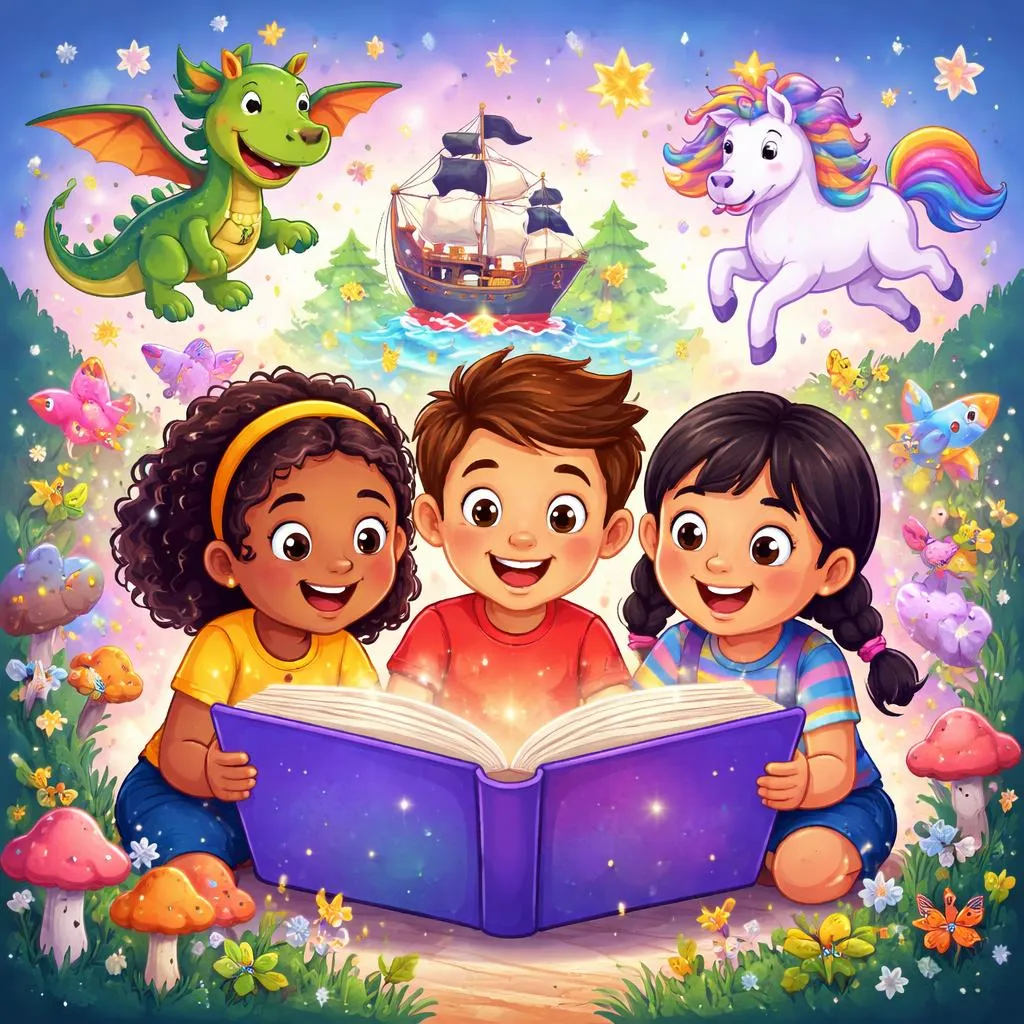

What Are Children's Story Book Covers? Let us explore this important aspect of children's literature together. A children's story book cover is the outside of a book that protects the pages. It is the first thing a child sees when choosing a book. The cover includes the title, author's name, and illustrator's name. It features artwork that gives clues about the story inside. The cover illustration shows characters, settings, or important scenes. The title is usually large and easy to read. The colors and design create a mood or feeling. A happy story has bright, cheerful colors. A spooky story might use dark, mysterious colors. The cover invites children to open the book and read. It promises an enjoyable experience inside.
Meaning and Purpose of Book Covers Book covers serve several important purposes in reading development. They help children choose books that interest them. A child sees the cover and thinks, "I want to read that!" The cover also gives clues about what the story contains. Children learn to predict from cover illustrations. The cover also protects the book's pages from damage. It keeps the book in good condition for many readings. The cover also displays important information like title and author. Children learn to recognize favorite authors and illustrators. The cover creates expectations for the reading experience. A well-designed cover builds excitement and anticipation. It is the book's way of saying "Read me!"
Parts of a Book Cover We can identify several parts of a children's book cover. The front cover is what we see when the book is closed. It shows the title, author, illustrator, and main illustration. The spine is the narrow edge that faces out on a shelf. It shows the title and author so books can be found. The back cover often has a summary of the story. It might have reviews or information about the author. The front flap inside the cover has more information. The back flap might have author photo and biography. The cover art is the illustration on the front. The title is the name of the book in large letters. The author's name tells who wrote the words. The illustrator's name tells who created the pictures.
Categories of Book Cover Designs We can organize book cover designs into helpful categories. Character-focused covers show the main character prominently. The character's face or whole body appears on the cover. Scene-focused covers show an important moment from the story. The setting and action are illustrated. Series covers have a consistent look across multiple books. Readers can recognize books in the same series easily. Humorous covers use funny illustrations to attract readers. The cover makes children laugh before they even read. Award-winning covers have special stickers or medals. Caldecott and Newbery medals appear on covers. Holiday covers feature seasonal themes and decorations. Special edition covers celebrate anniversaries or events.
Daily Life Connections Through Book Covers Book covers connect to children's experiences in meaningful ways. Children see book covers in classrooms and libraries. They learn to scan shelves looking for favorite books. Cover illustrations help them find books they've read before. Children remember what the cover looked like. Cover colors and images create expectations. "That looks like a funny book!" or "That looks scary!" Children make predictions based on covers. This is an important reading comprehension skill. Favorite covers become familiar and comforting. Children seek out books with similar cover styles. We can point out these connections during library time. "Look, this cover shows the main character." "What do you think will happen based on the cover?"
Vocabulary Learning From Book Covers Book covers introduce important book-related vocabulary. Cover means the outside part of a book that protects pages. Title means the name of a book. Author means the person who wrote the book. Illustrator means the person who drew the pictures. Spine means the edge of a book that faces outward on a shelf. Front means the side of the book that opens first. Back means the opposite side from the front. Illustration means a picture in a book. Design means the way something is arranged or looks. Predict means to say what will happen in the future. We can teach these words with examples from classroom books. Use them in sentences about exploring the classroom library.
Phonics Points in Book Cover Vocabulary Book covers provide useful phonics practice with book vocabulary. Cover has the short O and ER ending. Title has the long I and final le. Author has the AU diphthong and OR combination. Illustrator has the short I and long U and OR and ER. Spine has the SP blend and long I and silent E. Front has the FR blend and short U and NT blend. Back has the short A and CK digraph. Illustration has the short I and long U and long A and SH sound. Design has the D sound and long I and silent GN. Predict has the PR blend and short E and CT ending. We can focus on one sound pattern from each book cover discussion. Find other words with that sound in the classroom library. Write them on book shape templates for practice.
Grammar Patterns in Book Cover Discussions Book cover discussions model useful grammar for young readers naturally. Present tense describes what is on the cover now. "The cover shows a bear and a mouse." Past tense tells about covers seen before. "Yesterday we saw a book with a blue cover." Future tense predicts what covers will show. "Tomorrow we will look for books with animal covers." Questions explore cover elements and predictions. "What do you see on this cover?" "What might happen in this story?" Commands appear in library exploration. "Look at the cover carefully." "Find a book with a red cover." Descriptive language paints cover pictures with words. "The bright, colorful cover showed a smiling dinosaur." Prepositional phrases describe locations on covers. "On the front, beside the title, under the illustration." We can point out these patterns during library time.
Learning Activities for Book Covers Many activities deepen understanding of book covers. Design a new cover for a favorite book. Draw what the cover could look like differently. Predict story content from covers before reading. Write down predictions and check after reading. Compare different editions of the same book. Notice how covers change over time. Create a classroom display of favorite book covers. Discuss what makes them appealing. Match book covers to their titles in a game. See who can match correctly. Design a cover for an original story written by the child. Include title, author, and illustration. These activities make book covers meaningful and engaging.
Printable Materials for Book Cover Learning Printable resources support deep engagement with book covers. Create book cover observation sheets with guiding questions. What do you see? What do you predict? Design a cover design template for creating original covers. Space for title, author, and illustration provided. Make a book cover matching game pairing covers with titles. Cut apart for children to match correctly. Create a favorite cover nomination form with reasons. "I like this cover because..." prompts included. Design a book cover parts labeling page. Cover, spine, title, author, illustrator, illustration identified. Make a cover comparison chart for two different books. List similarities and differences observed. These printables structure book cover exploration activities effectively.
Educational Games About Book Covers Games make book cover learning playful and interactive. Play "Cover Memory" matching pairs of book covers. Place covers face down, turn over two at a time. Create "Cover Detective" describing a cover without showing it. Others guess which book is being described. Play "Cover Scavenger Hunt" finding covers with specific features. Find an animal cover, a people cover, a funny cover. Design "Cover Sort" organizing covers by categories. Sort by color, character type, or illustration style. Play "Cover and Title Match" pairing covers with titles. See how quickly matches can be made. Create "Cover Design Contest" designing original covers. Vote on favorites and display in classroom. These games build cover awareness through active participation.
Teaching That Covers Tell Stories Book covers tell a story before the book even opens. The illustration shows characters and setting. The title gives a hint about the plot. The colors create mood and feeling. Children learn to read covers like mini-stories. They practice inferring from visual information. This skill transfers to reading comprehension. Authors and illustrators work together on covers. The cover must represent the book accurately. It must also attract potential readers. Children learn to appreciate this careful design. They become more thoughtful book choosers. The cover is the beginning of the reading journey.
Covers as Art Children's book covers are often beautiful works of art. Famous illustrators create memorable cover images. Some covers become as famous as the stories themselves. The Very Hungry Caterpillar cover is instantly recognizable. Where the Wild Things Are cover captures the story perfectly. Goodnight Moon cover shows the great green room. Children can appreciate covers as art objects. They can discuss what they like about the art. They can try to create art in similar styles. This builds visual literacy and art appreciation. The connection between art and story becomes clear. Covers are where art and literature meet.
Choosing Books by Covers Children often choose books based on covers. This is a natural and valid way to select reading material. The cover should attract the intended reader. A cover that appeals to a child is doing its job. Teachers and parents can guide children in cover reading. "What does this cover tell you about the book?" "Does this look like a book you would enjoy?" Children learn to use covers as information sources. They combine cover clues with their own preferences. This builds independent library skills. Children become confident book choosers. The ability to select satisfying books supports lifelong reading.