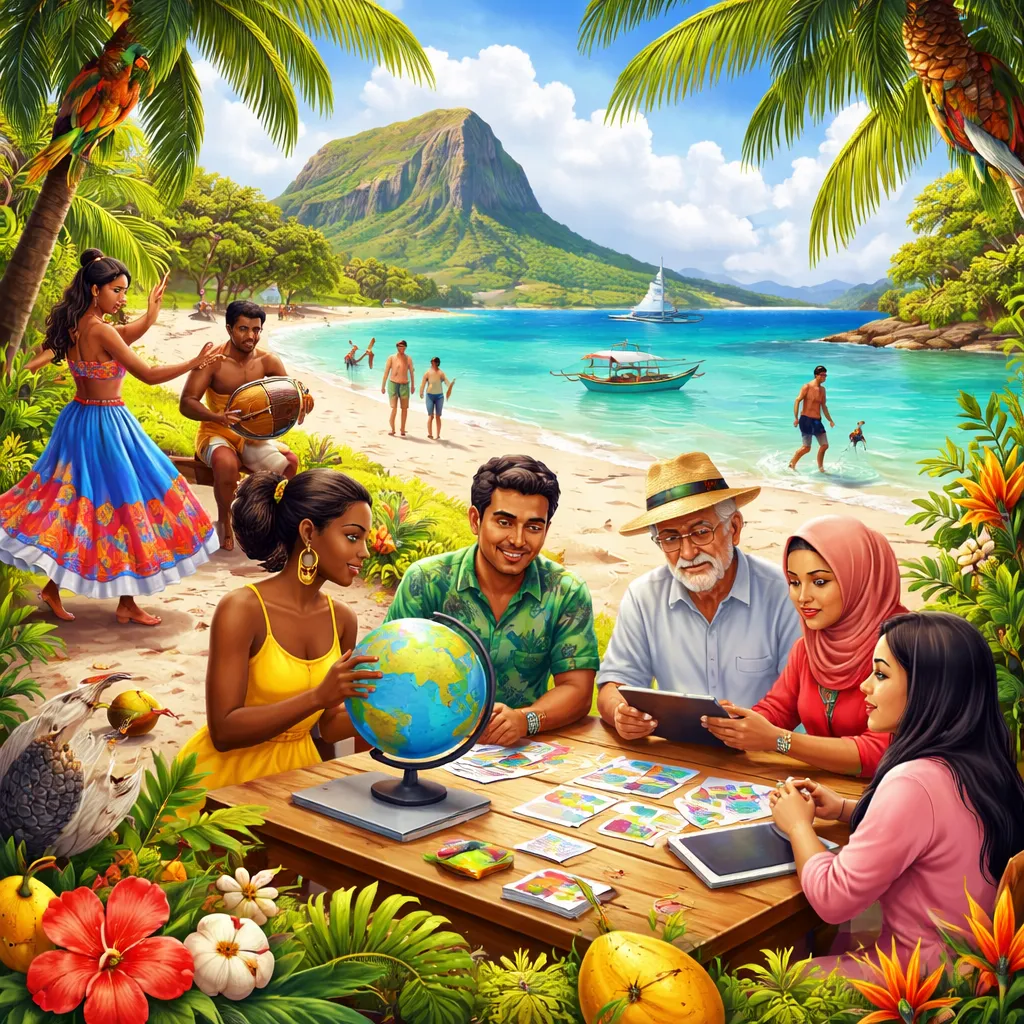

Introduction to Mauritius
Language learning transports us to an island where cultures blend like colors on a palette. Today we explore a tropical paradise in the Indian Ocean. This nation holds beaches, mountains, and a remarkable story of people coming together. Children will discover a place where African, Indian, European, and Chinese traditions meet. They will learn about a famous bird that lived only here. Exploring Mauritius builds reading skills while celebrating diversity and natural beauty. Every fact reveals a new layer of culture. Every word invites young readers to imagine this vibrant island nation.
Where Is Mauritius?
Mauritius lies in the Indian Ocean east of Madagascar. This island nation sits about five hundred miles off the coast of Africa. The country includes the main island of Mauritius and several smaller islands. The capital city is Port Louis. Port Louis sits on the northwest coast with mountains rising behind it. The island formed from volcanic activity millions of years ago. Mountains and hills create a dramatic landscape. Coral reefs surround much of the island, protecting its shores. Finding Mauritius on a map shows a small dot east of Madagascar. Its location made it unknown to most people until sailors discovered it about five hundred years ago.
Interesting Facts About Mauritius
Mauritius offers many fascinating facts for young learners. It was the only known home of the dodo bird. This flightless bird lived only on Mauritius. Sailors hunted it, and it disappeared within one hundred years of their arrival. The dodo remains a symbol of extinction. Another interesting fact involves the country's diverse people. Mauritius has no indigenous population. Everyone's ancestors came from somewhere else. People arrived from Africa, India, China, and Europe. Today, the country stands as a model of peaceful multicultural living.
Mauritius also has remarkable natural features. It holds one of the largest underwater waterfalls in the world. This is not a real waterfall but an optical illusion created by sand and currents. Seen from above, it looks like water pouring into the deep ocean. Another fun fact involves colors. The country has seven-colored earth in the Chamarel region. This geological formation displays layers of sand in red, brown, violet, green, and blue. The colors never wash away.
The country also has a unique flower. The national flower is the bougainvillea, which blooms in bright colors across the island. Mauritius also produces excellent sugar from sugar cane fields covering much of the land. These facts show children a country of stunning nature and cultural richness.
Key Vocabulary About Mauritius
Let us build vocabulary for this island nation. These words help children describe what they learn.
Indigenous: native to a particular place.
Dodo: a large, flightless bird that lived only in Mauritius.
Multicultural: including people of many different cultures.
Volcanic: formed by volcanoes.
Coral Reef: a ridge of coral near the surface of water.
Extinct: no longer existing as a living species.
Lagoon: a shallow body of water separated from the sea by a reef. Introduce these words with pictures and stories. Show the dodo bird and explain its story. Show the seven-colored earth. Let children say each word aloud. These vocabulary words give children the language to explore Mauritius's unique nature and culture.
Simple Sentences for Reading Practice
Short sentences help new readers build confidence. Use these sentences about Mauritius for practice.
Mauritius is an island in the Indian Ocean.
The capital city is Port Louis.
The dodo bird lived only in Mauritius.
People from many cultures live here.
Coral reefs surround the island.
Sugar cane grows in the fields.
The seven-colored earth has different colors. Read each sentence together. Let children point to the words. Encourage them to repeat after you. Use pictures to show each fact. These simple sentences prepare young readers for longer passages.
Short Reading Passage About Mauritius
Here is a short passage for children to read together.
“Mauritius sits in the Indian Ocean east of Madagascar. This volcanic island rose from the sea millions of years ago. Mountains and hills cover the landscape. Coral reefs circle the island, creating calm lagoons. Long ago, a unique bird lived here. The dodo had no wings for flying. It lived safely until sailors arrived. Today, the dodo reminds us to protect animals. People from many places came to Mauritius. Africans, Indians, Chinese, and Europeans arrived over the centuries. They brought their languages, foods, and traditions. Today, everyone celebrates this mix. The capital, Port Louis, has a busy market with spices, fruits, and crafts. In the south, the Chamarel region holds a colorful wonder. The seven-colored earth shows bands of sand in red, brown, violet, green, and blue. Rain does not wash the colors away. Sugar cane fields cover the lowlands. Green hills rise up behind the coast. Mauritius shows how people from many places can live together in beauty.”
Read this passage slowly together. Pause to talk about each idea. Ask children to find vocabulary words in the text. This activity builds reading fluency and deepens understanding.
Fun Questions About Mauritius
Questions make reading interactive and engaging. Use these to start conversations with young learners.
What ocean surrounds Mauritius?
What is the capital city of Mauritius?
What famous bird lived only in Mauritius?
Where did the people of Mauritius come from?
What natural wonder has bands of different colors?
What protects the shores of Mauritius? Let children answer in complete sentences. Encourage them to use new vocabulary. Ask them to imagine seeing the seven-colored earth. What colors would they look for? Creative questions make the topic personal and exciting.
Tips for Learning English with This Topic
Use Mauritius to create rich English learning experiences. Start with a map activity. Let children find Mauritius east of Madagascar. Point out its isolation in the Indian Ocean. Discuss how this isolation allowed unique creatures like the dodo to develop. This connects geography to biology and history.
Next, introduce the vocabulary through a hands-on activity. Create a simple seven-colored earth activity using colored sand or crayons. Let children layer colors in a jar or draw layered bands. Talk about how the colors in Mauritius remain bright even in rain. Use the word "volcanic" to describe how the island formed.
Read the passage aloud with warmth and curiosity. Let your voice reflect wonder at the multicultural society. After reading, let children draw a scene from Mauritius. One child might draw the dodo bird in a forest. Another might draw the seven-colored earth. Let them label their drawings with vocabulary words. Add colorful paper for the sugar cane fields.
Incorporate a cultural connection. Talk about how people from many places created one nation. Ask children about the different cultures represented in their own family or community. Compare this to Mauritius. This shows children that language learning reading connects to celebrating diversity.
Use music and movement to enhance the experience. Listen to traditional Mauritian music that blends African, Indian, and European sounds. Let children move like waves around a coral reef. Pretend to be the dodo walking on the ground. Physical activity reinforces learning in joyful ways.
Encourage children to share their knowledge. Let them tell a family member about the dodo bird and why it disappeared. They can explain what makes Mauritius multicultural. Teaching others builds confidence and deepens understanding.
Connect Mauritius to your child's world. Ask, “What animals live only near us?” Talk about local wildlife and how it might be unique. Compare to the dodo. Ask about different cultures in your community. Compare to the multicultural mix of Mauritius. These connections help children see that language learning reading is about understanding people and nature everywhere. By exploring Mauritius together, you give children a rich experience. They learn new words, discover an island of cultures and colors, and grow their love for reading. This tropical paradise becomes a meaningful part of their learning journey.