
What Is This Plant?
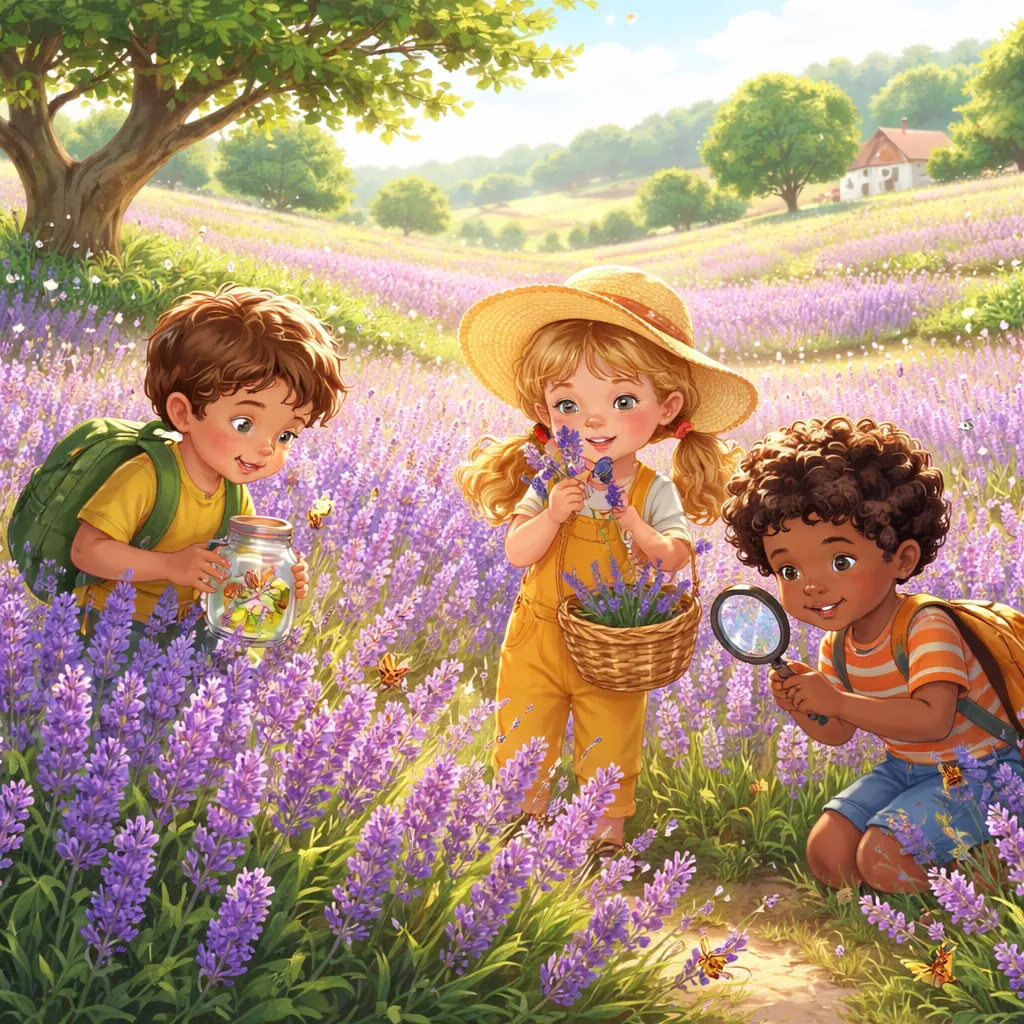
The lavender plant is a soft, silvery-green shrub that fills the air with a sweet, calming scent. It grows in rounded bushes with many slender stems. At the top of each stem, tiny purple flowers cluster together in whorls. These flower spikes stand above the leaves. The leaves are narrow and gray-green. They feel slightly fuzzy when you touch them. Lavender blooms in summer. Bees love the flowers. They buzz happily around the plant all day long. For children, lavender is a plant for the senses. It smells wonderful. It looks soft. It feels gentle. Parents can take children to see lavender growing in a garden or park. They can let them touch the leaves and smell the flowers. This plant makes learning about nature a calming and joyful experience.
English Learning About This Plant
The English name “lavender” comes from the Latin word “lavare.” It means to wash. People used lavender in baths and laundry for its fresh scent. The pronunciation is “lav-en-der.” The International Phonetic Alphabet (IPA) is /ˈlævəndər/. The word has three syllables. Children can say it: lav-en-der. When we learn about lavender plant, we learn words for its parts. The stem is the slender, upright part that holds the flowers. The leaf is the narrow, gray-green part with a soft texture. The flower spike is the cluster of tiny purple flowers at the top. The bud is the small, unopened flower. The root is the part underground that takes in water. These words help children describe this fragrant plant.
There is a lovely saying about lavender. It goes, “Lavender is the soul of the garden.” This means lavender brings a special feeling to any outdoor space. Its scent and color create peace. Another famous line comes from the writer Shakespeare. In one of his plays, he wrote, “Lavender’s blue, dilly dilly.” This old rhyme talks about the color of the flowers. Parents can say this rhyme with their child. It becomes a playful way to remember the plant. Lavender also appears in many stories as a flower that brings calm and sweet dreams.
Plant Facts and Scientific Knowledge
The lavender plant belongs to the genus Lavandula. There are about 47 species. Lavender is native to the Mediterranean region, the Middle East, and India. It grows in dry, rocky hillsides. Lavender is an evergreen shrub. It keeps its leaves all year.
Lavender flowers are tiny. Each flower has five petals. They grow in whorls around the stem. The flowers can be purple, blue, pink, or white. English lavender has the strongest scent. French lavender has a milder smell and a distinctive tuft at the top of the flower spike.
Lavender loves the sun. It grows best in hot, dry conditions. The leaves have tiny hairs. These hairs hold the scent and help the plant save water. Lavender is drought-tolerant. It does not need much water once established.
Lavender has many meanings. It represents calmness, purity, and devotion. People have used lavender for thousands of years. Ancient Egyptians used it in mummification. Romans used it in baths. In the language of flowers, lavender means silence and trust. It is a flower of peace and comfort.
How to Grow and Care for This Plant
Growing a lavender plant is a wonderful family project. Choose a sunny spot. Lavender needs at least six to eight hours of direct sun each day. The soil must drain well. Lavender does not like wet roots. If your soil is heavy, plant lavender in a raised bed or a pot.
You can buy small lavender plants from a garden store. Dig a hole twice as wide as the root ball. Place the plant in the hole. Fill with soil mixed with sand or gravel. Water well after planting. Children can help pat the soil and water.
Water lavender sparingly. Once established, it needs water only during long dry spells. Overwatering causes root rot. Let the soil dry out between waterings. Children can learn to check the soil with their fingers. If it feels dry, it is time to water.
Prune lavender every year. Cut back the stems in early spring or after flowering. Do not cut into the old, woody stems. This keeps the plant bushy and healthy. Children can help by snipping off the flower spikes after they fade.
Lavender grows well in pots. Use a pot with drainage holes. Fill with potting mix mixed with sand. Place the pot in a sunny spot. Water when the soil feels dry. Potted lavender needs a little more water than lavender in the ground.
Benefits of Growing This Plant
Growing a lavender plant brings many gifts to a family. First, the scent fills the garden. It is calming and fresh. Children love to brush their hands over the leaves and smell their fingers. Second, lavender attracts bees and butterflies. Watching these pollinators visit the flowers teaches children about nature’s connections.
Lavender also provides flowers for cutting. You can bring small bunches inside. The scent fills a room. Dried lavender keeps its smell for a long time. Children can help hang bundles to dry. This becomes a fun craft project.
Lavender has practical uses. The dried flowers make sachets for drawers. They keep clothes smelling fresh. You can also make lavender water by steeping flowers in water. This simple activity introduces children to natural scents.
The plant is also low-maintenance. It does not need much water or fertilizer. This makes it perfect for beginner gardeners. Children can take responsibility without feeling overwhelmed.
What Can We Learn From This Plant
A lavender plant teaches children about calmness. The gentle scent and soft colors create peace. Children learn that nature can help us feel quiet inside. When they feel busy or excited, they can think of lavender. It reminds them to take a breath.
Lavender also teaches about giving without taking. The plant gives its scent, its beauty, and its flowers to bees. It asks for little in return. Children learn that they too can give to others. A small kindness can make a big difference.
Another lesson is about resilience. Lavender grows in dry, rocky places. It thrives where other plants struggle. Children learn that they can grow strong even in hard conditions. They can find their own way to flourish.
Lavender also teaches about simplicity. The plant does not need rich soil or constant care. It grows well with just sun and good drainage. Children learn that sometimes the simplest things are the most beautiful. They do not need many things to be happy.
Fun Learning Activities
There are many simple activities to help children learn about lavender plant. One activity is a sensory exploration. Go to your lavender plant. Let your child touch the leaves. Describe the texture. Is it soft or rough? Smell the flowers. Describe the scent. Is it sweet or fresh? This builds descriptive language.
Another activity is making a lavender sachet. Harvest a few flower spikes. Tie them with a string. Hang them upside down in a dry place. After two weeks, the flowers are dry. Rub them off the stems. Place the dried flowers in a small cloth bag. Tie it closed. This sachet can go in a drawer or under a pillow.
A nature journal works well for lavender. Draw the plant. Show the gray-green leaves and the purple flower spikes. Label the parts: stem, leaf, flower spike. Write down how the plant smells. Write the date when the first flowers open.
For art, try lavender painting. Use purple and green paint. Paint the slender stems and the clusters of tiny flowers. Use a cotton swab to dot the individual flowers. This teaches about the flower’s structure.
Vocabulary games are fun too. Write the words lavender, stem, leaf, flower spike, scent, and calm on cards. Say each word. Ask your child to find the part on the plant. Practice saying lavender together. Clap the syllables: lav-en-der.
Finally, try a calm-down activity. On a warm day, sit near the lavender plant. Close your eyes. Take deep breaths. Notice the scent. Talk about how it feels to be calm. This connects the plant to emotional well-being.
Through these activities, children build a deep connection with a plant that soothes the senses. They learn new words, observe nature, and discover calm. The lavender plant becomes a symbol of peace and simplicity. Each time they smell lavender, they remember to breathe deeply. They remember that nature gives us gifts that help us feel safe and happy. This gentle plant opens a world of sensory learning and emotional growth.