
What Is This Plant?
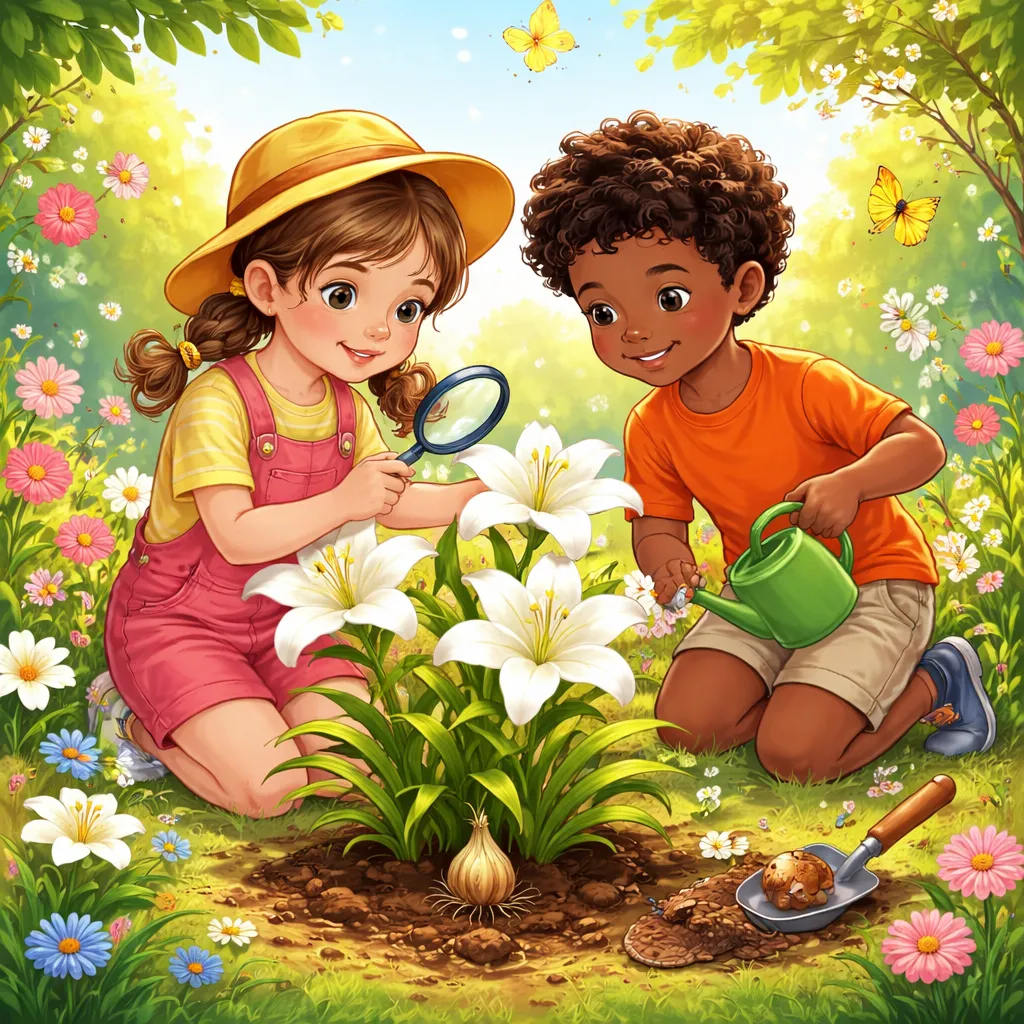
The lily plant is a graceful flower that grows from a bulb. It stands tall on a straight stem. The flowers are large and often trumpet-shaped. They open wide to show beautiful petals. Lilies come in many colors. You can find white, pink, yellow, orange, and red lilies. Some have spots or stripes on the petals. The leaves are long and narrow. They grow along the stem in a spiral pattern. Lilies have a strong, sweet scent. One stem can hold several flowers. They bloom in summer. For children, lilies look like something from a storybook. They are elegant and exciting to watch grow. Parents can plant lily bulbs in the garden or in pots. Children love checking for the first green shoot. When the flower opens, it feels like a special event. This plant offers a beautiful way to begin learning about nature.
English Learning About This Plant
The English name “lily” is short and soft. It sounds like “lil-ee.” The International Phonetic Alphabet (IPA) is /ˈlɪli/. The word has two syllables. Children can say it gently: lil-ee. When we learn about lily plant, we discover words for its parts. The bulb is the round part underground that stores food. The stem is the tall, straight part that holds the flowers. The leaf is the long, narrow green part that catches sunlight. The flower is the colorful part that opens wide. The petal is the soft part of the flower. These words help children describe what they see.
Lilies appear in many famous sayings and stories. In the Bible, there is a beautiful line about lilies. It says, “Consider the lilies of the field, how they grow.” This means lilies do not worry or work hard to be beautiful. They simply grow as they are meant to. This teaches children that they too can grow and bloom in their own time. Another famous quote comes from the writer Henry Ward Beecher. He said, “The lily is the queen of flowers.” This means lilies hold a special place among all flowers. Parents can share these gentle words with their child. They become small lessons about patience and self-acceptance.
Plant Facts and Scientific Knowledge
The lily plant belongs to the genus Lilium. There are about 100 species. Lilies are native to many parts of the world. They grow in North America, Europe, and Asia. True lilies grow from bulbs with scales. These scales look like overlapping layers. They store water and food for the plant.
Lily flowers have six petals. They often curve backward. This shape is called recurved. The flowers come in many colors. Some have dark spots called freckles. These spots guide bees to the center. Lilies bloom in summer. They last about two to three weeks. After flowering, the plant makes seeds in pods.
Lilies grow best in well-drained soil. They like full sun but appreciate some afternoon shade. Different lily species bloom at different times. Asiatic lilies bloom early. Oriental lilies bloom later. They have a very strong scent.
Lilies have rich symbolism. White lilies represent purity. They often appear in weddings and celebrations. Pink lilies represent prosperity. Orange lilies represent confidence. In many cultures, lilies symbolize renewal and new beginnings. They are also associated with motherhood in some traditions. This makes them a meaningful flower to grow with children.
How to Grow and Care for This Plant
Growing a lily plant is a rewarding family project. Start in spring or fall. Buy lily bulbs from a garden store. Choose a sunny spot with well-drained soil. Dig a hole about three times as deep as the bulb is tall. Place the bulb with the pointy side up. Cover it with soil. Water well.
Children can help with planting. Let them hold the bulb. Let them feel its scales. Explain that this small bulb will grow into a tall flower. This creates excitement and wonder.
Water lilies regularly. They need about one inch of water per week. Water at the base of the plant. Avoid getting water on the leaves and flowers. This helps prevent disease. Mulch around the base keeps the soil cool and moist.
Lilies need support. Tall stems can bend in wind. Place a small stake next to the stem. Tie it loosely with soft string. Show your child how to do this gently. It teaches care and attention.
After the flowers fade, leave the stem and leaves. They make food for the bulb for next year. Cut only the flower head. Let the leaves turn yellow before cutting them back. In winter, add a layer of mulch to protect the bulb.
Benefits of Growing This Plant
Growing a lily plant brings many gifts to a family. First, it adds elegance to the garden. The large, colorful flowers create a stunning display. Second, the scent fills the air. Walking near a lily brings a sweet surprise. This delights children and adults alike.
Lilies attract pollinators. Bees and butterflies visit the flowers. Children can watch these visitors up close. It teaches how plants and insects work together. This builds an early understanding of ecosystems.
Cutting lilies for the home is another benefit. One stem with several flowers makes a beautiful bouquet. Children feel proud when their flowers decorate the table. It gives them a sense of accomplishment.
Growing lilies also teaches about seasons. The bulb rests in winter. It sends up shoots in spring. It blooms in summer. It fades in fall. Children learn the rhythm of the year. This connects them to the natural world in a deep way.
What Can We Learn From This Plant
A lily plant teaches children about patience. The bulb sleeps underground for months. Nothing seems to happen. Then one day, a green shoot appears. Children learn that waiting is part of growth. Good things take time.
Lilies also teach about inner strength. The bulb stores everything it needs. It does not need constant attention. It grows from its own resources. Children learn that they have inner strength too. They can face challenges with what they already carry inside.
Another lesson is about standing tall. The lily stem rises straight and strong. It does not bend to the ground. Children learn to hold their heads high. They can face the world with confidence and grace.
Lilies also show that beauty comes in many forms. Some lilies are white. Some are orange. Some have spots. Some have no scent. Each one is beautiful in its own way. Children learn to appreciate differences. They learn that they do not need to look like anyone else to be wonderful.
Fun Learning Activities
There are many simple activities to help children learn about lily plant. One activity is bulb observation. Give your child a lily bulb. Let them touch the scales. Count how many scales they can see. Draw the bulb in a notebook. Write the date. This builds observation and drawing skills.
Another activity is height tracking. Plant a lily in a pot. Measure the stem each week. Mark the height on a chart. Children love seeing the plant grow taller. It builds math skills and patience.
A nature journal works well for lilies. Draw the plant at different stages. Draw the bulb, the shoot, the leaves, and the flower. Label each part. Write simple sentences. For example, “The lily has six petals.” This combines art, writing, and science.
For art, try painting lilies. Look at pictures of different lily colors. Ask your child to paint their favorite. Use watercolors or crayons. Talk about the shape of the petals. This encourages close observation.
Vocabulary games are fun too. Write the words bulb, stem, leaf, flower, petal, and root on cards. Say each word aloud. Ask your child to point to the part on a real plant or picture. Clap the syllables together. This makes language learning active and joyful.
Finally, try a scent activity. If you have a scented lily, let your child smell it gently. Ask them to describe the smell. Is it sweet? Is it strong? Compare it to other flowers. This builds sensory awareness and descriptive language.
Through these activities, children build a deep connection with nature. They learn new words, observe growth, and develop patience. The lily plant becomes a symbol of beauty and strength. Each time they see a lily, they remember their own journey of planting, caring, and watching life unfold. This elegant flower opens a door to wonder and learning that stays with them for years.