
What Is This Plant?
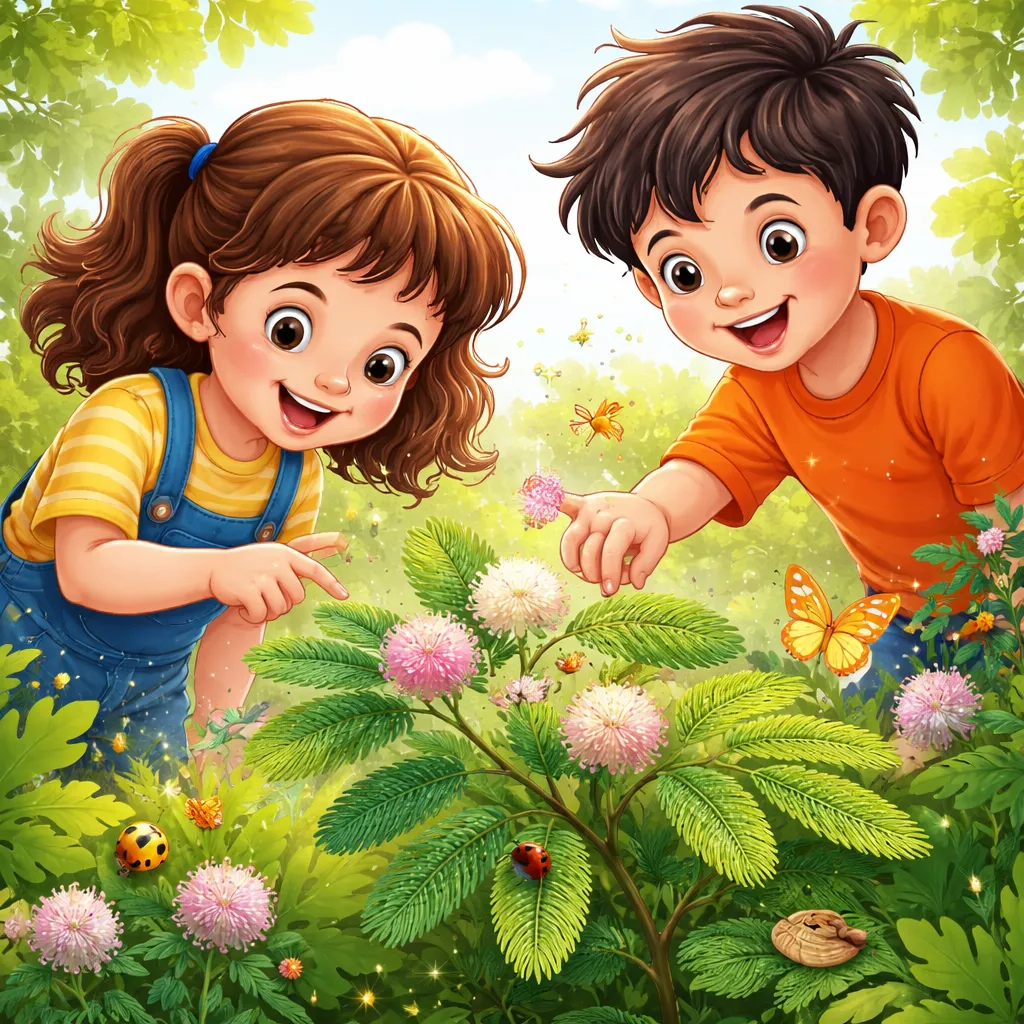
The mimosa plant is a fascinating, sensitive plant that moves when you touch it. It grows as a small shrub or ground cover. The stems are slender and sometimes have small thorns. The leaves are the most amazing part. They are fern-like and made of many tiny leaflets. When you touch the leaves, they fold up quickly. The leaflets close together. The leaf stem droops. The plant looks like it is sleeping. After a few minutes, it opens again. The flowers are small and fluffy. They look like pink or purple pom-poms. They grow in round clusters. For children, mimosa is like magic. They touch a leaf and it moves. They can watch it open again. Parents can plant mimosa in a pot or garden. Children can visit it every day. They learn that plants can respond to touch. This plant teaches children that the natural world is full of surprises.
English Learning About This Plant
The English name “mimosa” comes from the Greek word “mimos.” It means mimic or actor. The plant acts like it is shy. The pronunciation is “mi-mo-sa.” The International Phonetic Alphabet (IPA) is /mɪˈmoʊsə/. The word has three syllables. Children can say it: mi-mo-sa. When we learn about mimosa plant, we learn words for its parts. The leaf is the fern-like part with many tiny leaflets. The leaflet is one small part of the leaf. The stem is the slender part that holds the leaves and flowers. The flower is the fluffy, pink or purple pom-pom. The thorn is the small, sharp point on some stems. These words help children describe this moving plant.
There is a famous saying about mimosa. It is called the “sensitive plant” or “shy plant.” Another saying goes, “The mimosa teaches us that it is okay to close up sometimes.” Parents can share these words with their child. They become gentle lessons about boundaries and self-protection. The mimosa plant is also known as Mimosa pudica. “Pudica” means shy.
Plant Facts and Scientific Knowledge
The mimosa plant belongs to the species Mimosa pudica. It is a member of the pea family, Fabaceae. It is native to Central and South America. It has spread to many tropical regions around the world. It is often considered a weed in warm climates.
The movement of mimosa leaves is called thigmonasty. “Thigmo” means touch. “Nasty” means movement. When you touch the leaf, cells lose water pressure. The leaflets fold. The leaf stem droops. This movement is a defense mechanism. It may scare away insects or herbivores. The plant reopens after about ten to fifteen minutes.
Mimosa leaves are compound leaves. Each leaf has many pairs of tiny leaflets. The leaflets are sensitive along the midrib. Touching one leaflet makes all the leaflets on that leaf fold. Strong shaking can make the whole plant droop.
The flowers are small and fluffy. They are pink or purple. They grow in round clusters about one inch across. The flowers are pollinated by insects. After flowering, the plant produces seed pods. The pods have small, flat seeds.
Mimosa has symbolic meaning. It represents sensitivity, shyness, and self-protection. It reminds us that it is okay to have boundaries. The plant’s movement fascinates children and adults alike.
How to Grow and Care for This Plant
Growing a mimosa plant is exciting for children. Plant seeds in spring. Soak the seeds overnight before planting. This helps them germinate. Choose a sunny spot. Mimosa needs at least six hours of sunlight each day. It grows well in pots or garden beds.
Fill a pot with well-drained soil. Plant the seeds about half an inch deep. Cover with soil. Water gently. Children can help by soaking the seeds and planting them. The seeds are small and easy to handle.
Water mimosa regularly. Keep the soil moist but not soggy. It likes consistent moisture. In hot weather, water more often. The plant grows quickly. It can bloom in the first year.
Mimosa is sensitive to cold. In cool climates, grow it in a pot. Bring it indoors for winter. Place it in a sunny window. Water less in winter.
Prune mimosa to keep it bushy. Pinch back the growing tips. This encourages branching. Children can help by pinching the tips.
Benefits of Growing This Plant
Growing a mimosa plant brings many gifts to a family. First, the movement fascinates children. They can touch the leaves and watch them close. This builds wonder and curiosity. Second, the plant is easy to grow from seed. Children can watch the entire life cycle.
Mimosa teaches about plant movement. Most plants do not move quickly. Mimosa does. Children learn that plants respond to their environment.
The flowers are pretty. The fluffy pink pom-poms attract attention. Children love the soft texture.
Mimosa also teaches about respect. The plant closes when touched. Children learn that they can respect boundaries. They can ask before touching.
What Can We Learn From This Plant
A mimosa plant teaches children about sensitivity. The plant responds to touch. Children learn that they can be sensitive too. They can pay attention to how they feel.
Mimosa also teaches about boundaries. The plant closes up when touched. Children learn that they can say “no” or “not right now.” They can protect themselves.
Another lesson is about recovery. After closing, the plant opens again. Children learn that they can recover. After feeling shy or upset, they can open up again.
Mimosa also teaches about wonder. The moving plant is amazing. Children learn that nature is full of surprises. They can keep exploring.
Fun Learning Activities
There are many simple activities to help children learn about mimosa plant. One activity is a touch experiment. Touch one leaflet gently. Watch the leaflets fold. Time how long it takes to open again. Try touching different leaves. See if they react differently. This builds observation and experimentation skills.
Another activity is a gentle touch lesson. Explain that the plant closes when touched. Practice gentle touches. Ask the child to touch the plant softly. This builds respect and gentleness.
A nature journal works well for mimosa. Draw the fern-like leaves with tiny leaflets. Draw the fluffy pink flowers. Draw the leaf open and closed. Label the parts: leaf, leaflet, stem, flower, thorn. Write the date and what you observed.
For art, try painting mimosa. Use green paint for the fern-like leaves. Use pink paint for the fluffy flowers. Paint the leaves open and closed. This creates an interactive picture.
Vocabulary games are fun too. Write the words mimosa, leaf, leaflet, stem, flower, and touch on cards. Say each word. Ask your child to point to the part on the plant. Practice saying mimosa together. Clap the syllables: mi-mo-sa.
Finally, try a storytelling activity. Ask your child to imagine being a mimosa plant. What does it feel like when something touches it? What does it think about as it waits to open again? This builds empathy and imagination.
Through these activities, children build a deep connection with a plant that moves and responds to them. They learn new words, experiment with touch, and discover the joy of sensitivity. The mimosa plant becomes a symbol of gentle boundaries and recovery. Each time they touch the leaves and watch them close, children remember that it is okay to close up sometimes. They remember that they can open again when they are ready. This shy, moving plant opens a world of sensory discovery, respectful interaction, and the lasting wonder of a plant that talks back with its leaves.