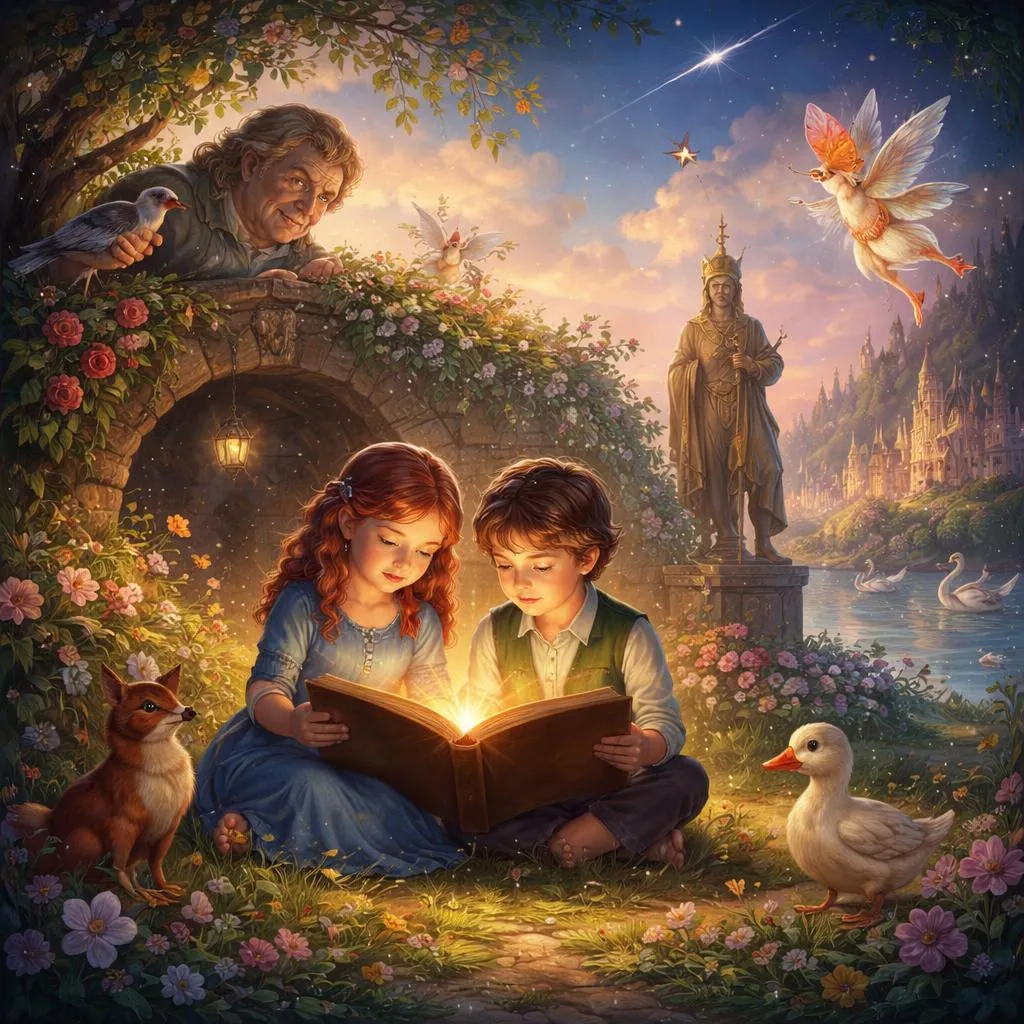

Some stories sparkle with language so beautiful it feels like music. Others carry wisdom so deep it stays with readers forever. Oscar Wilde children's stories do both. Written over a century ago, these tales continue to enchant new generations. They feature princes and giants, nightingales and rockets. They explore love and sacrifice, kindness and beauty. They teach profound lessons without ever sounding like lessons. This article explores how teachers can share these literary treasures with young readers, opening doors to both language development and deep thinking about what matters most in life.
What Are Oscar Wilde Children's Stories? Oscar Wilde children's stories are a collection of fairy tales written by the famous Irish author Oscar Wilde. He published two volumes: "The Happy Prince and Other Tales" and "A House of Pomegranates." These are not simple fairy tales. They are literary works with beautiful language and complex themes. The stories include "The Happy Prince," "The Nightingale and the Rose," "The Selfish Giant," "The Devoted Friend," and "The Remarkable Rocket." Each tale features memorable characters facing moral choices. The stories can be sad at times. They do not always have happy endings in the traditional sense. But they always have meaning. They teach about love, sacrifice, friendship, and what truly matters in life. The language is rich and descriptive, introducing children to the beauty of words.
Meaning and Explanation Behind Oscar Wilde's Stories Oscar Wilde wrote these stories for his own children, but he embedded deep wisdom in them. Each tale carries a central truth about human nature and life.
"The Happy Prince" tells of a statue who gives away everything to help poor people. He sacrifices his gold and jewels, becoming shabby but bringing comfort to others. The story teaches that true happiness comes from giving, not receiving. It shows that beauty is more than outward appearance.
"The Selfish Giant" refuses to let children play in his garden. Winter stays there permanently. When he finally opens his garden and his heart, spring returns. The giant learns that sharing brings joy. The story carries Christian themes of redemption and love.
"The Nightingale and the Rose" shows a nightingale who gives her life to create a red rose for a student in love. The student later discovers the girl he loves does not care about the rose. The story explores sacrifice, love, and whether people appreciate true gifts. It is bittersweet and thought-provoking.
"The Devoted Friend" examines friendship through a story within a story. A miller constantly takes advantage of a kind gardener named Hans, claiming to be his "devoted friend." Hans gives everything and receives nothing. The story teaches about true friendship versus selfish relationships.
"The Remarkable Rocket" features a fireworks rocket who believes he is terribly important. He talks endlessly about himself and his emotions. The rocket learns nothing and remains ridiculous. This story teaches about humility and self-awareness.
Categories or Lists of Oscar Wilde's Stories Oscar Wilde's children's stories can be grouped by theme.
Sacrifice and Love Stories:
The Happy Prince gives everything for others.
The Nightingale gives her life for love.
The Selfish Giant gives his heart to children.
Friendship Lessons:
The Devoted Friend explores true vs. false friendship.
The Happy Prince shows friendship between statue and swallow.
Humility and Pride:
The Remarkable Rocket satirizes self-importance.
The Star-Child must learn humility.
Beauty and Appearance:
The Happy Prince loses beauty but gains worth.
The Birthday of the Infanta explores inner vs. outer beauty.
Religious Themes:
The Selfish Giant has clear Christian symbolism.
The Happy Prince ends with angels taking the most precious things.
Justice and Mercy:
Many stories explore who deserves what.
They question simple ideas of fairness.
Daily Life Examples from Oscar Wilde's Stories Oscar Wilde children's stories connect to everyday experiences despite their fairy tale settings. A child who shares toys understands the Selfish Giant's lesson. Someone who gives up something for a friend recognizes the Happy Prince. A child who talks only about themselves might see themselves in the Remarkable Rocket.
Teachers can draw these connections gently. "Remember how the Happy Prince gave away everything to help others? Have you ever given something up to help someone?" "The Selfish Giant learned that sharing made him happier. When have you felt happy sharing?"
The stories also provide language for discussing complex topics. Sacrifice. True friendship. Selfishness. Generosity. These concepts become concrete through the tales.
Vocabulary Learning from Oscar Wilde's Stories Oscar Wilde's language is rich and sophisticated, introducing children to beautiful vocabulary.
Beautiful Descriptive Words: Splendid, glorious, magnificent, exquisite, delicate, radiant, luminous, golden.
Emotion Words: Sorrow, despair, joy, devotion, sacrifice, compassion, pity, gratitude, loneliness.
Moral Words: Selfish, generous, devoted, faithful, loyal, humble, proud, vain, foolish.
Nature Words: Nightingale, swallow, giant, garden, rose, crystal, ruby, sapphire, emerald.
Architectural Words: Statue, pedestal, spire, chimney, square, tower, palace, city.
Teachers can introduce these words during reading. Point them out in the text. Discuss their meanings. Create word walls for each story. The vocabulary becomes meaningful through Wilde's beautiful prose.
Phonics Points in Oscar Wilde's Stories Wilde's language offers advanced phonics practice for older children.
Complex Letter Patterns: Words like nightingale have silent gh. Beautiful has the ea pattern. These challenge and build skills.
Syllable Practice: Wilde's vocabulary offers rich syllable work. Mag-nif-i-cent has four. Ex-quis-ite has three. Glo-ri-ous has three. Practice clapping.
Stress Patterns: Longer words have stress patterns to notice. MAG-nificent. ex-QUIS-ite. glo-RI-ous. This builds pronunciation.
Word Origins: Many words come from Latin and French. Discussing origins builds deeper language understanding.
Teachers can explore these patterns with older children. The rich language provides advanced phonics opportunities.
Grammar Patterns in Oscar Wilde's Stories Wilde's writing provides excellent grammar models.
Complex Sentences: Wilde uses varied sentence structures. Short for impact. Long for description. This models sentence variety.
Descriptive Phrases: His descriptions are masterful. "The Happy Prince was a beautiful statue covered in gold leaf." This shows how adjectives and phrases work.
Dialogue: Characters speak in distinctive voices. The Rocket's pompous speeches. The Swallow's simple observations. This models character voice.
Figurative Language: Wilde uses metaphor and simile abundantly. "Her voice is like milk and honey." This introduces literary devices.
Teachers can point out these patterns with older readers. Wilde's writing teaches literary craft naturally.
Learning Activities for Oscar Wilde's Stories Activities deepen engagement with these rich tales.
Activity 1: Story Retelling in Modern Language After reading, children retell the story in their own words. This builds comprehension and makes the tale their own.
Activity 2: Character Letters Write a letter from one character to another. The Swallow to the Happy Prince. The Giant to the children. This builds empathy and writing skills.
Activity 3: Moral Discussion Circles Discuss the moral questions each story raises. Was the Nightingale's sacrifice worth it? Was the Miller truly a friend? These discussions build critical thinking.
Activity 4: Art from Description Wilde's descriptions are vivid. Children illustrate scenes based purely on the text. This builds visualization skills.
Activity 5: Compare and Contrast Compare Wilde's stories to traditional fairy tales. How are they similar? Different? Why might Wilde have written this way?
Activity 6: Modern Retelling Rewrite a Wilde story in a modern setting. The Happy Prince as a homeless shelter donor. The Selfish Giant as a neighbor who won't share.
Printable Materials for Oscar Wilde's Stories Printable resources support learning from these complex tales.
Story Summary Sheets: Simple summaries of each story for reference.
Character Trait Charts: Charts for listing and comparing character traits across stories.
Vocabulary Lists: Rich vocabulary from each story with definitions.
Discussion Question Cards: Questions for each story to guide discussion.
Illustration Pages: Scenes from stories for coloring or illustrating.
Compare and Contrast Chart: Template for comparing Wilde's stories to traditional tales.
Educational Games for Oscar Wilde's Stories Games make engagement with these stories playful.
Game: Character Match Create cards with character names and cards with character descriptions. Children match.
Game: Moral of the Story Write story titles and possible morals. Children match each story to its lesson.
Game: Wilde Bingo Create bingo cards with characters, objects, and themes from the stories. Call out descriptions.
Game: Story Sequence For each story, create cards with key events. Children arrange in correct order.
Game: Who Said That Read quotes from stories. Children guess which character spoke.
Connecting Oscar Wilde's Stories to Other Subjects These stories connect across the curriculum.
Social Studies Connection: Explore Victorian England when Wilde wrote. How did society treat poor people? How does this appear in the stories?
Art Connection: Study illustrations from different editions of Wilde's stories. Create art in various styles inspired by the tales.
Music Connection: The Nightingale and the Rose connects to music. Listen to music inspired by nightingales. Create soundscapes for stories.
Drama Connection: Act out scenes from the stories. The pompous Rocket. The kind Swallow. The changing Giant.
Writing Connection: Write original fairy tales in Wilde's style. Use rich description and moral themes.
The Enduring Magic of Wilde Oscar Wilde children's stories endure because they speak truth. They do not pretend life is always happy. The Nightingale dies. The Happy Prince becomes shabby. The student loses his love. Yet these sad endings teach something. Love and sacrifice have value even when not rewarded. Kindness matters even when not returned. Beauty fades but goodness remains.
Children sense this truth. They may not articulate it, but they feel it. The stories stay with them because they honor real emotions. They do not talk down. They treat children as capable of understanding deep things.
For teachers, Wilde offers a gift. Language of stunning beauty. Stories that provoke thought. Characters that linger in memory. Lessons that last a lifetime. Sharing these tales with children is not just teaching literacy. It is initiating them into the company of those who love great literature.