
What Is This Plant?
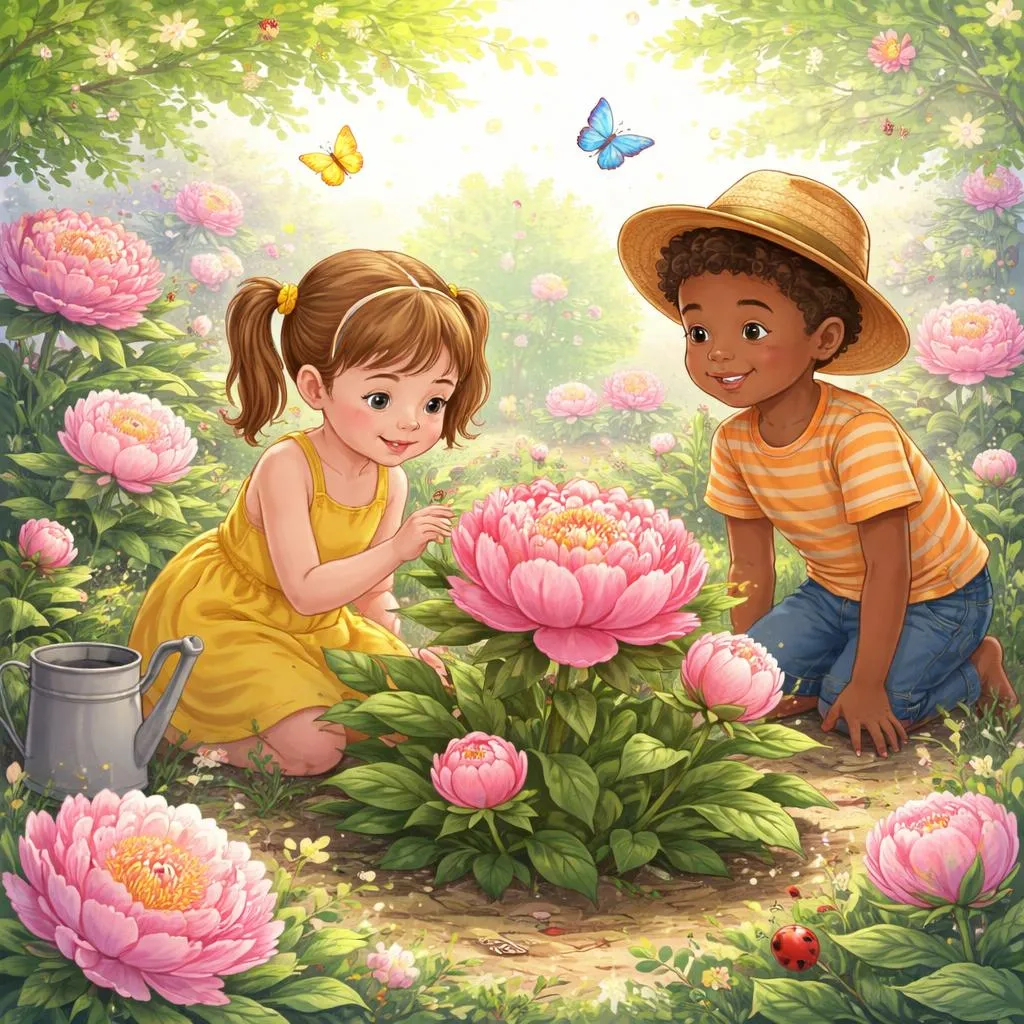
The peony plant is a lush, bushy perennial that produces some of the largest and most stunning flowers in the garden. It grows on sturdy stems that rise from thick, woody roots. The flowers are enormous. They can be as big as a child’s face. Some peonies have single layers of petals. Others have hundreds of petals packed together in soft, ruffled balls. The colors are rich and joyful. You can find peonies in white, pink, red, coral, and deep burgundy. The leaves are dark green and divided into many smaller leaflets. They look like fans. Peonies bloom in late spring and early summer. For children, peonies feel like a celebration. The flowers are so big and fluffy that they look like something from a dream. Parents can plant peonies in the garden or visit a garden when they bloom. This flower teaches children that some things are worth waiting for.
English Learning About This Plant
The English name “peony” has ancient roots. It comes from a Greek myth about a healer named Paeon. The gods turned him into a peony flower. The pronunciation is “pee-o-nee.” The International Phonetic Alphabet (IPA) is /ˈpiːəni/. The word has three syllables. Children can say it: pee-o-nee. When we learn about peony plant, we learn words for its parts. The root is the thick, woody part underground that stores energy. The stem is the sturdy, upright part that holds the heavy flowers. The leaf is the dark green, divided part that grows in layers. The flower is the large, layered blossom. The bud is the round, tight ball that slowly opens into the flower. These words help children describe this grand plant.
There is a famous saying about peonies. It goes, “A peony is a promise of spring.” This means when you see peony buds swelling, you know warm weather is coming. Another lovely thought comes from the ancient Chinese poet Li Bai. He wrote that peonies are like beautiful ladies with powdered faces. He meant they are elegant and refined. Parents can share these gentle words with their child. They become small lessons about anticipation and appreciation of beauty.
Plant Facts and Scientific Knowledge
The peony plant belongs to the genus Paeonia. There are about 33 species. Peonies are native to Asia, Europe, and North America. They have been cultivated for over 2,000 years. In ancient China, peonies were grown in imperial gardens. They were called the “king of flowers.”
There are three main types of peonies. Herbaceous peonies die back to the ground in winter. Tree peonies have woody stems that stay above ground. Intersectional peonies are a mix of both. They have the flowers of tree peonies and the growth habit of herbaceous ones.
Peony flowers come in six forms. Single peonies have one or two rows of petals. Japanese peonies have a center of modified stamens. Anemone peonies have a fluffy center. Semi-double peonies have many petals but you can still see the center. Double peonies have so many petals that you cannot see the center. Bomb peonies have a large, rounded center that rises above the outer petals.
Peonies have a sweet, delicate scent. Some smell like roses. Others have a citrusy note. The scent attracts bees and other pollinators.
Peonies have strong symbolism. They represent romance, prosperity, and good fortune. In China, peonies are the flower of wealth and honor. They appear in art, poetry, and celebrations. In Western cultures, peonies symbolize a happy marriage and a prosperous life.
How to Grow and Care for This Plant
Growing a peony plant is a lesson in patience. Peonies are long-lived. They can bloom for fifty years or more. Choose a sunny spot. Peonies need at least six hours of sunlight each day. The soil should be rich and well-drained. Peonies do not like wet feet.
Plant peonies in fall. Dig a wide hole. Place the root with the eyes facing up. The eyes are the small pink buds. Cover them with only one to two inches of soil. If you plant too deep, the peony will not bloom. Children can help by measuring the depth with a ruler.
Water well after planting. Peonies need regular water in their first year. After they are established, they are quite drought-tolerant. Water deeply once a week in dry weather.
Peonies need support. The heavy flowers can make the stems droop. Place a peony ring or hoop around the plant in spring. As the stems grow, they will grow through the support. Children can help place the rings.
Fertilize peonies in early spring. Use a balanced fertilizer. Do not overfertilize. Too much nitrogen causes lush leaves but few flowers. In fall, cut herbaceous peonies back to the ground. Remove the leaves to prevent disease.
Peonies may not bloom much in their first year. They need time to establish. Children learn to wait. In the second year, a few flowers appear. By the third year, the plant becomes full and glorious.
Benefits of Growing This Plant
Growing a peony plant brings many gifts to a family. First, it creates a spectacular display. The enormous flowers fill the garden with color and scent. Second, peonies make excellent cut flowers. They last a long time in a vase. Children can cut a flower to give to a teacher, grandparent, or neighbor. This builds generosity and pride.
Peonies attract bees and butterflies. Children love watching the insects visit the flowers. It shows how plants and pollinators work together.
The plant also teaches about history. Peonies have been loved for thousands of years. Parents can share stories about peonies in ancient gardens. This connects gardening to culture and time.
Peonies also offer a sense of accomplishment. Growing a peony from a root to a flowering plant takes time and care. When the first bud opens, children see that their patience paid off. This builds confidence and persistence.
What Can We Learn From This Plant
A peony plant teaches children about patience. Peonies take time to establish. They may not bloom much in the first year. Children learn that good things take time. They learn to wait without giving up.
Peonies also teach about strength. The stems hold up huge flowers. They are strong enough to carry great beauty. Children learn that they too can be strong. They can carry responsibilities and still bloom.
Another lesson is about fullness. Peony flowers have many petals. They are rich and abundant. Children learn that life is fuller when we embrace abundance. We do not need to be small and quiet. We can be generous with our gifts.
Peonies also teach about legacy. A peony plant can live for decades. It blooms year after year. Children learn that what they plant today can bring joy for a long time. Their small actions have lasting effects.
Fun Learning Activities
There are many simple activities to help children learn about peony plant. One activity is bud watching. In spring, check the peony plant each day. Look for the red buds pushing through the soil. Count how many buds appear. Draw them in a journal. Watch as they grow tall and form round flower buds.
Another activity is a flower dissection. When a peony flower fades, take it apart. Count the petals. Look at the center. Find the stamens with pollen. Find the carpels that will become seeds. This builds close observation skills.
A nature journal works well for peonies. Draw the plant at different stages. Draw the red shoots in spring. Draw the leafy bush. Draw the round buds. Draw the open flower. Label the parts. Write the date when the first flower opens.
For art, try painting peonies. Use pink, white, and red paint. Paint the ruffled petals. Use green for the leaves. Add a background of blue sky. This creates a beautiful picture that celebrates the flower.
Vocabulary games are fun too. Write the words peony, stem, leaf, bud, petal, and root on cards. Say each word. Ask your child to point to the part on the plant. Practice saying peony together. Clap the syllables: pee-o-nee.
Finally, try a patience activity. Plant a peony root in fall. Mark the spot with a small stake. Take a photo of the spot. In spring, look for the first shoots. Compare with the photo. Talk about how much happened underground while you waited. This teaches about hidden growth and patience.
Through these activities, children build a deep appreciation for a flower that rewards patience with spectacular beauty. They learn new words, observe carefully, and discover the joy of waiting. The peony plant becomes a symbol of strength and abundance. Each time they see a peony, they remember that great beauty takes time. They remember that strong stems can hold heavy flowers. This magnificent plant opens a world of patience, celebration, and lasting joy that stays with them through the years.