
What Does “Same Word, Different Forms” Mean?
Many English words belong to families.
A word family starts with one root and grows into related forms.
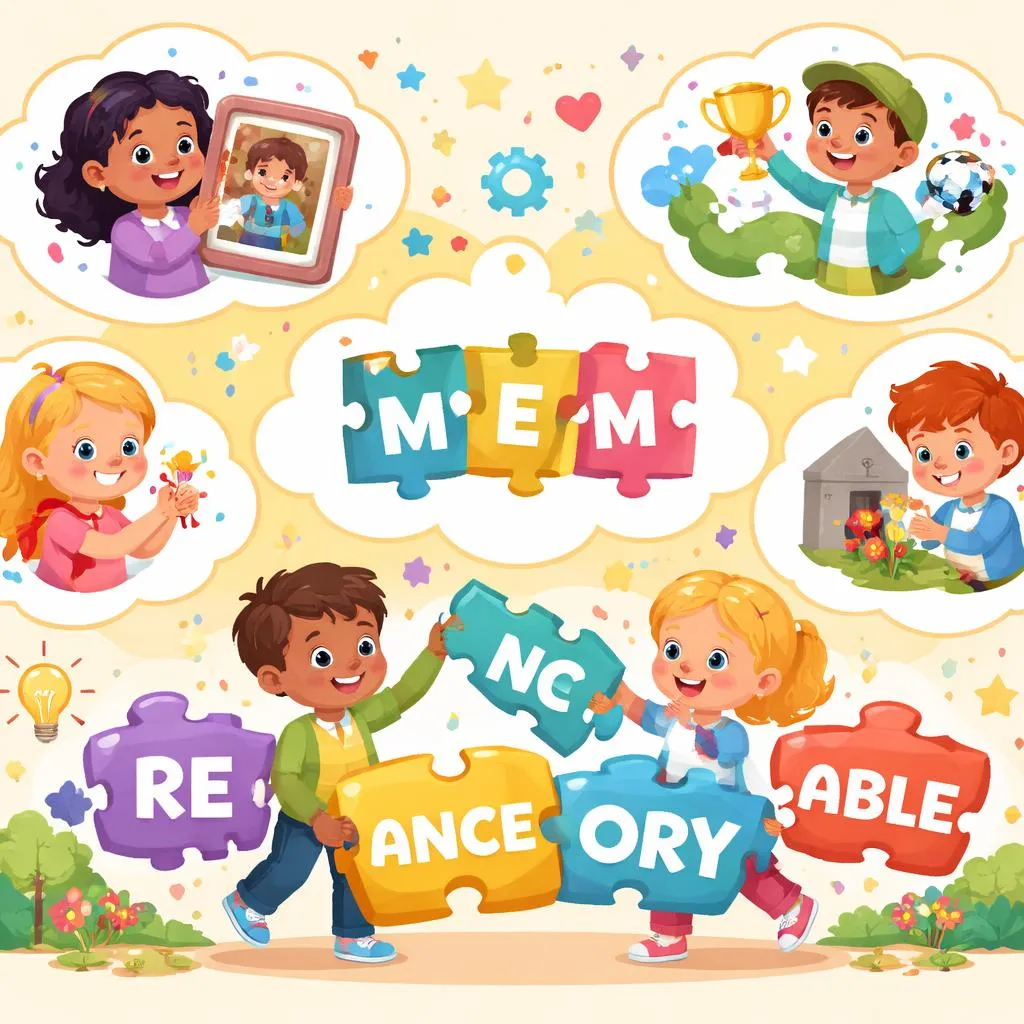
The family remember, remembrance, memorable, memorably is a beautiful example.
All four words connect to memory.
They relate to keeping something in mind or making something worth remembering.
But each word has a different grammar job.
Remember is a verb. Remembrance is a noun. Memorable is an adjective. Memorably is an adverb.
One root idea.
Several forms.
Different uses.
Learning this helps children understand patterns in English.
That supports stronger reading and writing.
Personal Pronouns Change Their Form
Children already know words can change form.
They see:
I, me, my she, her, hers
Different forms.
Connected meaning.
Word families work similarly.
Look at these:
I remember the story. The holiday is a happy remembrance. It was a memorable trip. We celebrated memorably.
The root meaning stays related.
The grammar changes.
That is how word families grow.
Children who see these patterns often build vocabulary faster.
From Verb to Noun to Adjective to Adverb – One Family, Many Words
This family shows clear word growth.
That makes it excellent for learning.
Remember as a Verb
Remember shows action.
Examples:
I remember the answer. Please remember your homework. She remembered my birthday.
This is often the first form children learn.
It is common in everyday English.
Remembrance as a Noun
Remembrance names memory or the act of remembering.
Examples:
The song brought remembrance of summer. The day became a time of remembrance.
This word feels a little formal or literary.
Children may meet it in stories or poems.
It expands vocabulary beyond everyday speech.
Memorable as an Adjective
Memorable describes something worth remembering.
Examples:
It was a memorable adventure. Her speech was memorable.
This describes a quality.
Notice the ending -able.
It often means “able to be.”
Memorable means worth being remembered.
That is a useful pattern.
Memorably as an Adverb
Memorably tells how something happened.
Examples:
He performed memorably. The team played memorably well.
This describes an action.
It grows from the adjective.
Children can see how -ly often creates adverbs.
One Root, Many Roles – How Words Grow from Actions to Qualities
Look at the growth.
remember → action remembrance → idea or event memorable → quality memorably → manner
One root.
Many roles.
That is how English builds meaning.
Children can use suffixes as clues.
-ance often forms nouns -able often forms adjectives -ly often forms adverbs
Patterns repeat in many word families.
That makes them powerful learning tools.
Same Meaning, Different Jobs – Is It a Verb or a Noun?
Children may confuse these forms.
That is natural.
Grammar helps.
Ask:
Is the word doing something?
Naming something?
Describing something?
Look here:
Correct:
I remember the story. The story inspired remembrance.
Not correct:
I remembrance the story.
Now compare:
It was memorable. She spoke memorably.
One is adjective.
One is adverb.
Different jobs.
Shared root.
That is the key idea.
Adjectives and Adverbs – When Do We Add -ly?
This family gives a classic pattern.
Memorable becomes memorably.
Add -ly.
Examples:
It was a memorable game. They played memorably.
Compare the jobs.
Adjective:
memorable game
Adverb:
played memorably
This pattern appears often.
comfortable → comfortably probable → probably memorable → memorably
Children can apply this pattern widely.
That strengthens grammar.
Watch Out for Tricky Spelling Changes (Double Letters, y to i, and More)
This family has useful spelling details.
Remember and Memorable Look Different
Children may ask:
Why does remember connect with memorable?
The root shifts in appearance.
But the family connection remains.
English sometimes does this.
Meaning helps show the connection.
Memorable to Memorably
Adding -ly creates a small spelling change.
memorable → memorably
The final e drops.
Then -ly joins.
That pattern appears often.
Children should watch for it.
Notice -ance
Remembrance ends in -ance.
That ending often forms nouns.
Examples:
perform → performance remember → remembrance
Patterns like this help spelling.
Let’s Practice – Can You Choose the Right Form?
Try these.
- Please ______ your backpack.
Answer: remember
Action word.
- The ceremony was a time of ______.
Answer: remembrance
Names an idea.
- It was a very ______ trip.
Answer: memorable
Describes the trip.
- The team played ______.
Answer: memorably
Describes how they played.
Practice helps children compare grammar and meaning together.
That builds confidence.
Tips for Parents – Help Your Child Learn Word Families in a Fun Way
Word families can be fun.
Make a Word Family Map
Write remember in the center.
Add:
remembrance memorable memorably
Draw arrows showing how the family grows.
Visual patterns help memory.
Compare -able and -ly
Show how one leads to another.
memorable memorably
Children enjoy building words.
It feels like solving puzzles.
Use Family Memories
Talk about memorable vacations.
Create remembrance boxes.
Use real experiences.
Words become meaningful.
Spot Word Parts in Books
Look for:
-ance -able -ly
Children start noticing patterns in reading.
That supports independence.
Play “Feeling, Thing, or Action?”
Sort each word.
Action?
Thing?
Description?
This turns grammar into a game.
Why This Word Family Helps Reading Growth
This family appears in stories and nonfiction.
Children may read:
memorable characters remembrance ceremonies
These are rich words.
Understanding them supports deeper comprehension.
Children also learn emotional and descriptive vocabulary.
That improves writing too.
Word families build more than spelling.
They build expression.
Common Mix-Ups Children Make Remember and Memorable
Children may confuse them.
One is action.
One is description.
I remember the song. It is a memorable song.
Different jobs.
Memorable and Memorably
Very common confusion.
Remember:
Adjective describes a noun.
Adverb describes an action.
memorable event performed memorably
That distinction matters.
Thinking All Related Words Mean the Same
They connect.
But they are not interchangeable.
That is a key lesson.
Shared roots.
Different uses.
How One Word Family Builds Bigger Vocabulary
This family teaches patterns children can reuse.
They may later understand:
enjoy, enjoyable value, valuable honor, honorable
The -able pattern repeats.
So does -ly.
One family often opens many doors.
That is why morphology matters.
Learning remember, remembrance, memorable, memorably as One Family
These words teach much more than definitions.
They show how one root can become action, memory, description, and manner.
That is how English grows.
When children understand remember, remembrance, memorable, memorably as one connected family, they begin seeing words as patterns rather than isolated pieces.
And once those patterns become familiar, vocabulary often grows faster, reading becomes richer, and expression becomes much more confident.