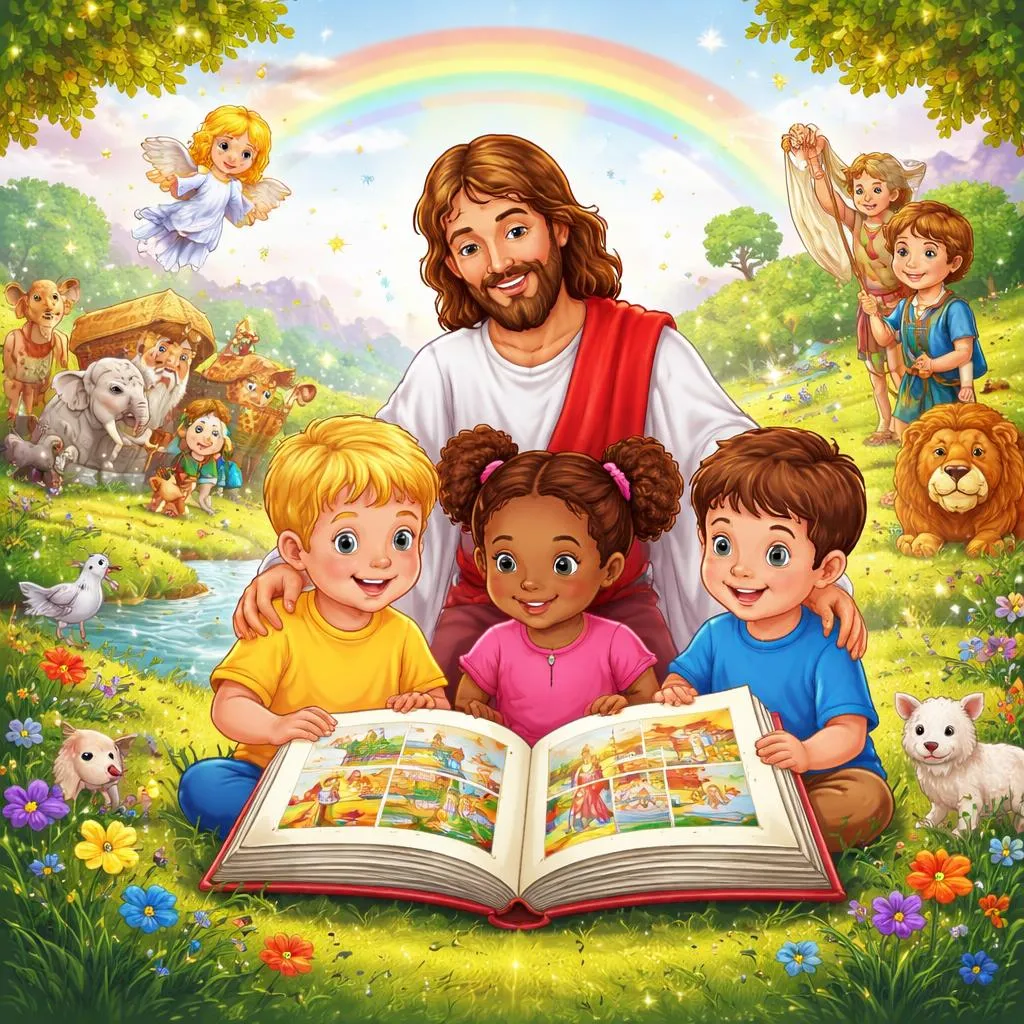

Certain books introduce young readers to foundational narratives. They use simple language and clear illustrations. The beginners bible timeless children's stories represents one such collection. This book presents biblical accounts in accessible form. The stories have educated generations of young learners. This article explores practical teaching applications for this classic resource. The focus remains on language development through simplified biblical narrative. Let us examine how this collection supports English learning.
What Is The Beginners Bible Timeless Children's Stories? The beginners bible timeless children's stories is a collection of simplified biblical narratives. It targets young readers specifically. The language uses basic vocabulary throughout. Sentences remain short and clear. Colorful illustrations accompany each episode.
The book covers major stories from both testaments. Creation appears in the opening pages. Noah's Ark follows soon after. David and Goliath receives attention. Daniel in the lions' den appears. Jonah and the great fish entertains young readers. Stories about Jesus fill later sections. Each story stands alone independently. Readers do not need previous knowledge to understand. The narratives focus on action and clear outcomes.
Vocabulary Learning from This Collection The beginners bible timeless children's stories introduces vocabulary in meaningful contexts. Creation stories use nature vocabulary extensively. "Light," "darkness," "sky," "land," "plants," and "animals" appear naturally throughout. Students learn words for the natural world through narrative context.
Ark stories introduce building and animal vocabulary richly. "Ark," "gopher wood," "animals," "pairs," "rain," and "rainbow" create comprehensive word sets. Each word connects to clear images in accompanying illustrations.
Stories about leaders build character vocabulary effectively. "Courage," "faith," "obedience," "wisdom," and "strength" describe main characters consistently. Abstract concepts become concrete through character actions displayed.
Miracle stories use action vocabulary dramatically. "Heal," "calm," "feed," "walk," and "restore" describe extraordinary events clearly. The amazing nature of events makes vocabulary particularly memorable for young learners.
Phonics Points in These Stories The beginners bible timeless children's stories contains useful phonics patterns throughout. Character names provide sound practice regularly. "Noah" contains the long "o" sound repeatedly. "David" contains the long "a" sound consistently. "Jonah" contains the long "o" sound similarly. These names become familiar through frequent repetition.
Place names offer additional practice opportunities. "Eden" contains the long "e" sound clearly. "Canaan" contains the soft "c" and long "a" distinctly. "Jericho" contains the soft "j" and long "o" prominently. Students encounter these sounds in meaningful contexts consistently.
Word families appear in story vocabulary naturally. "Ark" connects to "dark" and "bark" easily. "Fish" connects to "dish" and "wish" similarly. "Pray" connects to "day" and "say" directly. Students extend patterns from story words productively.
Sight words appear frequently throughout narratives. "Was," "said," "they," "their," "from," and "were" repeat across episodes regularly. Repeated exposure builds automatic recognition effectively.
Grammar Patterns in These Stories The beginners bible timeless children's stories models essential grammar structures consistently. Past tense dominates narratives throughout. "Noah built an ark carefully." "David fought Goliath bravely." "Jonah prayed inside the fish sincerely." Students encounter regular and irregular past forms naturally in context.
Present tense appears in dialogue regularly. Characters speak in the moment directly. "I am sending rain," said God firmly. "Do not be afraid," said the angel gently. Students see tense shifts between narration and speech clearly.
Question forms appear throughout narratives frequently. Characters ask God questions directly. People question each other regularly. Angels ask questions sometimes. "Who will go for us?" "Why are you afraid?" "Where are you going?" Students hear question patterns repeatedly in context.
Imperative sentences appear in commands from God. "Build an ark immediately." "Go to Nineveh now." "Do not eat the fruit ever." These commands carry divine authority strongly. Students learn imperative forms through memorable content effectively.
Learning Activities with These Stories Several activities work well with the beginners bible timeless children's stories. Story sequencing builds comprehension effectively. Provide sentence strips describing key events from one episode clearly. Students arrange them in correct order carefully. This builds understanding of narrative structure consistently.
Character comparison charts develop analytical thinking actively. Create two columns for different characters clearly. Compare Noah and Jonah thoughtfully. Compare David and Goliath carefully. Compare Mary and Martha meaningfully. Students build comparison vocabulary progressively.
Cause and effect charts connect story events logically. List actions on one side clearly. List consequences on the other side accurately. Adam and Eve eat fruit specifically. They leave the garden consequently. This builds understanding of narrative logic effectively.
Modern application discussions connect stories to daily life meaningfully. What does courage look like today practically? How do people show faith now currently? What does forgiveness mean in the classroom specifically? Students apply ancient teachings to modern contexts productively.
Printable Flashcards for Story Vocabulary Flashcards reinforce key vocabulary from the beginners bible timeless children's stories effectively. Create cards for people in the stories clearly. "Adam," "Eve," "Noah," "Abraham," "Sarah," "Moses," "David," "Jonah," "Mary," and "Jesus" appear prominently. Use simple drawings on one side, words on the reverse consistently.
Place flashcards build setting vocabulary thoroughly. "Garden," "ark," "mountain," "desert," "sea," "palace," "temple," and "stable" provide location words abundantly. Students match places to events that happened there logically.
Object flashcards highlight key items distinctly. "Apple," "dove," "rainbow," "sling," "stone," "whale," "manger," and "crown" appear across stories regularly. Students connect objects to the stories where they appear accurately.
Animal flashcards feature creatures in stories prominently. "Snake," "raven," "lion," "fish," "donkey," "sheep," and "dove" appear throughout consistently. Students learn animal names in story contexts meaningfully.
Educational Games with These Stories Games transform the beginners bible timeless children's stories into interactive experiences enjoyably. Story bingo works well with groups. Create cards with story elements clearly. Call out descriptions accurately. Students mark matches promptly. First to complete a row wins excitedly.
Match game pairs story parts with titles effectively. Create cards with episode names and cards with brief descriptions precisely. Students match each title to its correct description carefully. This builds comprehension of what each story contains thoroughly.
Storytelling circle builds oral language dynamically. Sit in a circle comfortably. One student starts telling a Bible story confidently. After a few sentences, next student continues seamlessly. This builds narrative skills and listening attention simultaneously.
Charades with story elements engages physical learning actively. Write story elements on cards clearly. Students act out while others guess enthusiastically. Building an ark faithfully. Fighting a giant bravely. Praying inside a fish sincerely. Walking on water miraculously.
Printable Materials for Story Lessons Printable materials support structured learning with these stories consistently. Story summary templates guide comprehension effectively. Provide spaces for characters, setting, problem, events, and solution clearly. Students complete after reading or listening attentively.
Comic strip templates allow creative retelling imaginatively. Provide blank panels sequentially. Students draw key scenes and add simple dialogue naturally. This combines artistic expression with language production productively.
Vocabulary collectors encourage active word learning regularly. Provide sheets with columns for new words, student drawings, and simple definitions clearly. Drawing the word strengthens memory significantly.
Comprehension questions check understanding after each story thoroughly. Create simple questions about who, what, where, when, and why logically. Students answer verbally or in writing confidently.
Character Education Connections The beginners bible timeless children's stories naturally supports character education comprehensively. Obedience appears in many narratives prominently. Noah builds the ark as instructed faithfully. Abraham follows direction obediently. Students discuss what obedience means and when it matters thoughtfully.
Courage features prominently throughout consistently. David faces Goliath bravely. Esther approaches the king courageously. Daniel enters the lions' den faithfully. Students explore moments requiring courage in their own lives personally.
Faith appears throughout narratives abundantly. Characters trust promises confidently. They believe without seeing directly. Students discuss what faith means and who they trust meaningfully.
Forgiveness appears in many stories regularly. Joseph forgives his brothers generously. The father welcomes the prodigal son joyfully. Jesus teaches about forgiveness consistently. Students explore what forgiveness looks like in relationships practically.
Cross-Curricular Connections These stories connect to multiple subject areas naturally. History explores the ancient world thoroughly. What was life like in Egypt historically? How did people travel typically? What were houses like traditionally? Students learn historical vocabulary meaningfully.
Geography follows story locations accurately. Map activities locate Eden, Egypt, Canaan, Jerusalem, and Babylon carefully. Students learn place names and spatial relationships progressively.
Science connections appear through natural events logically. Floods, famines, storms, and droughts appear in stories regularly. Students learn weather and climate vocabulary contextually.
Art projects extend the narratives visually creatively. Students draw scenes from stories imaginatively. They create dioramas of important events carefully. They illustrate parables in their own style uniquely.
The beginners bible timeless children's stories provides rich material for language development comprehensively. The narratives contain clear plots and memorable characters consistently. Vocabulary builds through repeated exposure to key terms naturally. Grammar appears in natural contexts within the stories meaningfully. Character education emerges through the actions portrayed clearly. Young learners acquire language while engaging with stories of courage, faith, and wisdom deeply. This combination of linguistic and moral education creates meaningful learning experiences that extend far beyond the classroom walls.