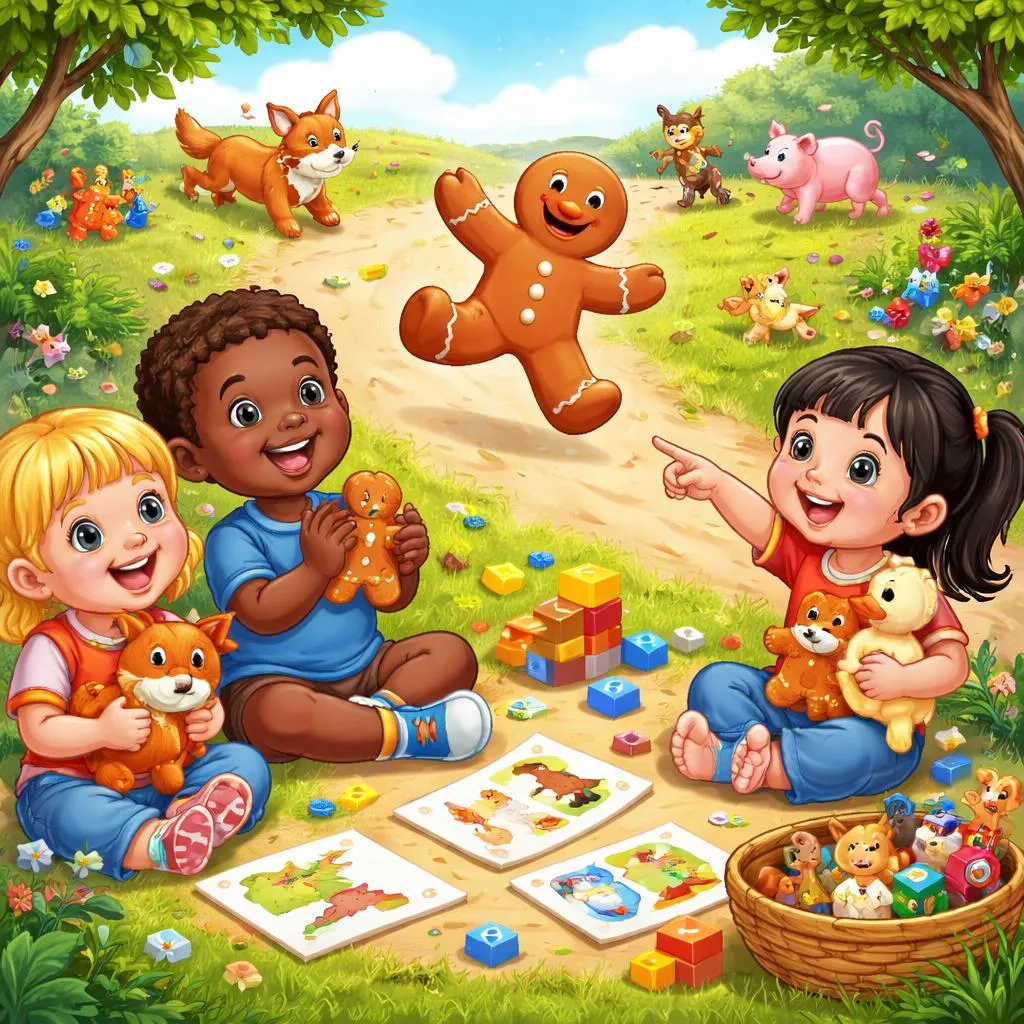

Some stories capture young imaginations immediately. A cookie that runs away and talks creates instant engagement. The children's story gingerbread man offers this magic. The plot moves quickly. The characters appear one by one. The refrain repeats constantly. These elements create ideal conditions for language acquisition. Children anticipate the famous line. They join in reading. They remember the sequence. The story teaches vocabulary through repetition. It models sentence patterns through the chase. It builds confidence through participation. Let us explore how this classic tale serves language development in early childhood classrooms.
What Is the Children's Story Gingerbread Man?
This is a traditional folktale about a runaway cookie. An old woman bakes a gingerbread man. When she opens the oven, he jumps out and runs away. He shouts, "Run, run, as fast as you can! You can't catch me, I'm the gingerbread man!" The woman chases him. Then the man chases. Various animals join the chase. A cow, a horse, some farm animals. The gingerbread man outruns them all. Finally, he meets a fox. The fox offers help crossing a river. The gingerbread man climbs on the fox's head. Then the nose. Then the mouth. The fox eats him. The story ends with the fox's clever trick.
Vocabulary Learning from the Gingerbread Man Story
This narrative introduces vocabulary across multiple domains. Words connect to baking, animals, actions, and body parts.
Baking Words: gingerbread, oven, bake, dough, raisin, cookie, flour, sugar, butter, recipe. Animal Words: cow, horse, pig, sheep, chicken, fox, dog, cat, mouse, bird. Action Words: run, chase, catch, jump, climb, swim, float, shout, laugh, eat. Body Words: head, nose, mouth, eyes, ears, legs, arms, hands, feet, tail. Farm Words: barn, field, river, bridge, farm, farmer, old woman, old man, house, garden.
Each story element introduces connected vocabulary. The baking scene teaches kitchen words. The chase teaches animal names. The fox scene teaches body parts. The setting teaches farm vocabulary.
Phonics Points in the Gingerbread Man Story
Specific sound patterns appear frequently in this tale. Identifying these helps build decoding skills.
The /g/ sound: gingerbread, good, garden, go. The main character starts with this sound. Practice saying gingerbread words together.
The /r/ sound: run, river, rabbit, recipe. The famous line begins with "Run, run!" This sound repeats throughout the chase.
The /f/ sound: fox, fast, farm, field. The fox appears at the end. Fast describes the running. The sound appears frequently.
The /ch/ sound: chase, catch, chicken. The whole story is about chasing and catching. Chickens often appear in the animal list.
Rhyming words: man/can/pan, run/fun/sun, fox/box/socks. The famous couplet rhymes "can" and "man." Point out this pattern.
Grammar Patterns in the Gingerbread Man Story
The children's story gingerbread man models essential grammar structures within its repetitive narrative.
Repeated Refrain: The gingerbread man repeats the same sentence each time. "Run, run, as fast as you can! You can't catch me, I'm the gingerbread man!" Repetition builds confidence and participation.
Past Tense Narrative: The story uses simple past tense. "The old woman baked a gingerbread man." "He ran out the door." "The cow chased him." This provides extensive past tense modeling.
Questions from Characters: Animals ask questions. "Stop, little man! I want to eat you!" Not a question, but some versions include "Where are you going?" Questions model conversational patterns.
Preposition Use: The story uses location words. "Out of the oven." "Down the road." "Across the field." "Into the river." "On the fox's head." Pictures show these relationships clearly.
Comparative Language: The gingerbread man compares speed. "I ran away from the old woman. I can run away from you too!" Comparatives appear in the boasting.
Learning Activities for the Gingerbread Man Story
Active engagement helps children internalize vocabulary and themes through hands-on learning.
Gingerbread Play Dough: Make gingerbread-scented play dough. Students create their own gingerbread people. Practice body part vocabulary while creating. Head, arms, legs, eyes, mouth. Use raisin candies for decorations if available.
Gingerbread Man Puppets: Create simple paper gingerbread men on sticks. Students use puppets to retell the story. The puppet says the famous line. This builds confidence through character voice.
Chase Sequence Cards: Create picture cards showing the chase sequence. Old woman, cow, horse, pig, fox. Students arrange in order and retell who chased when. This builds narrative understanding.
River Crossing Experiment: The fox helps cross the river. Set up a water tray with a "river." Test which materials float. Foam, wood, paper, plastic. Connect to the story's floating scene.
Gingerbread Man Cookies: If possible, bake actual gingerbread cookies. Students decorate with icing and candies. Use decorating vocabulary. Practice following recipe directions using sequence words.
Learning Activities for Group Settings
Collaborative learning builds language through interaction and shared experiences.
Story Retelling Circle: Sit in a circle. Pass a gingerbread man puppet. Each student adds one sentence to retell the story. This builds narrative skills and listening attention.
Character Parade: Assign each student a character from the story. Old woman, cow, horse, pig, fox, gingerbread man. Line up in chase order. March around saying character lines. This builds sequence understanding.
Fox Strategy Discussion: The fox tricks the gingerbread man. Small groups discuss why the gingerbread man trusted the fox. Was the fox clever or mean? Share ideas using simple language. This builds critical thinking.
Gingerbread Man Variations: Read different versions of the story from various cultures. Some have different animals. Some have different endings. Compare using comparative language. "In this version, a goat chases him."
Educational Games from the Gingerbread Man Story
Games transform learning into playful competition. These require minimal preparation.
Run, Run Game: Students sit in a circle. One student walks around outside the circle holding a gingerbread man picture. The class chants "Run, run, as fast as you can!" The student drops the picture behind someone. That person chases them around the circle. The chased student tries to sit in the empty spot before being tagged. This builds listening and physical response.
Catch Me If You Can Tag: Play a gentle tag game where one student is the gingerbread man. Others are chasers. When tagged, students freeze. The gingerbread man says the famous line while running. This builds active language use.
Animal Sounds Match: Create cards with farm animals from the story. Students match animals to their sounds. "The cow says moo." "The horse says neigh." Practice animal sounds and names together.
Gingerbread Bingo: Create bingo cards with story pictures. Oven, gingerbread man, old woman, cow, horse, fox, river. Call out words. Students cover matching pictures. First to cover a row wins.
Printable Materials for the Gingerbread Man Story
Ready-to-use printables extend learning beyond story time into independent practice.
Vocabulary Flashcards: Create cards with story pictures on one side and words on the other. Gingerbread man, oven, cow, horse, fox, river, old woman, old man. Use for matching games or quick review.
Story Sequencing Cards: Create cards showing main events in order. Baking. Running away. Cow chase. Horse chase. Fox meeting. River crossing. Fox eats gingerbread man. Students arrange and retell.
Gingerbread Man Template: Print a large gingerbread man outline. Students decorate with crayons or craft materials. Label body parts together. Head, arms, legs, eyes, mouth.
Coloring Pages: Print outline drawings of chase scenes. Gingerbread man running from old woman. Animals chasing. Fox by the river. Students color while discussing with partners.
Mini-Book: Fold paper to create a small book. Each page shows one story event with simple text. "The woman baked a man." "He ran away." "The cow chased him." "The fox ate him." Students illustrate each page.
Daily Life Connections to the Gingerbread Man Story
Linking story themes to daily experiences makes learning relevant and personal.
Baking Connections: When baking at home or school, connect to the story. "We are making cookies like the old woman." Use recipe vocabulary. Practice sequencing instructions.
Running Games: On the playground, play running games. Connect to the gingerbread man's running. "You run fast like the gingerbread man!" Use comparative language. "She runs faster than me."
Trusting Strangers Discussion: The gingerbread man trusted the fox. This connects to safety discussions about not trusting strangers. Use simple, non-scary language. "The fox tricked him. We only talk to people we know."
Animal Observations: If visiting a farm or seeing animals, connect to story animals. "Look, a cow like in the gingerbread man story!" Practice animal names and sounds.
Printable Flashcards from the Gingerbread Man Story
Effective flashcards support multiple learning styles and review methods.
Picture-Word Cards: Front shows simple drawing or printed image from story. Back shows word in English. Gingerbread man, oven, cow, horse, fox, river, old woman, old man.
Character Cards: Create cards for each character with simple descriptions. "Old woman: baked the gingerbread man." "Fox: tricked the gingerbread man." Students match characters to descriptions.
Action Cards: Create cards showing story actions. Baking, running, chasing, swimming, eating. Students act out actions while others guess. This builds verb vocabulary.
Sequence Cards: Create cards showing main events. Students arrange in order and retell using complete sentences. "First, the woman baked him. Then, he ran away."
Phonics Practice from Story Words
Use gingerbread story vocabulary to practice specific phonics patterns.
Initial Sound Sort: Provide picture cards from story. Gingerbread, oven, cow, horse, fox, river. Students sort by beginning sound. G words. O words. C words. This builds phonemic awareness.
Rhyming Word Hunt: Find words that rhyme with story words. Man/can/pan/ran. Fox/box/socks. Bake/cake/lake. Create rhyming pairs and use in sentences.
Syllable Clapping: Clap syllables in story vocabulary. Gin-ger-bread (3). Wom-an (2). Cow (1). Fox (1). Riv-er (2). This builds phonological awareness through physical movement.
Vowel Sound Sort: Sort story words by vowel sounds. Man has short /a/. Fox has short /o/. Run has short /u/. This builds vowel discrimination at appropriate levels.
Grammar Patterns Practice
Use story sentences to practice specific grammar structures naturally.
Refrain Practice: Practice the famous refrain chorally. "Run, run, as fast as you can! You can't catch me, I'm the gingerbread man!" Break it into phrases. Practice with different emotions. Happy, scared, boastful. This builds fluency and expression.
Past Tense Practice: Write sentences with missing verbs. "The woman ___ a gingerbread man." Students choose from "bake" or "baked." "The cow ___ him." Choose from "chase" or "chased." This builds past tense understanding.
Question Formation: Practice asking questions about the story. "Who baked the gingerbread man?" "What did the cow do?" "Where did the fox go?" "Why did the gingerbread man trust the fox?" Students ask and answer with partners.
Because Sentences: Practice causal sentences using "because." "The gingerbread man ran because he didn't want to be eaten." "The fox tricked him because he was hungry." Students create because sentences about story events.
The Enduring Appeal of the Gingerbread Man
The children's story gingerbread man continues teaching new generations of language learners. Its fast pace maintains attention. Its repetition builds confidence. Its clear sequence supports comprehension. Its characters introduce animal vocabulary naturally. Its refrain provides phonics and fluency practice. Its ending generates discussion about trust and consequences. For language educators, this tale offers rich teaching opportunities within an engaging framework. Vocabulary builds through baking and animal words. Phonics develops through repeated sounds. Grammar models appear in past tense and questions. Discussions explore character motivation. The story connects to baking, running games, and safety conversations. A cookie that runs away teaches more than words. It teaches pattern recognition, prediction, and participation. That is the magic of this classic tale.