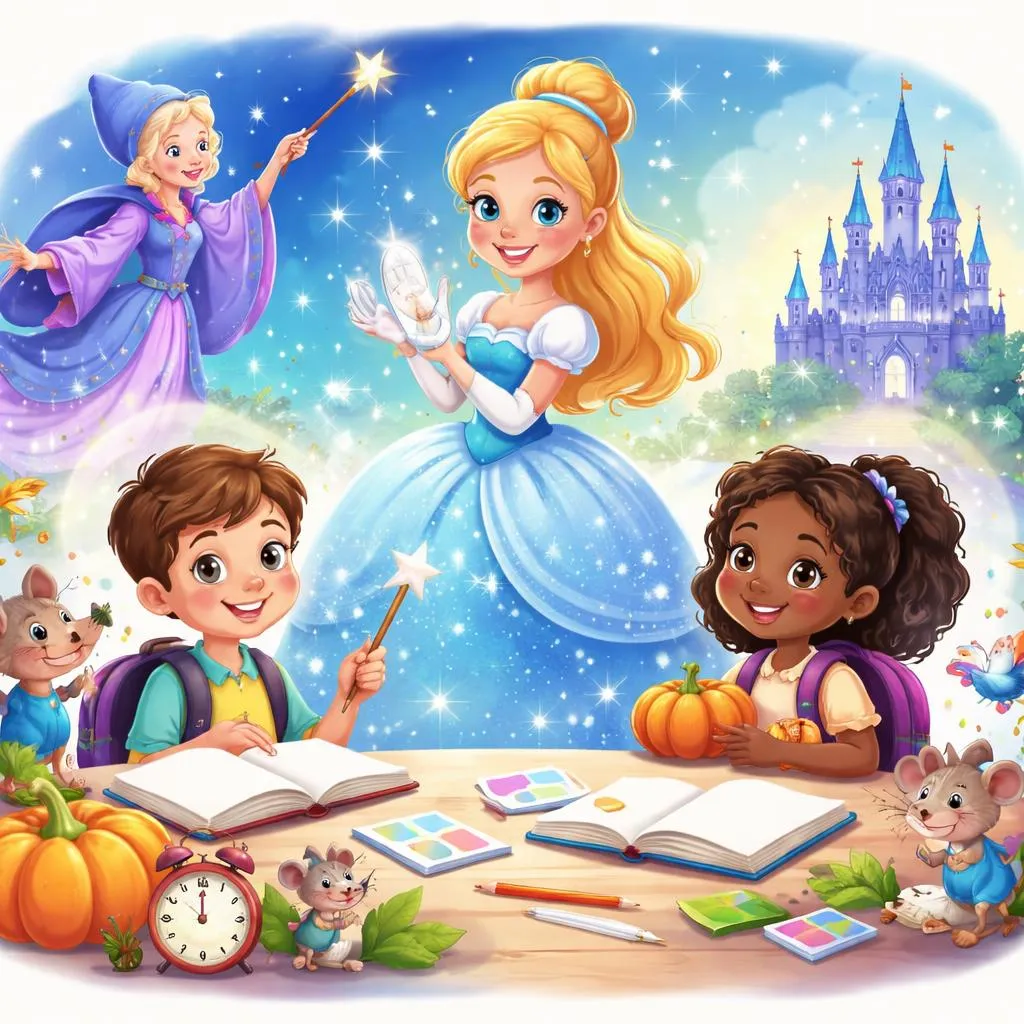

Fairy tales endure for generations because they speak to universal experiences. The story of a kind heart overcoming adversity resonates across cultures. For language educators, this familiarity becomes a teaching advantage. Students already understand the plot. They focus energy on the words, not the narrative. The children's story of Cinderella offers rich language opportunities within a known framework. This classic tale contains clear vocabulary, repeated phrases, and emotional depth. Let us explore how to transform this beloved story into structured language lessons that engage and instruct young learners effectively.
What Is the Children's Story of Cinderella?
This is a traditional fairy tale about kindness rewarded. A young girl loses her mother. Her father remarries a woman with two daughters. The stepmother and stepsisters treat the girl cruelly. They force her to work as a servant. She sleeps near the fireplace, earning the name Cinderella. Despite her hardships, she remains kind. Through the help of a magical figure, she attends a royal ball. The prince falls in love with her. She loses a glass slipper when fleeing at midnight. The prince searches the kingdom for the foot that fits the slipper. It fits Cinderella. They marry, and she forgives her stepsisters. The story teaches that goodness and patience eventually prevail.
Vocabulary Learning from the Cinderella Story
The tale contains tiered vocabulary suitable for various learning levels. Basic words appear alongside richer descriptive language. This mix supports differentiated instruction.
Character Words: girl, stepmother, stepsisters, prince, fairy, godmother, king, servant. Household Words: fireplace, ashes, kitchen, broom, slipper, clock, carriage, gown. Action Words: scrub, sew, cook, cry, dance, run, lose, fit, forgive, marry. Descriptive Words: kind, cruel, beautiful, ugly, magical, grand, poor, royal. Time Words: morning, midnight, afternoon, evening, ball, festival.
When teaching these words, connect them directly to story events. Show Cinderella scrubbing the floor while introducing "scrub." Point to the clock striking twelve while teaching "midnight." Visual connections strengthen memory.
Phonics Points in the Cinderella Story
Specific sound patterns recur throughout the narrative. Identifying these helps build decoding skills.
The /sl/ blend: slipper, sleep, slow. These words appear frequently in the ball scene. Practice saying them together. Notice how the tongue moves.
The /pr/ blend: prince, pretty, princess. The prince arrives at the ball. Use this moment to emphasize the sound. Find other /pr/ words students know.
The /f/ sound: fairy, foot, fit, forget. The fairy godmother says these words. Practice the voiceless /f/ versus the voiced /v/ in "love" and "live."
The soft /c/ sound: Cinderella, cellar, century. Explain that "c" can sound like /s/ before certain letters. Cinderella's name demonstrates this rule perfectly.
Rhyming words: ball, hall, tall. The ball happens in a grand hall with tall ceilings. Point out these patterns naturally during reading.
Grammar Patterns in the Story
The children's story of Cinderella models essential grammar structures naturally. Students absorb patterns through repeated exposure.
Past Tense Verbs: The story primarily uses simple past tense. "Cinderella lived with her stepmother." "The fairy godmother appeared." "The slipper fit perfectly." This provides extensive modeling for narrative language.
Comparatives and Superlatives: The stepsisters try to be prettier than Cinderella. The slipper must fit the prettiest girl in the land. These forms appear in meaningful contexts.
Modals for Possibility: "May I go to the ball?" "You shall go." "Could it be?" "Would she fit?" Questions and permission statements model modal verb usage authentically.
Sequence Words: First, she scrubbed. Then, the fairy appeared. Later, the clock struck twelve. Finally, the prince found her. These words organize the narrative logically.
Learning Activities for the Cinderella Story
Active engagement transforms passive listening into language acquisition. These activities work with any version of the story.
Story Mapping: Create a large chart showing story elements. Draw sections for characters, setting, problem, events, and solution. Students fill sections with words and simple drawings. Display the map for reference during other activities.
Character Traits Web: Draw Cinderella in the center of the board. Surround her with adjectives describing her character. Kind, patient, hopeful, hardworking. Do the same for the stepsisters. Cruel, lazy, jealous, mean. Compare the webs.
Sequence Cards: Draw simple pictures of main events on cards. Mix them up. Students arrange cards in correct order. Say a sentence about each card. "Cinderella scrubs the floor." "The fairy godmother arrives." This builds narrative understanding.
Emotion Vocabulary: Identify moments when characters feel specific emotions. Cinderella feels sad at the fireplace. She feels surprised when the fairy appears. She feels happy at the ball. She feels scared at midnight. Build an emotion word bank.
Learning Activities for Group Settings
Collaborative learning deepens understanding through social interaction. Groups of different sizes allow varied participation.
Tableau Vivant: Small groups create frozen pictures of story scenes. Other groups guess which scene they represent. This requires close reading to identify key moments. It also builds teamwork and physical expression.
Hot Seat Interview: One student扮演 a character. Classmates ask questions about story events. The character answers in first person. "Why did you treat Cinderella badly?" The stepsister must explain her actions. This builds perspective-taking and spontaneous language use.
Readers Theater: Assign roles and read the story as a script. No memorization required. Students practice fluency by reading their lines repeatedly. Expression matters more than perfection.
Story Comparison: Different cultures have Cinderella variants. Read another version, like the Chinese "Yeh-Shen" or the Native American "The Rough-Face Girl." Compare similarities and differences. This builds cultural awareness and analytical thinking.
Educational Games from the Cinderella Story
Games motivate through fun and friendly competition. These games require minimal preparation.
Slipper Match: Create pairs of paper slippers. Write English words on one slipper. Write matching pictures or definitions on another. Hide slippers around the room. Students find matching pairs. This builds word recognition.
Midnight Memory: Place 10-15 story-related items on a tray. A small slipper, a clock, a crown, a broom. Cover the tray. Remove one item. Students identify what disappeared. Name the item in English. This builds vocabulary and observation.
Ball Invitation: Design an invitation to the royal ball. Include who, what, when, where. This practices informational writing in a fun context. Display finished invitations.
Stepmother Says: Play like "Simon Says" but with commands related to chores. "Stepmother says scrub the floor." "Stepmother says sew the dress." Students perform actions. If no "Stepmother says," they freeze. This practices listening comprehension and action verbs.
Printable Materials for the Cinderella Story
Ready-to-use printables extend learning beyond story time. These materials support independent practice.
Vocabulary Flashcards: Create cards with pictures on one side and words on the other. Words: slipper, carriage, gown, pumpkin, mouse, clock, crown, fireplace. Use for matching games or quick reviews.
Comprehension Questions: Prepare simple questions about the story. "Where did Cinderella sleep?" "Who helped Cinderella go to the ball?" "What did she lose at midnight?" Students answer in complete sentences.
Sentence Building Strips: Write sentence fragments on strips. "Cinderella ___ to the ball." Students add words from a word bank to complete sentences. "went" "danced" "ran" Multiple correct answers encourage creativity.
Coloring Pages: Print outline drawings of key scenes. Students color while discussing the story with partners. "What color is her dress?" "The stepsisters are wearing ugly colors."
Character Comparison Chart: Create a simple chart comparing Cinderella and a stepsister. Categories: kind, hardworking, pretty, helpful. Students check boxes based on story evidence. This builds analytical thinking.
Daily Life Connections to Cinderella
Linking story themes to daily experiences makes language relevant. Students see themselves in the narrative.
Kindness Discussion: Talk about times students showed kindness despite difficulty. Cinderella remained kind even when treated badly. How can we show kindness in hard situations? This builds character while practicing language.
Chores Vocabulary: Cinderella did many chores. What chores do students do at home? Make a bilingual chart of chore words. Sweep, make bed, wash dishes. Connect to daily responsibilities.
Getting Ready for Events: Cinderella prepared for the ball. How do we prepare for special events? What do we wear? What time do we arrive? This practices event-related vocabulary naturally.
Family Relationships: Cinderella lived with a stepfamily. Many students have blended families. Discuss different family structures respectfully. Use simple family vocabulary.
Printable Flashcards from the Cinderella Story
Creating effective flashcards requires attention to design and content. Well-made cards become lasting classroom resources.
Picture-Word Front: On the front, place a simple drawing or printed image. Below the image, write the word in English. This connects visual and textual representations.
Definition Back: On the back, write a simple definition or a sentence from the story. "Slipper: a small shoe for dancing." "Carriage: the fairy godmother made one from a pumpkin."
Color Coding: Use different colored card stock for different word categories. Blue for nouns. Red for verbs. Green for adjectives. This visually reinforces parts of speech.
Storage System: Organize flashcards by story in labeled envelopes or boxes. Students can access them independently for review. This builds autonomy in learning.
The Enduring Power of Cinderella
The children's story of Cinderella continues teaching new generations of language learners. Its clear plot supports comprehension. Its emotional depth engages hearts. Its vocabulary builds foundations. Its grammar models authentic language. The story transcends cultural boundaries because kindness and hope are universal. Every classroom contains students facing their own difficulties. Cinderella shows them that goodness matters. For language educators, the tale offers endless teaching opportunities within a single narrative. One story can yield weeks of lessons. Vocabulary, phonics, grammar, writing, speaking, listening. All from a girl, a slipper, and a dream. That is the magic of using complete stories for language instruction.