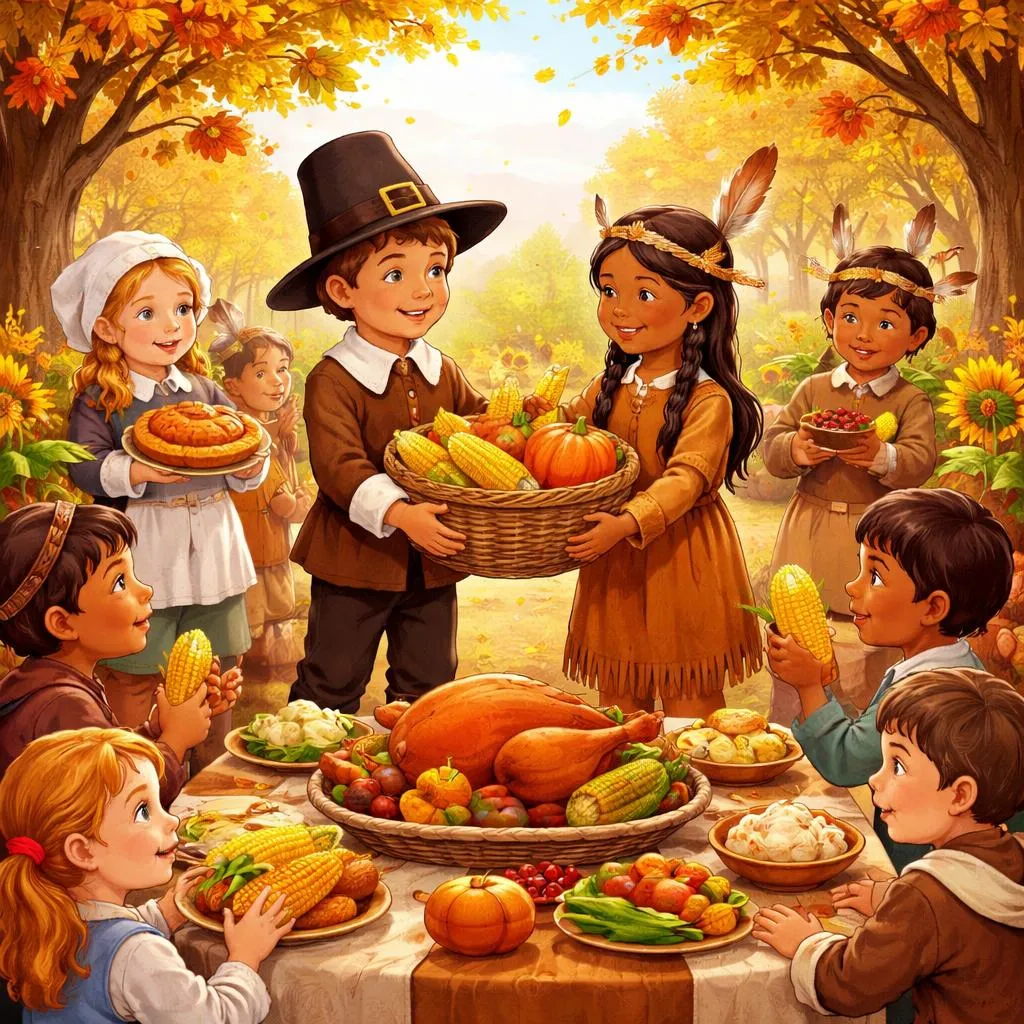

What Is the Children's Story of Thanksgiving? Let us explore this beloved holiday narrative together. The children's story of Thanksgiving tells about the first Thanksgiving celebration. It begins with a group of people called Pilgrims. They left England to find religious freedom long ago. They sailed on a ship called the Mayflower across the ocean. The journey was long and difficult for everyone aboard. They landed in a place they called Plymouth in winter. The first winter was very hard for the Pilgrims. Many people became sick and died from the cold. The survivors needed help to make it through. Native Americans, especially one named Squanto, helped them. Squanto taught them how to plant corn and fish. The Wampanoag people showed them how to survive. After the harvest that fall, they had much to celebrate. They had food, shelter, and friendship with their neighbors. Governor Bradford declared a day of thanksgiving. They invited their Native American friends to join them. Everyone shared a feast that lasted for three days. This became the first Thanksgiving celebration in America.
Meaning and Purpose of the Thanksgiving Story This story serves several important purposes in children's education. It teaches about gratitude and thankfulness. The Pilgrims gave thanks for their blessings after hardship. Children learn that gratitude matters even in difficult times. The story also introduces early American history simply. Children learn about Pilgrims, Native Americans, and colonial life. The narrative also shows the value of helping others. Squanto and the Wampanoag people helped the Pilgrims survive. Children learn that kindness across cultures matters. The story also emphasizes community and working together. Pilgrims and Native Americans shared food and friendship. Children learn that people can help each other despite differences. The story builds appreciation for the holiday's meaning beyond feasting.
Main Characters in the Thanksgiving Story We can identify several important figures in this narrative. The Pilgrims were English people seeking religious freedom. They were brave to cross the ocean in a small ship. William Bradford was the leader of the Pilgrims. He helped guide them through difficult times. Squanto was a Native American who spoke English. He had been to England and learned the language. He taught the Pilgrims how to plant corn and fish. Massasoit was the leader of the Wampanoag people. He made a peace treaty with the Pilgrims that lasted many years. The Wampanoag people were the Native Americans living nearby. They shared their knowledge and helped the Pilgrims survive. The Mayflower was the ship that brought the Pilgrims to America. It carried them across the dangerous ocean.
Vocabulary Learning from the Thanksgiving Story The Thanksgiving story introduces important historical vocabulary. Pilgrim means a person who travels for religious reasons. Mayflower was the name of the ship the Pilgrims sailed on. Plymouth was the place where the Pilgrims landed and settled. Harvest means the gathering of crops at the end of growing season. Feast means a large, special meal shared with others. Thanksgiving means the act of giving thanks, especially to God. Native American means the original people living in America. Wampanoag was the tribe that helped the Pilgrims. Squanto was a Native American who helped the Pilgrims survive. Governor means the person who leads a colony or state. We can teach these words with picture cards showing examples. Use them in sentences about the Thanksgiving story.
Phonics Points in the Thanksgiving Story The Thanksgiving story provides useful phonics practice with historical language. Pilgrim has the short I and short I and L and M. Mayflower has the long A and OW diphthong and ER. Plymouth has the short I and long O and TH sound. Harvest has the HAR combination and short E and ST blend. Feast has the F sound and EA digraph and ST blend. Thanksgiving has the TH digraph and short A and short I and ING. Native has the long A and long E. American has the short A and short E and short I and short A. Wampanoag has the short A and short A and long O and short A. Squanto has the SQU blend and short A and O. We can focus on one sound pattern from each part of the story. Find all words with that sound in the Thanksgiving tale. Write them on turkey or leaf shapes for practice.
Grammar Patterns in the Thanksgiving Narrative The Thanksgiving story models useful grammar for young readers naturally. Past tense carries the main historical narrative throughout. "The Pilgrims sailed on the Mayflower across the ocean." Present tense describes what we do now to celebrate. "Families gather to share a feast on Thanksgiving Day." Future tense shows what will happen next year. "Next Thanksgiving we will remember the first celebration." Questions explore historical events and meaning. "Why did the Pilgrims leave England?" "How did Squanto help them?" Commands appear in preparation for the holiday. "Share what you are thankful for." "Pass the food, please." Descriptive language paints historical scenes vividly. "The cold, difficult winter made the Pilgrims grateful for spring." Prepositional phrases describe locations and times. "On the ship, in Plymouth, during the harvest." We can point out these patterns during reading.
Daily Life Connections Through the Thanksgiving Story The Thanksgiving story connects directly to children's holiday experiences. Family gatherings on Thanksgiving are common for many. Children recognize the big meal with special foods. Turkey, stuffing, and pumpkin pie appear on tables. Giving thanks around the table happens in many homes. Children hear family members share gratitude. Parades and football games are part of the day. Many families watch these traditions together. The story explains why these traditions exist. Children understand the meaning behind the celebration. We can point out these connections during reading. "We eat turkey on Thanksgiving just like the Pilgrims." "We share what we're thankful for too."
Learning Activities for the Thanksgiving Story Many activities deepen understanding of Thanksgiving themes. Create a thankfulness tree with paper leaves for blessings. Write one blessing on each leaf and add to branches. Make Pilgrim and Wampanoag paper crafts with simple materials. Learn about how they dressed and lived. Cook simple Pilgrim foods like cornbread or soup. Experience what they might have eaten. Practice saying thank you in the Wampanoag language. Learn a few words from their language. Create a timeline showing the Pilgrims' journey. From England to Plymouth to the first Thanksgiving. Act out the story of the first Thanksgiving. Assign roles of Pilgrims and Wampanoag people. These activities make Thanksgiving history tangible and personal.
Printable Materials for Thanksgiving Learning Printable resources support deep engagement with Thanksgiving themes. Create sequencing cards showing the Thanksgiving story events. Sailing, first winter, Squanto helps, harvest, feast, friendship. Design character cards for each person in the story. Pilgrims, William Bradford, Squanto, Massasoit, Wampanoag included. Make vocabulary cards with Thanksgiving words and definitions. Pilgrim, Mayflower, Plymouth, harvest, feast, Thanksgiving included. Create a thankfulness journal page with writing prompts. "I am thankful for..." with space to draw and write. Design a Mayflower ship coloring page with facts. Children color while learning about the voyage. Make a comparison chart of then and now. Compare Pilgrim life to modern life. These printables structure Thanksgiving learning activities effectively.
Educational Games About Thanksgiving Games make Thanksgiving learning playful and interactive. Play "Thanksgiving Charades" acting out story elements. Sailing, planting corn, sharing a feast, giving thanks appear. Create "Match the Person" pairing names with descriptions. Match Squanto with "helped Pilgrims plant corn." Play "Thanksgiving Bingo" with holiday elements on cards. Turkey, corn, Pilgrim, Native American, Mayflower, harvest included. Design "Then and Now" sorting cards by time period. Sort Pilgrim items from modern items correctly. Play "Feast Relay" gathering foods for the Thanksgiving meal. Teams collect pictures of Thanksgiving foods. Create "Thankfulness Circle" where each person shares gratitude. Pass a talking piece while sharing thanks. These games build Thanksgiving knowledge through active participation.
Teaching About Both Sides of the Story The Thanksgiving story has multiple perspectives to consider. The Pilgrims' story is one part of the history. The Wampanoag people have their own story too. Their lives changed greatly after the Pilgrims arrived. Some years later, conflicts arose between the groups. Children can learn that history has many viewpoints. The first Thanksgiving was a moment of peace and sharing. This moment is worth celebrating and remembering. But it is not the whole story of what followed. Teaching with sensitivity honors both perspectives. Children can appreciate the friendship that existed. They can also understand that relationships were complex. This builds historical thinking and empathy.
Gratitude as a Daily Practice The Thanksgiving story encourages gratitude beyond one holiday. The Pilgrims gave thanks after surviving hardship. Gratitude helped them through difficult times. Children can practice gratitude every day. Noticing good things builds happiness and resilience. Thanking people who help them shows appreciation. A gratitude journal can record daily blessings. Families can share thanks at meals throughout the year. The Thanksgiving story reminds us to be grateful always. Not just when things are easy, but always. Gratitude becomes a habit that shapes character. The Pilgrims' example inspires this daily practice.
Modern Thanksgiving Traditions The story connects to how families celebrate Thanksgiving today. Many traditions come from the first Thanksgiving. Sharing a big meal with loved ones continues. Giving thanks before eating is common. Parades celebrate community and togetherness. Football games bring families together to watch. Volunteering to help others is part of the day. Some families serve meals to those in need. These modern traditions carry the spirit of the first Thanksgiving. Gratitude, community, and sharing remain central. Children learn they are part of an ongoing tradition. The story connects them to generations of thanks-givers.