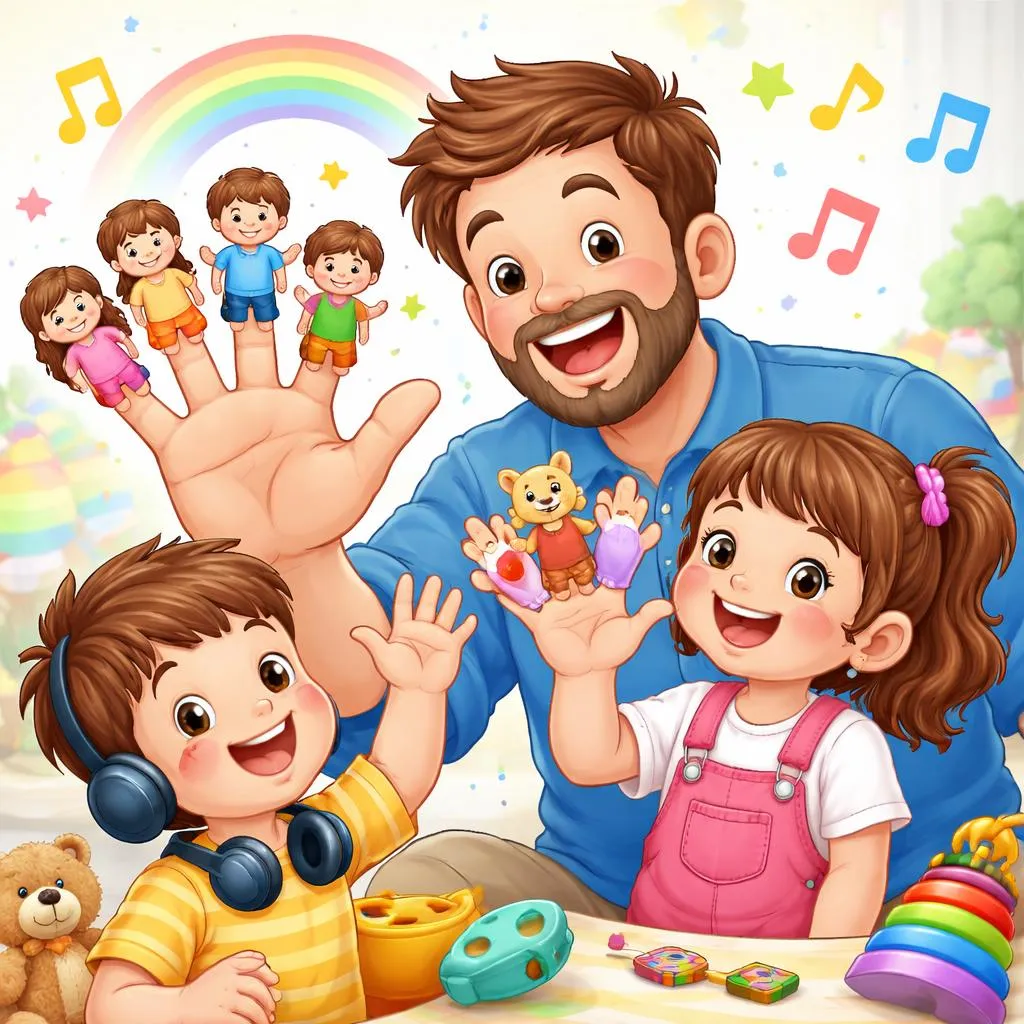

Hello, dear teachers and parents! Today brings a wonderful opportunity to explore a classic finger play song. This simple tune has delighted children for generations. It teaches family vocabulary through movement and repetition. The "Father Finger Song Lyrics" offer so much more than entertainment. Each verse introduces a new family member. Each finger represents a different person. Children learn through seeing, hearing, and doing. Let us discover together why this song remains a favorite in English classrooms everywhere.
What Is the "Father Finger" Nursery Rhyme? The "Father Finger Song" is a beloved finger play rhyme. It goes by many names around the world. Some call it "Daddy Finger." Others know it as "Family Finger." The song introduces each family member through a simple question and answer pattern. The fingers become characters in a happy family.
The song typically starts with the thumb. This finger represents the father. The singer asks where father finger is. Then the finger appears and says, "Here I am!" A cheerful greeting follows. The same pattern repeats for each family member. Mother finger comes next. Then brother finger, sister finger, and finally baby finger.
What makes this song special is its physical component. Children hold up their own hands. They wiggle each finger as it sings. This kinesthetic learning helps memory. The brain connects the word with the movement and the tune. Learning becomes multi-sensory and effective.
The "Father Finger Song Lyrics" vary slightly across versions. Some include a happy greeting. Others add actions like dancing or playing. The core structure remains the same. This consistency helps children predict what comes next. They feel successful when they can join in.
The Lyrics of the Father Finger Nursery Rhyme Let us look closely at the words of this wonderful song. The lyrics follow a clear call-and-response pattern. This structure invites participation from the very beginning.
The first verse introduces the father:
Where is father finger? Where is father finger? Here I am! Here I am! How are you today, sir? Very well, I thank you. Run away, run away.
The second verse brings in the mother. The words change only the family member:
Where is mother finger? Where is mother finger? Here I am! Here I am! How are you today, ma'am? Very well, I thank you. Run away, run away.
Brother finger follows the same pattern. Sister finger comes next. Baby finger completes the family. Some versions add a happy greeting instead of the formal "How are you?" exchange. Others include actions like "Dance away" or "Play away" at the end.
The repetition makes this song perfect for young learners. After hearing the first verse, children know what to expect. They anticipate the "Here I am!" response. They feel proud when they can sing along. The "Father Finger Song Lyrics" build confidence through predictability.
Vocabulary Learning from the Father Finger Song The "Father Finger Song Lyrics" introduce essential family vocabulary. Children learn the names for each family member. These words appear in a memorable, musical context.
Father and mother form the foundation. These are primary family words. Children learn that father means dad. Mother means mom. The song connects these words to the largest fingers on the hand. This visual association strengthens memory.
Brother and sister add sibling vocabulary. Children with brothers and sisters connect personally to these words. Only children learn about siblings through the song. The middle fingers represent these family members, which helps with differentiation.
Baby finger completes the family. The smallest finger represents the baby. Children love this connection. They see their own pinky and think of the youngest family member. The word "baby" becomes concrete and visual.
Some versions include additional family members. Grandfather and grandmother appear in extended versions. The song can grow with the learners. More family words can join the original five.
The greeting vocabulary offers additional learning. "How are you today?" models a common social question. "Very well, I thank you" provides a polite response. Children absorb these social phrases naturally through the song. They learn not just family words but also how families interact.
Phonics Points in the Father Finger Song Phonics learning happens naturally with this simple song. The repeated sounds draw attention to letter patterns. Children hear specific sounds in a memorable context.
The "th" sound appears in "father" and "mother." This sound can be tricky for young learners. Hearing it in a song helps. Children feel the tongue between the teeth when they sing. The music makes the sound practice feel like play.
The "r" sound appears in "brother" and "run away." This consonant requires precise tongue placement. Singing the words slowly helps children articulate clearly. The repetitive nature of the song provides many practice opportunities.
The long "i" sound appears in "I" and "am." The short "i" sound appears in "sister" and "finger." Children hear both versions in context. They begin to notice that the same letter can make different sounds.
The rhyming pattern, while simple, builds phonemic awareness. "Am" and "thank you" do not rhyme traditionally. But the rhythmic pattern creates its own satisfying echoes. Children feel the beat and anticipate where words fall.
Teachers can extend phonics learning beyond the song. After singing, point to the words on a chart. Ask children to find all the "f" words. Father, finger, and run appear. This turns a fun song into a focused phonics moment.
Grammar Patterns Emerging from the Song Grammar teaching becomes effortless with this song. The natural language provides perfect models. Children absorb correct structures without formal lessons.
The question form "Where is father finger?" appears repeatedly. This models proper question word order. Children learn that "where" questions ask about location. They understand that the verb "is" comes before the subject in questions. This grammar point becomes intuitive through repetition.
The response "Here I am!" shows subject-verb inversion for emphasis. Usually we say "I am here." The song flips this order. Children learn that English can change word order for special effects. They absorb this pattern without needing the grammatical explanation.
The greeting "How are you today, sir?" models polite address. "Sir" shows respect for father. "Ma'am" shows respect for mother. Children learn that English uses different words for male and female polite address. This cultural knowledge comes through the song naturally.
The farewell "Run away" shows a command form. The subject "you" is understood, not stated. Children learn that commands start with the verb. They can later create their own commands using this model.
Pronouns appear throughout the song. "I" shows self-reference. "You" shows direct address. Children see these small but important words in context. They begin to understand who "I" and "you" refer to in conversation.
Learning Activities for the Father Finger Song The "Father Finger Song Lyrics" inspire countless learning activities. These ideas extend the song into deeper language practice. Each activity builds different skills while maintaining the fun.
Finger puppet crafts bring the song to life. Provide materials to create small finger puppets. Each puppet represents one family member. Children decorate father, mother, brother, sister, and baby puppets. They wear the puppets while singing. Each finger puppet wiggles when its part comes in the song. This tactile experience reinforces family vocabulary.
Family drawing activities connect the song to real life. After singing, ask children to draw their own families. They can label each person with the words from the song. Father, mother, brother, sister, and baby appear on their papers. This extends vocabulary learning to personal meaning. Children see that the song words apply to their own lives.
Hand tracing creates a permanent reminder of the song. Trace each child's hand on paper. Label each finger with the correct family member. Father on the thumb, mother on the index, brother on the middle, sister on the ring, baby on the pinky. Children color their traced hands. They practice the song while looking at their own labeled fingers.
Movement games get everyone involved. Stand in a circle. Assign each child a family role. When the song calls for father finger, all fathers step forward and wiggle. Mothers step forward for their verse. Brothers, sisters, and babies do the same. This builds listening skills and quick responses. Children must attend carefully to know when to move.
Story connections enrich understanding. Read books about families after singing. Discuss how families in books are similar or different. Do they have fathers and mothers? Brothers and sisters? Babies? This connects the song vocabulary to broader literacy experiences.
Printable Materials for the Father Finger Song Printable materials support learning at home and school. These resources give children something to hold and use. They extend the song into independent practice.
Finger puppets printables save preparation time. Create sheets with simple finger puppet outlines. Children cut out the puppets and tape them into rings. Each puppet shows a family member face. Children wear them while singing. The puppets can be stored and used again and again.
Hand diagram worksheets provide labeling practice. Print a large hand outline on each page. Children write the family words on the correct fingers. Father goes on the thumb. Mother on the index. Brother on the middle. Sister on the ring. Baby on the pinky. Younger children can match word cards to the correct fingers.
Mini books let children own the song. Create a simple folded book with pages for each family member. Each page shows the finger and the corresponding verse. Children color the pictures and practice reading the words. They can take these books home and sing for their families.
Word cards focus on key vocabulary. Print each family word separately. Father, mother, brother, sister, baby. Children can arrange them in song order. They can match words with finger pictures. They can use them for spelling practice. Laminating makes them last longer.
Song posters decorate the classroom. Create a large poster with all the verses. Add pictures of hands with labeled fingers. Display it where children can see during circle time. Point to the words while singing. Children begin to connect the written words with the spoken song.
Educational Games Based on the Father Finger Song Games turn learning into pure joy. These game ideas use the "Father Finger Song Lyrics" as their foundation. Children practice language skills while having fun.
Family Finger Match builds vocabulary recognition. Create pairs of cards. One card shows a finger with a label. The other card shows a family member face. Children find matching pairs. Father finger matches the father face. Mother finger matches the mother face. This game builds connections between words and images.
Where Is the Finger? Hide and seek brings movement to learning. Hide small finger puppets around the room. Children search while singing the song. When they find father finger, they hold it up and sing his verse. Continue until all family members are found. This combines physical activity with language practice.
Finger Puppet Theater encourages creative language use. Set up a small stage using a cardboard box. Children put on shows using their finger puppets. They can sing the original song or create new adventures. The father puppet might go to work. The baby puppet might go to sleep. This extends language beyond the song lyrics.
Musical Hands adds a listening challenge. Print large hand shapes on paper. Place them in a circle on the floor. Play the song while children walk around. When the music stops, each child stands on a hand. Point to one child and ask, "Where is mother finger?" That child must find mother finger on their hand and sing her verse. This builds quick thinking and song knowledge.
Family Dress-Up connects to imaginative play. Provide simple costume pieces. A tie for father. A scarf for mother. A hat for brother. A bow for sister. A rattle for baby. Children dress up as their assigned family member. They sing the song from that character's perspective. This deepens understanding of each family role.
The "Father Finger Song Lyrics" continue teaching long after the singing ends. The simple words carry rich language learning potential. Family vocabulary becomes concrete through finger associations. Question forms become natural through repetition. Greetings and polite language appear in meaningful context. Every child can participate, regardless of language level. The physical component ensures engagement. The predictable pattern builds confidence. Through this beloved finger play, children learn without even trying. They absorb English through joyful participation. That is the lasting magic of nursery rhymes in language teaching.