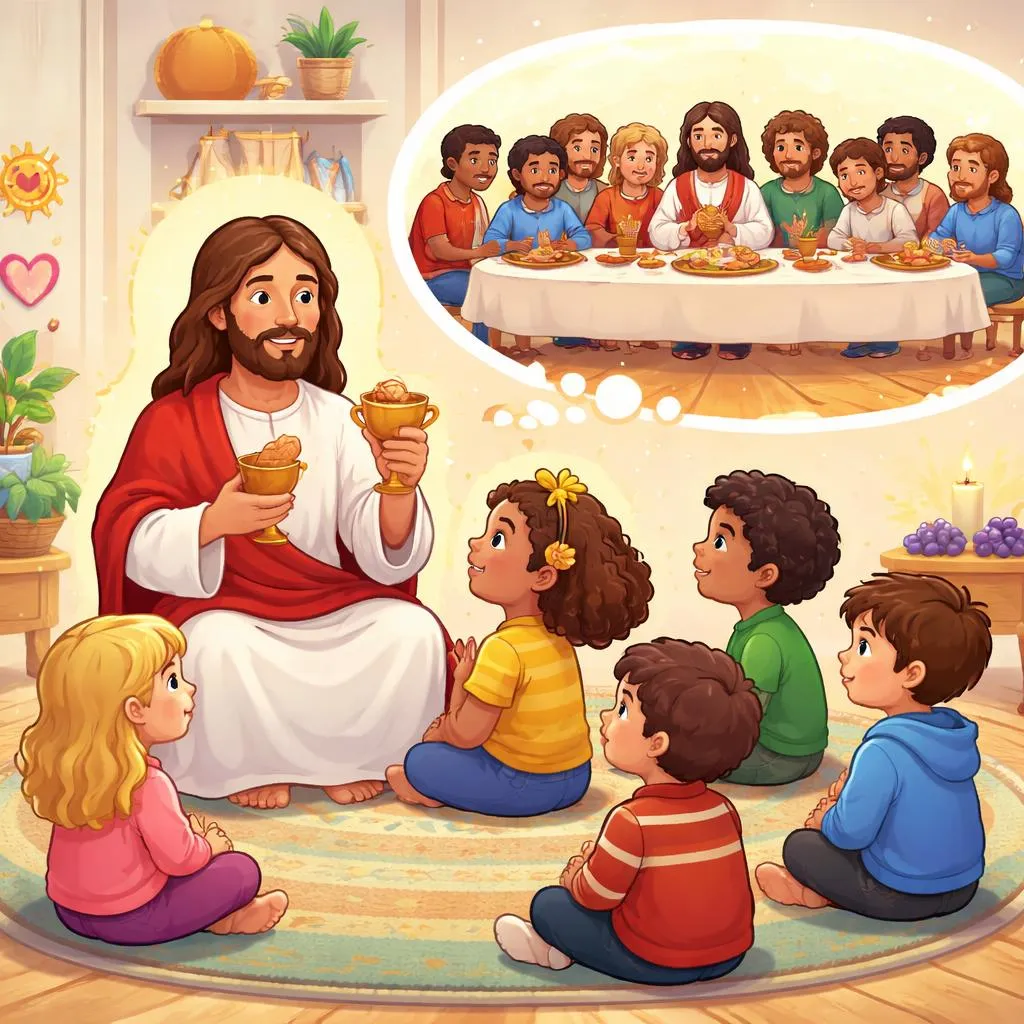

What Is the Last Supper Children's Story? Let us explore this important Bible story together. The Last Supper children's story tells about Jesus' final meal with his disciples. It happened on the night before Jesus was crucified. Jesus and his twelve disciples gathered in an upstairs room. They came together to celebrate the Passover feast. This was a special Jewish holiday remembering when God freed his people from Egypt. During the meal, Jesus did something surprising. He took bread, gave thanks, and broke it into pieces. He gave it to his disciples and said, "This is my body, given for you." Then he took a cup of wine and gave thanks. He said, "This is my blood, poured out for you and for many." He told them to do this to remember him. Jesus also washed his disciples' feet that night. He showed them that leaders must serve others. He told them that one disciple would betray him. This made the disciples very sad and confused. The Last Supper was a night of love, service, and preparation.
Meaning and Purpose of the Last Supper Story This story carries deep meaning about Jesus' love and sacrifice. Jesus knew he would die the next day. Yet he spent his last hours with his friends. He gave them a way to remember him always. The bread and wine became symbols of his body and blood. Christians still celebrate this meal today. It is called Communion, the Lord's Supper, or the Eucharist. The story also teaches about serving others. Jesus washed feet, a job for servants. He showed that true leaders serve, not demand service. The story also shows Jesus' honesty with his disciples. He told them hard truths about betrayal and his death. He prepared them for what was coming. Children learn that love sometimes requires difficult conversations.
Main Characters in the Last Supper Story We can identify several important figures in this narrative. Jesus is the central figure of the story. He knew what was coming and still loved his friends. The twelve disciples were Jesus' closest followers. They had been with him throughout his ministry. Peter was one of the most prominent disciples. He protested when Jesus wanted to wash his feet. Judas Iscariot was the disciple who would betray Jesus. Jesus knew this but still shared the meal with him. John was the disciple Jesus loved. He leaned against Jesus at the table. The disciples didn't understand everything at the time. Later they would remember and understand. The room where they met became a sacred place.
Vocabulary Learning from the Last Supper Story The Last Supper story introduces important religious vocabulary. Last Supper means the final meal Jesus shared with his disciples. Passover means the Jewish holiday remembering freedom from Egypt. Disciple means a follower or student of Jesus. Apostle means someone sent out with a special mission. Betray means to turn against someone who trusted you. Communion means the Christian service remembering the Last Supper. Eucharist means giving thanks, another name for Communion. Body refers to Jesus' physical body given for others. Blood refers to Jesus' life poured out in sacrifice. Serve means to help or work for others. We can teach these words with picture cards showing examples. Use them in sentences about the story events.
Phonics Points in the Last Supper Story The Last Supper story provides useful phonics practice with biblical language. Supper has the short U and PP and ER. Passover has the short A and long O and ER. Disciple has the short I and long I and final le. Apostle has the short A and short O and final le. Betray has the short E and long A. Communion has the short O and long U and short O and N. Eucharist has the long U and short A and short I and ST. Body has the long O and long E. Blood has the BL blend and long U and D sound. Serve has the SER combination and silent E. Place names offer valuable sound patterns. Jerusalem has the soft G and short U and short U. Galilee has the short A and long I. Judea has the long U and long E. We can focus on one sound pattern from each part. Find all words with that sound in the Last Supper story. Write them on bread or cup shapes for practice.
Grammar Patterns in the Last Supper Narrative The Last Supper story models useful grammar for young readers naturally. Past tense carries the main historical narrative throughout. "Jesus broke the bread and gave it to his disciples." Present tense appears in applications and faith statements. "Christians still celebrate Communion today." Future tense shows promises and hope ahead. "Jesus said he would return again someday." Questions explore events and their meaning deeply. "Why did Jesus wash the disciples' feet?" "What did the bread and wine mean?" Commands appear in Jesus' instructions. "Do this in remembrance of me." "Love one another as I have loved you." Descriptive language paints the scene vividly. "The quiet, solemn room held Jesus and his twelve closest friends." Prepositional phrases describe locations and movements. "In the upper room, around the table, at the feast." We can point out these patterns during reading.
Daily Life Connections Through the Last Supper Story The Last Supper story connects to children's experiences in meaningful ways. Sharing meals with family is a daily experience. Children understand gathering around a table with loved ones. Special holiday meals have extra meaning and traditions. Passover was a special meal for Jesus and his disciples. Remembering someone who died happens in families. Children understand honoring loved ones' memory. Helping and serving others happens at home. Setting the table, clearing dishes, and helping are familiar. Someone leaving soon makes time together precious. Children know what it feels like when someone is going away. We can point out these connections during reading. "We share special meals with family like Jesus did." "Helping at home is serving like Jesus taught."
Learning Activities for the Last Supper Story Many activities deepen understanding of Last Supper themes. Create a simple Communion service with bread and juice. Explain the meaning as children participate. Act out the washing of feet with a basin and water. Experience serving others as Jesus taught. Draw the Last Supper scene with Jesus and disciples around table. Include details like bread and cup. Make a "do this in remembrance" bookmark with the verse. Use it during church services. Learn a simple Communion song together. Sing about remembering Jesus' love. Create a timeline of Holy Week events. Place the Last Supper on Thursday before Good Friday. These activities make the Last Supper story tangible and memorable.
Printable Materials for Last Supper Learning Printable resources support deep engagement with the Last Supper story. Create sequencing cards showing major story events. Preparing room, gathering, washing feet, breaking bread, sharing cup, talking. Design character cards for each person in the story. Jesus, Peter, John, Judas, other disciples included. Make vocabulary cards with Last Supper words and definitions. Last Supper, Passover, disciple, betray, Communion, serve included. Create a Last Supper coloring page showing Jesus and disciples. Children color while hearing the story again. Design a foot washing activity sheet explaining the meaning. Connect serving to modern life applications. Make a Communion reflection page for children to complete. "When I take Communion, I remember..." These printables structure Last Supper learning activities effectively.
Educational Games About the Last Supper Games make Last Supper learning playful and interactive. Play "Last Supper Charades" acting out story elements. Washing feet, breaking bread, sharing cup, praying appear. Create "Match the Disciple" pairing names with facts about them. Match Peter with "denied knowing Jesus," Judas with "betrayed Jesus." Play "Who Said It?" matching quotes with who spoke. "One of you will betray me" matches Jesus. Design "Last Supper Bingo" with story elements on cards. Bread, cup, feet, towel, table, room, disciples included. Play "Sequence the Story" arranging events in correct order. From gathering to leaving to the garden. Create "Remember Relay" racing to share what happened at the Last Supper. Teams pass "bread" and "cup" while telling parts. These games build Last Supper knowledge through active participation.
Teaching About Service Through Foot Washing Jesus washing feet was a powerful lesson in service. In those days, feet were dirty from dusty roads. Washing them was the job of the lowest servant. Jesus, their teacher and Lord, did this job. He showed that no task is beneath a leader. True greatness comes from serving others. Children can learn to serve in small ways. Helping younger children, assisting teachers, and helping at home. Serving others shows love in practical ways. It puts others' needs before our own. This lesson from the Last Supper lasts a lifetime. Children who learn to serve become caring adults.
The Meaning of Bread and Wine Jesus used ordinary things to teach deep truths. Bread was everyday food everyone understood. Breaking bread together meant sharing life. Jesus said the bread was his body given for them. Wine was part of celebration and meals. Jesus said the wine was his blood poured out. His death would be a sacrifice for others. These symbols help us remember Jesus' love. Every time Christians share Communion, they remember. The simple elements carry deep meaning. Children can understand this at their level. The bread and juice remind us of Jesus. They connect us to him and to each other.
Preparing for What Was Coming The Last Supper was a time of preparation. Jesus knew he would die the next day. He wanted to prepare his friends for what was coming. He told them hard truths so they wouldn't be surprised. He comforted them with promises of the Spirit. He prayed for them and for all believers. This preparation helped them after he was gone. They remembered his words and found strength. Children can learn that hard conversations can help. Parents and teachers prepare them for challenges. Difficult news is easier when shared with love. Jesus modeled this caring preparation perfectly.